• Skip to primary navigation
  • Skip to main content
  • Skip to primary sidebar

Earth Wise

A look at our changing environment.

  • Home
  • About Earth Wise
  • Where to Listen
  • All Articles
  • Show Search
Hide Search
You are here: Home / Archives for university of michigan

university of michigan

More eco-friendly desalination

May 14, 2025 By EarthWise Leave a Comment

There are about 16,000 operational desalination plants, located across 177 countries, which generate an estimated 25 billion gallons of fresh water daily.

For every gallon of drinking water produced at a typical desalination plant, one and a half gallons of brine are produced.  Much of it is stored in ponds until the water evaporates, leaving behind solid salt or concentrated brine for further treatment.  There are various other techniques for concentrating brines, but they are energy-intensive and environmentally problematic.  The process called electrodialysis uses electrified membranes to concentrate salts. 

Water flows into many channels separated by membranes, each of which has the opposite electrical charge of its neighbors.  Positive salt ions move towards negatively charged electrodes and negative ions move toward positive electrodes.  Two streams result, one containing purified water and one containing concentrated brine.

This eliminates the need for evaporation ponds, but existing electrodialysis membranes either result in leakage of salts into the environment or are too slow, making the process impractical for large-scale use.

Researchers at the University of Michigan have developed a new kind of membrane for electrodialysis.  The new membranes don’t leak and are ten times more conductive than those on the market today which means that they can move more salt using less power.  The membranes can be customized to suit a broad range of water types, which may help make desalination a more sustainable solution to the world’s growing water crisis.

**********

Web Links

Making desalination more eco-friendly: New membranes could help eliminate brine waste

Photo, posted February 4, 2012, courtesy of David Martinez Vicente via Flickr.

Earth Wise is a production of WAMC Northeast Public Radio
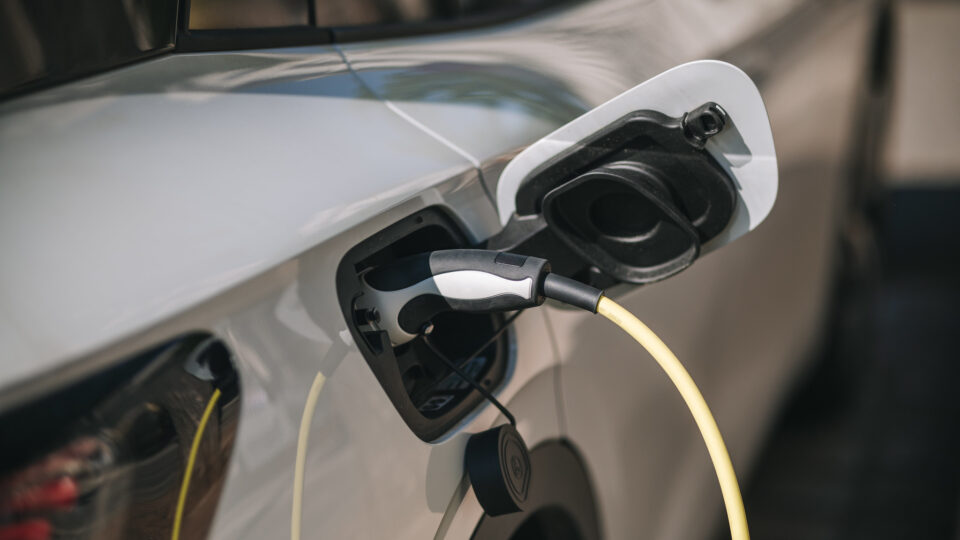
The Carbon Footprint Of Electric Vehicles | Earth Wise

November 29, 2022 By EarthWise Leave a Comment

Electric vehicles are widely known to be the environmentally friendly alternative to internal combustion-based cars.   But there are skeptics who argue that EVs actually have a larger carbon footprint than nonelectric vehicles.  The argument is that the manufacturing and disposal of vehicle batteries is very carbon intensive.  They also point to the reliance on coal to produce the electricity that powers the cars.

These claims have led to multiple studies in the form of life-cycle analyses comparing the amount of greenhouse gases created by the production, use, and disposal of a battery electric vehicle to that associated with a gasoline-powered car of a similar size.

In short, the studies have found that while it is true that the production of a battery electric vehicle results in more emissions than a gasoline-powered one, this difference disappears as the vehicle is driven. 

According to a study conducted by the University of Michigan and financed by the Ford Motor Company, the emissions equation evens out in 1.4-1.5 years for sedans, 1.6-1.9 years for S.U.V.s, and about 1.6 years for pickup trucks.

Emissions from driving come from burning gas in the nonelectric vehicles and from the generation of electricity used by the battery-powered cars.  In the current average power mix across the U.S., driving an EV results in a 35% reduction in emissions.  However, it varies tremendously by location.  There are some places with very dirty power and some with very clean power.  But of the more than 3,000 counties in the U.S., only 78 end up with higher emissions from electric cars.  Of course, as the electric grid gets greener, the advantages of electric cars only become greater.

**********

Web Links

E.V.s Start With a Bigger Carbon Footprint. But That Doesn’t Last.

Photo, posted May 21, 2022, courtesy of Ivan Radic via Flickr.

Earth Wise is a production of WAMC Northeast Public Radio

Solar Windows | Earth Wise

September 1, 2022 By EarthWise Leave a Comment

Solar windows offer massive potential

Solar windows are an attractive idea.  It is very appealing to have the vertical surfaces on the outside of almost any building generate electricity.  The challenge is to have a transparent window be able to function as an efficient-enough solar panel.

Most conventional solar panels use silicon solar cell technology, which is not based on a transparent material.  Transparent solar cells use dye-sensitized technology, which has been the subject of research for decades but has yet to achieve widespread use.

Researchers at the University of Michigan have recently published work on a new process to manufacture solar windows that can be large (over six feet in each dimension) and efficient at electricity production.

The windows make use of dye-sensitized cells which are connected to lines of metal so small that they are invisible to the naked eye.  The individual cells are fairly small but the connection technology allows the construction of large windows.

The solar window has an efficiency of 7%, meaning 7% of incoming sunlight energy is converted to electricity.  The researchers believe that 10% efficiency should be attainable with their technology.  Conventional solar panels have efficiencies of 15% or more.

However, the goal is not necessarily to compete with silicon solar panels.  The real opportunity is to be able to generate electricity when rooftop solar is not practical or to produce additional electricity even when there is already a solar roof.

Going forward, the goals of solar window development are to increase efficiency and to reduce costs to where installing the windows is economically attractive.  Estimates are that the windows currently would cost about twice as much as a conventional window but would pay for the difference in two to six years depending on such things as the level of sun exposure.

**********

Web Links

Inside Clean Energy: What’s Hotter than Solar Panels? Solar Windows.

Photo, posted April 17, 2017, courtesy of Shelby Bell via Flickr.

Earth Wise is a production of WAMC Northeast Public Radio.

Quiet In The Pandemic | Earth Wise

November 19, 2020 By EarthWise Leave a Comment

Pandemic creates quiet

The early months of the Covid-19 pandemic had dramatic effects on many aspects of our daily lives.  Vehicle traffic, air pollution, and many other aspects of modern life saw reduced levels not seen in decades.  It turns out that one of the things that saw reduced levels was people’s exposure to environmental noise.

According to University of Michigan researchers, daily average sound levels dropped in half during the time that local governments made announcements about social distancing and issued stay-at-home orders in March and April as compared to noise levels measured in January and February.

The data was acquired from the Apple Hearing Study, which looked at noise exposure data from volunteer Apple Watch users in Florida, New York, California, and Texas.  The analysis included more than half a million daily noise levels measured before and during the pandemic shutdown.

The noise reduction – 3 decibels, which is a factor of two in noise level – is considered to be quite large and could have a significant effect on people’s overall health outcomes over time.

The four states studied had differing responses in terms of stay-at-home orders.  Both California and New York both had really drastic reductions in sound that happened very quickly, whereas Florida and Texas had somewhat less of a reduction.

The study demonstrated the utility of everyday use of digital devices in evaluating daily behaviors and exposures.  This sort of analysis could allow researchers to begin describing what personal sound exposures are like for Americans who live in a certain state, or are of a certain age, or who do or don’t have hearing loss.  The Apple Hearing Study is continuing and is still accepting new participants.

**********

Web Links

Stay-at-home orders cut noise exposure nearly in half

Photo, posted April 10, 2020, courtesy of Joey Zanotti via Flickr.

Earth Wise is a production of WAMC Northeast Public Radio.

Primary Sidebar

Recent Episodes

  • An uninsurable future
  • Clean energy and jobs
  • Insect declines in remote regions
  • Fossil fuel producing nations ignoring climate goals
  • Trouble for clownfishes

WAMC Northeast Public Radio

WAMC/Northeast Public Radio is a regional public radio network serving parts of seven northeastern states (more...)

Copyright © 2026 ·