• Skip to primary navigation
  • Skip to main content
  • Skip to primary sidebar

Earth Wise

A look at our changing environment.

  • Home
  • About Earth Wise
  • Where to Listen
  • All Articles
  • Show Search
Hide Search
You are here: Home / Archives for tree planting

tree planting

Tree plantings and climate impact

October 1, 2025 By EarthWise Leave a Comment

Assessing the climate impact of tree plantings

Planting trees is a key strategy in the fight against climate change.  Trees absorb carbon dioxide, regulate temperature, support biodiversity, and improve air and water quality, offering benefits that extend well beyond their boundaries.

But according to a new study by researchers from University of California – Riverside, where those trees are planted makes a big difference.  The study, which was recently published in the journal Climate and Atmospheric Science, found that tree plantings are almost always a net positive for the climate because trees pull CO2 out of the atmosphere. But the impact of trees on temperature varies a lot by region.

In tropical regions, trees deliver the biggest cooling benefits.  They not only absorb carbon but also cool the air through a process called evapotranspiration.  Roots draw water from the soil, and when it evaporates from the leaves, it cools both the tree and the air around it.  This also raises humidity, which can lead to more clouds.  Both effects block some sunlight from reaching the ground, which adds to the cooling.

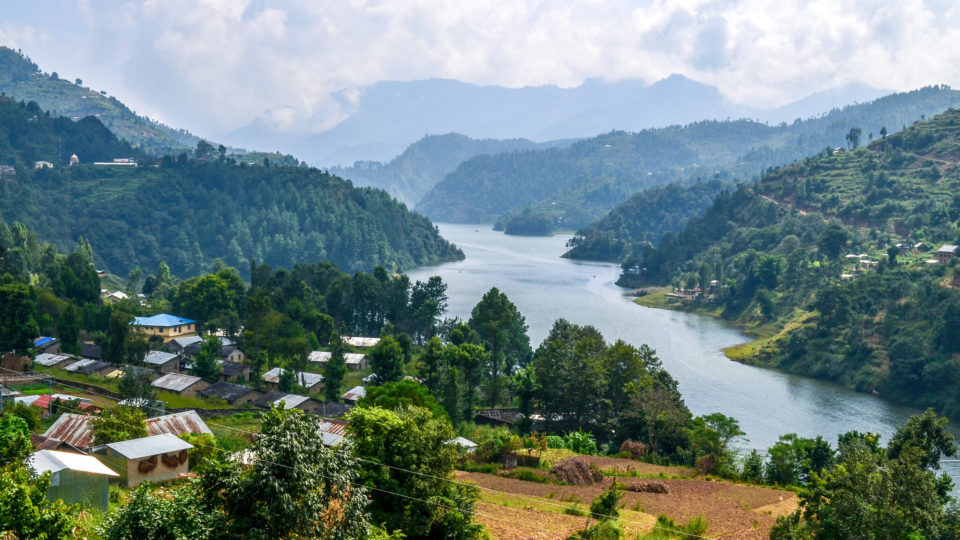
The researchers estimated that tropical tree plantings could cool regions like central Africa by as much as eight-tenths of a degree Fahrenheit. 

In contrast, planting trees at higher latitudes may have a slight warming effect.  Darker tree canopies absorb more sunlight, which can offset some of the cooling.  In some places, such as Canada and the northeastern U.S., trees may even increase fire risk.  But this does not mean trees in those regions are unhelpful.  They provide many other benefits for biodiversity, ecosystems, and the environment. 

But one thing is clear: planting trees in the tropics offers the strongest returns for the climate.

**********

Web Links

Trees in the tropics cool more, burn less

Photo, posted September 15, 2024, courtesy of Jan Helebrant via Flickr.

Earth Wise is a production of WAMC Northeast Public Radio
Tree-Planting Is Not Necessarily A Good Thing | Earth Wise

July 31, 2020 By EarthWise Leave a Comment

Tree planting is not always beneficial

There is no question that forests have a major role in efforts to combat climate change as well as to slow biodiversity loss.   As a result, tree-planting on a massive scale has gained traction as a strategy and there have been major commitments made to plant billions of trees around the world.

A new study at Stanford University has rigorously analyzed the potential effects of these efforts and has found some significant problems.  For example, the Bonn Challenge, which seeks to restore an area of forest more than eight times the size of California over the next 10 years, has 80% of its commitments in the form of  planting monoculture tree plantations or a limited mix of trees that produce fruit and rubber, rather than restoring natural forests.   The problem is that plantations have significantly less potential for carbon sequestration, habitat creation, and erosion control than natural forests.  The potential benefits of the planting dwindle further if planted trees replace natural flora – forests, grasslands, or savannahs – which are ecosystems that have evolved to support local biodiversity.

The study looked at previous policies that created subsidies for planting trees.  Chile’s Decree Law, in effect from 1974 to 2012, has served as a model for similar policies in a number of countries.  Those subsidies further reduced native forest cover by encouraging the establishment of plantations in places where forests might have naturally regenerated.  The subsidies expanded the area covered by trees, but decreased the area of native forests.

The study recommends that nations should design and enforce their forest subsidy policies to avoid undesirable ecological impacts and actually promote the recovery of carbon- and biodiversity-rich ecosystems.

**********

Web Links

Poorly designed tree-planting campaigns could do more harm than good, according to Stanford researcher and others

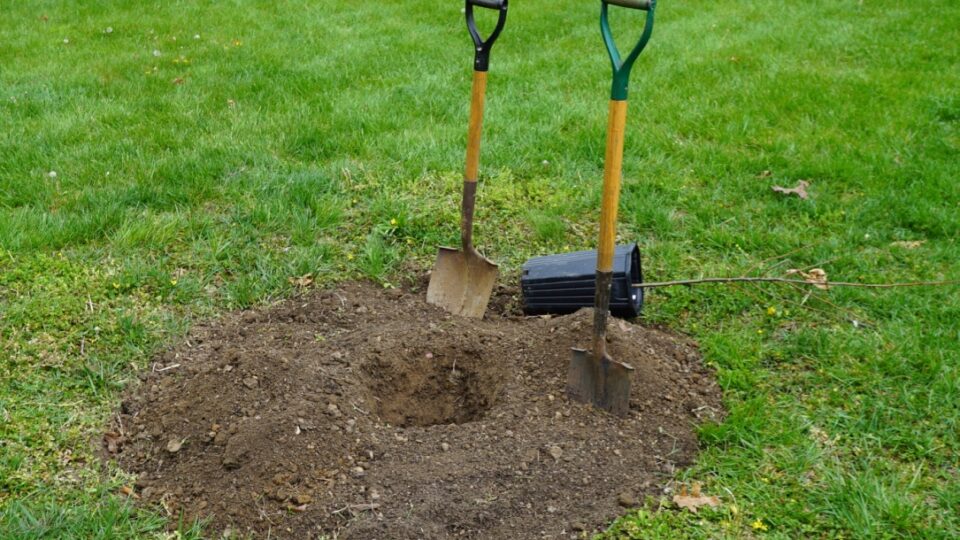
Photo, posted April 28, 2016, courtesy of the U.S. Department of State via Flickr.

Earth Wise is a production of WAMC Northeast Public Radio.

Out-Migration And Reforestation

November 4, 2019 By EarthWise Leave a Comment

A challenging global trend is that of deforestation in developing countries.  But there are places where the opposite trend is happening.  Nepal is one such place.

According to satellite imaging, in 1992 forest covered 26% of Nepal.  As of 2016, that number was 45%. 

To some extent, the forest regrowth was a result of policy changes from about three decades ago, when the government began removing management authority from bureaucrats and shifting it to local communities across the country.  This local management helped to reduce illegal logging and many local villages undertook tree-planting campaigns.

But perhaps a bigger factor at play is human migration.  In recent decades, millions of Nepalis have left the country to work in the Persian Gulf, Southeast Asia, and elsewhere.  The out-migrants wire money home and meanwhile, families left behind rely less on forest products or abandon farmland, aiding reforestation.  A 2018 study showed that the areas with the highest out-migration experience, on average, had the most forest recovery.

Globally, migration has important impacts on forests, but not always positive ones.  In many countries, forests seem to recover as people leave rural areas to work elsewhere.  El Salvador, for example, has seen a rebound of its forests as many of its rural residents move to cities or even to the United States. But in Guatemala and Nicaragua, the return of migrants bringing money they have earned overseas has led to an expansion of cattle ranching that has harmed forests.

The global relationship between migration and forests is a complicated one that depends on whether the migration is one-way or “circular” (meaning that the migrants eventually return) and how returning migrants make use of their earnings from abroad.

**********

Web Links

In Nepal, Out-Migration Is Helping Fuel a Forest Resurgence

Photo, posted September 30, 2018, courtesy of Flickr.

Earth Wise is a production of WAMC Northeast Public Radio.

Primary Sidebar

Recent Episodes

  • An uninsurable future
  • Clean energy and jobs
  • Insect declines in remote regions
  • Fossil fuel producing nations ignoring climate goals
  • Trouble for clownfishes

WAMC Northeast Public Radio

WAMC/Northeast Public Radio is a regional public radio network serving parts of seven northeastern states (more...)

Copyright © 2026 ·