• Skip to primary navigation
  • Skip to main content
  • Skip to primary sidebar

Earth Wise

A look at our changing environment.

  • Home
  • About Earth Wise
  • Where to Listen
  • All Articles
  • Show Search
Hide Search
You are here: Home / Archives for traction

traction

Self-Deicing Roads | Earth Wise

March 23, 2023 By EarthWise Leave a Comment

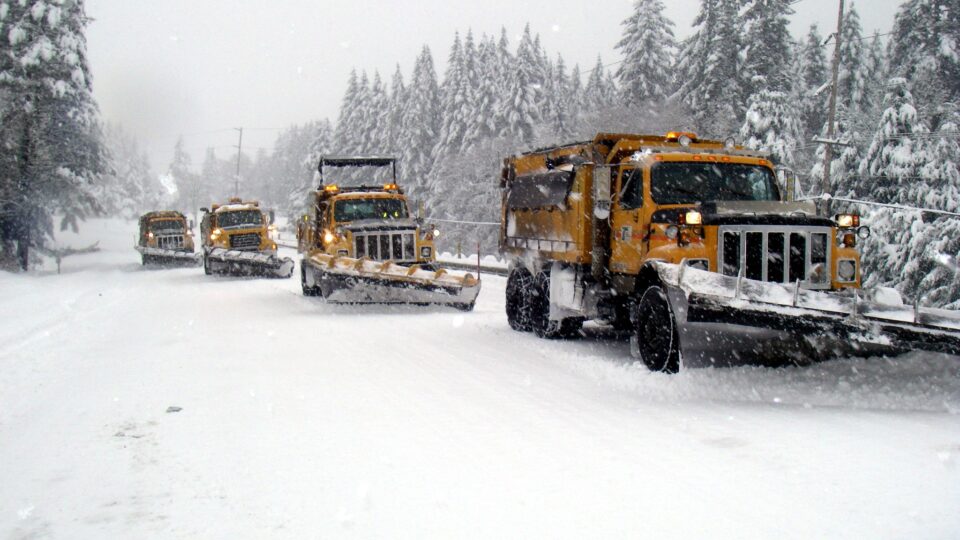
Driving on snowy or icy roads can be pretty dangerous.  That is why roads are salted or coated with sand to provide traction in icy weather.  But excessive use of these substances is bad for the environment and sometimes a storm will blow in before the roads can be coated.

In a paper published in the American Chemical Society Journal ACS Omega, researchers in China describe a method of adding microcapsules filled with a chloride-free salt mixture to the asphalt with which roads are paved.  The idea is to provide the road itself with long-term snow melting capabilities.

The researchers prepared a sodium-acetate salt and combined it with a surfactant, silicon dioxide, sodium bicarbonate, and blast furnace slag, which is a waste product from power plants.  The substances were reduced to a fine powder and then coated with a polymer solution to form tiny microcapsules.  The microcapsules were then used to replace some of the standard mineral filler in asphalt.

Lab experiments showed that the special additive lowered the freezing point of water on the asphalt to -6 degrees Fahrenheit.   The researchers estimated that a 2-inch-thick layer of the anti-icing asphalt would be effective at melting snow for seven or eight years.  A real-world pilot test of the coating on a highway offramp showed that it melted snow that fell on the road whereas an uncoated road required snow removal operations.

According to the researchers, given the cost of materials used for the coating and its potential useful lifetime, it could be a practical and economic enhancement for wintertime snow and ice removal.  Maybe we’ll someday have roads that can fairly often deice themselves. 

**********

Web Links

Keeping drivers safe with a road that can melt snow, ice on its own

Photo, posted April 8, 2007, courtesy of the Oregon Department of Transportation via Flickr.

Earth Wise is a production of WAMC Northeast Public Radio

Polar Bears and Tires | Earth Wise

January 12, 2023 By EarthWise Leave a Comment

Researchers turn to polar bear paws to find better traction

There is lots of interest in traction.  People want to find better ways to move across wet and frozen surfaces safely.   This applies to both the shoes on our feet and the tires on our cars. 

Researchers at the University of Akron along with colleagues at Syracuse University and at Bridgestone, the tire company, have been studying how many arctic animals can walk and run across the ice without slipping and falling.  Their research focused on the paws of polar bears.

Previous studies discovered that polar bears have papillae – little bumps on the pads of their feet – that provide improved traction on snow.  The new research also looked at the paws of other species of bear – brown bears and black bears – and found that these others also have papillae on their paw pads, but that those of polar bears are as much as 50% taller.  These taller bumps give the pads a 30-50% increase in frictional shear stress.

The research may lead to various applications. For example, snow tires typically have deeper treads, but the polar bear study may lead to some new designs that would improve traction.  People who do high-altitude climbing are interested in the research as are companies that deliver goods in bad weather.  Anyone who has to be out and about in bad weather would like to get a better grip.

There are various other animals with traction-improving adaptations that are probably worth studying.  These include dogs, wolves, foxes, and mountain goats.  The same researchers at Akron have also studied other animals with unique abilities to deal with challenging surfaces including geckos, spiders, and mussels.  The natural world is filled with examples of creatures who can easily function in environments that we humans find very challenging.

**********

Web Links

UA researchers’ focus on tire traction leads to investigation of polar bear paws

Photo, posted March 2, 2008, courtesy of Sam Weng via Flickr.

Earth Wise is a production of WAMC Northeast Public Radio.

Tree-Planting Is Not Necessarily A Good Thing | Earth Wise

July 31, 2020 By EarthWise Leave a Comment

Tree planting is not always beneficial

There is no question that forests have a major role in efforts to combat climate change as well as to slow biodiversity loss.   As a result, tree-planting on a massive scale has gained traction as a strategy and there have been major commitments made to plant billions of trees around the world.

A new study at Stanford University has rigorously analyzed the potential effects of these efforts and has found some significant problems.  For example, the Bonn Challenge, which seeks to restore an area of forest more than eight times the size of California over the next 10 years, has 80% of its commitments in the form of  planting monoculture tree plantations or a limited mix of trees that produce fruit and rubber, rather than restoring natural forests.   The problem is that plantations have significantly less potential for carbon sequestration, habitat creation, and erosion control than natural forests.  The potential benefits of the planting dwindle further if planted trees replace natural flora – forests, grasslands, or savannahs – which are ecosystems that have evolved to support local biodiversity.

The study looked at previous policies that created subsidies for planting trees.  Chile’s Decree Law, in effect from 1974 to 2012, has served as a model for similar policies in a number of countries.  Those subsidies further reduced native forest cover by encouraging the establishment of plantations in places where forests might have naturally regenerated.  The subsidies expanded the area covered by trees, but decreased the area of native forests.

The study recommends that nations should design and enforce their forest subsidy policies to avoid undesirable ecological impacts and actually promote the recovery of carbon- and biodiversity-rich ecosystems.

**********

Web Links

Poorly designed tree-planting campaigns could do more harm than good, according to Stanford researcher and others

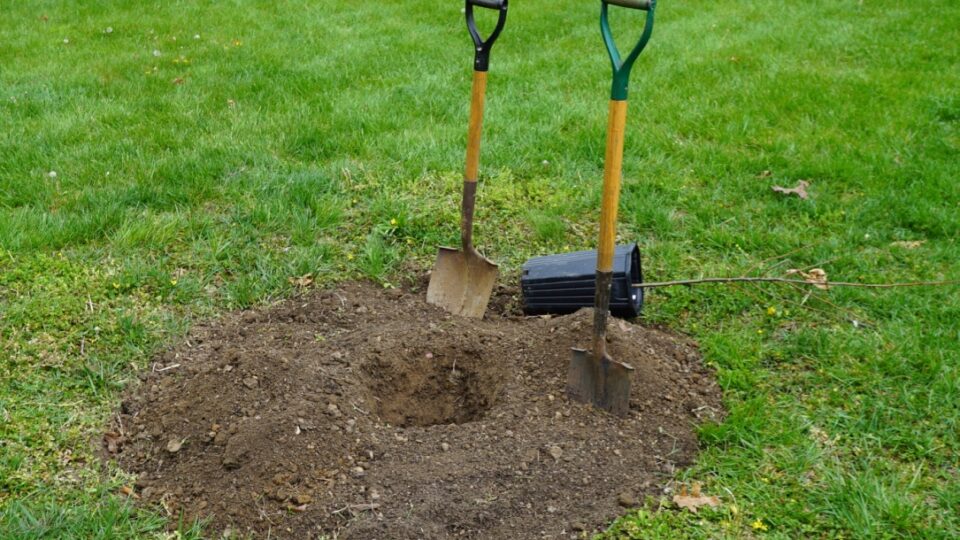
Photo, posted April 28, 2016, courtesy of the U.S. Department of State via Flickr.

Earth Wise is a production of WAMC Northeast Public Radio.

Primary Sidebar

Recent Episodes

  • An uninsurable future
  • Clean energy and jobs
  • Insect declines in remote regions
  • Fossil fuel producing nations ignoring climate goals
  • Trouble for clownfishes

WAMC Northeast Public Radio

WAMC/Northeast Public Radio is a regional public radio network serving parts of seven northeastern states (more...)

Copyright © 2026 ·