• Skip to primary navigation
  • Skip to main content
  • Skip to primary sidebar

Earth Wise

A look at our changing environment.

  • Home
  • About Earth Wise
  • Where to Listen
  • All Articles
  • Show Search
Hide Search
You are here: Home / Archives for tower

tower

New York’s first offshore wind farm

December 14, 2023 By EarthWise Leave a Comment

New York has set a target of installing 9 GW of offshore wind capacity by 2035.  The first offshore wind farm in the state – South Fork Wind – was approved by the Long Island Power Authority in 2017.  Construction began in 2022.

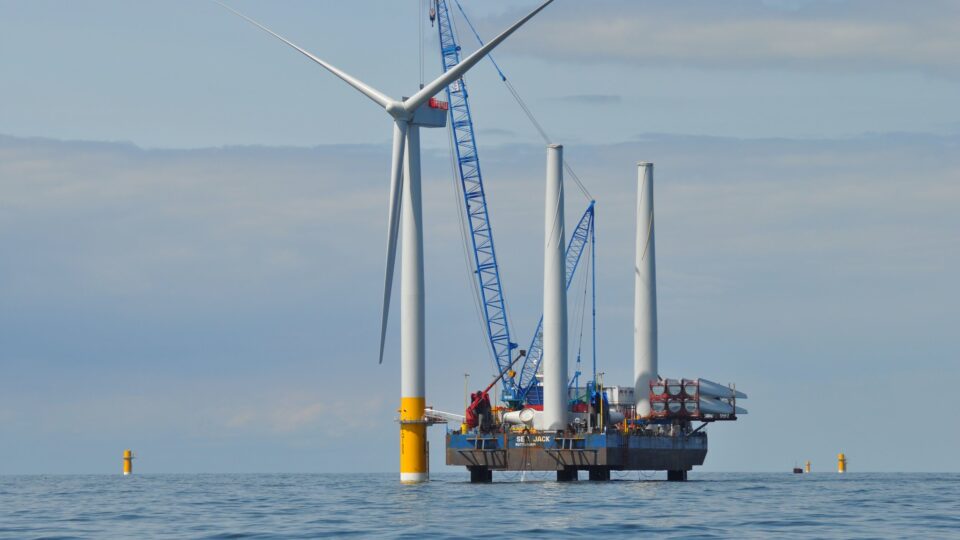
South Fork Wind Farm is a 132 MW project sited 35 miles offshore from Montauk, New York.  Early this year, the subsea power export cable was installed by Nexans, a cable and optical fiber company.  In June, the project reached its “steel in the water” milestone with the installation of the farm’s first monopile foundation.

In November, the first of South Fork Wind’s 12 Siemens Gamesa wind turbine generators was hoisted into place by the offshore construction team.  The turbines are being installed by a specialized vessel called the Aeolus.  Turbine installation involves using a crane to place the steel turbine tower onto the foundation.  The nacelle and rotor are then installed on top of the tower.  Finally, the blades are bolted one by one to the rotor.

All 12 turbines for the project are expected to be installed by the end of this year or by early 2024.

There have been setbacks for the U.S. offshore wind industry in recent times.  Two projects in New Jersey have been scrapped because of supply chain issues.   Rhode Island Energy pulled out of a project citing higher interest rates, increased expenses, and problems with tax credits.

But despite these setbacks, the industry continues to make headway.  Vineyard Wind in Massachusetts is on the precipice of delivering its first power to the grid and the pipeline of additional projects continues to grow.

**********

Web Links

First turbine installed at South Fork Wind, New York’s first offshore wind farm

Photo, posted August 7, 2013, courtesy of SSE / Department of Energy and Climate Change via Flickr.

Earth Wise is a production of WAMC Northeast Public Radio
Grid-Scale Gravity Energy Storage | Earth Wise

September 19, 2023 By EarthWise Leave a Comment

As wind and solar energy play a growing part in our energy system, the need for grid-scale energy storage is growing as well.  An historic form of energy storage and still the largest in installed capacity is pumped hydro storage, which makes use of the potential energy contained in having water sitting at a higher elevation where it can be released downward to operate turbine generators.  This is an effective system but is limited to places where geography cooperates.

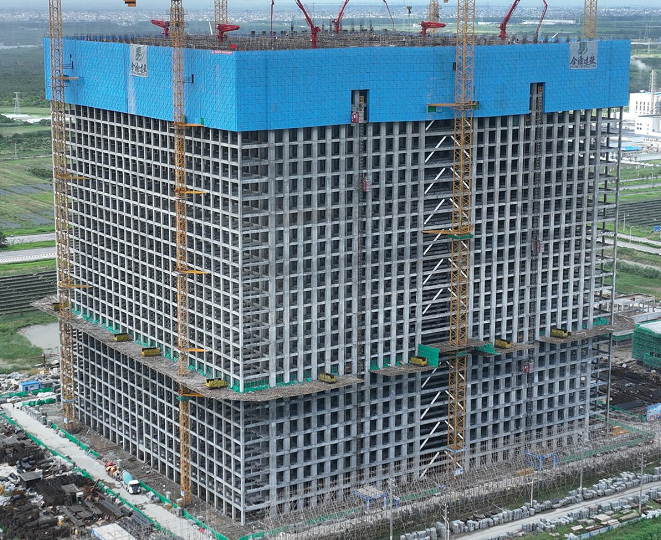
For the past five years, a company called Energy Vault has been developing a system that uses the same principle to generate electricity but instead of pumping water to a higher elevation, it uses mechanical devices to lift heavy objects such as concrete blocks to an appropriate height.  Lowering the blocks back to the ground drives generators.

To date, Energy Vault has only built demonstration systems with a fraction of the storage capacity needed for grid-scale operation. Their EV1 Tower in Switzerland was successfully grid interconnected in 2020 and demonstrated round-trip efficiency (the fraction of the energy stored that was produced by the generators) above 75%.  Their improved EVx system is expected to do better than 80%.

This year the company, along with partners Atlas Renewable and China TIanying, is now in the first phases of commissioning a grid-scale system located outside of Shanghai, China.  The 25-MW system is built adjacent to a wind farm and a national grid interconnection site

This is the first grid-scale gravity energy storage system and is expected to be fully online in the fourth quarter of this year.  A second, similar system is now under contract to be built elsewhere in China.

**********

Web Links

First grid-scale gravity energy storage system undergoes commencement in China

Photo courtesy of Energy Vault.

Earth Wise is a production of WAMC Northeast Public Radio
Mauna Loa Eruption And Climate Tracking | Earth Wise

January 9, 2023 By EarthWise Leave a Comment

Mauna Loa eruption disrupts global climate tracking

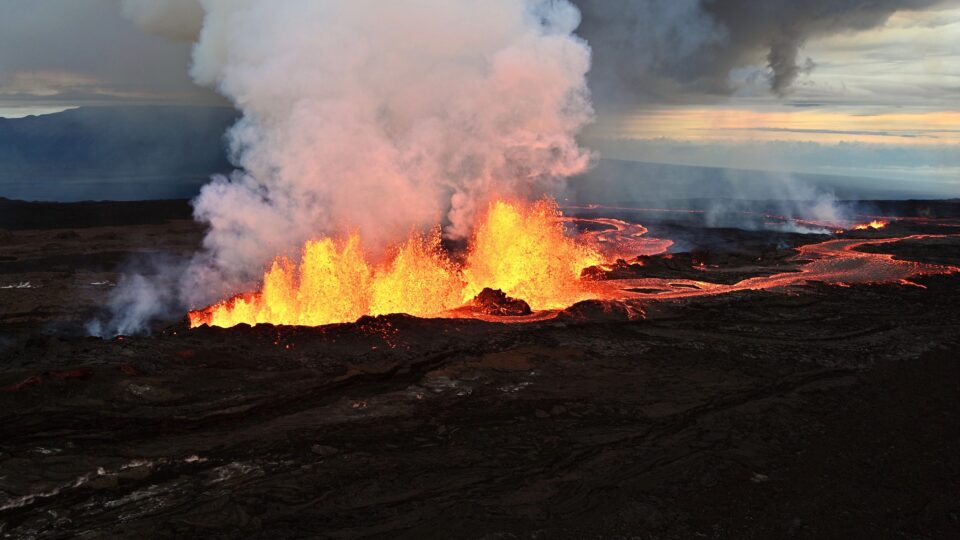
Mauna Loa, the largest active volcano in the world, erupted for the first time in nearly 40 years in late November.  A 124-foot aluminum tower at the top of the volcano has been the site of carbon dioxide measurements for over 60 years but the eruption cut off power to the site, stopping the monitoring.

Carbon dioxide measurements on Mauna Loa began in 1958.  The project was started by geochemist Charles Keeling and eventually taken over by his son Ralph Keeling upon his father’s death in 2005.  It is the longest continuous record of the rising levels of carbon dioxide in the world.

Mauna Loa is an ideal location for carbon dioxide monitoring because it is a remote location away from both carbon dioxide sources like dense population centers and roads, and carbon sinks like areas of heavy vegetation.

There are hundreds of carbon dioxide monitoring stations around the world, including more than 70 operated by the National Oceanic and Atmospheric Administration, so the interruption will not stop global recordkeeping.  But Mauna Loa holds significant symbolism as the first and most frequently sited source of carbon dioxide data.

There have been other interruptions in the measurements.  Federal budget cuts in 1964 paused them for about 3 months.  A 1984 eruption also cut off power to the facility and shut it down for about a month.

When the facility first started operating, the average carbon dioxide concentration was measured at 313 parts per million.   Most recently, levels have peaked at around 421 parts per million, the greatest concentration in at least 4 million years. 

Power will be restored to the Mauna Loa facility and its measurements will resume.

**********

Web Links

Mauna Loa Eruption Threatens a Famous Climate Record

Photo, posted November 29, 2022, courtesy of L. Gallant / USGS via Flickr.

Earth Wise is a production of WAMC Northeast Public Radio.

A Giant Solar Farm In Dubai

June 26, 2019 By EarthWise Leave a Comment

Like many places in the Middle East, Dubai made its fortune from oil.  But the Emirate’s oil resources are limited, and its economy has evolved in other directions.  Today, oil provides less than 5% of Dubai’s revenues; its economy relies on revenues from trade, tourism, aviation, real estate, and financial services.

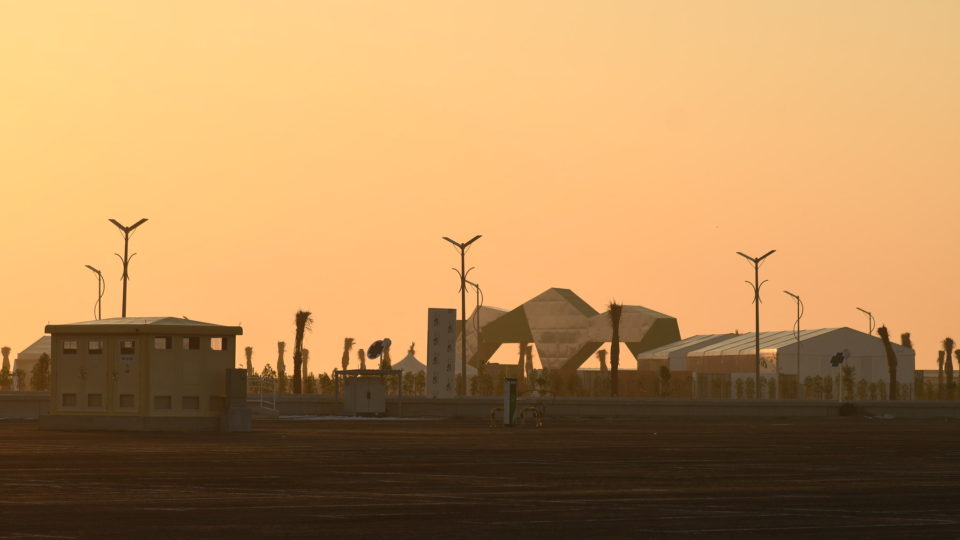
Dubai is also away from fossil fuels to meet its energy needs. A monumental construction project is underway deep within Dubai’s desert interior which will be the largest solar energy facility in the world.

The Mohammed Bin Rashid Al Maktoum Solar Park – named after Dubai’s ruler – has been under development for 7 years.  Total investment in the project will be nearly $14 billion when it is completed in 2030.  It will have a total capacity of 5,000 megawatts, enough to power 1.3 million homes.  Only some large hydroelectric power plants, the largest nuclear power plants, and a couple of Asian coal plants have more generating capacity.

Phases one and two of the project are already complete and feature more than 2 million solar panels.  Phase three – well along the way in construction – will add another 3 million solar panels and should be completed next year.

Phase four will not involve solar panels but instead will make use of the world’s tallest concentrated solar power tower.  It will use mirrors to focus sunlight at the top of the tower to heat up molten salt that will power steam turbines to generate electricity and will be able to operate long after the sun goes down.

Currently, the Tengger Desert Solar Park in China is the largest photovoltaic park in the world, but a colossal farm in India will take its place in a few years.  Big solar is getting bigger all the time.

**********

Web Links

$13.6B record-breaking solar park rises from Dubai desert

Photo, posted December 15, 2018, courtesy of Anoop S. via Flickr.

Earth Wise is a production of WAMC Northeast Public Radio.

Primary Sidebar

Recent Episodes

  • An uninsurable future
  • Clean energy and jobs
  • Insect declines in remote regions
  • Fossil fuel producing nations ignoring climate goals
  • Trouble for clownfishes

WAMC Northeast Public Radio

WAMC/Northeast Public Radio is a regional public radio network serving parts of seven northeastern states (more...)

Copyright © 2026 ·