• Skip to primary navigation
  • Skip to main content
  • Skip to primary sidebar

Earth Wise

A look at our changing environment.

  • Home
  • About Earth Wise
  • Where to Listen
  • All Articles
  • Show Search
Hide Search
You are here: Home / Archives for taxpayers

taxpayers

Saving the Great Salt Lake

January 27, 2025 By EarthWise Leave a Comment

For many years, scientists have warned that the Great Salt Lake in Utah is headed toward a catastrophic decline.  While the size of the Great Salt Lake fluctuates naturally with seasonal and long-term weather patterns, the lake has been experiencing significant and steady declines for decades.  In fact, the Great Salt Lake has lost more than 15 billion cubic yards of water over the past three decades, and it’s getting shallower at the rate of four inches a year. 

This reduction is primarily due to excessive water diversions from rivers and streams that feed into the lake for agricultural, industrial, and municipal use. These diversions, combined with prolonged drought and rising temperatures due to climate change, have significantly reduced the lake’s water level. 

According to a new study led by researchers from Oregon State University, 62% of the river water bound for the Great Salt Lake is diverted for human use, with agricultural activities responsible for nearly three-quarters of that percentage.  The analysis, which was recently published in the journal Environmental Challenges, found that reducing irrigation is necessary to save the lake. 

In order to stabilize and begin refilling the lake, the research team proposes cutting human water consumption in the Great Salt Lake’s watershed by 35%.  The researchers emphasize that farmers and ranchers facing income losses from using less water would require taxpayer-funded compensation.

The Great Salt Lake is a biodiversity hotspot, sustaining more than 10 million migratory birds.  The lake also directly supports 9,000 jobs and fuels $2.5 billion in economic activity annually. 

**********

Web Links

Reducing irrigation for livestock feed crops is needed to save Great Salt Lake, study argues

Photo, posted January 14, 2024, courtesy of Olaf Zerbock via Flickr.

Earth Wise is a production of WAMC Northeast Public Radio
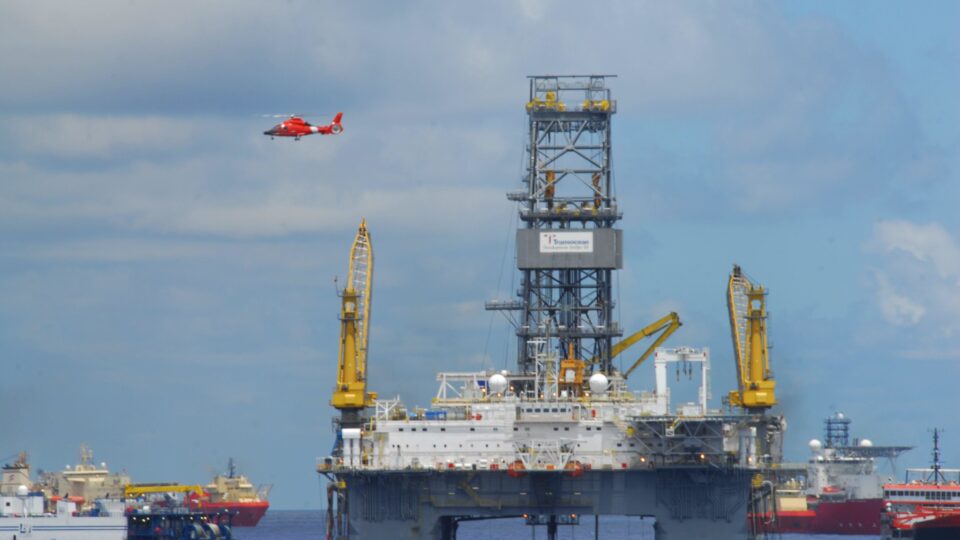
Abandoned Oil Wells In The Gulf Of Mexico | Earth Wise

June 7, 2023 By EarthWise Leave a Comment

Abandoned and unplugged oil wells pose a major risk to the environment

There have been offshore oil platforms in the Gulf of Mexico for 85 years.  After all those decades of drilling, there are now more than 14,000 old, unplugged wells out in the water, and they are at risk of springing dangerous leaks and spills.  There are now more unplugged, non-producing wells than active wells in the gulf.   According to a new study, plugging all those abandoned wells could cost more than $30 billion.

Most of these wells are in federal waters and nearly 90% of them were owned at some point by one of the so-called supermajor oil companies:  BP, Shell, Chevron, and Exxon.  Under federal law, those companies would still be responsible for cleanup costs, even if they might have sold the wells in the past.

Oil and gas companies are legally responsible for plugging wells that are no longer in service, but such companies often go bankrupt, leaving wells orphaned and unplugged and taxpayers end up footing the bill.  The 2021 trillion-dollar infrastructure bill sets aside $4.7 billion to plug orphaned wells, but that is nowhere near enough.  

It may be possible to go after the supermajors to get them to pay for plugging wells in federal waters, but it will undoubtedly be a battle.   In state waters, whose wells are generally in shallower locations, it is even more urgent to act because any pollution from the wells is more likely to reach shore and wreak environmental havoc.

As the world starts to transition away from fossil fuels, decades of mining and drilling in almost every corner of the world, including the oceans, has left behind the need for an immense plugging and cleanup effort.

**********

Web Links

Price to Plug Old Wells in Gulf of Mexico? $30 Billion, Study Says

Photo, posted July 8, 2010, courtesy of John Masson / Coast Guard via Flickr.

Earth Wise is a production of WAMC Northeast Public Radio

Electrifying The Federal Fleet | Earth Wise

October 7, 2021 By EarthWise Leave a Comment

Accelerating the electrification of the federal fleet could save billions of dollars

The federal government owns and operates about 645,000 vehicles.  Among them are about 200,000 passenger vehicles, 78,000 heavy-duty trucks, 47,000 vans, 847 ambulances, and three limousines.   About 225,000 vehicles are operated by the Postal Service.  

Each year, these vehicles are driven about 4.5 billion miles and use about 400 million gallons of gasoline, producing 3.5 million tons of greenhouse gases.

President Biden signed an executive order in January directing federal officials to devise a plan for converting the entire fleet to clean and zero-emission vehicles.  So far, the work has been slow. 

According to a new report from Atlas Public Policy, accelerating the push for electric vehicles in the federal fleet could save taxpayers billions of dollars.

Electric vehicles have lower fueling and maintenance costs as well as a smaller environmental impact.  According to the report, the government could replace 40% of its light-duty vehicles and buses not owned by the Postal Service with cheaper plug-in alternatives by 2025.  By 2030, it could replace 97% of such vehicles with EVs for a lifetime savings of more than $1 billion.  Furthermore, by 2025, it would be possible to replace nearly all mail trucks with EVs for a savings of $2.9 billion.

The federal fleet represents an opportunity to encourage transportation electrification to happen much more quickly.  Apart from the economic and environmental benefits, having an electrified federal fleet would increase public awareness of the practicality and benefits of electric vehicles.

**********

Web Links

Push to Electrify Federal Fleet Could Yield Billions in Savings by 2030

Photo, posted May 14, 2015, courtesy of Tony Webster via Flickr.

Earth Wise is a production of WAMC Northeast Public Radio.

Primary Sidebar

Recent Episodes

  • An uninsurable future
  • Clean energy and jobs
  • Insect declines in remote regions
  • Fossil fuel producing nations ignoring climate goals
  • Trouble for clownfishes

WAMC Northeast Public Radio

WAMC/Northeast Public Radio is a regional public radio network serving parts of seven northeastern states (more...)

Copyright © 2026 ·