• Skip to primary navigation
  • Skip to main content
  • Skip to primary sidebar

Earth Wise

A look at our changing environment.

  • Home
  • About Earth Wise
  • Where to Listen
  • All Articles
  • Show Search
Hide Search
You are here: Home / Archives for symbols

symbols

Artificial intelligence and lost oil wells

January 2, 2025 By EarthWise Leave a Comment

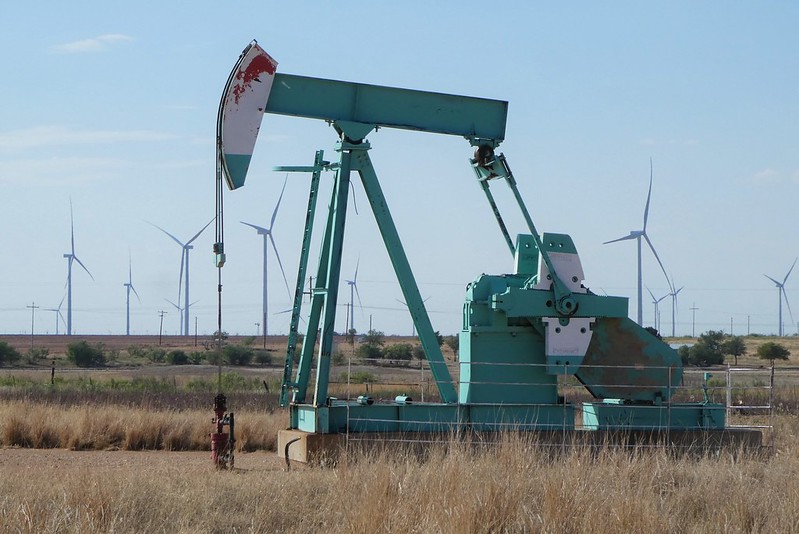
Using artificial intelligence to find lost and abandoned oil wells

There have been commercial oil and gas wells across the United States for 170 years.  Researchers estimate that there are between two and three million wells that have been abandoned.  There are hundreds of thousands of them, across 27 states, that are “orphaned,” meaning that they are uncapped, unproductive, and nobody is responsible to manage their leakage or pollution.

Many are undocumented orphaned wells – UOWs – that are not listed in formal records and are basically out of sight and out of mind.  Besides having nobody responsible for them, nobody even knows where they are.  But they are potential sources of oil and chemical leaks into nearby water sources and can send toxic substances like benzene and hydrogen sulfide into the air. 

Researchers are using modern tools like drones, laser imaging, and advanced sensors to try to locate UOWs.  But these wells are scattered over an area of more than three million square miles.

To better predict where to look for undocumented wells, researchers are combining historical topographic maps with artificial intelligence. The US Geological Survey has scanned 190,000 topographic maps made between 1884 and 2006.  AI is being used to find the symbols for oil and gas wells on the maps.  People can recognize these symbols easily, but there are just too many maps to look at.  The problem is equivalent to finding a needle in a haystack; there is just an awful lot of hay to look through.

Abandoned wells are a big problem and it will take lots of modern technology to try to solve it.

**********

Web Links

AI Helps Researchers Dig Through Old Maps to Find Lost Oil and Gas Wells

Photo, posted August 16, 2022, courtesy of Larry Syverson via Flickr.

Earth Wise is a production of WAMC Northeast Public Radio
Sequoias in Britain

April 16, 2024 By EarthWise Leave a Comment

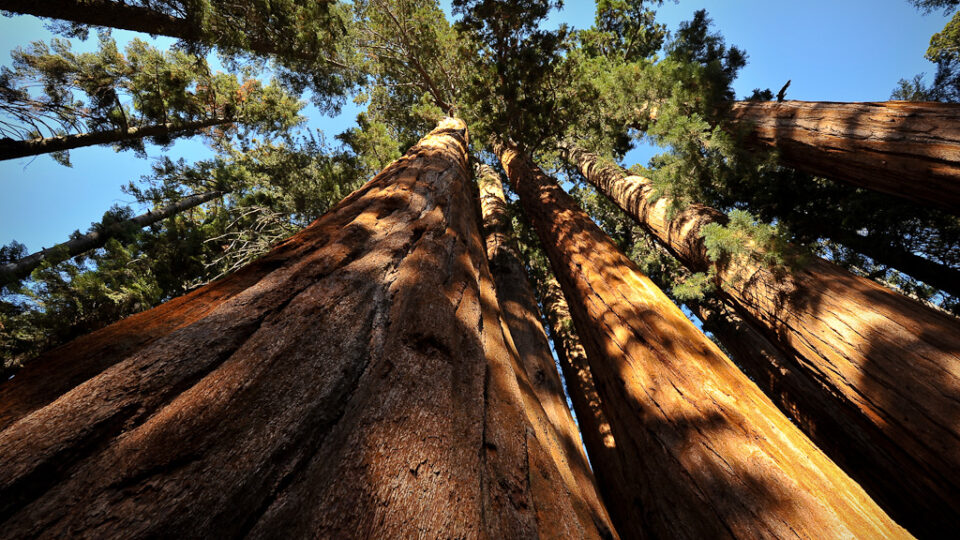
Giant sequoias are the most massive trees on earth.  They can grow as tall as nearly 300 feet and have trunk diameters from 20 to 26 feet.  They are also among the oldest living organisms on Earth; some of them are well over 3,000 years old.  The trees are native to the western slopes of the Sierra Nevada mountain range in California.

Lengthy droughts and wildfires have been pushing giant sequoias in California into decline.  Up to 20% of all large giant sequoias in California died in wildfires in 2020 and 2021.  There are estimated to be only about 80,000 remaining in the native groves in the Sierra Nevada.  These old-growth forests are very much in jeopardy and represent rare ecosystems of considerable ecological and historical value.

Giant sequoias have been planted in many places around the world.  They were introduced to country estates in Britain during the 19th century.  They were seen as symbols of wealth and power.  Over time, they have been widely planted in parks and woodlands.   As a result, there are now half a million giant sequoias growing in Britain and they are thriving there.

The British sequoias are rather young by sequoia standards, so they are relatively squat in stature.  The tallest of them measures about 180 feet.  But recent research, published in the journal Royal Society Science, found that in Britain’s cool and mild climate, the trees are growing nearly as fast as they do in California. 

The British sequoias are probably more important for their aesthetic and historical interest than their impact on the environment, but it is good to know they are there.

**********

Web Links

Under Threat in Their Native California, Giant Sequoias Are Thriving in Britain

Photo, posted November 4, 2010, courtesy of John Buie via Flickr.

Earth Wise is a production of WAMC Northeast Public Radio

Phasing Out Disposables | Earth Wise      

May 5, 2022 By EarthWise Leave a Comment

Starbucks plans to phase out disposables

Humans generate a remarkable amount of garbage.  According to the World Bank, humans produce 4.5 trillion pounds of trash every year, with at least 33% of this garbage not managed in an environmentally-safe manner. By 2050, global garbage generation is expected to reach nearly 7.5 trillion pounds a year. 

Globally, an average of 1.6 lbs of waste is generated per person per day.  While high-income countries only account for 16% of the global population, they are responsible for about 34% of the world’s waste. 

But almost everything humans throw away was bought from a company.   Whether it was the packaging or the product itself, we purchased it from somewhere.  There’s a growing movement to hold the companies responsible for the trash they produce. 

Faced with increasing consumer consciousness, many companies are stepping up and announcing initiatives to reduce their waste.  Starbucks is one of them.  The company’s white logo-emblazoned paper cups and clear plastic cups are instantly recognizable symbols of the brand.  But these ubiquitous cups are disposable and also serve as a symbol of our throwaway society. 

By the end of next year, Starbucks is planning to allow customers to use their own personal mugs at every location in the U.S. and Canada.  By 2025, the company wants every customer to be able to use either their own mug or to borrow a ceramic or reusable to-go mug.  This borrow-a-mug program is currently being tested in eight different markets around the globe. 

In lieu of regulation mandating corporate responsibility for waste, we will have to hope that more companies do the right thing.

**********

Web Links

Starbucks is planning to phase out its iconic cups

Photo, posted June 11, 2010, courtesy of Sunghwan Yoon via Flickr.

Earth Wise is a production of WAMC Northeast Public Radio.

Primary Sidebar

Recent Episodes

  • An uninsurable future
  • Clean energy and jobs
  • Insect declines in remote regions
  • Fossil fuel producing nations ignoring climate goals
  • Trouble for clownfishes

WAMC Northeast Public Radio

WAMC/Northeast Public Radio is a regional public radio network serving parts of seven northeastern states (more...)

Copyright © 2025 ·