• Skip to primary navigation
  • Skip to main content
  • Skip to primary sidebar

Earth Wise

A look at our changing environment.

  • Home
  • About Earth Wise
  • Where to Listen
  • All Articles
  • Show Search
Hide Search
You are here: Home / Archives for sulfur dioxide

sulfur dioxide

Renegade geoengineering

October 30, 2024 By EarthWise Leave a Comment

Geoengineering inc

As the dangers of climate change continue to grow, so has interest in geoengineering – deliberate tinkering with the earth’s climate system.  In particular, stratospheric solar geoengineering – releasing aerosols into the stratosphere to reduce the amount of heat from the sun reaching the Earth – is attracting increasing interest.  Scientists at Harvard, Cornell, Colorado State, Princeton, and the University of Chicago are all researching the topic.

Actually doing it on a scale that matters is fraught with peril from unintended consequences of disrupting the delicate interactions between the Earth’s atmosphere, ocean, land, and sea ice. 

Meanwhile, a tiny start-up company in Silicon Valley has raised more than a million dollars in venture capital and is busy releasing balloons full of sulfur dioxide into the atmosphere in the name of combatting global warming.  Furthermore, they are selling so-called “cooling credits” to customers who want to offset their personal carbon emissions.

The aerosol being released is on such a small scale that it can’t possibly have a meaningful effect on temperatures.  There really isn’t scientific analysis guiding or accompanying the work. 

There are no laws prohibiting the dispersal of small amounts of sulfur dioxide in California.  Even if there were, these people could go offshore or elsewhere to do their work.  But this renegade geoengineering highlights a serious issue; namely, that there doesn’t have to be scientific, political, or any other kind of consensus for someone to undertake a potentially catastrophic attempt to alter the climate.  It’s a real worry.

**********

Web Links

Silicon Valley Renegades Pollute the Sky to Save the Planet

Photo, posted September 24, 2006, courtesy of Doc Searls via Flickr.

Earth Wise is a production of WAMC Northeast Public Radio
Pollution in downwind states

August 26, 2024 By EarthWise Leave a Comment

Pollution in downwind states

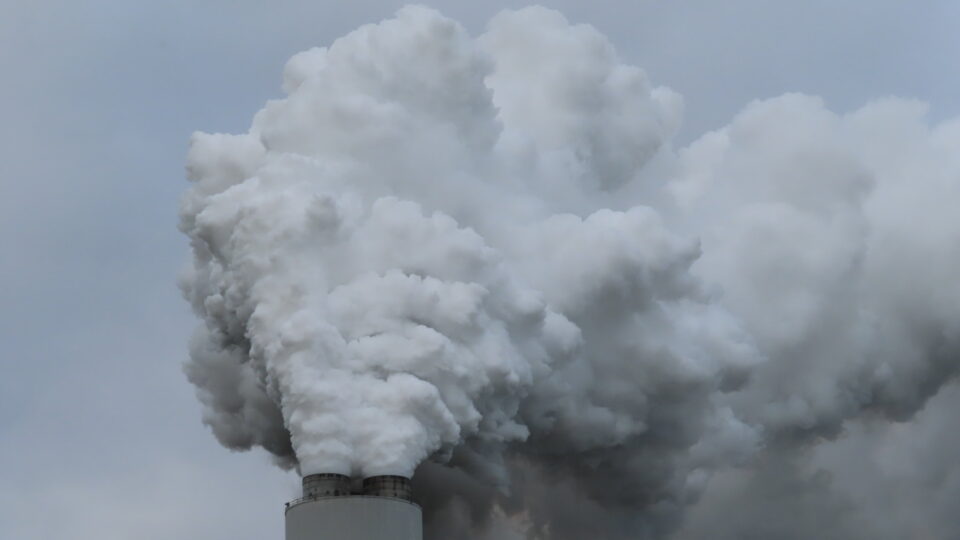
Air pollution is a serious health threat.  It is associated with asthma and can lead to chronic disease, cancer, and premature death.  Globally, air pollution kills 7 to 9 million people, and 200,000 Americans die from it each year.

There are multiple sources of air pollution including automobiles, power plants, and other industrial activities.  Exposure to pollutants such as nitrogen oxide, sulfur dioxide, and particulate matter does not require living or working near their sources.  Winds can carry pollution great distances including across state lines.  

The Clean Air Act included the EPA’s “Good Neighbor Plan”, which requires “upwind” states to implement plans to reduce emissions from power plants and other industrial sources.  However, three states – Indiana, Ohio, and West Virginia – along with various industrial companies and trade organizations sued the EPA when it tried to enforce these plans.  A recent Supreme Court decision to block a federal rule curbing interstate air pollution further complicates efforts to reduce emissions.

As a result, there is a disproportionate burden on downwind states.  They face major challenges in demonstrating and attributing air pollution to sources across state lines and pursuing legal actions to get the EPA to address their problems.

A recent study by the University of Notre Dame looking at all the complex issues related to interstate pollution underscored how the regulatory system continues to be hamstrung when attempting to address a serious threat to human health and the environment.

**********

Web Links

Downwind states face disproportionate burden of air pollution

Photo, posted February 19, 2021, courtesy of David Wilson via Flickr.

Earth Wise is a production of WAMC Northeast Public Radio

A brief bout of bad air in Scotland

July 3, 2024 By EarthWise Leave a Comment

Explaining a brief period of poor air in Scotland

Scotland, and the UK in general, used to suffer from sulfur dioxide pollution.  Industrial and domestic emissions, especially from burning coal, contributed heavily to urban air leading to the London smog of the 1950s and the acid rain of the 1980s.  But national air pollution agreements and various international measures have been highly successful in reducing sulfur dioxide emissions.  Desulfurization of coal-fired powerplants and the introduction of ultralow sulfur fuels among other measures have decreased sulfur dioxide emission by 98% since 1970. 

As a result, it came as quite a surprise on May 31st when Edinburgh saw sulfur dioxide levels higher than had been observed in over 30 years.  The levels greatly exceeded air quality objectives for 10 hours with concentrations even creeping towards workplace exposure limits.

What happened?  For once, it was nothing that people did.  Two days earlier, a volcanic fissure eruption took place in the Reykjanes Peninsula in Iceland, some 850 miles from Edinburgh.  Because of an unusual meteorological configuration, the prevailing winds sent the plume of volcanic gases southward towards Scotland.  Had the eruption taken place 60 miles further north or happened a few hours later, the plume of gases would have missed the UK entirely and would have traveled north to the Arctic region.

Icelandic volcanic eruptions have impacted air travel in Europe on a number of occasions.  This non-explosive eruption had little impact outside of its local region, but it turned out to briefly wreak havoc in Scotland.  Fortunately, this pollution event was short-lived.

**********

Web Links

Atmospheric sulphur dioxide levels reach historic high in Scotland following Icelandic volcano eruption

Photo, posted November 17, 2021, courtesy of Catherine Poh Huay Tan via Flickr.

Earth Wise is a production of WAMC Northeast Public Radio

Geoengineering could create winners and losers

November 13, 2023 By EarthWise Leave a Comment

Geoengineering – deliberate interventions to alter the climate and curb climate change – is a controversial topic, to say the least.  Once practically considered taboo even to discuss, there in increasing interest in at least exploring various ideas about how to halt or reverse climate change through direct actions that impact global temperatures.

Putting aside the very real concerns about the risks and dangers associated with such action, there is also the issue that climate interventions may create dramatically different effects across the globe, benefitting some areas and adversely affecting others.

A recent study by scientists at Rutgers University tackled this very issue.  Published in the journal Nature Food, it described the results of computer models simulating the impacts of stratospheric aerosol intervention (SAI), which is spraying sulfur dioxide into the stratosphere, where it would partially shield the Earth from the Sun, lowering temperatures.

The study looked at 11 different SAI scenarios and found that none of them benefitted everyone.  Uncontrolled global warming favors crop production in cold, high-latitude areas such as Canada, Russia, Scandinavia, and our northern border states.  Moderate amounts of SAI favors food production in the mid-latitudes (such as in the US and Europe.)  Large amounts of intervention favors agricultural production in the tropics. 

Even if geoengineering might not have dire consequences – which is by no means certain – it would create winners and losers.  Nations may have different ideas of what constitutes an optimal global temperature.  So, who gets to decide where to set the global thermostat?  The prospects for conflict loom large. 

**********

Web Links

Climate Intervention Technologies May Create Winners and Losers in World Food Supply

Photo, posted November 18, 2021, courtesy of Conall via Flickr.

Earth Wise is a production of WAMC Northeast Public Radio
What’s The Best Way To Reduce Emissions? | Earth Wise

April 1, 2021 By EarthWise Leave a Comment

Taxing carbon is the best solution to climate change

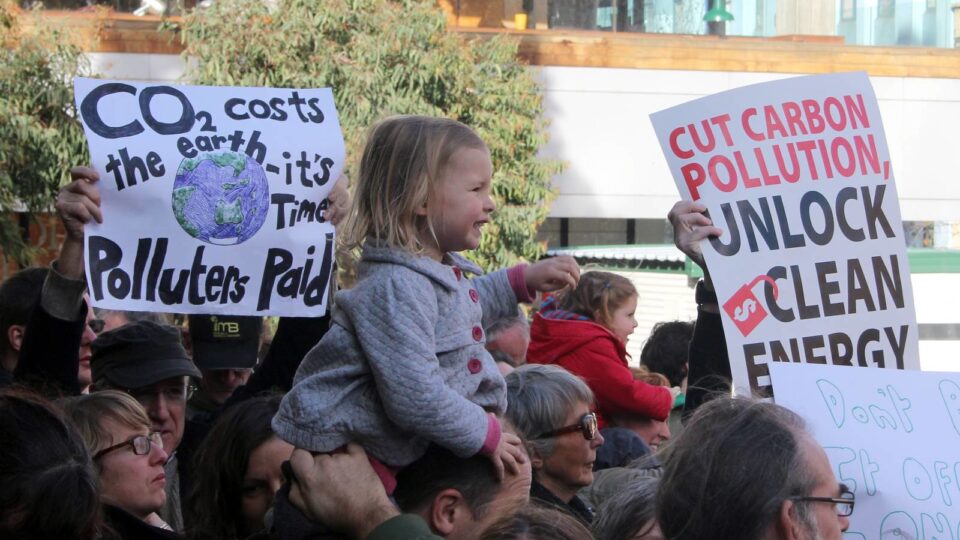
A carbon tax is a fee imposed on the burning of carbon-based fuels, like coal, oil, and gas.  It’s one way to make the users of carbon fuels pay for the climate damage caused by releasing carbon dioxide into the atmosphere. 

According to a new study by researchers at Ohio State University, putting a price on producing carbon is the cheapest and most efficient policy change that legislators can make in order to reduce climate change-causing emissions. 

The case study, which was recently published in the journal Current Sustainable/Renewable Energy Reports, looked at the impact that a variety of policy changes would have on reducing carbon dioxide emissions from electricity generation in Texas. The researchers found that assigning a price to carbon, based on the cost of climate change, was most effective. 

The study did not look at how policy changes might affect the reliability of the Texas power system, an important consideration after the failure of the state’s power grid following winter storms in February. 

But the study did examine other policies and found that they were either more expensive or not as effective, including mandates that a certain amount of energy in a portfolio come from renewable sources.  Subsidizing renewable energy sources was also found to be less effective. 

According to researchers, market-based solutions have previously proven effective combating environmental issues.  For example, a cap-and-trade approach was used to reduce levels of sulfur dioxide, one of the chemicals that causes acid rain. 

For the sake of the climate, we should probably tax carbon. 

**********

Web Links

Want to cut emissions that cause climate change? Tax carbon

What’s a carbon tax?

Photo, posted June 5, 2011, courtesy of John Englart via Flickr.

Earth Wise is a production of WAMC Northeast Public Radio.

Cleaner Air For China

December 5, 2018 By EarthWise Leave a Comment

https://earthwiseradio.org/wp-content/uploads/2018/12/EW-12-05-18-Cleaner-Air-for-China.mp3

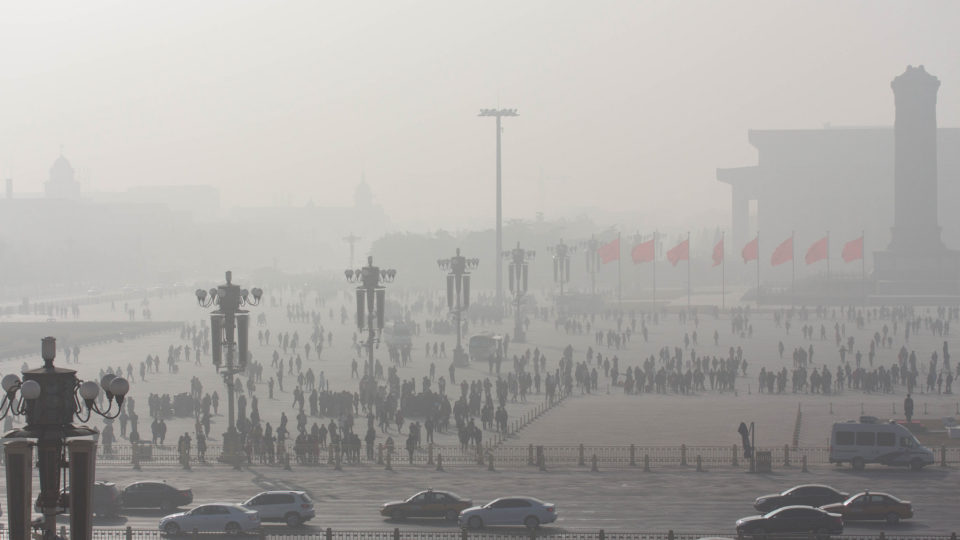
For more than 15 years, the Chinese government has been grappling with some of the deadliest air pollution in the world.  Extreme pollution events are a regular wintertime occurrence and health experts estimate that more than a million people die each year in China from particulate air pollution.

[Read more…] about Cleaner Air For China

A Soy-Based Air Filter

February 16, 2017 By EarthWise

https://earthwiseradio.org/wp-content/uploads/2017/02/EW-02-16-17-Soy-Based-Air-Filter.mp3

Particulate matter and toxic chemical pollutants are a pervasive problem in the air people breathe in many places.  Poor air quality causes health problems worldwide and is a factor in diseases such as asthma, heart disease and lung disease.

[Read more…] about A Soy-Based Air Filter

Primary Sidebar

Recent Episodes

  • An uninsurable future
  • Clean energy and jobs
  • Insect declines in remote regions
  • Fossil fuel producing nations ignoring climate goals
  • Trouble for clownfishes

WAMC Northeast Public Radio

WAMC/Northeast Public Radio is a regional public radio network serving parts of seven northeastern states (more...)

Copyright © 2026 ·