• Skip to primary navigation
  • Skip to main content
  • Skip to primary sidebar

Earth Wise

A look at our changing environment.

  • Home
  • About Earth Wise
  • Where to Listen
  • All Articles
  • Show Search
Hide Search
You are here: Home / Archives for substances

substances

Are today’s refrigerants safe?

March 21, 2025 By EarthWise Leave a Comment

The refrigerants being used today may not be safe

Refrigeration is based on heat transfer mediums that absorb heat from the area being cooled and transfer it to the outside environment.

The earliest refrigerants were dangerous substances like ammonia.  In the 1930s, chlorofluorocarbons (CFCs) like Freon became the standard refrigerant for use in refrigeration systems and even in aerosol cans.  When these substances were found to be depleting the earth’s ozone layer, the Montreal Protocol dictated their phaseout and by the mid-1990s, CFCs were largely replaced by hydrofluorocarbons (HFCs).

HFCs don’t deplete the ozone layer, but they were eventually determined to be potent greenhouse gases, thousands of times more planet-warming than carbon dioxide.   As a result, the global phaseout of HFCs began in 2016, and have been increasingly replaced by hydrofluoroolefins (HFOs), which are considered a more environmentally-friendly alternative to all their predecessors.

Trying to not be surprised by additional unpleasant discoveries about refrigerants, researchers are studying the potential environmental impacts of HFOs.  Researchers at the University of New South Wales in Australia have found that HFOs can break down in the atmosphere and that some small amounts of the resultant products are in fact fluoroforms, which are the HFC with the greatest global warming potential and can stay in the atmosphere for up to 200 years.

That only a small amount of HFC gets into the atmosphere is good, but nevertheless it reveals that the consequences of replacing widely-used chemicals are not a simple matter to determine.

**********

Web Links

Are our refrigerants safe? The lingering questions about the chemicals keeping us cool

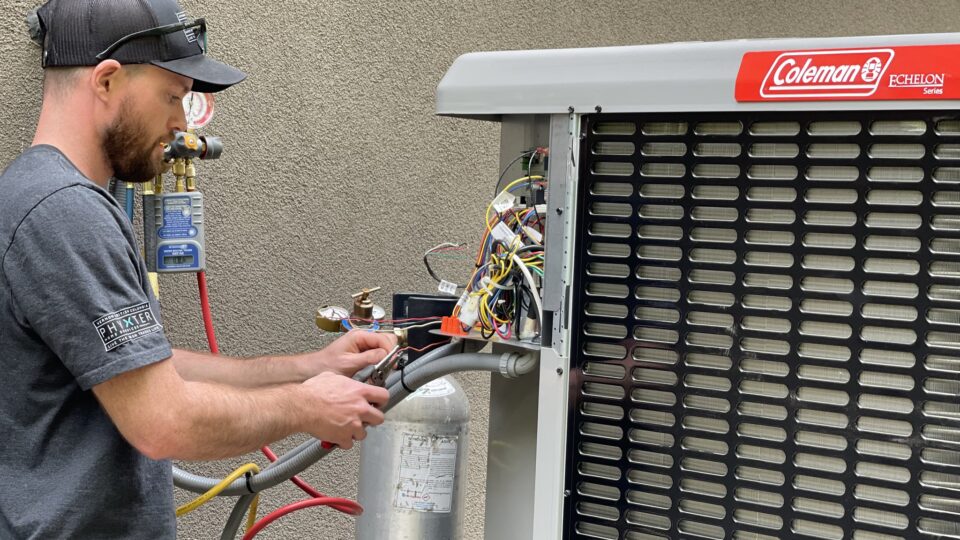
Photo, posted July 19, 2021, courtesy of Vernon Air Conditioning via Flickr.

Earth Wise is a production of WAMC Northeast Public Radio

Ocean geoengineering

October 24, 2024 By EarthWise Leave a Comment

A start-up company is exploring ocean geoengineering

As greenhouse gas emissions continue to be dangerously large and the perils of climate change are increasingly apparent, the world is increasingly exploring ways to deliberately intervene in climate systems.  A number of these ideas involve introducing substances into the atmosphere, but there are also ways to tinker with the oceans.

The oceans naturally absorb about a third of the carbon dioxide that humans pump into the atmosphere, mostly by burning coal, gas, and oil.  People are exploring ways to get the ocean to take up even more of the carbon dioxide.  One approach that is gaining traction is known as alkalinity enhancement.  By adding limestone, magnesium oxide, or other alkaline substances to rivers and oceans, it changes their chemistry and makes them soak up more carbon dioxide.

This approach has been around for a while as a way to mitigate acid rain in rivers and has been very successful.  A start-up company in Canada called CarbonRun is building a machine that grinds up limestone and will release the powder it produces into a local river in Nova Scotia.  The limestone in the river will be naturally converted into a stable molecule that will eventually be washed into the seas, where it should remain for thousands of years.

Expanding this approach to oceans faces many challenges including the costs and complexities of obtaining, processing, and transporting vast amounts of limestone to where it is to be released.  There are also potential environmental issues to grapple with.  But CarbonRun and others are moving forward with testing the approach.

In any event, the biggest barrier to ocean alkalinity enhancement is proving that it works.  That effort is underway.

**********

Web Links

They’ve Got a Plan to Fight Global Warming. It Could Alter the Oceans.

Photo, posted May 27, 2007, courtesy of John Loo via Flickr.

Earth Wise is a production of WAMC Northeast Public Radio

Cleaning Up Forever Chemicals | Earth Wise

August 29, 2022 By EarthWise Leave a Comment

New technology to help clean up forever chemicals

PFAS, per- and polyfluoroalkyl substances, are chemical pollutants that threaten human health and ecosystem sustainability.  They are used in a wide range of applications including food wrappers and packaging, dental floss, firefighting foam, nonstick cookware, textiles, and electronics.  Over decades, these manufactured chemicals have leached into our soil, air, and water.  Chemical bonds in PFAS molecules are some of the strongest known, so the substances do not degrade easily in the environment.

Studies have shown that at certain levels, PFAS chemicals can be harmful to humans and wildlife and have been associated with a wide variety of health problems.

Currently, the primary way to dispose of PFAS chemicals is to burn them, which is an expensive multistep process.  Even trace levels are toxic, so when they occur in water in low amounts, they need to be concentrated in order to be destroyed.

Researchers at Texas A&M University have developed a novel bioremediation technology for cleaning up PFAS.  It uses a plant-derived material to absorb the PFAS which is then eliminated by microbial fungi that literally eat the forever chemicals.

The sustainable plant material serves as a framework to adsorb the PFAS.  That material containing the adsorbed PFAS serves as food for the fungus.  Once the fungus has eaten it, the PFAS is gone. 

The EPA has established a nationwide program to monitor the occurrence and levels of PFAS in public water systems and is considering adding PFAS threshold levels to drinking water standards.  If this happens, the technology developed at Texas A&M may become an essential part of municipal water systems.

**********

Web Links

Texas A&M AgriLife develops new bioremediation material to clean up ‘forever chemicals’

Photo, posted August 10, 2013, courtesy of Mike Mozart via Flickr.

Earth Wise is a production of WAMC Northeast Public Radio.

Fuel From Lignin | Earth Wise

November 26, 2020 By EarthWise Leave a Comment

Lignin as a fuel

Lignin is an organic polymer that provides the rigid structure of plants and is what gives wood and bark their characteristic properties.  Lignin typically comprises between 20 and 35% of the mass of wood.  The two major substances extracted from trees, grasses, and other biomass materials are cellulose and lignin.  Cellulose is used to make paper, bioethanol, and other products, but lignin is largely unused because it is difficult to break down into useful substances such as feedstocks for fuels.  As a result, lignin is largely wasted.  Worldwide, some 50 million tons of lignin are produced from paper and bioethanol manufacturing each year and almost all of that is simply burned to generate heat.

Lignin can be broken down using pyrolysis techniques at high temperatures to create bio-oils, but those oils lack sufficient hydrogen and contain too much oxygen to be useful as fuels.  There is a process called hydrodeoxygenation that adds hydrogen and removes oxygen, but it requires high temperatures and very high pressures as well as producing char and tar that reduces the efficiency of the process.

Researchers at Georgia Tech recently published work describing a new process for turning lignin into useful products.  They developed a dual catalyst system of super-acid and platinum particles that adds hydrogen and removes oxygen from lignin bio-oil and makes it useful as a fuel and source of chemical feedstocks. 

The new process could help meet the growing demand for bio-based oils as well as helping the forest product, paper, and bioethanol industries by providing an additional revenue stream from what previously was a waste product.

**********

Web Links

New Process Boosts Lignin Bio-oil as a Next-Generation Fuel

Photo, posted August 16, 2017, courtesy of evcabartakova via Flickr.

Earth Wise is a production of WAMC Northeast Public Radio.

Better Paint For Cooler Buildings | Earth Wise

August 20, 2020 By EarthWise 2 Comments

white paints help keep buildings cool

A research team led by scientists at UCLA have developed a super-white paint that reflects as much as 98% of incoming heat from the sun.  Such paint, if used on rooftops and other parts of buildings, could have a major impact on reducing the costs of keeping buildings cool.

Passive daytime radiative cooling is a well-known method to keep buildings cooler.  By having building surfaces reflect sunlight and radiate heat into space, building temperatures can be significantly lowered.  This in turn cuts down on air conditioner use and associated carbon emissions.

A roof painted white will result in lower indoor temperatures than a darker roof.  But a white roof will do even more:  it can reject heat at infrared wavelengths that are invisible to our eyes.  This results in even more radiative cooling.

The best performing white paints currently available reflect about 85% of incoming solar radiation.  The rest is absorbed by materials in the paint.  The new research has identified simple modifications in paint ingredients that lead to a major increase in reflectivity.

Current reflective white paints use titanium dioxide, which absorbs UV radiation and therefore heats up under sunlight.  The researchers studied replacing it with other substances such as barite – an artist’s pigment – or with powdered Teflon, both of which allow the paint to reflect more of the sun’s radiation. 

Many cities are encouraging the use of cool-roof technologies on new buildings.  Using the most reflective coatings possible on rooftops, if applied on a sufficiently large scale, could have a real impact on climate change as well as saving significant amounts of energy used for running air conditioners in buildings.

**********

Web Links

UCLA-led Team Develops Ways to Keep Buildings Cool with Improved Super White Paints

Photo, posted August 15, 2012, courtesy of Flickr.

Earth Wise is a production of WAMC Northeast Public Radio.

Safer Disposal Of Printed Circuit Boards | Earth Wise

March 4, 2020 By EarthWise Leave a Comment

Disposing of Printed Circuit Boards More Safely

Printed circuit boards are key elements of modern electronic devices that support and connect all of their electronic components.  On average, they are composed of 30% metallic and 70% nonmetallic substances.

Once the circuit boards have served their purpose, they are often burned or buried in landfills, and can pollute the air, soil, and water.  The biggest problem is that they have brominated flame retardants added to them in order to keep them from catching fire.  Compounds in brominated flame retardants have been linked to endocrine disorders and fetal tissue damage.

Many circuit boards are recycled to recover valuable materials – generally the metals they contain.  But recycling has its own problems.  Metallic components can be recovered from crushed circuit boards by magnetic and high-voltage electrostatic separations.  When the metals are removed, what remains are resins, reinforcing materials, brominated flame retardants, and other additives, which are of little value and present various dangers.

Researchers at Sun Yat-sen University in China have developed a ball-milling method to break down these potentially harmful compounds, enabling safe disposal.  A ball mill is a rotating machine that uses small agate balls to grind up materials. The researchers also added iron powder, which helps remove bromine from organic compounds by breaking the carbon-bromine bonds in the flame retardants.  The result was particles with half of their bromine content removed as well as decomposition of phenolic resin compounds.

The ever-increasing proliferation of device technology had led to a new set of pollution and waste challenges facing society.  Research on ways to reduce the impact of high-tech garbage is an important need for society.

**********

Web Links

Toward safer disposal of printed circuit boards

Photo, posted February 18, 2018, courtesy of Diego Torres Silvestre via Flickr.

Earth Wise is a production of WAMC Northeast Public Radio.

Primary Sidebar

Recent Episodes

  • An uninsurable future
  • Clean energy and jobs
  • Insect declines in remote regions
  • Fossil fuel producing nations ignoring climate goals
  • Trouble for clownfishes

WAMC Northeast Public Radio

WAMC/Northeast Public Radio is a regional public radio network serving parts of seven northeastern states (more...)

Copyright © 2026 ·