• Skip to primary navigation
  • Skip to main content
  • Skip to primary sidebar

Earth Wise

A look at our changing environment.

  • Home
  • About Earth Wise
  • Where to Listen
  • All Articles
  • Show Search
Hide Search
You are here: Home / Archives for strength

strength

Deconstructing buildings

July 24, 2025 By EarthWise Leave a Comment

Deconstructing buildings to reduce waste

An estimated 30 million tons of wood waste from construction and demolition in the U.S. ends up in landfills each year.  A growing number of cities have launched initiatives to reuse the wood instead.  It is a strategy to reduce carbon emissions, cut waste, and shift towards a circular economy.

For a long time, salvaged wood was a niche pursuit by people who valued the fine grain and enduring quality of older wood.  Reclaimed old-growth lumber offers character and strength.  These people pursued construction that uses wood with a story – timber recovered from historic structures, collapsing barns, and other demolished buildings.

Now, there are multiple companies in the business of salvaging wood from buildings.  Cities and businesses are embracing the use of reclaimed materials.   Ordinances in cities like Portland, Oregon, Boulder, Colorado, and San Antonio, Texas require older buildings to be taken apart for repurposing their materials.  Palo Alto, California has banned demolition completely. 

Portland was the first U.S. city to require old residential homes to be deconstructed.  After a decade, contractors have deconstructed more than 650 homes in the city, salvaging 2,000 tons of reusable wood.

Using reclaimed wood in local buildings stores carbon and reduces emissions by avoiding the need to cut new trees, process materials, and ship them long distances.

Deconstructing buildings is not a widely available skill.  Contractors have to be trained on how to dismantle buildings piece by piece.  But there is now a national registry of deconstruction trainers and a network of practitioners.

**********

Web Links

Deconstructing Buildings: The Quest for New Life for Old Wood

Photo, posted May 16, 2018, courtesy of Alexandre Prevot via Flickr.

Earth Wise is a production of WAMC Northeast Public Radio

Polar bear population decline

March 13, 2025 By EarthWise Leave a Comment

Researchers from the University of Toronto have directly linked the population decline in polar bears living in Canada’s Western Hudson Bay to climate change.  Between 1979 and 2021, the polar bear population in this region has declined by nearly 50%.

The monitoring data over this period shows that the average size of polar bears has declined, the size of cub litters has dropped, and cub survival rates are reduced.

The primary factor is the declining amount and duration of sea ice.  When there is less ice, bears have less feeding time and less energy overall.  The loss of sea ice means that bears spend less time hunting seals and more time fasting on land.  The lack of food leads to reduced reproduction, cub survival, and, ultimately, population decline. 

The average body mass of adult females has dropped by 86 pounds and of cubs by 47 pounds.  With shorter hunting periods and less food, mothers produce less milk.  Not only have cub litter sizes dropped over the monitoring period, but mothers are keeping their cubs longer because they are not strong enough to live on their own.  The bottom line is that the survival of cubs directly impacts the survival of the population.

Western Hudson Bay is considered to be a bellwether for polar bear populations globally.  It is one of the southernmost populations of polar bears and it has been monitored for a long time.  With the Arctic warming at a rate four times faster than the global average, polar bear populations in other Arctic regions are likely to be experiencing similar declines. 

**********

Web Links

Polar bear population decline the direct result of extended ‘energy deficit’ due to lack of food

Photo, posted October 23, 2015, courtesy of Anita Ritenour via Flickr.

Earth Wise is a production of WAMC Northeast Public Radio

Methane Emissions And The Paris Agreement | Earth Wise

August 21, 2023 By EarthWise Leave a Comment

The Paris Agreement is a legally binding international treaty on climate change adopted at the UN Climate Change Conference in 2015.  Its goal is to strengthen the global response to climate change by committing to limit the rise in global average temperature to well below 2°C above pre-industrial levels, and pursue efforts to limit that increase to just 1.5°C. 

Achieving the goals of the Paris Agreement requires reaching net-zero carbon dioxide emissions by or around 2050, as well as deep reductions in methane and other emissions. 

According to a new study by researchers from Simon Fraser University in Canada, reductions in methane emissions are needed urgently  if we are to meet the goals of the Paris Agreement.  The study, which was recently published in the journal Nature’s Communications Earth & Environment, suggests that global warming levels could be kept below 2°C if methane mitigation efforts are initiated globally before 2030.  However, delaying methane mitigation to the year 2040 or beyond would increase the risk of exceeding 2°C, even if net-zero carbon dioxide emissions were achieved.

Methane is a potent greenhouse gas, second only to carbon dioxide in contributing to global temperature increases over the last two centuries.  However, methane is known to warm the planet 86 times more effectively than carbon dioxide over a 20-year period.

During the past 40 years, more than 60% of global methane emissions have been produced as a result of human activities, such as fossil fuel exploitation, livestock production, and waste from landfills.

**********

Web Links

Delaying methane mitigation increases risk of breaching Paris Agreement climate goal, study finds

Photo, posted July 22, 2011, courtesy of Steven W. via Flickr.

Earth Wise is a production of WAMC Northeast Public Radio
Carbon-Negative Concrete | Earth Wise

June 6, 2023 By EarthWise Leave a Comment

Researchers exploring a carbon-negative concrete

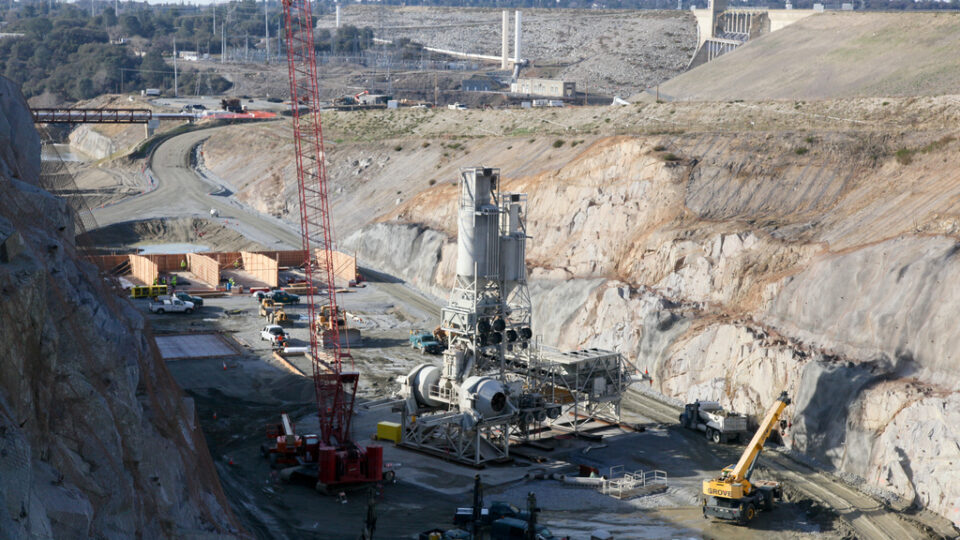
Concrete is a mainstay of modern civilization.  The world produces more than 4 billion tons of it each year and the process requires high temperatures, mostly obtained by burning fossil fuels.  The chemical reactions that produce concrete also produce large amounts of carbon dioxide.  In all, cement production is responsible for about 8% of total global carbon emissions by human activities.

This situation is the impetus for a wide range of research activities aimed at reducing the environmental impact of concrete production.  Researchers at Washington State University have recently developed a way of making carbon-negative concrete: a recipe for concrete that absorbs large amounts of carbon dioxide.

There have been attempts in the past to add biochar to concrete.  Biochar is a type of charcoal made from organic waste that sucks up carbon dioxide from the air.  In earlier attempts, even adding 3% of biochar would dramatically reduce the strength of the concrete.

The WSU researchers found that treating biochar with concrete washout wastewater makes it possible to add much more biochar to concrete without reducing its strength.  Mixing it with biochar adds calcium, which induces the formation of the mineral calcite, which in turn strengthens the concrete.

The researchers were able to add up to 30% biochar to their cement mixture.  Within a month, the resultant concrete was comparable in strength to ordinary concrete.  But at the same time, the biochar was able to absorb up to 23% of its weight in carbon dioxide from the air.  The new concrete is potentially the most environmentally friendly concrete ever developed.

**********

Web Links

Researchers develop carbon-negative concrete

Photo, posted January 31, 2012, courtesy of Michael J. Nevins / U.S. Army Corps of Engineers via Flickr.

Earth Wise is a production of WAMC Northeast Public Radio
Turning Wood Into Plastic | Earth Wise

May 4, 2021 By EarthWise Leave a Comment

Could wood solve the plastics problem?

Plastic pollution is particularly pernicious because plastics can take hundreds of years to degrade in the environment.  For this reason, researchers across the globe search for ways to shift from petrochemical plastics to ones that are biodegradable.

Producing biodegradable plastics is challenging both from the standpoint of the methods needed and from the results obtained.  Producing them often requires toxic chemicals and can be very expensive.  The materials that emerge often do not have the durability and strength of conventional plastics and can be unstable when exposed to moisture.

Researchers at the Yale School of the Environment have developed a process of decomposing the porous matrix of natural wood into a slurry that can be formed into a biodegradable plastic.  The material shows high mechanical strength, stability when holding liquids, and is resistant to the effects of ultraviolet light.  Along with all these favorable properties, the material can be recycled or safely biodegraded in the natural environment.

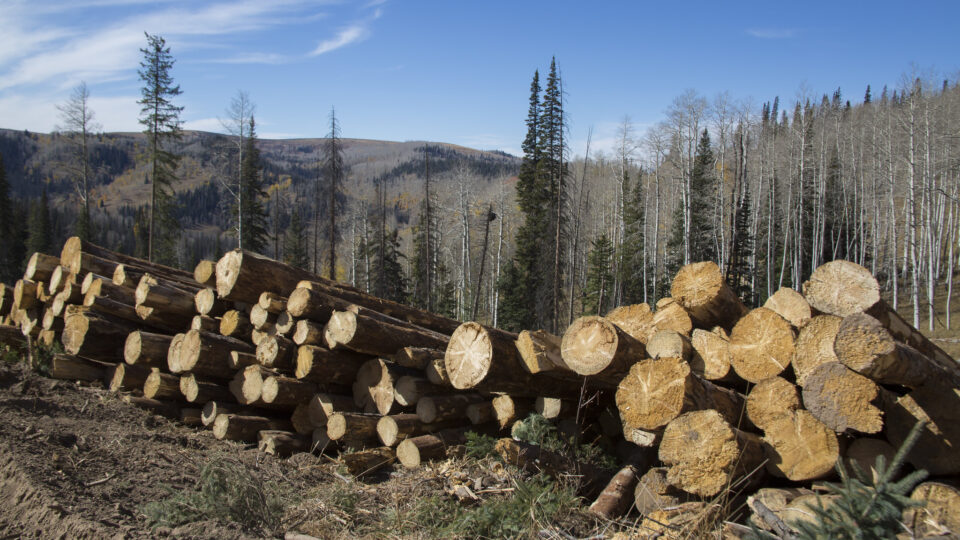
The slurry mixture is created by taking wood powder – a processing residue usually discarded in lumber mills – and deconstructing it with a biodegradable and recyclable solvent.  The resulting mixture has a high solid content and high viscosity and can be casted and rolled without breaking.

The researchers conducted a comprehensive life cycle assessment to test the environmental impacts of the bioplastic compared with conventional plastics.  Sheets of it were buried in soil and observed to fracture after two weeks and completely degrade after three months.  The material can also be broken back down into the slurry by mechanical stirring.

The remaining topic to investigate is the potential impact on forests if the manufacturing of this bioplastic is scaled up.

**********

Web Links

Turning wood into plastic

Photo, posted October 12, 2016, courtesy of the US Forest Service via Flickr.

Earth Wise is a production of WAMC Northeast Public Radio.

Helping Corals With Beneficial Bacteria | Earth Wise

March 31, 2021 By EarthWise Leave a Comment

Utilizing exploratory technology to help corals

A group of researchers at the King Abdullah University of Science and Technology in Saudi Arabia is exploring a novel technology to improve the health of corals.  Around the globe, corals are being stressed by pathogens, toxins, and warming waters leading to widespread bleaching events.

The new idea is to introduce beneficial bacteria to the corals, thereby boosting the strength and resilience of their symbiotic partners.  The concept is akin to the use of probiotics in plant science.  Corals rely on bacterial and algal symbionts to provide nutrients, energy (through photosynthesis), toxin regulation, and protection against pathogens.  

The researchers selected bacteria that are naturally symbiotic to specific coral species on reefs in the Red Sea, ensuring that no alien bacteria are accidentally introduced.  A probiotic cocktail comprising six bacteria strains was used in a laboratory setting.  Results in the lab have been promising so far, as they have observed dynamic and metabolic alterations to the corals that boosted their chances of survival under heat stress. 

Success in the lab will need to be translated to success in the open oceans, which is challenging.  Scaling up and seeding whole reefs might involve robots and artificial intelligence in order to deliver probiotics either into sediments or directly onto corals.

The use of beneficial microorganisms is not the solution to the global destruction of coral reefs.  Only worldwide CO2 mitigation can ultimately accomplish that.  But the probiotic approach might buy corals some time as they deal with shifting environmental pressures and try to adapt to a changing world.

**********

Web Links

Microbiome boost may help corals resist bleaching

Photo, posted March 18, 2018, courtesy of Steven dos Remedios via Flickr.

Earth Wise is a production of WAMC Northeast Public Radio.

Superstrong Nanofibers | Earth Wise

March 5, 2021 By EarthWise Leave a Comment

MIT research team has developed superstrong nanofibers

Self-assembly is a ubiquitous process in the natural world that leads to the formation of the DNA double helix, the creation of cell membranes, and to many other structures.   Scientists and engineers have been working to design new molecules that assemble themselves in water for the purpose of making nanostructures for biomedical applications such as drug delivery or tissue engineering.  For the most part, the materials created in this way have been chemically unstable and tended to degrade rapidly, especially when the water is removed.

A team at MIT recently published a paper describing a new class of small molecules they have designed that spontaneously assemble into nanoribbons with unprecedented strength and that retain their structure outside of water.

The material is modeled after a cell membrane.  Its outer part is hydrophilic (it likes to be in water) and its inner part is hydrophobic (it tries to avoid water.)  This configuration drives the self-assembly to create a specific nanostructure and by choosing the appropriate chemicals to form the structures, the result was nanoribbons in the form of long threads that could be dried and handled.  The resultant material in many ways resembles Kevlar.   In particular, the threads could hold 200 times their own weight and have extraordinarily high surface areas.  The fibers are stronger than steel and the high surface-to-mass ratio offers promise for miniaturizing technologies for such applications as pulling heavy-metal contaminants out of water and for use in electronic devices and batteries.

The goal of the research is to tune the internal state of matter to create exceptionally strong molecular nanostructures.  The potential for important new applications is considerable and exciting.

**********

Web Links

Researchers construct molecular nanofibers that are stronger than steel

Photo, posted June 19, 2007, courtesy of Andrew Hitchcock via Flickr.

Earth Wise is a production of WAMC Northeast Public Radio.

Concrete Production And Diminishing Coal Burning | Earth Wise

June 5, 2020 By EarthWise Leave a Comment

electricity generation and concrete production

Coal burning is still one of the primary means of generating electricity in the United States, but its use is diminishing and doing so fairly rapidly.  The coal burning process produces residual, incombustible materials.  One of them is fly ash, which is composed of fine, glassy, rounded particles rich in silicon, aluminum, calcium, and iron oxides.  Fly ash is captured from coal plant flue gas by precipitators and bag filters. It turns out that two-thirds of this fly ash is not dumped into landfills or impoundments, but rather is put to use.

Because of its chemical and physical characteristics, fly ash can substitute for a portion of portland cement in concrete.  Using this byproduct material in making cement actually reduces its cost. Beyond cost, the addition of fly ash as a so-called supplementary cementitious material or SCM improves concrete’s long-term strength and reduces porosity and permeability.  It reduces the risk of thermal cracking and provides good long-term mechanical properties.

The amount of fly ash used in concrete products increased by 5% between 2011 and 2017 while the amount produced dropped by 36%.  Concrete production continues to increase steadily while fly ash production is steadily dropping.

Therefore, the concrete industry is looking for alternative sources of SCM.  The most obvious is the approximately 1/3 of fly ash that hasn’t been used to make concrete.  Much of that is landfilled or ponded onsite at power plants.  So, opportunities exist for excavating or dredging and recovering these materials.

As coal burning goes away, concrete manufacturing needs to make some changes.

**********

Web Links

What Does the Changing Face of Electricity Production Mean for Concrete?

Photo, posted February 16, 2017, courtesy of Flickr.

Earth Wise is a production of WAMC Northeast Public Radio.

Harvesting Blue Energy | Earth Wise

February 7, 2020 By EarthWise Leave a Comment

researchers closer to harvesting osmotic energy

There are various ways to generate renewable energy from the world’s oceans, most obviously from the power of tides and waves.  But there is also an oceanic energy source called osmotic or “blue” energy.  Osmotic energy uses the differences in pressure and salinity between freshwater and saltwater to generate electricity. 

When freshwater and saltwater are mixed together, large amounts of energy are released. If the freshwater and seawater are then separated via a semi-permeable membrane, the freshwater will pass through the membrane and dilute the saltwater due to the chemical potential difference. This process is called osmosis. If the salt ions are captured completely by the membrane, the passing of water through the membrane will create a pressure known as osmotic pressure. This pressure can be used to generate electricity by using it to drive a turbine.  This has been demonstrated to work as far back as the 1970s, but the materials we have to use are not adequate to withstand ocean conditions over the long term and tend to break down quickly in the water.

New research, published in the journal Joule, looked to living organisms for inspiration to develop an improved osmotic energy system.  Scientists from the U.S. and Australia combined multiple materials to mimic the kind of high-performance membranes that are found in living organisms.  They created a hybrid membrane made from aramid microfibers (like those used in Kevlar) and boron nitride.  The new material provides both the flexibility of cartilage and the strength and stability of bone.

The researchers believe that the low cost and high stability of the new hybrid membrane will allow it to succeed in volatile marine environments.  They also expect the technology will be both efficient and scalable. 

**********

Web Links

Inspired by the Tissues of Living Organisms, Researchers Take One Step Closer to Harvesting “Blue Energy”

Photo, posted February 14, 2017, courtesy of Marian May via Flickr.

Earth Wise is a production of WAMC Northeast Public Radio.

Spider Silk

February 15, 2017 By EarthWise

https://earthwiseradio.org/wp-content/uploads/2017/02/EW-02-15-17-Spider-Silk.mp3

Spider silk – the protein fiber spun by spiders to make webs, nests, cocoons, and wrapping for prey that they stash away – is a remarkable substance.  Its mechanical properties combine high tensile strength and high extensibility or ductility.  This allows spider silk to absorb a lot of energy before breaking.   It is stronger than steel, but not as strong as Kevlar, for example.  On the other hand, it is tougher than either.

[Read more…] about Spider Silk

Primary Sidebar

Recent Episodes

  • An uninsurable future
  • Clean energy and jobs
  • Insect declines in remote regions
  • Fossil fuel producing nations ignoring climate goals
  • Trouble for clownfishes

WAMC Northeast Public Radio

WAMC/Northeast Public Radio is a regional public radio network serving parts of seven northeastern states (more...)

Copyright © 2025 ·