• Skip to primary navigation
  • Skip to main content
  • Skip to primary sidebar

Earth Wise

A look at our changing environment.

  • Home
  • About Earth Wise
  • Where to Listen
  • All Articles
  • Show Search
Hide Search
You are here: Home / Archives for standard

standard

Better blue LEDs

August 27, 2025 By EarthWise Leave a Comment

Developing better blue LEDs

LEDs have become the standard source of energy-efficient lighting.  They make use of semiconductors to turn electricity into light.  Depending upon the materials used to make them, LEDs produce different colors.  In the early 1990s, the first blue LEDs were discovered, ultimately earning the Nobel Prize in physics, and enabling LEDs to produce white light, which is essential for general lighting applications.

Blue LEDs have shortcomings.  Some have issues with stability, scalability, cost, efficiency, complexity in manufacturing, or have environmental concerns because of the use of toxic components. 

Researchers at Rutgers University in collaboration with scientists at several other institutions have found a way to make blue LEDs more efficient and sustainable.  These LEDs use a new type of hybrid material that is a combination of copper iodide with organic molecules.  The impressive performance of these LEDs was achieved through an innovative technique called dual interfacial hydrogen-bond passivation.  This new manufacturing technique boosts the performance of LEDs by a factor of four.

The material has several advantages.  It has a very high photoluminescence quantum yield, which means that it converts nearly all the photoenergy it receives into blue light.  The LEDs last longer than many others and they work well in larger-scale applications, maintaining high efficiency.  The materials are eco-friendly and cost-effective.

According to the researchers, this new approach could be a versatile strategy for generating high-performance LEDs that can pave the way for better, brighter, and longer-lasting LEDs.

**********

Web Links

Scientists Develop Deep-Blue LEDs Expected to Greatly Enhance General Lighting

Photo, posted February 1, 2021, courtesy of Ivan Radic via Flickr.

Earth Wise is a production of WAMC Northeast Public Radio
A plug for all cars

January 23, 2024 By EarthWise Leave a Comment

The Tesla charging standard is being renamed the North American charging standard

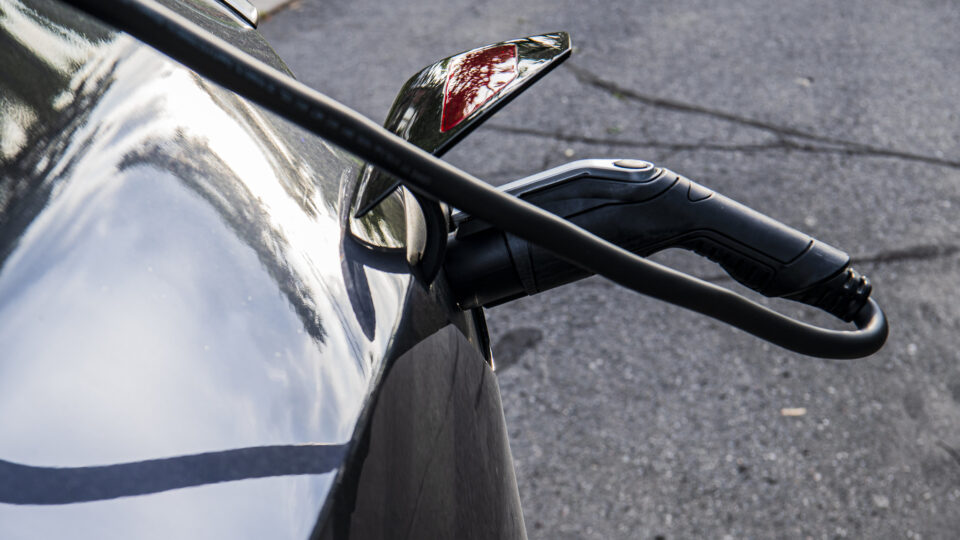
Different brands of electric cars have required different charging connections. There has been no standard connector for charging.  But now, as the transition to electric vehicles is accelerating, there is the North American Charging Standard, which within in the next couple of years, will be common to pretty much any new electric vehicle on the road.

There have been several different charging connector systems in use by auto manufacturers and each charging station offered only a particular one of them.  The largest charging network in the US has been Tesla’s Supercharger Network, which uses a proprietary standard it put in place in 2012.  Tesla offered to open up their charging technology to other cars but auto manufacturers declined to take them up on the offer for a number of years.  The Bipartisan Infrastructure Law, passed in 2021, provided federal subsidies for building out fast charging networks, provided a common charging standard was adopted.  That has broken the log-jam.

The Tesla Charging Standard has been renamed the North American Charging Standard and Tesla opened its technology to other manufacturers in November 2022.

Automakers who have signed on to the standard include BMW, General Motors, Honda, Hyundai, Jaguar Land Rover, Lucid, Mercedes-Benz, Nissan, Polestar, Rivian, Subaru, Toyota, and Volvo.  In December, the Volkswagen Group – which includes Volkswagen, Porsche, and Audi – announced that they are also implementing it for future vehicles in North America, starting in 2025.   (The only significant holdout is Stellantis, parent of Dodge, Chrysler, and Jeep).

It will be a year or two before cars from all these companies will have the NACS connector and be able to charge at the same stations, but it will happen.

**********

Web Links

Volkswagen, Audi, And Porsche Finally Commit To Using Tesla’s NACS Plug

Photo, posted July 8, 2023, courtesy of Michael Swan via Flickr.

Earth Wise is a production of WAMC Northeast Public Radio
Removing Lead From Water With Beer Yeast | Earth Wise

July 14, 2022 By EarthWise Leave a Comment

An innovative solution for removing lead from freshwater

Lead and other heavy metals in water are a serious global problem that is worsening because of electronic waste and discharges from mining operations.  In the U.S., over 12,000 miles of waterways are impacted by mine-drainage water that is rich in heavy metals.

Lead in particular is highly toxic, especially to children.  The European Union established a standard for allowable lead in drinking water of only 5 parts per billion.  In the US, the EPA has declared that no level of lead at all is safe.

Researchers at MIT have recently discovered that inactive yeast can be effective as an inexpensive, abundant, and simple material for removing lead contamination from drinking water supplies.  The MIT study shows that the method works even at parts-per-billion levels of contamination.

The method is called biosorption, in which inactive biological material is used to remove heavy metals from water.  Previously, it has been studied at parts-per-million contaminant levels, but the MIT study shows that it works at much lower levels as well.

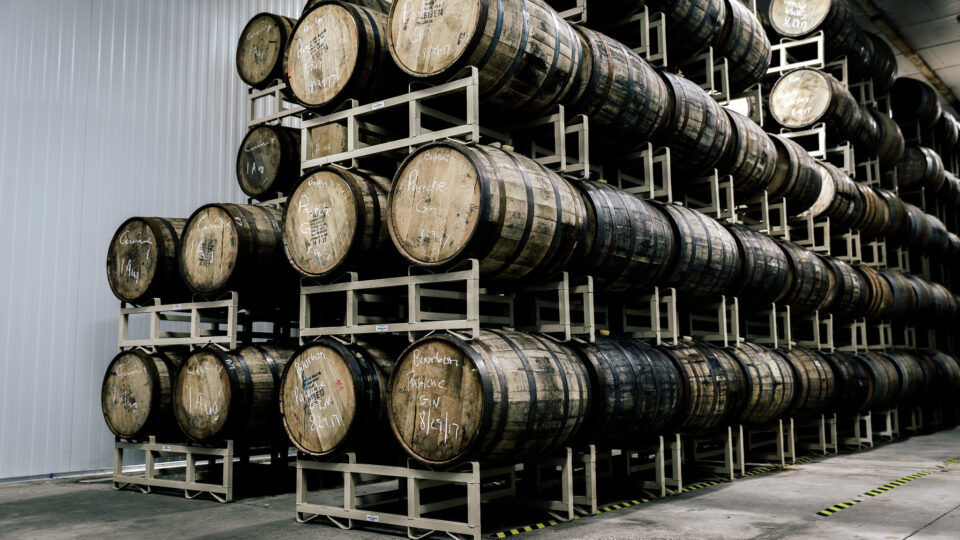
The team studied a type of yeast widely used in brewing.   The yeast cells used are inactive and desiccated and require no special care.  Such yeast is abundantly available as a waste product from beer brewing and various other fermentation-based industrial processes. 

The researchers estimate that to clean a water supply for a city the size of Boston would require about 20 tons of yeast a day, or 7,000 tons a year.  That seems like a lot, but one single brewery, the Boston Beer Company, generates 20,000 tons a year of surplus yeast that is no longer useful for fermentation.

**********

Web Links

Could used beer yeast be the solution to heavy metal contamination in water?

Photo, posted September 5, 2017, courtesy of Allagash Brewing via Flickr.

Earth Wise is a production of WAMC Northeast Public Radio.

Corn Ethanol And The Climate | Earth Wise

March 29, 2022 By EarthWise 1 Comment

Corn ethanol hurts - not helps - the planet

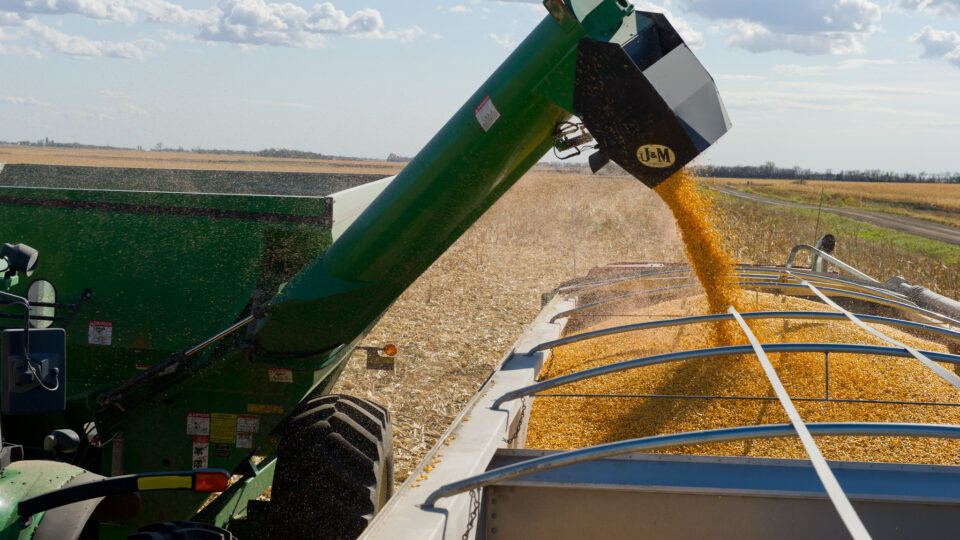
The Renewable Fuel Standard legislation, first passed in 2005 and updated in 2007, requires billions of gallons of renewable fuel to be added to the country’s transportation fuel supplies.  It created the world’s largest biofuels program.

The standard was hailed as a major victory for the climate as well as a way to reduce our dependence upon foreign oil.

The intent of the legislation was to encourage various forms of renewable fuels – especially cellulosic ethanol from plant and wood fiber – to become an increasing part of the fuel mix.  That has yet to happen.  Instead, corn ethanol has been the backbone of the program.

Back in 2007, the EPA determined that ethanol from corn would lead to a 20% reduction in greenhouse gases compared to gasoline.  But the next year, a study published in the journal Nature projected that corn ethanol would double greenhouse gas emissions over 30 years because demand for corn would drive farmers to plow up increasing amounts of carbon-rich forest and grassland.

A new study published by researchers at the University of Wisconsin, Madison, has again concluded that corn-based ethanol may actually be worse for the climate than fossil-based gasoline as well as having other environmental downsides.  According to the study, since the fuel standard was passed, farmers have expanded corn production on nearly 7 million acres each year, causing the conversion of lands to cropland.  The result is that the carbon intensity of corn ethanol could be as much as 24% higher than gasoline.

The issue is still being debated in Congress, but if these results are verified, the time has come to revamp the terms of the renewable fuel standard.

**********

Web Links

Corn-Based Ethanol May Be Worse For the Climate Than Gasoline, a New Study Finds

Trots den höga effektiviteten leder inte vissa patienter som tar läkemedlet till en förbättring av erektion. Detta beror på felaktig användning av medicinen eller på att ED helt enkelt är en följd online apotek viagra av en annan sjukdom. I sådana fall är det obligatoriskt att konsultera och undersöka en läkare.

Photo, posted October 23, 2011, courtesy of the United Soybean Board via Flickr.

Earth Wise is a production of WAMC Northeast Public Radio.

Primary Sidebar

Recent Episodes

  • An uninsurable future
  • Clean energy and jobs
  • Insect declines in remote regions
  • Fossil fuel producing nations ignoring climate goals
  • Trouble for clownfishes

WAMC Northeast Public Radio

WAMC/Northeast Public Radio is a regional public radio network serving parts of seven northeastern states (more...)

Copyright © 2026 ·