• Skip to primary navigation
  • Skip to main content
  • Skip to primary sidebar

Earth Wise

A look at our changing environment.

  • Home
  • About Earth Wise
  • Where to Listen
  • All Articles
  • Show Search
Hide Search
You are here: Home / Archives for spike

spike

How warm is It?

August 8, 2024 By EarthWise Leave a Comment

The record-breaking heat continues

As of June, the world had seen 13 consecutive months of record-breaking heat.  The average global temperature over the last 12 of those months measured 1.5 degrees Celsius warmer than the preindustrial era. This means that the world has at least temporarily exceeded the temperature target set forth in the Paris Climate Agreement.

Does this mean that climate change has gotten to the point where keeping temperatures below that goal is no longer possible? Not necessarily. Temperatures could drop below the 1.5-degree level in the near future.

The world has certainly been warming as a result of climate change, but the spike in temperature for the past year has also been driven by an El Niño condition in the Pacific, which leads to warmer temperatures.  How much of the warming is a result of each factor is not known.

But scientists say that El Niño has ended in June and a La Niña condition is likely to take shape between August and October. This would lead to cooler temperatures in many places.

Despite the extensive and lingering heatwaves in the US in July, on a global scale, temperatures have actually started falling in July.  July may end up being the first month since June 2023 to not set a new monthly global temperature record.  Nevertheless, the long streak of record-high temperatures is no statistical anomaly.  It is indicative of a large and continuing shift in the climate.   Whether conditions in the Pacific produce an El Niño or a La Niña, the steady long-term warming will continue as long as human-generated carbon emissions continue.

**********

Web Links

How Bad Is Warming? La Niña May Reveal

Photo, posted September 19, 2022, courtesy of Paul Sableman via Flickr.

Earth Wise is a production of WAMC Northeast Public Radio
Is It Really Getting Warmer? | Earth Wise

March 28, 2022 By EarthWise Leave a Comment

The primary indicator of global climate change is the Global Mean Surface Temperature of the Earth and the world’s nations are trying to keep its increase below 1.5 degrees Celsius over the pre-industrial level.   That rise in temperature is called the Global Surface Temperature Anomaly and it actually reached an all-time high in 2016 at 1.02 degrees before going back down.

At this point, you might be saying, “hold on there…  it hasn’t gotten larger over the past 5 years?”  What’s going on?

The global climate is pretty complicated and there are many things that influence it.  One of the most significant factors is the El Niño Southern Oscillation or, more familiarly, the El Niño.  The El Niño is a periodic and irregular variation in the sea surface temperature of the tropical eastern Pacific Ocean driven by persistent westerly winds.  When an El Niño is happening, currents move to the west coast of South America and warm the tropics and subtropics.  This causes a spike in the global mean temperature.  There was a strong El Niño in 2016.

On the other hand, when easterly winds dominate to form a La Niña, cool water comes up from the depths of the Pacific and cools the atmosphere.  In 2017 and 2018, there was a fairly strong La Niña, lowering the global mean temperature.  2020 had no El Niño or La Niña, and the global temperature went back up to its previous peak.  Last year, there was again a La Niña and the temperature dipped again.

The global mean surface temperature has been rising in the industrial era, but it also fluctuates with the complicated dynamics of the Pacific Ocean.

**********

Web Links

Why Isn’t It Getting Warmer?

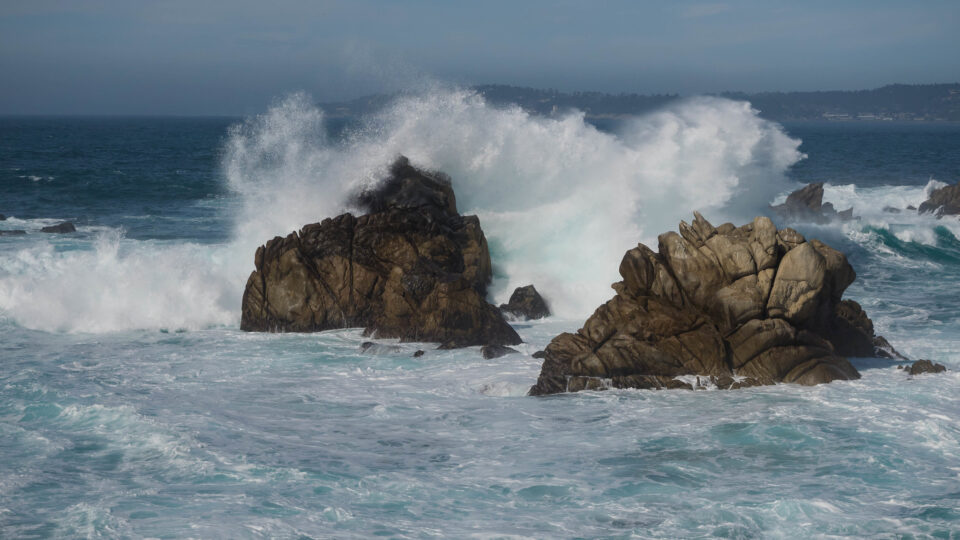
Photo, posted February 12, 2016, courtesy of Amit Patel via Flickr.

Earth Wise is a production of WAMC Northeast Public Radio.

Ozone Recovery Back On Track | Earth Wise

March 15, 2021 By EarthWise Leave a Comment

Ozone recovery is on track

In 2019, we reported that new emissions of chlorofluorocarbons from eastern Asia were threatening the recovery of the ozone layer in the upper atmosphere.  An unexpected spike in CFC emissions was threatening to undo the progress made under the Montreal Protocol, the international treaty under which every country in the world agreed to phase out the production and use of the ozone-eating chemicals by 2010.

In 2018, a team of scientists reported the spike in emissions of the particular formulation CFC-11 that began in 2013.  By 2019, a second team reported that a significant portion of the emissions could be traced to the Shandong and Hebie provinces in China where there were small factories using the chemical to manufacture foam insulation used in refrigerators and buildings.

Recently, in two papers published in Nature, the same two research teams reported that the global annual emissions of CFC-11 into the atmosphere have declined sharply.   They traced a substantial fraction of the global emission reductions to the very same regions of eastern China where they had previously reported the original spike. 

The results are very encouraging.   If CFC-11 emissions had continued to rise, or even just level off, there would have been real problems with ozone depletion.  Two independent global monitoring networks – one operated by the National Oceanic and Atmospheric Administration and one led by MIT called the Advanced Global Atmospheric Gases Experiment – are doing a good job of detecting threats to the world’s protective ozone layer.  However, the Chinese sources only accounted for about half of the CFC-11 entering the atmosphere.  We still don’t know where the rest of it is coming from.

**********

Web Links

Reductions in CFC-11 emissions put ozone recovery back on track

Return of an Old Threat

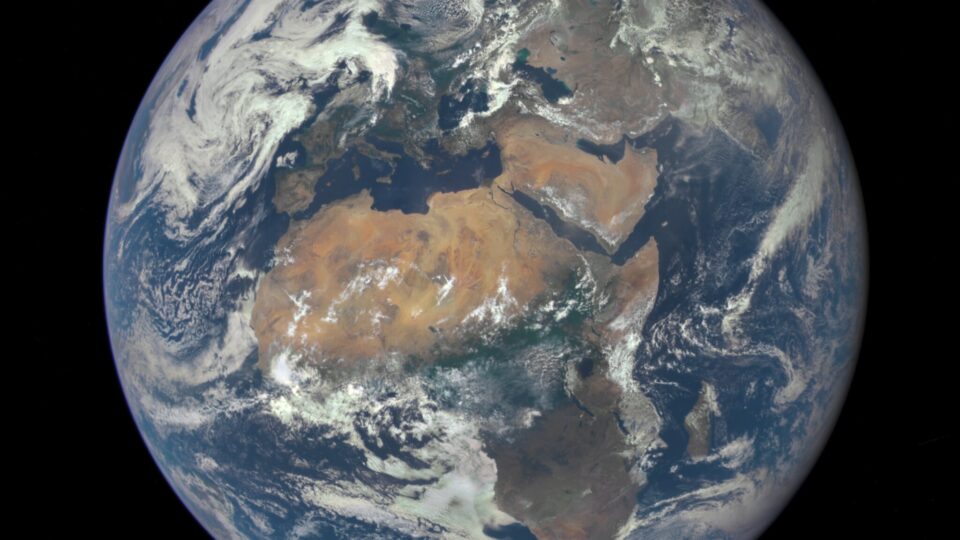
Photo, posted July 29, 2015, courtesy of NASA Goddard Space Flight Center via Flickr.

Earth Wise is a production of WAMC Northeast Public Radio.

Primary Sidebar

Recent Episodes

  • An uninsurable future
  • Clean energy and jobs
  • Insect declines in remote regions
  • Fossil fuel producing nations ignoring climate goals
  • Trouble for clownfishes

WAMC Northeast Public Radio

WAMC/Northeast Public Radio is a regional public radio network serving parts of seven northeastern states (more...)

Copyright © 2026 ·