• Skip to primary navigation
  • Skip to main content
  • Skip to primary sidebar

Earth Wise

A look at our changing environment.

  • Home
  • About Earth Wise
  • Where to Listen
  • All Articles
  • Show Search
Hide Search
You are here: Home / Archives for shutdowns

shutdowns

Wind And Solar And Meeting Climate Goals | Earth Wise

May 20, 2022 By EarthWise Leave a Comment

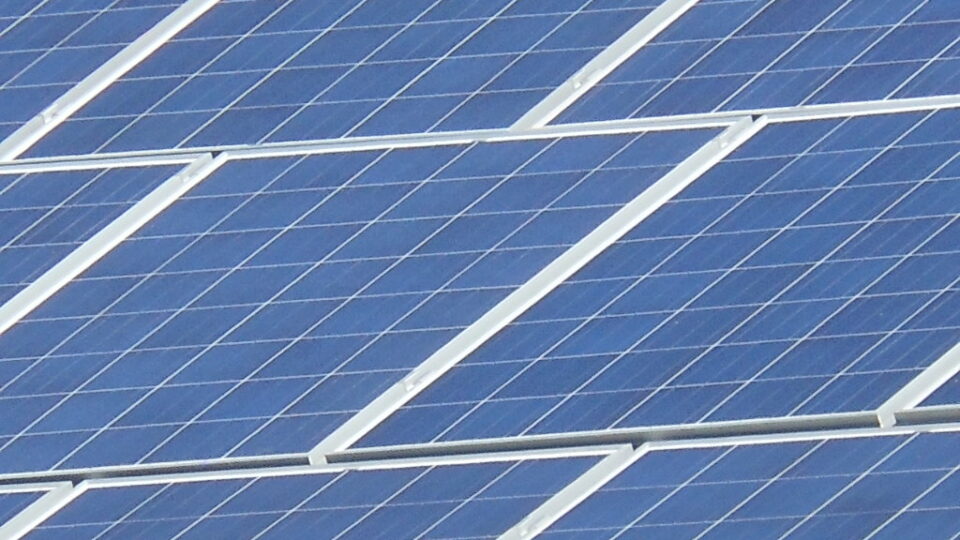
Meeting climate goals using solar and wind power

According to a new report from the climate think tank Ember, the rapid growth that has been going on for solar and wind power could allow the global electricity sector to do its part in limiting global warming to 1.5 degrees Celsius.

In 2021, solar power grew by 23% worldwide and wind power grew by 14%.  The Netherlands, Australia, and Vietnam had the largest gains in renewable energy.  Solar power in Vietnam grew by 337%.

The trends over the past decade, if continued across the globe, would result in the power sector being on track for meeting climate goals.  But not all the news is good.  The overall power sector has not been adequately reducing emissions.  Coal power actually grew by 9% last year as a result of increased demand for power during the rapid economic recovery in the easing of the pandemic shutdowns.  A spike in natural gas prices made coal more cost-competitive.

In order for the power sector to do its part in keeping warming below 1.5 degrees, wind and solar power will need to provide 40% of the world’s power by 2030 and nearly 70% by 2050.  Today, they supply only 10% of the world’s electricity.

With rising gas prices during Russia’s war with Ukraine, there is real danger of increased use of coal, threatening the gains made by renewable energy.

Nonetheless, a study published in Oxford Open Energy modeled various scenarios for the growth of renewable energy and found that it is feasible to meet climate goals.  In order to achieve this, countries’ policies will need to stimulate significant increases in energy and resource efficiency and rapid deployment of low-carbon technologies, promote strong environmental actions, and encourage low population growth.

**********

Web Links

Rapid Growth of Wind and Solar Could Help Limit Warming to 1.5 degrees C

Photo, posted October 11, 2011, courtesy of Michael Coghlan via Flickr.

Earth Wise is a production of WAMC Northeast Public Radio.

Post-COVID Emissions Rebound | Earth Wise

May 28, 2021 By EarthWise Leave a Comment

Emissions are on the rise as COVID crisis lessons

The extensive shutdowns associated with the COVID-19 pandemic resulted in reduced activity across many sectors of the global economy.  As a result, global pollution and greenhouse gas emissions also saw lower levels.  As the COVID crisis lessens, an economic recovery is growing and as that occurs, emissions are on the rise.

The International Energy Agency forecasts that energy-related carbon dioxide emissions are projected to increase by 1.5 billion tons this year, the second-largest increase in history.

The emissions increase in 2021 is expected to be nearly 5%, reversing most of last year’s emissions decline caused by the pandemic. This would be the largest annual rise since the 2010 recovery from the global financial crisis.  In many places across the globe, people are making up for lost time and doing more of all the things that cause carbon emissions.

A key driver of the emissions increase is a rise in coal use.  The forecast is that coal-burning in 2021 would come close to the all-time peak of 2014.  Both natural gas and oil use are also expected to increase this year.  These increases are in spite of a predicted 17% increase in electricity generation from wind power and an 18% increase in solar-power generation. 

Atmospheric concentrations of CO2 are now at 417 parts per million and have increased by 3 PPM in the past year.  If human CO2 emissions are not reined in, atmospheric concentrations of planet-warming greenhouse gases could double those of pre-Industrial levels by mid-century, which would have disastrous impacts on the climate.

**********

Web Links

Global CO2 Emissions Set to Surge in 2021 in Post-Covid Economic Rebound

Photo, posted October 22, 2020, courtesy of Hospital Clínic Barcelona via Flickr.

Earth Wise is a production of WAMC Northeast Public Radio.
The Problem Of Gas Flaring | Earth Wise

January 9, 2020 By EarthWise Leave a Comment

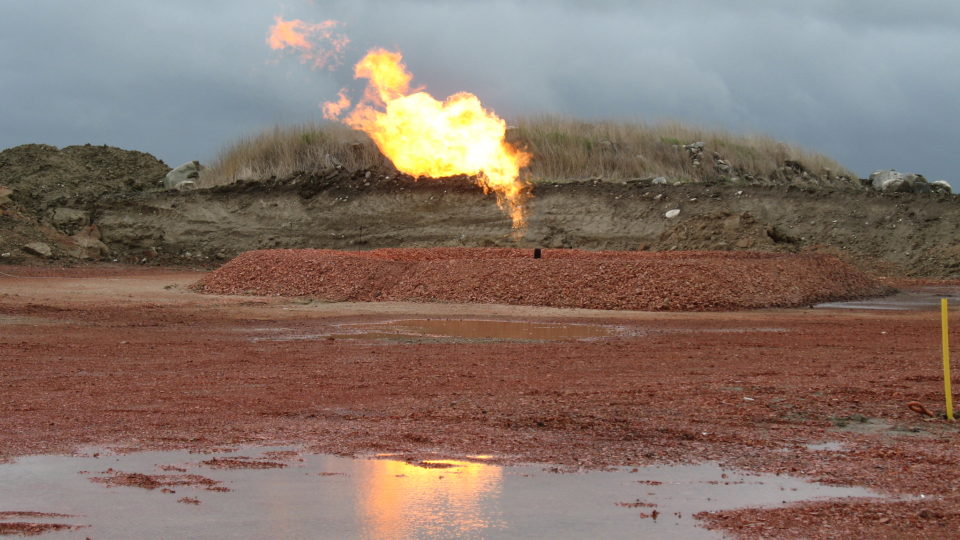
Gas flaring

Gas flaring is the burning off of flammable gas released by pressure relief values during over-pressuring of plant equipment at petroleum refineries, chemical plants, natural gas processing plants, and a variety of oil and gas production plants.  Flaring is also used during plant startups and shutdowns.

A new study by Rice University concludes that reducing gas flaring would benefit both the environment and the economy. Flaring and venting of gas in West Texas’s Permian Basin and certain other parts of the U.S. have reached levels that the intended result of burning gas to allow oil extraction now looks more like wasting one resource to produce another.

At current rates, enough gas is flared in the Permian Basin to yield nearly 5 million metric tons of exportable liquid natural gas if it was captured and liquified.  At these rates, the wasted gas could fill the largest sized LNG carrier every ten days.  If that liquified natural gas was exported to China and used in a power plant, it would displace 440,000 metric tons of coal burned to generate electricity.

Burning natural gas to heat homes, power industrial processes, or generate electricity all emit carbon dioxide, but at least these things also perform valuable functions. Flaring gas produces CO2 as well as other combustion products but doesn’t even do anything useful.  The venting of unburned gas, which also takes place with some frequency, is even worse since it is dumping methane directly into the atmosphere.

Across the U.S., some 14.1 billion cubic meters of natural gas was flared in 2018, equivalent to nearly 9 million metric tons per year of LNG.  In energy terms, that is equivalent to more than one-third of the total LNG volume U.S. firms actually exported that year.

**********

Web Links

Reducing gas flaring will benefit economy and environment, says Baker Institute expert

Photo courtesy of Flickr.

Earth Wise is a production of WAMC Northeast Public Radio.

Primary Sidebar

Recent Episodes

  • An uninsurable future
  • Clean energy and jobs
  • Insect declines in remote regions
  • Fossil fuel producing nations ignoring climate goals
  • Trouble for clownfishes

WAMC Northeast Public Radio

WAMC/Northeast Public Radio is a regional public radio network serving parts of seven northeastern states (more...)

Copyright © 2026 ·