• Skip to primary navigation
  • Skip to main content
  • Skip to primary sidebar

Earth Wise

A look at our changing environment.

  • Home
  • About Earth Wise
  • Where to Listen
  • All Articles
  • Show Search
Hide Search
You are here: Home / Archives for shrunk

shrunk

The human footprint on Earth

February 6, 2025 By EarthWise Leave a Comment

The Earth is a pretty big place, and it is easy to think that humans and their activities occupy very little of it.  But the impact of human activities on our planet continues to grow.  Recent satellite images from NASA’s Earth Observatory show the staggering extent of the human footprint on Earth.

Agriculture is a major part of it.  Farms and pastures take up almost half of the world’s habitable land – land not covered by ice or desert.  Greenhouses have recently proliferated tremendously and now cover 3.2 million acres, an area the size of Connecticut, and they even have effects on local climates.

More than half of the world’s population now lives in cities, which are expanding rapidly.  Enormous cities in Asia are changing the landscape in places like Thailand and Indonesia.  Apart from taking up lots of land, many of the world’s cities are immersed in clouds of air pollution that they generate.

Greenhouse gas emissions continue to grow, and temperatures continue to rise.  The effects of this on the planet are increasingly evident.  Seas are rising, ice is melting, glaciers shrink away, and wildfires continue to burn.  The massive wildfires in and around Los Angeles have made major changes in the local landscape.  Rising seas have flooded coastal wetlands and elsewhere, rivers and lakes have shrunk.

There are also human impacts visible from space that represent positive signs.  Large solar arrays supply the cheapest form of energy in most parts of the world and the number and size of solar installations are at a record high.   These solar installations provide some hope that global warming can be slowed.

**********

Web Links

The Growing Human Footprint on Earth, as Seen from Space

Photo, posted July 28, 2012, courtesy of Beth Scupham via Flickr.

Earth Wise is a production of WAMC Northeast Public Radio
Melting Himalayan Glaciers | Earth Wise

February 1, 2022 By EarthWise Leave a Comment

Accelerating melting of Himalayan glaciers poses a massive threat to regional water supply

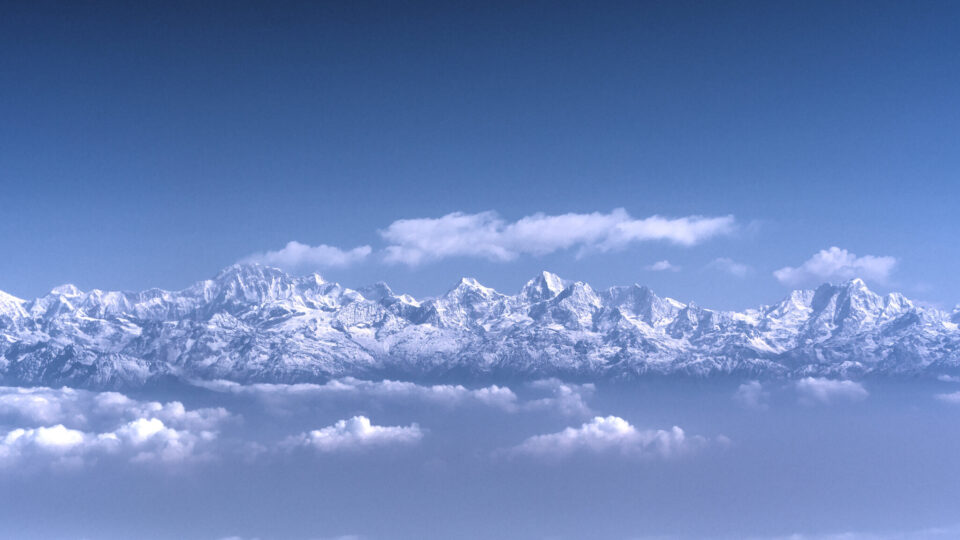
The great mountain ranges of central Asia, including the Himalayas, contain the third-largest deposit of ice and snow in the world, trailing only Antarctica and the Arctic.  The Himalayan range contains about 15,000 glaciers, and is part of a region widely referred to as the Third Pole due to its extraordinary reserves of freshwater.

But in recent years, scientists have observed an increase in the rate of Himalayan glacier loss.  According to a new study led by researchers from the University of Leeds in the UK, the accelerating melting of the Himalayan glaciers threatens the water supply of millions of people in Asia. 

In the study, researchers reconstructed the reach of the Himalayan glaciers during the Little Ice Age, which was the last major glacier expansion 400-700 years ago. They found that these glaciers began losing ice 10 times faster during the modern era.  In fact, the glaciers have shrunk from a peak of nearly 11,000 square miles to around 7,500 square miles today.   

This exceptional acceleration of melting of the Himalayan glaciers could have significant implications.  Hundreds of millions of people rely on Asia’s major river systems for food and energy, and depend on these glaciers to feed rivers during the dry seasons.  These rivers include the Brahmaputra, Ganges, and Indus.  The changing global climate could disastrously impact water resources and livelihoods of the Greater Himalayan region.

According to the research team, people living in these regions have already seen changes that are unlike anything witnessed for centuries.  This study is the latest to confirm that these changes are accelerating and pose a significant threat to entire nations and regions. 

**********

Web Links

Himalayan glaciers melting at ‘exceptional rate’

Photo, posted March 13, 2018, courtesy of Sarunas Burdulis via Flickr.

Earth Wise is a production of WAMC Northeast Public Radio.

Greenland Glaciers Past The Point Of No Return | Earth Wise

September 18, 2020 By EarthWise Leave a Comment

warming greenland glaciers

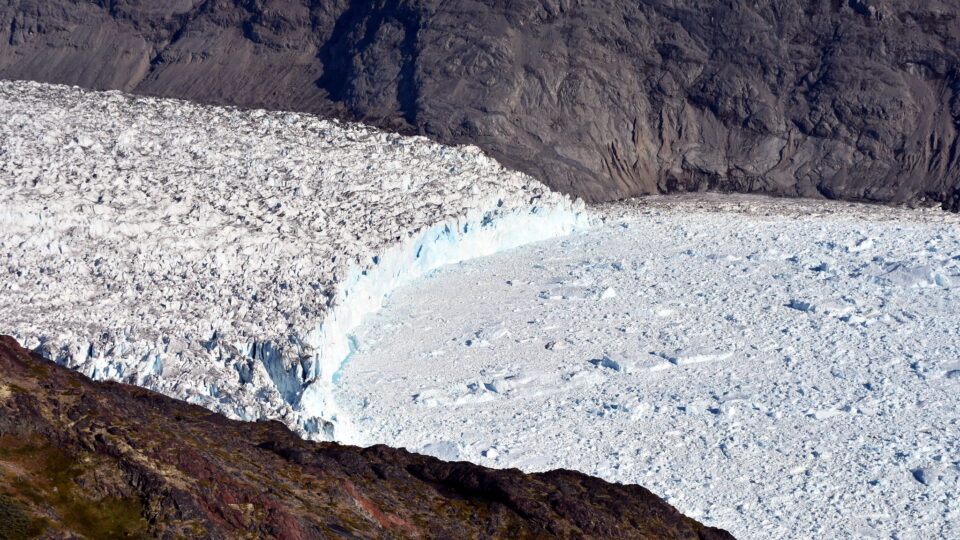
Forty years of satellite data from Greenland shows that the glaciers on the island have shrunk so much that even if global warming came to an abrupt halt, the Greenland ice sheet would continue to shrink.

This conclusion was published in the journal Communications Earth and Environment by researchers at Ohio State University.  According to their study, Greenland’s glaciers have passed a tipping point where the snowfall that replenishes the ice sheet each year can no longer keep up with the ice that is flowing into the ocean from the glaciers.

The study analyzed monthly satellite data from more than 200 large glaciers that drain into the ocean around Greenland.  It looked at how much ice breaks off into icebergs or melts from the glaciers into the ocean as well as the amount of snowfall each year that replenishes the glaciers.

Throughout the 1980s and 90s, these two processes were mostly in balance, keeping the ice sheet intact.  But the amount of ice being lost each year started to increase steadily around the year 2000 while there was no increase in snowfall.   Both processes fluctuate from year to year, but the baseline for ice loss has steadily risen.  Before 2000, the Greenland ice sheet had about the same chance of gaining or losing mass each year.  At this point, the ice sheet is likely to gain mass in only one out of every 100 years.

Large glaciers in Greenland have retreated about 2 miles since 1985, so that many of them are sitting in deeper water with more ice in contact with warmer water making it harder for glaciers to grow back.  At this point, even if the climate reverses its trend, the ice sheet will continue to lose mass.

**********

Web Links

Warming Greenland ice sheet passes point of no return

Photo, posted August 27, 2015, courtesy of Joxean Koret via Flickr.

Earth Wise is a production of WAMC Northeast Public Radio.

Primary Sidebar

Recent Episodes

  • An uninsurable future
  • Clean energy and jobs
  • Insect declines in remote regions
  • Fossil fuel producing nations ignoring climate goals
  • Trouble for clownfishes

WAMC Northeast Public Radio

WAMC/Northeast Public Radio is a regional public radio network serving parts of seven northeastern states (more...)

Copyright © 2025 ·