• Skip to primary navigation
  • Skip to main content
  • Skip to primary sidebar

Earth Wise

A look at our changing environment.

  • Home
  • About Earth Wise
  • Where to Listen
  • All Articles
  • Show Search
Hide Search
You are here: Home / Archives for separation

separation

A better way to extract lithium

December 10, 2024 By EarthWise Leave a Comment

Researchers are developing a better way to extract lithium

Lithium is the critical component in the batteries that power phones and computers, electric cars, and the systems that store energy generated by solar and wind farms.  Lithium is not particularly rare, but it is difficult and often environmentally harmful to extract from where it is found.

Traditional ore sources are increasingly difficult and expensive to mine.  The largest known deposits of lithium are in natural brines – the salty water found in geothermal environments.  These brines also contain other ions like sodium, potassium, magnesium, and calcium, and efficiently separating out the lithium is extremely challenging.

Traditional separation techniques consume large amounts of energy and produce chemical waste, particularly hazardous chlorine gas.  These techniques typically suffer from poor selectivity; that is, the process is interfered with by the other ions present in natural brines.

A team of researchers at Rice University has developed a three-chamber electrochemical reactor that improves the selectivity and efficiency of lithium extraction from brines.  The middle chamber of the reactor contains a specialized membrane that acts as a barrier to chloride ions, preventing them from getting to the electrode area where they can form chlorine gas.

The new reactor has achieved a lithium purity rate of 97.5%, which means the setup can effectively separate lithium from other ions in the brine and allow the production of high-quality lithium hydroxide, the key material for battery manufacturing. 

The Rice University reactor design has the potential to be a game changer for lithium extraction from geothermal brines.

**********

Web Links

‘Game changer’ in lithium extraction: Rice researchers develop novel electrochemical reactor

Photo, posted October 21, 2023, courtesy of Simaron via Flickr.

Earth Wise is a production of WAMC Northeast Public Radio
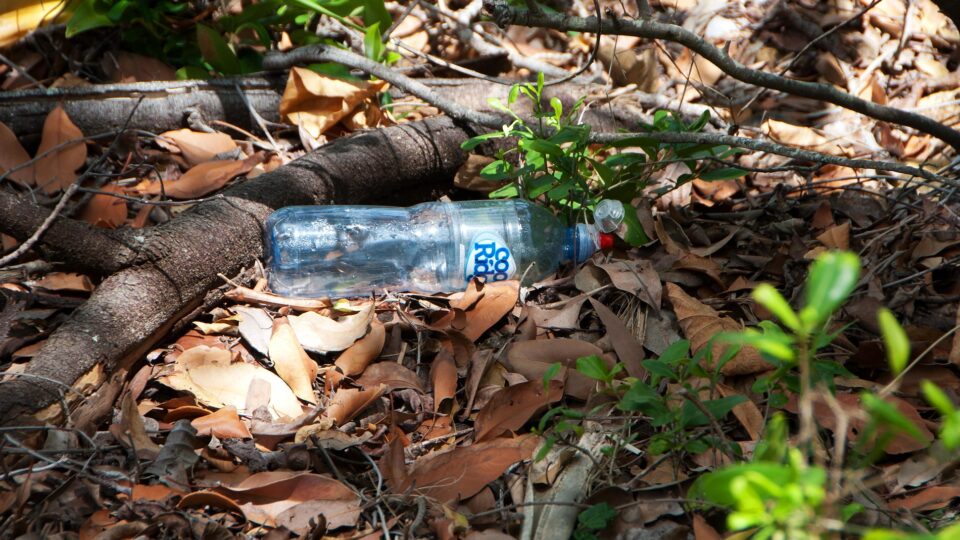
Ending plastic separation anxiety

December 27, 2023 By EarthWise Leave a Comment

Petroleum-based plastics are one of the biggest environmental problems we face.  They mostly end up in landfills – or worse, in the oceans and elsewhere in the environment – and they basically don’t decompose over time.  Bio-based plastics were invented to help solve the plastic waste crisis.  These materials do break down in the environment providing a potential solution to the problem.  But it turns out that they can actually make plastic waste management even more challenging.

The problem is that bioplastics look and feel so similar to conventional plastics that they get mixed in with the petroleum-based plastics rather than ending up in composters, where they can break down as designed.

Mixtures of conventional and bioplastics end up in recycling streams where they get shredded and melted down, resulting in materials that are of very poor quality for making functional products.  The only solution is to try to separate the different plastics at recycling facilities, which is difficult and expensive to do.

Scientists at Lawrence Berkeley National Laboratory, the Joint BioEnergy Institute, and the incubator company X have invented a simple “one pot” process to break down mixtures of different types of plastic using naturally derived salt solutions and specialized microbes and then produce a new type of biodegradable polymer that can be made into fresh commodity products.

The team is experimenting with various catalysts to find the optimum way to break down polymers at the lowest cost and are modeling how their processes can work at the large scales of real-world recycling facilities. Chemical recycling of plastics is a hot topic but has been difficult to make happen economically at the commercial scale.

**********

Web Links

Putting an End to Plastic Separation Anxiety

Photo, posted November 28, 2016, courtesy of Leonard J Matthews via Flickr.

Earth Wise is a production of WAMC Northeast Public Radio
Актуальная ссылка на Мега сайт обеспечивает удобный и быстрый доступ к площадке.

Nanotech Water Purification | Earth Wise

July 14, 2020 By EarthWise Leave a Comment

Ultrathin nanosheets separate ions from water

We have occasionally talked about metal-organic frameworks, which are organic-inorganic hybrid crystalline structures that have a microscopic cage-like structure.  MOFs have been under development for a diverse set of applications including gas storage and separation, liquid purification, energy storage, catalysis, and sensing.

For the first time, an international research team, led by researchers from Monash University in Australia, has created an ultrathin porous membrane based on MOF technology that can completely separate potentially harmful ions, such as lead and mercury, from water.

This innovation could enhance water desalination and transform even the dirtiest water into something potable for millions of people around the world.  The new membrane performed steadily in tests for more than 750 hours using only limited energy.

The technology uses water-stable monolayer aluminum-based MOFs just a millionth of a millimeter in thickness.  These are essentially two-dimensional structures.  The ultrathin membrane is permeable to water – it achieves maximum porosity – but rejects nearly 100 percent of ions.  It has been a daunting challenge to fabricate ultra-thin MOFs for water-based processing.  Most previous membranes were too thick and unstable in water. 

Most existing ion separation membrane technologies are based on polymers and have the limitation that they have limited selectivity.  They don’t reject all unwanted ions.

The new membrane technology has great potential based on its precise and fast ion separation and could be ideal for a variety of filtration applications such as gas separation and separation of organic solvents such as paint.  Such membranes might also be used to remove harmful carcinogens from the atmosphere.

**********

Web Links

Ultrathin nanosheets separate ions from water

Photo courtesy of Monash University.

Earth Wise is a production of WAMC Northeast Public Radio.

A New Membrane For Converting Carbon Dioxide | Earth Wise

March 24, 2020 By EarthWise Leave a Comment

Efficiently transforming CO2 into fuel

Methanol is a valuable chemical used as fuel in the production of countless products. Carbon dioxide is a greenhouse gas that is produced by countless industrial processes.  Carbon dioxide can be converted into methanol, which is one way all that CO2 can be put to good use instead of causing harm. 

In research recently published in Science, chemical engineers from Rensselaer Polytechnic Institute have developed a process that converts CO2 to methanol in a more efficient way by using a highly effective separation membrane they produced.  

The chemical reaction responsible for the transformation of CO2 into methanol also produces water, which severely restricts the continued reaction. The Rensselaer team has found a way to filter out the water as the reaction is happening, without losing other essential gas molecules. 

They produced a membrane made up of sodium ions and zeolite crystals that was able to carefully and quickly permeate water through small pores — known as water-conduction nanochannels — without losing gas molecules. The sodium ions effectively only allow water to go through. When water was effectively removed from the process, the team found that the chemical reaction was able to happen very quickly. By removing the water, the equilibrium shifts, which means more CO2 will be converted and more methanol will be produced.  

The team is now working to develop a scalable process and a startup company that would allow this membrane to be used commercially to produce high purity methanol.  This membrane could also be used to improve a number of other reactions. 

In industry there are many reactions limited by water and this RPI membrane could be an important enhancement for many of them. 

**********

Web Links

Water-Conducting Membrane Allows Carbon Dioxide To Transform into Fuel More Efficiently

Photo courtesy of RPI.

Earth Wise is a production of WAMC Northeast Public Radio.

Primary Sidebar

Recent Episodes

  • An uninsurable future
  • Clean energy and jobs
  • Insect declines in remote regions
  • Fossil fuel producing nations ignoring climate goals
  • Trouble for clownfishes

WAMC Northeast Public Radio

WAMC/Northeast Public Radio is a regional public radio network serving parts of seven northeastern states (more...)

Copyright © 2026 ·