• Skip to primary navigation
  • Skip to main content
  • Skip to primary sidebar

Earth Wise

A look at our changing environment.

  • Home
  • About Earth Wise
  • Where to Listen
  • All Articles
  • Show Search
Hide Search
You are here: Home / Archives for seashells

seashells

Seashells inspire better concrete

July 10, 2024 By EarthWise Leave a Comment

Seashells inspiring better concrete

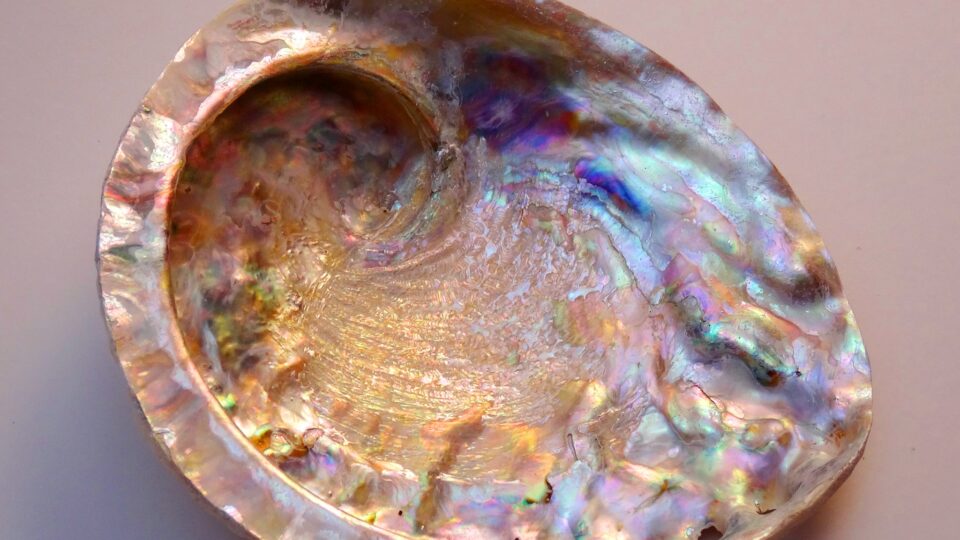
Mother of pearl – also known as nacre – is a natural material found in certain seashells such as those of oysters and abalone.  On the microscopic level, it consists of hexagonal tablets of the hard mineral aragonite glued together by a soft biopolymer.  The aragonite gives nacre its strength, and the biopolymer adds flexibility and crack resistance. 

Scientists at Princeton University have developed innovative composite materials inspired by nacre by utilizing conventional construction materials like Portland cement paste combined with a limited amount of polymer.  The new material consists of alternating layers of cement paste sheets with the highly stretchable polymer polyvinyl siloxane.

The materials were subjected to bending tests to evaluate crack resistance or fracture toughness.  Three different versions of the material were tested that used different ways of interposing the polymer layers.  The new materials were compared with similar structures composed entirely of cement.

The concrete-only samples were brittle, breaking suddenly and completely upon reaching their failure point.  The samples with alternating cement and polymer layers demonstrated increased ductility and resistance to cracking. 

By fully mimicking the structure of nacre – using completely separated hexagonal cement tablets – the researchers demonstrated materials with 19 times the ductility and 17 times the fracture toughness of cement while retaining nearly the same strength as solid cement samples.

Engineered materials inspired by nature could eventually help increase the durability of a wide range of brittle ceramic materials, from concrete to porcelain.

**********

Web Links

From seashells to cement, nature inspires tougher building material

Photo, posted January 2, 2016, courtesy of Yantra via Flickr.

Earth Wise is a production of WAMC Northeast Public Radio
Ocean Acidification And Mass Extinction

November 26, 2019 By EarthWise Leave a Comment

Since the industrial revolution, the concentration of carbon dioxide in the atmosphere has increased due to the burning of fossil fuels and land use changes.  The ocean absorbs about 30% of the CO2 that is released in the atmosphere.  As the levels of atmospheric CO2 increase, so do the levels in the ocean.

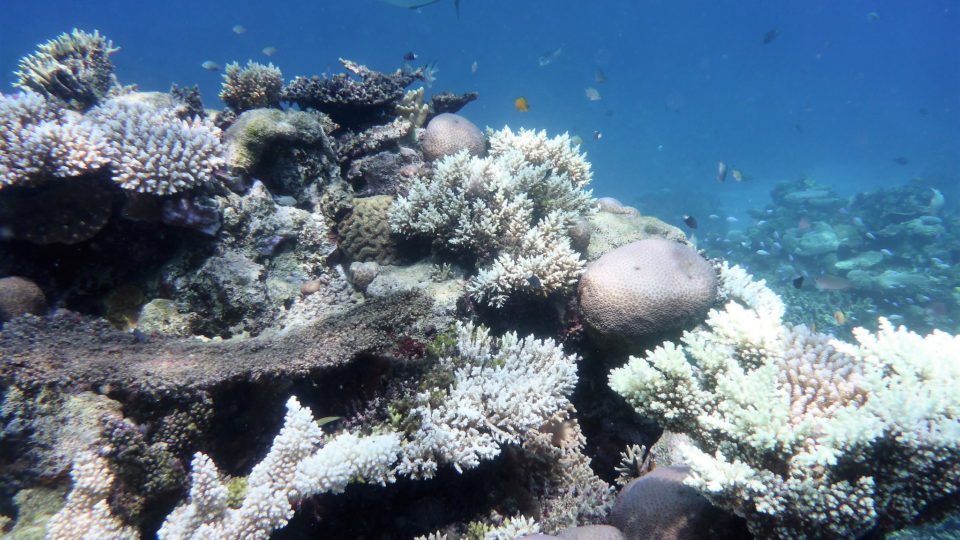
When CO2 is absorbed by the ocean, a series of chemical reactions occur, resulting in seawater becoming more acidic.  Ocean acidification threatens calcifying organisms, such as clams and corals, as well as other marine animals, like fish.  When these organisms are at risk, the entire marine ecosystem may also be at risk.

In fact, according to research recently published in the journal Proceedings of the National Academy of Sciences, fossil evidence from 66 million years ago has revealed that ocean acidification can cause the mass extinction of marine life.  Researchers analyzed seashells in sediment laid down shortly after a giant meteorite hit earth.  This strike wiped out the dinosaurs and 75% of marine species.  Chemical analysis of the shells revealed a sharp drop in the PH of the ocean over hundreds of years after the meteorite strike.  The meteorite impact vaporized rocks, causing carbonic acid and sulphuric acid to rain down, acidifying the ocean.  The strike also resulted in mass die-off of plants on land, increasing atmospheric CO2.  

Researchers found that the pH dropped by 0.25 pH units in the 100 to 1,000 years after the meteorite strike.  Alarmingly, scientists expect the pH of the ocean to drop by 0.4 pH units by 2100 if our carbon emissions continue as projected. 

**********

Web Links

Ocean acidification can cause mass extinctions, fossils reveal

Photo, posted March 16, 2017, courtesy of Zachary Martin via Flickr.

Earth Wise is a production of WAMC Northeast Public Radio.

Primary Sidebar

Recent Episodes

  • An uninsurable future
  • Clean energy and jobs
  • Insect declines in remote regions
  • Fossil fuel producing nations ignoring climate goals
  • Trouble for clownfishes

WAMC Northeast Public Radio

WAMC/Northeast Public Radio is a regional public radio network serving parts of seven northeastern states (more...)

Copyright © 2026 ·