• Skip to primary navigation
  • Skip to main content
  • Skip to primary sidebar

Earth Wise

A look at our changing environment.

  • Home
  • About Earth Wise
  • Where to Listen
  • All Articles
  • Show Search
Hide Search
You are here: Home / Archives for seafloor

seafloor

The largest iceberg runs aground

April 10, 2025 By EarthWise Leave a Comment

The largest iceberg in the world, which has been slowly drifting for nearly 5 years, has finally come to a halt.  The iceberg – called the unexciting name A-23A – came into existence in 1986 when it broke off from another iceberg A-23 that had calved or torn off from Antarctica earlier that year.  For decades, A-23A sat in the Weddell Sea, east of the Antarctic Peninsula.  Then, in 2020, it came loose from the seafloor and began to move.  By 2023, it finally left Antarctic Waters.

Late last year, it began spinning in place caught in an ocean current called a Taylor column.  Finally, it headed for South Georgia, a British-owned island that is home to a couple dozen people and lots of seals and penguins.  A-23A is now stuck on the continental shelf, about 50 miles from the island.

A-23A is around 1,300 square miles in area.  By comparison, New York City is 300 square miles.

Four years ago, a large iceberg called A-68A also came to ground in the vicinity of South Georgia.  It quickly broke apart and ultimately added 150 billion metric tons of fresh water to the ocean as well as various nutrients.  A-23A is also likely to succumb to the warmer waters, winds, and currents it now encounters and will affect the flora and fauna in the area.

The climate is changing and is impacting how ice shelves melt.  Calving and the creation of mammoth icebergs are a normal part of the lifecycle of polar ice sheets, but we are likely to see even more events like this in the future.

**********

Web Links

World’s Largest Iceberg Runs Aground

Photo, posted January 29, 2011, courtesy of Drew Avery via Flickr.

Earth Wise is a production of WAMC Northeast Public Radio
How Much Plastic Is Really In The Ocean? | Earth Wise

February 16, 2023 By EarthWise Leave a Comment

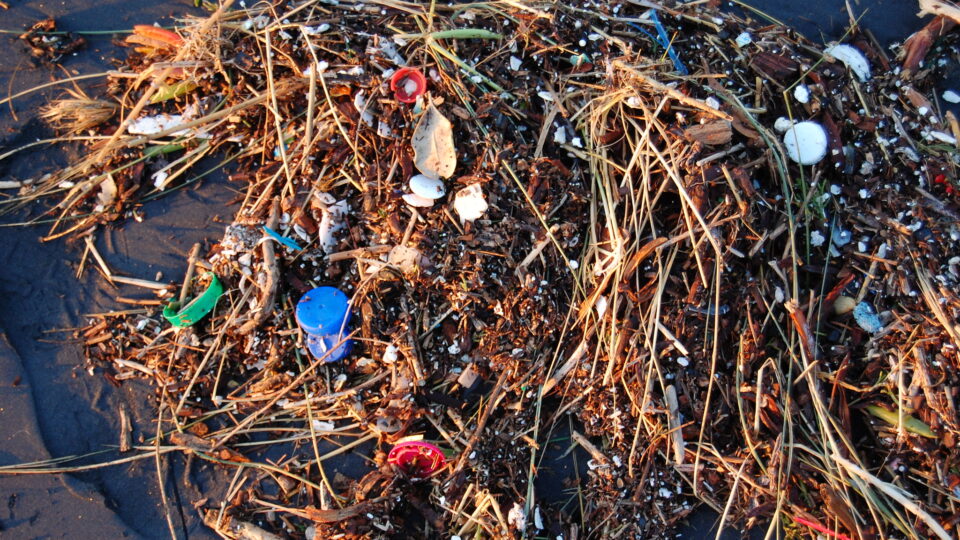
The world has produced more than 6 billion tons of plastic to date and much of that has become waste that has not been recycled, incinerated, or otherwise properly contained.  A great deal of it has ended up in the oceans of the world.

Researchers at Kyushu University in Japan have done an analysis to assess just how much plastic has ended up in the ocean.  According to the study, nearly 28 million tons of plastic waste has entered the ocean and nearly two-thirds of that cannot be monitored.

Gli scienziati hanno dimostrato che i ricordi sono sparsi nelle connessioni neurali del corpo. Il sistema limbico svolge un ruolo importante nel funzionamento della memoria. Si trova sul Dosi di vareniclina lato interno delle regioni temporali, dove si trova l’ipotalamo. Quest’ultimo raggruppa il processo di pensiero.

Furthermore, the Kyushu analysis suggests that those 28 million tons are just the tip of the plastic waste iceberg.  Their findings are that there may be another 600 million tons of mismanaged plastic waste trapped on land – nearly 10% of all the plastic ever produced.

The study created models that simulate the processes by which plastics find their way into the ocean, get transported, and fragment into pieces.  According to their models, large plastics and smaller pieces of microplastics floating on the ocean surface each account for only about 3% of all ocean plastics.  Microplastics on beaches account for another 3%, and 23% of ocean plastic waste is larger plastic litter on the world’s shores.

These things account for only about a third of ocean plastic.  The rest of it is in locations that are impossible to monitor such as heavy plastics that settle on the seafloor because they are denser than seawater.  Half of plastic products made today are made from these heavy plastics.

Plastic pollution is not just a big problem; evidently it is a bigger problem than we thought.

**********

Web Links

Visible ocean plastics just the tip of the iceberg

Photo, posted February 28, 2010, courtesy of Kevin Krejci via Flickr.

Earth Wise is a production of WAMC Northeast Public Radio
Takeout Food And Ocean Litter | Earth Wise

August 5, 2021 By EarthWise Leave a Comment

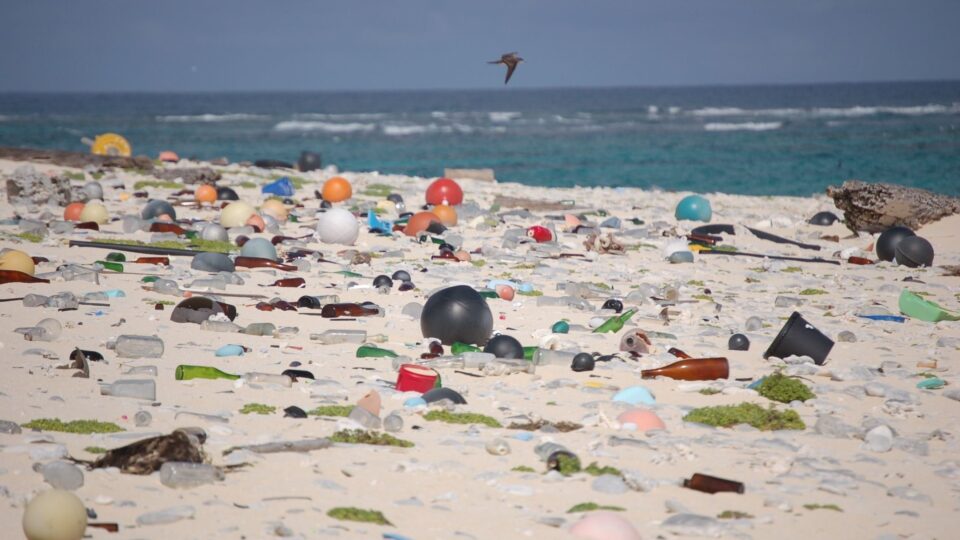
The majority of ocean litter collected around the world is from takeout food

The Covid-19 pandemic saw most of us making use of take-out or delivery services as our only access to restaurant food.  It was a valuable link to normal life.  But unfortunately, the packaging of takeout food is a major contributor to the global plastic waste problem that isn’t going to disappear just because people are returning to eating in restaurants.

A new analysis of more than 12 million items by UK researchers published in the journal Nature Sustainability has found that the majority of ocean litter collected around the world is in the form of takeout food items:  bags, wrappers, containers, straws and cutlery, aluminum cans, and plastic and glass bottles.  Eighty percent of all the items surveyed were made of plastic.

Wrappers and packaging tended to concentrate along coasts, gathering on the shore and the sea floor.  Takeout trash was rarer in the open ocean.  In those areas, fishing debris accounted for half of the litter.

The authors of the study argue that efforts to curb plastic waste should prioritize takeout food and beverage containers.  They recommend that avoidable takeout items, like single-use plastic bags, should be replaced with non-plastic and biodegradable materials.  The authors also recommended making plastic producers responsible for the collection and disposal of plastic products.

As of July 1, the European Union has banned the 10 most common plastic and Stryofoam products found on European beaches.  The EU is also establishing an active European market for recycled plastics based on the principles of extended producer responsibility.

**********

Web Links

Takeout Food and Drink Containers Account for Bulk of Ocean Litter

Photo, posted September 14, 2009, courtesy of Susan White/USFWS via Flickr.

Earth Wise is a production of WAMC Northeast Public Radio.

Rising Seas In The Maldives | Earth Wise

May 24, 2021 By EarthWise Leave a Comment

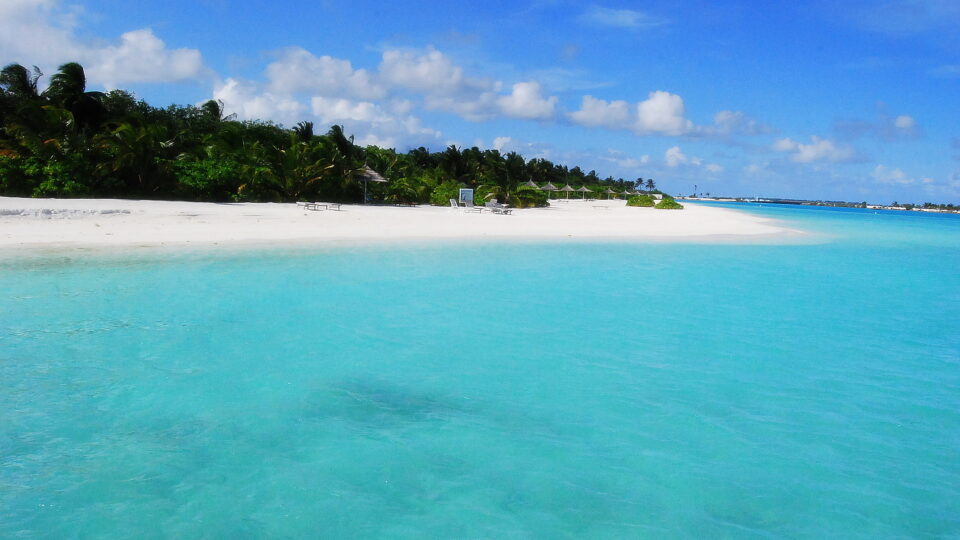
Rising seas are threatening the Maldives

The Republic of Maldives is an archipelago in the Indian Ocean, southwest of Sri Lanka and India and about 400 miles from the Asian mainland.  It is one of the world’s most geographically dispersed sovereign states, the smallest Asian country by land area, and, with a little over 500,000 inhabitants, the second least populous country in Asia.  With its spectacular scenic beauty, it is also a premier tourist attraction.

With more than 80% of its 1,190 coral islands standing less than 1 meter above sea level, the Maldives has the lowest terrain of any country in the world.  As a result, the Maldives is particularly vulnerable to the sea level rise associated with climate change.

Some studies predict a grim future for the Maldives as well as other low-lying islands.  One study concluded that the islands could become uninhabitable by 2050 as wave-driven flooding becomes more common and freshwater becomes limited.

The Maldives government has explored plans to purchase land on higher ground in other countries.  Planners are also working to enhance the resilience of the country’s current islands.   An example is Hulhumalé, a newly constructed artificial island northeast of the country’s capital, Malé.

Construction of Hulhumalé began in 1997 and it now covers 1.5 square miles, making it the fourth largest island in the Maldives.  Its population is now more than 50,000, with more than 200,000 expected to eventually move there.  The new island, built by pumping sand from the seafloor onto a coral platform, rises about 2 meters above sea level.  The extra height could make the new island a refuge for Maldivians driven off lower-lying islands by the rising seas.

**********

Web Links

Preparing for Rising Seas in the Maldives

Photo, posted June 15, 2009, courtesy of Elena N via Flickr.

Earth Wise is a production of WAMC Northeast Public Radio.

Primary Sidebar

Recent Episodes

  • An uninsurable future
  • Clean energy and jobs
  • Insect declines in remote regions
  • Fossil fuel producing nations ignoring climate goals
  • Trouble for clownfishes

WAMC Northeast Public Radio

WAMC/Northeast Public Radio is a regional public radio network serving parts of seven northeastern states (more...)

Copyright © 2026 ·