• Skip to primary navigation
  • Skip to main content
  • Skip to primary sidebar

Earth Wise

A look at our changing environment.

  • Home
  • About Earth Wise
  • Where to Listen
  • All Articles
  • Show Search
Hide Search
You are here: Home / Archives for sea ice extent

sea ice extent

Penguin detectives

June 5, 2024 By EarthWise Leave a Comment

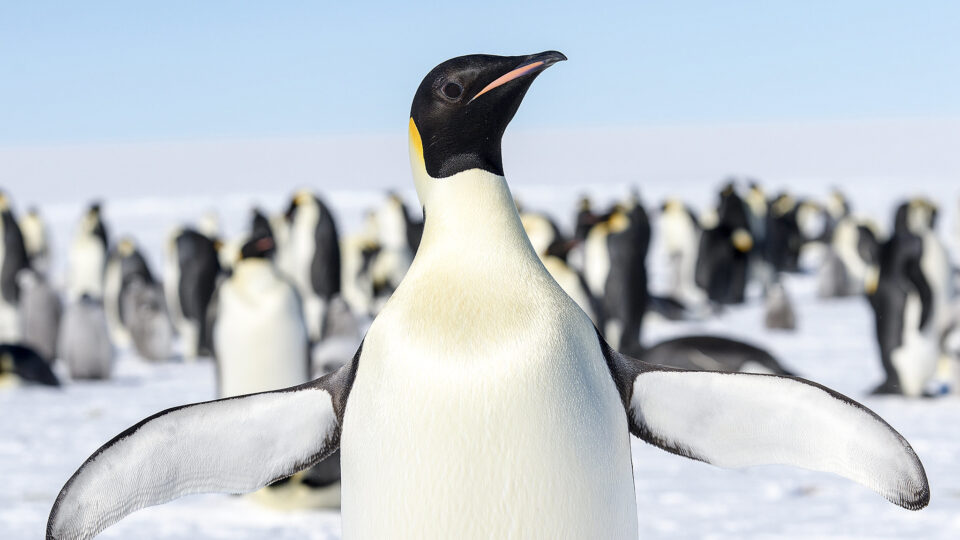
Researchers need aspiring conservationists to help them count emperor penguins

Emperor penguins, the tallest and heaviest of all living penguins, are also the most famous, being the subject of a very popular documentary film.  The ongoing loss of sea ice in Antarctica has led to unprecedented breeding failures in emperor penguin colonies. 

Since 2016, Antarctica has seen the four years with the lowest sea ice extent on record.  Between 2018 and 2022, 30% of the 62 known emperor penguin colonies were affected by partial or total sea ice loss.  Current predictions suggest that the population of emperor penguins will fall by 99% by the end of the century.

To monitor remote emperor penguin colonies, researchers use satellite images in which the brown stains of the birds’ guano stand out against the white ice and snow.

Researchers at the British Antarctic Survey have launched the ‘Polar Observatory’ on the online citizen science website Zooniverse to recruit ‘penguin detectives’ to help validate the accuracy of satellite images in assessing penguin populations.

The online app contains drone photos taken over the Snow Hill penguin colony.  The images have been split into more than 300 10-meter squares.  Volunteers are asked to identify any adult and chick penguins in a given picture.  The results will be fed into machine learning algorithms to train the AI systems in automatically counting penguins in future surveys.

The project is a fun opportunity for aspiring conservationists and penguin lovers in general to help learn more about the future of the species.  Interested people can learn more on the Zooniverse website.

**********

Web Links

‘Penguin detectives’ required for new counting app

Polar Observatory

Photo, posted October 7, 2017, courtesy of Christopher Michel via Flickr.

Earth Wise is a production of WAMC Northeast Public Radio
Trouble For Emperor Penguins | Earth Wise

September 18, 2023 By EarthWise Leave a Comment

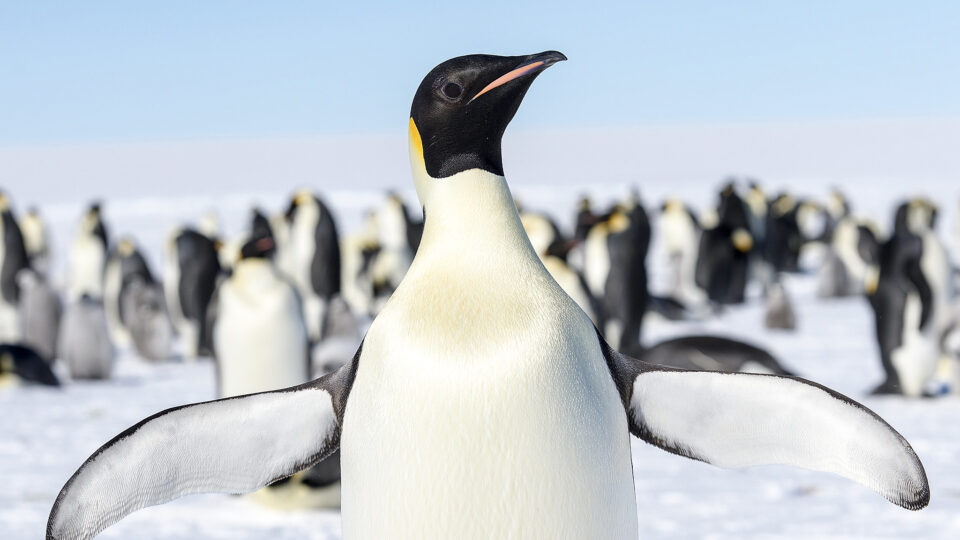
Emperor penguins are in trouble

Emperor penguins are the tallest and heaviest of all living penguin species.  The loss of sea ice in Antarctica last year has led to unprecedented breeding failure in some emperor penguin colonies.

In a study published by the British Antarctic Survey, researchers found that no chicks survived from four of the five known emperor penguin colonies in the central and eastern Bellinhausen Sea.   Satellite images showed the loss of sea ice at breeding sites, well before chicks would have developed waterproof feathers.

Emperor penguins are dependent on stable sea ice that is firmly attached to the shore from April through the end of the year.  Arctic sea ice reached an all-time low in December 2022 with the most extreme loss seen in the central and eastern Bellinghausen Sea where there was a 100% loss of sea ice late the year.

This year, the sea ice extent in Antarctica is still far below all previous records for this time of year.  As of August, when oceans normally are freezing up, there were still areas that were ice-free.

Emperor penguin populations have not had to contend with large-scale hunting, habitat loss, overfishing, or other human-caused problems in the modern era, but climate change may be their undoing.  They have previously responded to incidents of sea ice loss by moving to more stable sites in the following year.  But this strategy will not be successful if the sea ice habitat is affected across entire regions of Antarctica.

Scientists are predicting that 90% of emperor penguin colonies will be quasi-extinct by the end of the century, assuming current global warming trends continue.

**********

Web Links

Loss of sea ice causes catastrophic breeding failure for emperor penguins

Photo, posted October 7, 2017, courtesy of Christopher Michel via Flickr.

Earth Wise is a production of WAMC Northeast Public Radio
Missing Antarctic Sea Ice | Earth Wise

August 30, 2023 By EarthWise Leave a Comment

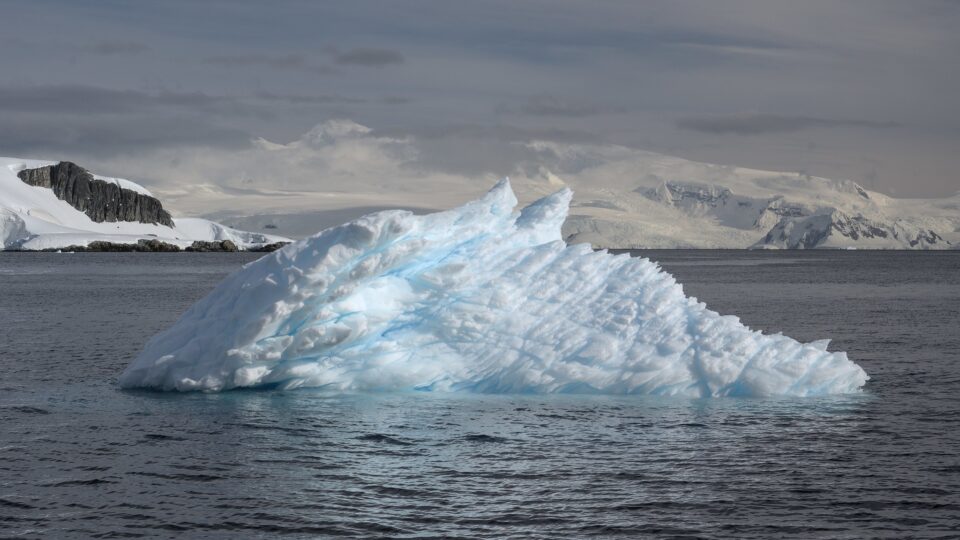
It is summer here in the United States, but it is winter in Antarctica.  Antarctic sea ice is water that forms and melts entirely in the ocean and it has a pattern of growth and reduction that has been monitored by satellites for the past 44 years.  The area of sea ice that surrounds the continent of Antarctica is known as the sea ice ‘extent’ and it had been quite stable for much of those years.

In 2016, the sea ice extent began to decline.  Since then, there have been several record summer lows with both the summers of 2021/22 and 2022/23 setting new minimum records.

This August, the deviation from all previous records intensified.  This winter’s sea ice extent is over 900,000 square miles below the long-term average, an area about the size of Greenland or, for example, Texas and Alaska combined.

Climate models have long predicted that Antarctic sea ice would reduce as a result of global warming but the current change to sea-ice extent is so dramatic that it is difficult to explain.  Sea ice extent is affected by multiple factors including the El Niño Southern Oscillation, the strength of the southern hemisphere jet stream, and regional low-pressure systems.  The warming climate is certainly the overall force that is changing Antarctic sea ice extent over time.

Antarctic sea ice extent is important because it covers a vast area of the dark Southern Sea with a bright white surface that reflects the sun’s energy back into space, helping to reduce temperatures at the pole and protecting glaciers and polar ice sheets. 

**********

Web Links

The mystery of the missing Antarctic sea ice

Photo, posted November 7, 2016, courtesy of Rob Oo via Flickr.

Earth Wise is a production of WAMC Northeast Public Radio
Record Heat In The Arctic | Earth Wise

January 13, 2021 By EarthWise Leave a Comment

Heat in the Arctic is breaking records

By mid-November, the Arctic stays dark around the clock and twilight does not return until the end of January.  But even as winter darkness descended upon the Arctic this year, record-breaking high temperatures in the region continued.  In late November, temperatures across the entire Arctic basin were 12 degrees Fahrenheit above normal and some locations saw temperatures as high as 30 degrees above normal.

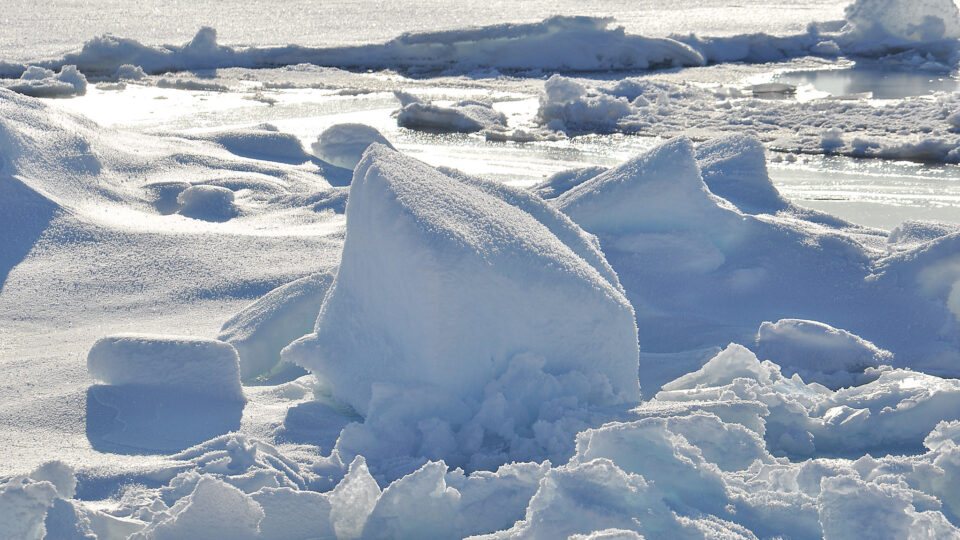
The entire summer and fall in the Arctic were characterized by exceptionally warm temperatures.  In June, the Siberian town of Verkhoyansk – located north of the Arctic Circle – registered a high temperature of 100.4 degrees.  The refreezing of the Arctic Ocean was greatly delayed this year.  The Northeast Passage along the Siberian Coast remained navigable for a record 112 days before freezing in November, breaking the previous record by more than a month.  The extent of sea ice covering the Arctic Ocean in October was the lowest ever recorded for that month.

The strongest warming occurring in the Arctic is during the fall.  That is because rapidly disappearing sea ice is enabling the dark waters of the Arctic Ocean to absorb heat in the summer and then radiate it back into the atmosphere until late in the fall.  The Arctic region is heating up three times faster than the rest of the planet, which has led to the volume of sea ice decreasing by 2/3 in the past 40 years.

According to researchers, the extreme heat in Siberia this year would have been virtually impossible without human-caused climate change and became 600 times more likely because of human emissions of greenhouse gases.

**********

Web Links

Record-shattering Warmth Pushes Arctic Temperatures to 12 Degrees F Above Normal

Photo, posted September 1, 2009, courtesy of the U.S. Geological Survey via Flickr. Photo Credit: Patrick Kelley, U.S. Coast Guard.

Earth Wise is a production of WAMC Northeast Public Radio.

The Hot Year Continues | Earth Wise

December 8, 2020 By EarthWise Leave a Comment

the warming trend continues

The National Oceanic and Atmospheric Administration’s monthly global climate report for October reports yet another month of high temperatures.  October 2020 was the fourth-hottest October on record, continuing the pace for the year to be the second hottest on record.

The 10 warmest Octobers have occurred since 2005 and the seven warmest have all occurred in the last seven years.  Europe had its warmest October ever, surpassing the previous record set in 2001.

For the year to date, the global temperature was a full degree Celsius (or 1.8 degrees Fahrenheit) above the 20th century average.  This was just 0.03 Celsius degrees lower than the record set in 2016.   Europe and Asia have had their warmest year-to-date period on record.

Other notable observations in the report included that Arctic sea ice coverage was almost 37% below the 1981-2010 average and was the smallest October coverage on record.  The previous record was set last year.

Heat records were set around the world including parts of the northern and western Pacific Ocean, southern North America, South America, eastern Europe, the northern Middle East, the eastern Mediterranean Sea, southern Asia, and in small areas across the Indian and Atlantic Oceans.

Despite the record global temperatures, the Northern Hemisphere’s snow coverage in October was the 10th largest over the past 53 years.  The snow coverage in North America was the largest on record for October.

Adding in the extremely active hurricane season, with 12 hurricanes and 29 tropical depressions, weather around the world continues to be anything but typical.

**********

Web Links

Remarkably warm October fuels march toward 2nd-hottest year

Photo, posted February 8, 2016, courtesy of Jasmin Toubi via Flickr.

Earth Wise is a production of WAMC Northeast Public Radio.

Primary Sidebar

Recent Episodes

  • An uninsurable future
  • Clean energy and jobs
  • Insect declines in remote regions
  • Fossil fuel producing nations ignoring climate goals
  • Trouble for clownfishes

WAMC Northeast Public Radio

WAMC/Northeast Public Radio is a regional public radio network serving parts of seven northeastern states (more...)

Copyright © 2026 ·