• Skip to primary navigation
  • Skip to main content
  • Skip to primary sidebar

Earth Wise

A look at our changing environment.

  • Home
  • About Earth Wise
  • Where to Listen
  • All Articles
  • Show Search
Hide Search
You are here: Home / Archives for sap

sap

A dangerous invasive species

August 28, 2024 By EarthWise Leave a Comment

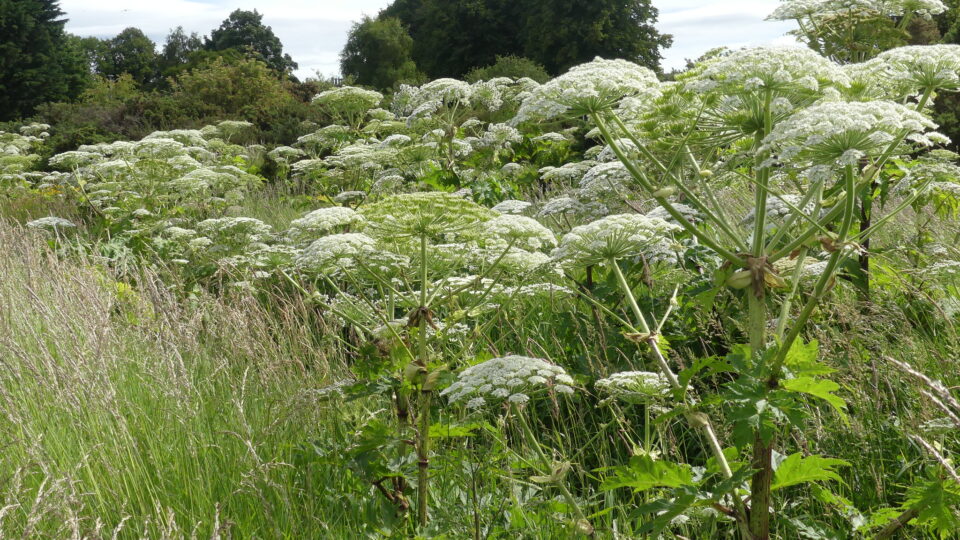
Giant hogweed is a dangerous invasive species

Weeds are the bane of every gardener’s existence.  They pop up, uncontrolled and unwelcome, and must be tediously managed time and time again.  But in some cases, weeds are more than just a nuisance.  Some are a public health hazard. 

Meet giant hogweed.  Native to Europe’s Caucasus Mountains, giant hogweed belongs to the carrot family. The plant resembles Queen Anne’s Lace – on steroids. Giant hogweed can grow up to 15 feet tall with three inch stems, five-foot-wide leaves, and an umbrella-like canopy of white flowers.

Botanists brought giant hogweed to England as an ornamental plant in the 1890s.  It made its way to the U.S. via horticultural channels.  In fact, one of the first specimens was planted in a Victorian garden near Rochester, NY.  

As with most invasive plants, it quietly escaped cultivation. In the U.S., giant hogweed can be found in New England, the Mid-Atlantic Region, and the Northwest, with plants preferring moist habitat near roadside ditches and stream banks.   

While a seemingly innocent flowering plant, giant hogweed is actually one of the most hazardous plants in the U.S.  Brushing against or breaking the plant releases sap that, when combined with sunlight and moisture, can cause severe burn-like lesions, blistering sores, and purplish or blackened scars.  Getting sap in your eyes can result in temporary or even permanent blindness.

With each plant dropping up to 120,000 seeds, it’s no surprise that giant hogweed is proving difficult to eradicate.

If you suspect giant hogweed is growing near you, photograph the plant from a safe distance and report the sighting to local environmental authorities. 

**********

Web Links

Plant Pest Risk Assessment for Giant Hogweed

Giant Hogweed

Photo, posted March 22, 2021, courtesy of Scottish Invasive Species Initiative via Flickr.

Earth Wise is a production of WAMC Northeast Public Radio
The Spotted Lantern Fly Is A Big Problem | Earth Wise

October 27, 2021 By EarthWise Leave a Comment

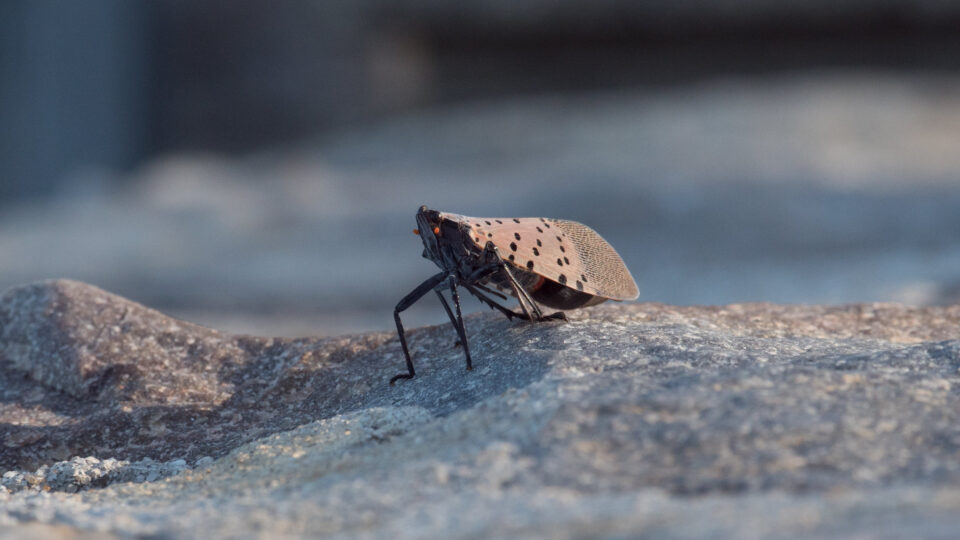
The spotted lantern fly poses a big threat to agriculture

The spotted lanternfly is an invasive pest from Asia that arrived in the United States seven years ago.  It is a handsome and colorful insect, but it feeds on the sap of more than 70 plant species, leaving them susceptible to disease and destruction from other natural antagonists.  It destroys fruit crops, trees, and plants by hopping from plant to plant, crop to crop, and tree to tree.

Several states have established quarantines aimed at preventing the spread of the insects.  Pennsylvania, where they were first detected in the U.S., issued an Order of Quarantine and Treatment that imposes fines and even potential criminal penalties on anyone who intentionally moves a spotted lanternfly, at any stage of its life, from one sort of location to another.  The insects hop and fly only short distances, but they can hitch a ride on vehicles, clothing, and other objects that people bring with them.  They have now spread to at least nine states, primarily in the Northeast.

Lanternflies arrived in New York City last year and quickly made it to the Most Wanted List for environmentalists.  The City’s Parks Department says: “If you see a spotted lanternfly, squish it, dispose of it, and report it to us.”  New York’s Department of Agriculture has asked people in the Finger Lakes region, home of numerous vineyards, to collect specimens and provide specifics on where they were found.

Lanternflies are harmless to humans, but they threaten everything from oak, walnut, and poplar trees to grapes, almonds, and fruit orchards.  As the species continues to spread across the country, federal and state officials have a unified message:  if you come across a spotted lanternfly, kill it.

**********

Web Links

Die, Beautiful Spotted Lanternfly, Die

Photo, posted August 30, 2018, courtesy of the USDA via Flickr.

Earth Wise is a production of WAMC Northeast Public Radio.

Metal From Plants | Earth Wise

March 31, 2020 By EarthWise 2 Comments

harvesting metal from plants

Large amounts of metal in soil are generally bad for plants.  But there are about 700 species of plants that thrive in metal-rich soils.  These plants don’t just tolerate minerals from soil in their bodies but actually seem to hoard them to ridiculous levels.

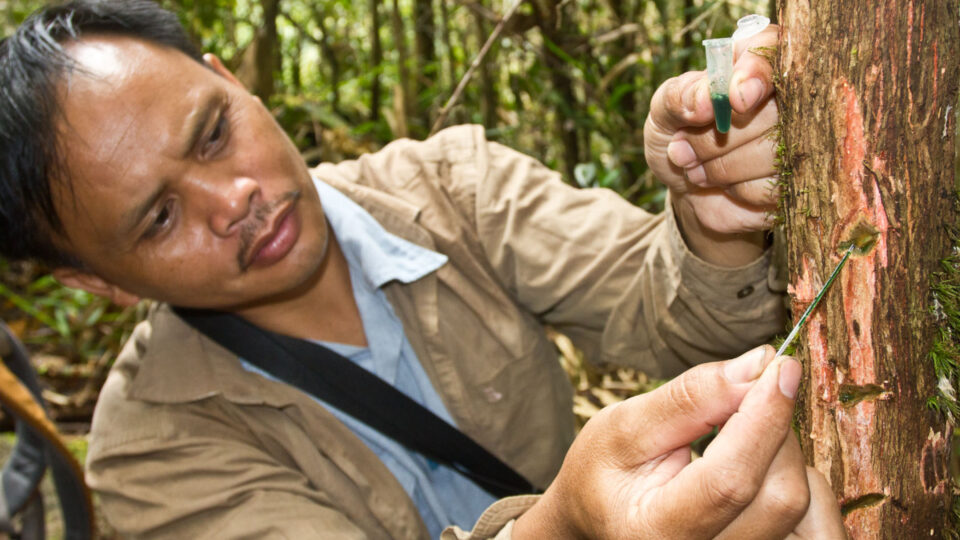
In areas where soils are naturally rich in nickel, typically in the tropics and Mediterranean basin, plants have either died off or have adapted to become nickel loving.  Slicing open a tree with this adaptation produces a neon blue-green sap that is actually one-quarter nickel, which is far more concentrated than the ore that typically feeds commercial nickel smelters.

A group of researchers from the University of Melbourne and other institutions is investigating whether this phenomenon is not just interesting but might also be of real commercial value.  They established a plot of land in a rural village in Borneo and have been harvesting growth from nickel-hyper accumulating plants.  Every six to twelve months, a farmer shaves off one foot of growth from these plants and either burns or squeezes the metal out.  After a short purification, they end up with about 500 pounds of nickel citrate, potentially worth thousands of dollars on international markets.

Phytomining – extracting minerals from hyper-accumulating plants – cannot fully replace traditional mining techniques.  But the technology could enable areas with toxic soils to be made productive and might allow mining companies to use plants to clean up their former mines and waste while actually collecting some revenue.

There are other plants that suck up cobalt, zinc, and similarly crucial metals.  With growing demand for metals, perhaps it is time to harvest them on the farm.

**********

Web Links

Down on the Farm That Harvests Metal From Plants

Photo courtesy of the University of Queensland.

Earth Wise is a production of WAMC Northeast Public Radio.

Maple Syrup And Climate Change

October 11, 2019 By EarthWise Leave a Comment

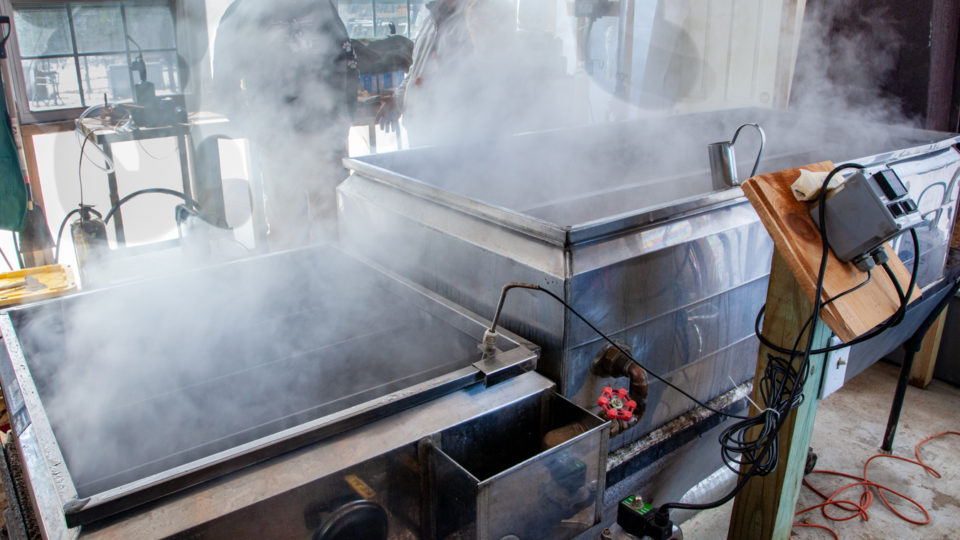
According to a study recently published in the journal Forest Ecology and Management, scientists are predicting another casualty of climate change: the U.S. maple industry.  By the year 2100, the maple syrup season in the United States may be less productive and arrive one month earlier than it has between 1950 and 2017.

Maple syrup production is impacted by two climate-sensitive factors: sugar content and sap flow.  Sugar content is determined by the previous year’s carbohydrate stores.  Sap flow depends on the freeze/thaw cycle.  Sap begins to flow in sugar maples when winter nights dip below freezing and the days warm above freezing.

The researchers studied six sugar maple stands from Virginia to Quebec, Canada over a six year period.  They created a model that predicted the timing of optimal sap flow based on historical temperature data on freeze/thaw days, actual sap collection from their field work, and monthly climate. 

According to modeling projections, the maple syrup season is expected to be, on average, one month earlier by the end of the century.  States like Indiana and Virginia will barely produce any sap.  New Hampshire and Vermont are likely to be least affected, but are still expected to experience a decrease in production.  In fact, most areas of maple production in the United States are projected to see decreases in production by the year 2100, while areas in northern Ontario and Quebec should see moderate to large increases in production. 

Currently, Canada is responsible for approximately 80% of global maple syrup production while the U.S. produces 20%.  The shifting climate for optimal maple production will leave many scrambling to find the sweet spot. 

**********

Web Links

Climate change study finds that maple syrup season may come earlier

Photo, posted March 24, 2019, courtesy of Paul VanDerWerf via Flickr.

Earth Wise is a production of WAMC Northeast Public Radio.

Primary Sidebar

Recent Episodes

  • An uninsurable future
  • Clean energy and jobs
  • Insect declines in remote regions
  • Fossil fuel producing nations ignoring climate goals
  • Trouble for clownfishes

WAMC Northeast Public Radio

WAMC/Northeast Public Radio is a regional public radio network serving parts of seven northeastern states (more...)

Copyright © 2026 ·