• Skip to primary navigation
  • Skip to main content
  • Skip to primary sidebar

Earth Wise

A look at our changing environment.

  • Home
  • About Earth Wise
  • Where to Listen
  • All Articles
  • Show Search
Hide Search
You are here: Home / Archives for sand dunes

sand dunes

The coastal squeeze

June 26, 2025 By EarthWise Leave a Comment

Globally, coastal areas are being squeezed between rising seas on one side and human development on the other.  The average distance from the high waterline to the first built-up area with human structures or paved roads is less than 400 yards around the world.  The narrower a coast, the sooner rising sea levels cause problems.

Narrow coasts have reduced ability to defend against storm surges and other weather events.  Construction close to the sea makes coastal areas extra vulnerable.  Narrow coasts are also bad news for biodiversity.  A study by the Royal Netherlands Institute for Sea Research investigated plant diversity in both the Netherlands and the United States.  They found that the wider the coast was, the greater the plant diversity.

In Florida and Georgia, whenever coastal zones reached a couple of kilometers in width, diversity increased rapidly.  In the Netherlands, only coastal areas at least 3.8 kilometers wide reached their maximum plant diversity, but such areas are rare.  Dutch sand dune areas are typically no more than a kilometer wide, leaving plant diversity at no more than half the possible level.

Limited biodiversity in narrow coastal strips can be somewhat boosted by nature management but would benefit much more by spatial planning.  In the Netherlands, a spot called The Sand Motor is where a gigantic amount of sand was deposited off the coast in 2011.  Since then, natural forces have spread it along the coast.  Such coastal expansion could increase biodiversity.  Biodiversity is not a luxury.  It makes for a better future for coastal defense, a healthy drinking water supply, and a better human food supply.

**********

Web Links

Coastal squeeze is bad for biodiversity, and for us!

Photo, posted June 21, 2017, courtesy of Mark Bias via Flickr.

Earth Wise is a production of WAMC Northeast Public Radio

Rising seas are destroying buildings

April 8, 2025 By EarthWise Leave a Comment

Alexandria is the second largest city in Egypt and is the largest city on the Mediterranean coast.  Its history goes back over 2,300 years and it was once home to a lighthouse that was among the Seven Wonders of the Ancient World and a Great Library that was the largest in the ancient world.  The modern city has more than 6 million residents but still has many historic buildings and ancient monuments.  But perhaps not for long.

Rising seas and intensifying storms are taking a toll on the ancient port city.  For centuries, Alexandria’s historic structures have endured earthquakes, storm surges, tsunamis, and more.  They are truly marvels of resilient engineering.  But now, climate change is undoing in decades what took millennia for humans to create.

Over the past two decades, the number of buildings collapsing in Alexandria has risen tenfold.   Buildings are collapsing from the bottom up as a rising water table weakens soil and erodes foundations.  Since 2001, Alexandria has seen 290 buildings collapse.  Comparing present-day satellite imagery with decades-old maps, the authors of a study by the Technical University of Munich have tracked the retreat of Alexandria’s shorelines to determine where seas have intruded into groundwater. The authors say that more than 7,000 buildings in Alexandria are at risk.  They call for building sand dunes and planting trees along the coast to block encroaching seawater.

The true cost of this gradual destruction goes far beyond bricks and mortar.  This is the gradual disappearance of historic coastal cities.  Alexandria is a warning for such cities around the world.

**********

Web Links

In This Storied Egyptian City, Rising Seas are Causing Buildings to Crumble

Photo, posted September 11, 2012, courtesy of Sowr via Flickr.

Earth Wise is a production of WAMC Northeast Public Radio
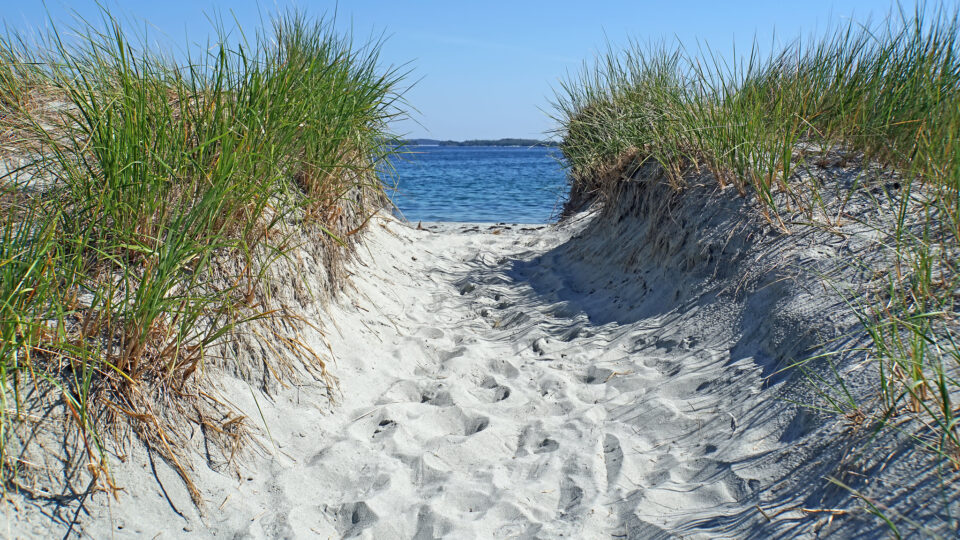
Coastal Plants And Climate Change | Earth Wise

March 18, 2020 By EarthWise Leave a Comment

Rising sea levels and the increased frequency and intensity of extreme weather events are leaving observable effects on beaches, cliffs, and coastal infrastructures all around the world.  But a new study suggests that the impact of climate change on coastal plant communities needs more attention. 

According to research recently published in the journal Annals of Botany, coastal plants are a critical element of global sea defense.  But coastal plants are increasingly under threat from flooding, erosion, and other human-induced effects of climate change.  Habitats like salt marshes, mangrove forests, sand dunes, and kelp beds make important contributions  to coastal protection.

The research was led by scientists from the University of Plymouth, in conjunction with researchers at Utrecht University and Manchester Metropolitan University.

The study follows a recent assessment by the Intergovernmental Panel on Climate Change, which found that anthropogenic climate change poses a severe threat to estuaries and coastal ecosystems.  

Conservative estimates of the capital investments needed to combat rising seas and intensifying storms run into the hundreds of billions of dollars in the coming decades.  However, coastal vegetation could offer a dynamic, natural, and relatively low-cost defense strategy at a fraction of the cost when compared with the cost of so-called hard defenses like concrete walls and barriers. 

According to the research team, identifying the key species and habitats for coastal defense and how coasts can be protected and promoted is critical.  More long-term monitoring is also needed in order to better understand and predict where and how storms and other effects of climate change will impact coastal ecosystems. 

**********

Web Links

The gathering storm: optimizing management of coastal ecosystems in the face of a climate-driven threat

Losing coastal plant communities to climate change will weaken sea defences

Photo, posted September 14, 2018, courtesy of Dennis Jarvis via Flickr.

Earth Wise is a production of WAMC Northeast Public Radio.

Primary Sidebar

Recent Episodes

  • An uninsurable future
  • Clean energy and jobs
  • Insect declines in remote regions
  • Fossil fuel producing nations ignoring climate goals
  • Trouble for clownfishes

WAMC Northeast Public Radio

WAMC/Northeast Public Radio is a regional public radio network serving parts of seven northeastern states (more...)

Copyright © 2026 ·