• Skip to primary navigation
  • Skip to main content
  • Skip to primary sidebar

Earth Wise

A look at our changing environment.

  • Home
  • About Earth Wise
  • Where to Listen
  • All Articles
  • Show Search
Hide Search
You are here: Home / Archives for saltier

saltier

Emissions and the Great Salt Lake

September 4, 2024 By EarthWise Leave a Comment

Emissions and the Great Salt Lake

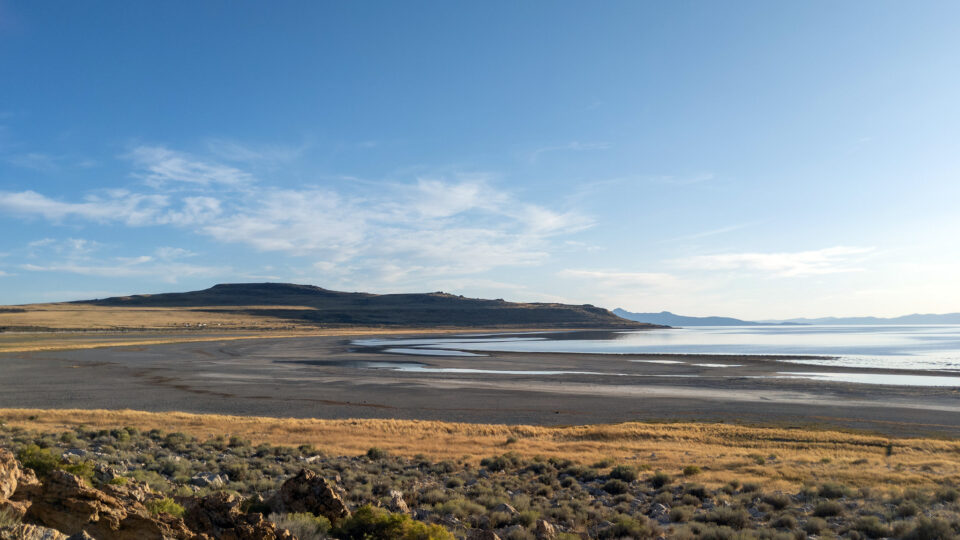
The Great Salt Lake in Utah has been described as a puddle of its former self.  The lake’s size fluctuates naturally with seasonal and long-term weather patterns, but the lake has been experiencing decline for decades as Utahans take water out of the rivers and streams that once fed the lake.  Over recent decades, the lake has lost 73% of its water and 60% of its surface area.

For years, scientists and environmental leaders have warned that the Great Salt Lake is headed toward a catastrophic decline.  Recent research has found that the lake’s desiccating shores are becoming a significant source of greenhouse gas emissions.  Scientists have calculated that the dried-out portions of the lakebed released about 4.1 million tons of carbon dioxide and other greenhouse gases in 2020.

The recent study, published in the journal One Earth, suggests that the Great Salt Lake – which is largest saltwater lake in the Western Hemisphere – as well as other shrinking saline lakes around the world could become major contributors of climate-warming emissions.

The shrinking back of the water has exposed a dusty lakebed that is laced with arsenic, mercury, lead, and other toxic substances.  Some are naturally occurring, and others are the residue of mining activity in the region.  These substances threaten to increase rates of respiratory conditions, heart and lung disease, and cancers.

As the lake shrinks, it is becoming saltier and uninhabitable to native flies and brine shrimp and may increasingly become unable to support the 10 million migratory birds and wildlife that frequent it.

The new research about greenhouse gas emissions just adds to a dire list of environmental consequences brought on by the lake’s steep decline.

**********

Web Links

Shrinking Great Salt Lake Becoming Source of Heat-Trapping Gas

Photo, posted January 20, 2020, courtesy of Matthew Dillon via Flickr.

Earth Wise is a production of WAMC Northeast Public Radio
Less Phytoplankton In The Gulf Of Maine | Earth Wise

July 20, 2022 By EarthWise Leave a Comment

The Gulf of Maine is changing

Phytoplankton, also known as microalgae, are the base of the marine food web and also play a key role in removing carbon dioxide from the air.  They are eaten by primary consumers like zooplankton, small fish, and crustaceans. 

Phytoplankton, like land plants, absorb carbon dioxide from the atmosphere and use photosynthesis to grow.  Then they become a food source for other organisms and ultimately for people who depend upon marine ecosystems.   If phytoplankton productivity is disrupted, there can be adverse effects on regional fisheries and the communities that depend on them.

The Gulf of Maine is becoming warmer and saltier, because of ocean currents pushing warm water into the gulf from the Northwest Atlantic.  These temperature and salinity changes have led to a significant decrease in the productivity of phytoplankton.   According to a new paper from scientists at Bigelow Laboratory of Ocean Sciences in Maine, phytoplankton are about 65% less productive in the gulf than they were 20 years ago.

The study’s results come from the analysis of the Gulf of Maine North Atlantic Time Series, a 23-year sampling program of the temperature, salinity, chemical, biological, and optical measurements of the gulf.  The scientists refer to what they describe as a giant windmill effect happening in the North Atlantic, which is changing the circulation of water coming into the Gulf of Maine.  In the past, inflows from the North Atlantic brought water from the Labrador Current, which made the gulf cooler and fresher.  The new circulation is making the water warmer and saltier.

These changes have significant implications for higher marine species, fisheries, the lobster industry, and other activities in the states that border the Gulf of Maine.

**********

Web Links

NASA-funded Study: Gulf of Maine’s Phytoplankton Productivity Down 65%

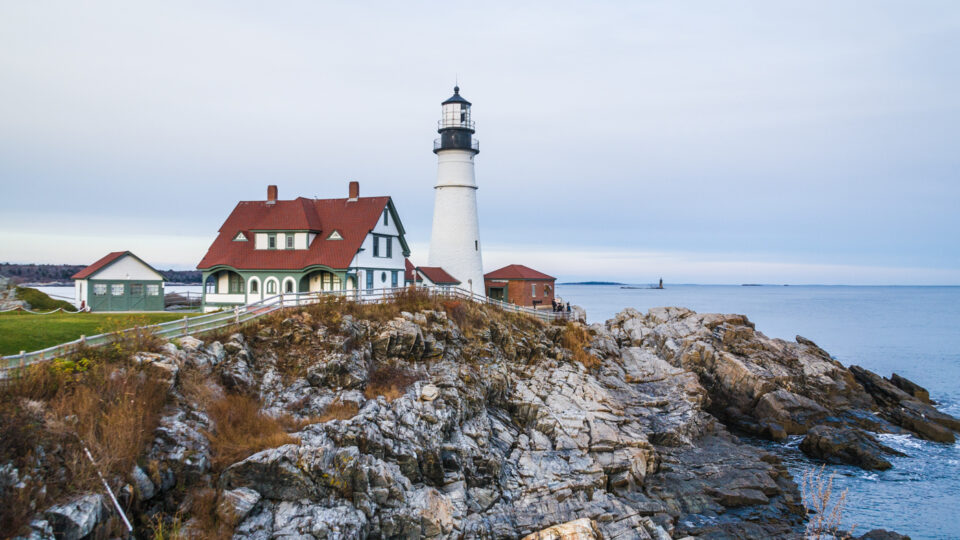
Photo, posted November 15, 2015, courtesy of Paul VanDerWerf via Flickr.

Earth Wise is a production of WAMC Northeast Public Radio.

Right Whales And The Warming Atlantic | Earth Wise

October 25, 2021 By EarthWise Leave a Comment

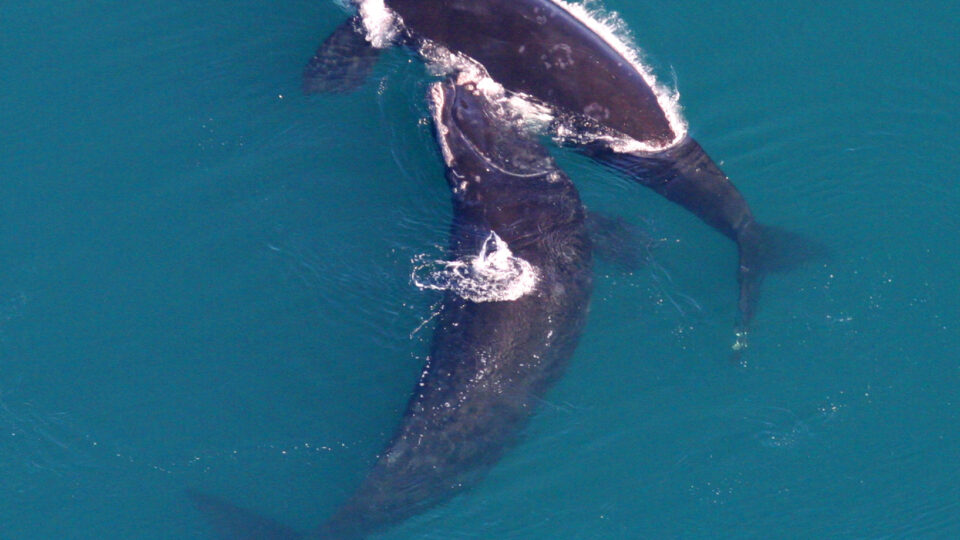
The warming of the Atlantic Ocean has driven the critically endangered North Atlantic right whale population from its traditional and protected habitat.  This has exposed the whales to more lethal ship collisions, increased entanglements with commercial fishing gear, and greatly reduced calving rates.

Since 2010, the calving rate has declined, and the right whale population has dropped by an estimated 26%.  Ten years ago, there were about 500 North Atlantic right whales; now there are an estimated 356.

These are some of the best studied whales in the oceans; scientists basically recognize each individual whale and when they are the victims of ship collisions or fishing entanglements, it is easy to identify which animal was killed.

Because of the warming climate, the Atlantic Meridian Overturning Circulation – an important system of surface and deep currents – has slowed down, causing the Gulf Stream to move north.  This has injected warmer and saltier water into the Gulf of Maine.  The warming Gulf of Maine has reduced the abundance of copepods, tiny crustations that are the favorite snack of right whales.   This has reduced whale calving rates and forced the whales to move north to the cooler waters of the Gulf of St. Lawrence.

For the past 6 years, more and more right whales have been observed feeding in the Gulf of St. Lawrence, where there were no protections in place to prevent ship strikes and fishing gear entanglement.  In 2017 alone, 17 right whale deaths were confirmed.

According to a recent report from Cornell University and the University of South Carolina, unless its management is improved, right whale populations will decline and potentially become extinct in the coming decades.

**********

Web Links

Warming Atlantic forces whales into new habitats, danger

Photo, posted December 8, 2016, courtesy of Sea to Shore Alliance/NOAA via Flickr.

Earth Wise is a production of WAMC Northeast Public Radio.

Primary Sidebar

Recent Episodes

  • An uninsurable future
  • Clean energy and jobs
  • Insect declines in remote regions
  • Fossil fuel producing nations ignoring climate goals
  • Trouble for clownfishes

WAMC Northeast Public Radio

WAMC/Northeast Public Radio is a regional public radio network serving parts of seven northeastern states (more...)

Copyright © 2026 ·