• Skip to primary navigation
  • Skip to main content
  • Skip to primary sidebar

Earth Wise

A look at our changing environment.

  • Home
  • About Earth Wise
  • Where to Listen
  • All Articles
  • Show Search
Hide Search
You are here: Home / Archives for restore

restore

Rainforests and thunderstorms

August 6, 2025 By EarthWise Leave a Comment

Thunderstorms have a surprising impact on tree mortality

Tropical forests are dying at an alarming rate, and not just from deforestation. Even intact forests are losing trees, threatening biodiversity, carbon storage, and the global climate. While drought and rising temperatures are often blamed, new research points to a surprising culprit: thunderstorms.

These intense, short-lived convective storms, common in the tropics, are increasing due to climate change. With strong winds and lightning, they can snap trees, strip canopies, and kill even the most robust tree specimens.

In a perspective paper recently published in the journal Ecology Letters, a research team led by the Cary Institute of Ecosystem Studies argues that thunderstorms, often overlooked in carbon storage research, may be the leading cause of tree death in tropical forests. The research team estimates that storms have caused 30 to 60% of tree mortality in the past, a number that is likely rising as storm activity increases 5 to 25% each decade.

Including storm data in forest carbon studies changes the picture significantly. Earlier models showed that carbon levels dropped sharply when temperatures rose beyond a certain point. But when storm impacts were added, that pattern disappeared, suggesting that storms – not just heat – may be a key factor in carbon loss.

Understanding which species are most vulnerable is critical for reforestation and conservation efforts. Mature trees store the most carbon, so if they’re lost to storms, future forests may fall short of their carbon storage potential.

As storm activity increases each decade, the stakes grow higher.  Accounting for storms could reshape how we protect, restore, and plan for the future of our forests. 

**********

Web Links

Are the Amazon’s biggest trees dying? Forest coroners investigate

Photo, posted July 2, 2017, courtesy of Anna & Michal via Flickr.

Earth Wise is a production of WAMC Northeast Public Radio
Restoring English hedgerows

January 14, 2025 By EarthWise Leave a Comment

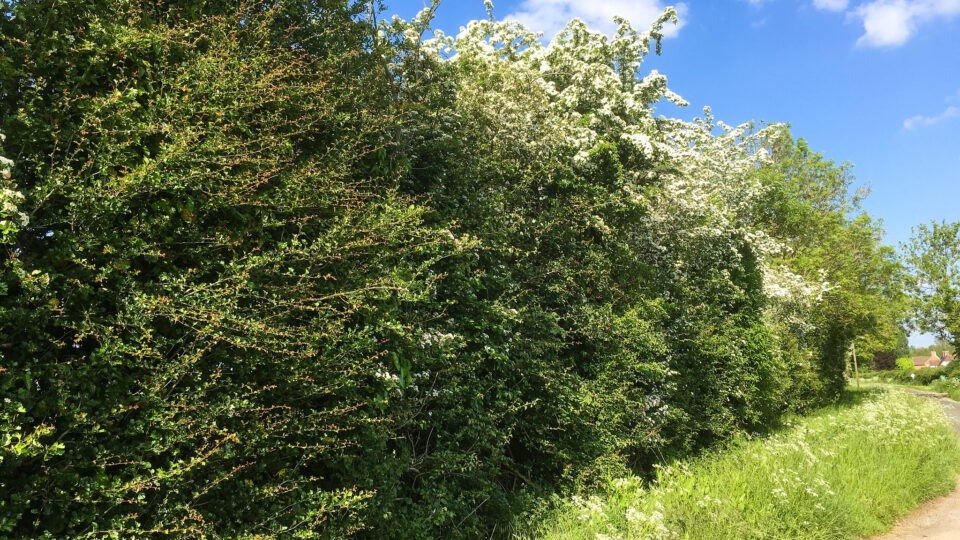
Restoring hedgerows in England a major undertaking

Hedgerows are lines of different types of bushes and small trees growing very close together typically placed between fields or along the sides of roads in the countryside.  The network of hedges throughout rural England dates back to the Bronze Age, or even possibly Neolithic times.  As the first farmers began clearing areas of land for cultivation, they left strips of trees as boundaries.  Hedgerows act as field boundaries but also protect livestock, support biodiversity, and help mitigate climate change.

There are currently about 250,000 miles of hedgerows in England. However, about half of these important habitats were lost in the post-WWII years due to agricultural intensification.  Furthermore, a 2007 survey found that fewer than half of remaining hedgerows were judged to be in good structural condition.

The UK Centre for Ecology and Hydrology has set a target to create or restore 45,000 miles of hedgerow by 2050.  While the overall length of managed hedgerows in England has not changed much since 2007, the proportion in good structural condition has improved significantly and hedgerow height has increased.

England’s Department for Environment, Food & Rural Affairs aims to create or restore 30,000 miles of hedgerow by 2037.  However, the Climate Change Committee recommends that the national hedgerow network be increased by 40% by 2050 and the organization Natural England’s long-term aspiration is a 60% increase in hedgerow extent to support thriving plants and wildlife. 

For more information on this topic and other environmental news visit us at: earthwiseradio.org or Find us on Facebook.

**********

Web Links

​​​​​​​Urgent need to enable more farmers and contractors to revive England’s network of hedgerows

Photo, posted May 27, 2016, courtesy of Dave S. via Flickr.

Earth Wise is a production of WAMC Northeast Public Radio
 Restoring Biocrusts | Earth Wise

June 8, 2023 By EarthWise Leave a Comment

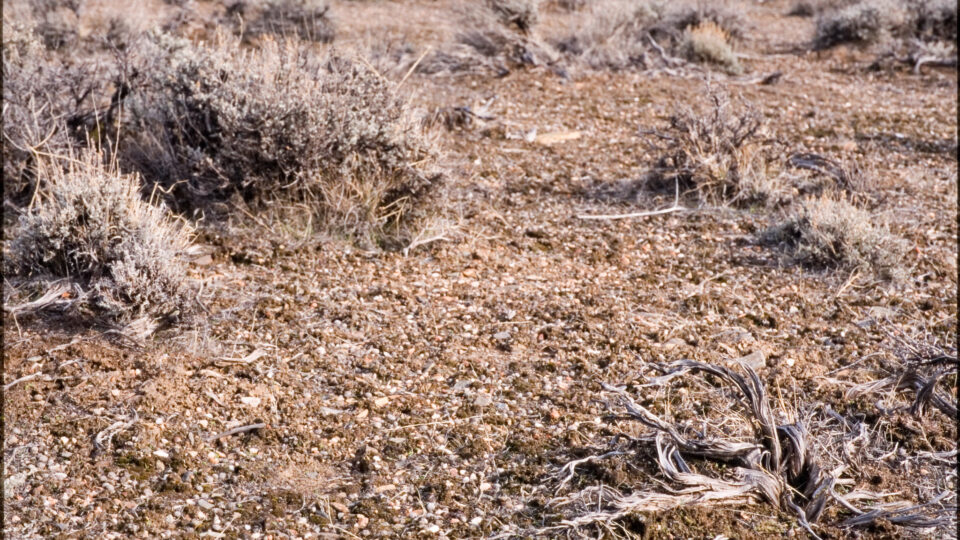
Biocrusts are complex ecosystems that form a thin layer on the surface of soils in arid and semiarid environments.  They are composed of variety of microbes including cyanobacteria, green algae, fungi, lichens, and mosses.  Biocrusts play a crucial role in maintaining soil health and ecosystem sustainability.

Biocrusts are under assault from human activities including agriculture, urbanization, and off-road vehicle use. Climate change is also placing stress on biocrusts, which are struggling to adapt to increasing temperatures.

Researchers at Arizona State University have proposed a novel approach to restoring healthy biocrusts.  Their idea is to make use of solar energy farms as nurseries for generating fresh biocrust.  The arrays of solar panels serve as shields from excessive heat and allow biocrusts to flourish and develop.  The newly generated biocrusts can then be used to replenish arid lands where the existing biocrusts have been damaged or destroyed.

When such biocrusts are harvested, the natural recovery process is rather slow, taking around six or eight years to fully recuperate.  But the researchers found that when harvested areas are reinoculated with the microbes, the biocrust cover can reach near-original levels within a year.

The ASU researchers demonstrated the viability of the approach in a three-year study at a solar farm in Arizona’s lower Sonoran Desert.  Based on their results, they conclude that the use of large solar farms for this purpose could provide a low-cost, low-impact, and high-capacity method to regenerate biocrusts and enable soil restoration on a regional scale.  They have dubbed their new approach as “crustivoltaics.”

**********

Web Links

Using solar farms to generate fresh desert soil crust

Photo, posted March 12, 2023, courtesy of Eric Peterson via Flickr.

Earth Wise is a production of WAMC Northeast Public Radio

Help For Kelp | Earth Wise

April 10, 2023 By EarthWise Leave a Comment

Sea urchins and climate change is devastating ocean kelp

The warming of the oceans has been causing the decimation of kelp forests.  The thick canopies covering coastal ocean regions have been wilting in warmer and nutrient-poor water.  Making matters much worse has been the explosion in population of sea urchins that thrive in warmer water.  The urchins gobble up the kelp, often resulting in so-called urchin barrens, largely devoid of life.

Kelp are considered a foundation species that occupy nearly half of the world’s marine ecoregions.  They thrive in cold water, where they form large underwater forests that provide essential habitat, food, and refuge for many species.  Kelp are often harvested for use in products ranging from toothpaste and shampoo to puddings and cakes.  Including the other services kelp provide, they are associated with billions of dollars in value annually.

On the North American Pacific Coast, a species of sea star consumes sea urchins.  However, these creatures are critically endangered. A marine wildlife epidemic known as sea star wasting syndrome, which began 10 years ago, has killed off more than 90% of the sunflower sea star population.   A new study by researchers at Oregon State University looked at the ability of sea stars to control sea urchin populations.

Lab experiments showed that sea stars consume urchins at a rate sufficient to maintain and possibly even restore the health of kelp forests.  The study shows that there is a clear link between the population crash of sea stars, the explosion in sea urchin populations, and the decline in kelp.

The study’s authors are calling for active management and a coordinated sea star recovery program to try to deal with the effects of a disease whose cause has not been determined.

**********

Web Links

Sea stars able to consume kelp-eating urchins fast enough to protect kelp forests, research shows

Photo, posted December 14, 2015, courtesy of Ed Dunens via Flickr.

Earth Wise is a production of WAMC Northeast Public Radio
What Does Conservation Really Mean? | Earth Wise

June 2, 2021 By EarthWise Leave a Comment

Determining the most important species to preserve and protect

There is a great deal of interest in protecting nature and, in many cases, restoring aspects of nature that have been lost.  But what do these things really mean?

What is most important?  Protecting iconic species?  Strengthening nature’s resilience?  Several recent scientific papers address these questions and come up with rather different answers.

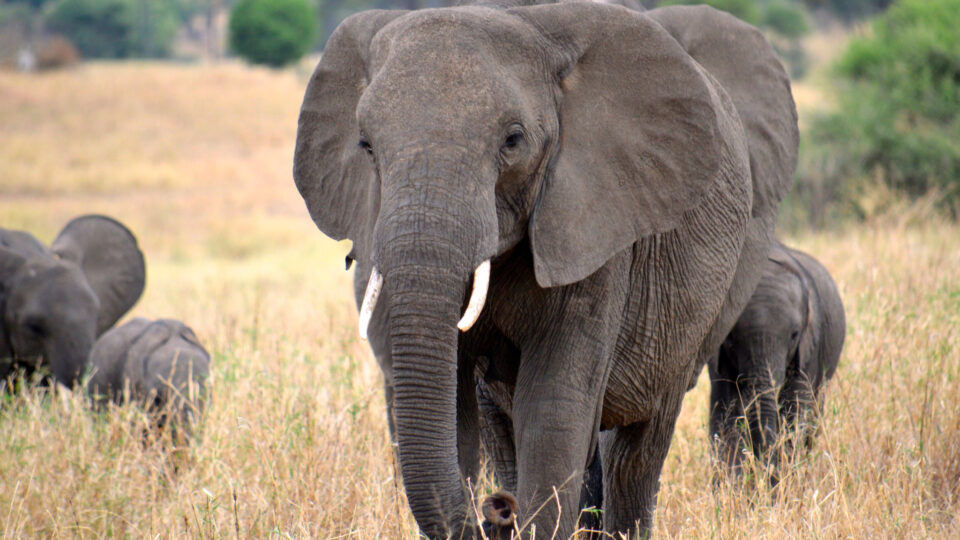
It isn’t even clear what constitutes a pristine ecosystem.  According to some experts, ecosystems that have lost most of their large mammal species, for example, cannot be considered intact.  By that standard, only a tiny fraction of the world’s ecosystems remains intact.

Other experts contend that preserving individual species is not what really matters.  Studies have shown that many ecosystems have undergone and continue to undergo massive species shifts over time with frequent extinctions along the way.  Nevertheless, the ecosystems continue to flourish with new species replacing others to perform the various functions required.

Some perspectives consider intact ecosystems to be those devoid of human influence.  But that notion is not universally held.   There is the idea that most of the world’s ecosystems were essentially untouched until perhaps 500 years ago when European exploration expanded greatly.  But the reality is that even 12,000 years ago, nearly three-quarters of terrestrial nature was inhabited, used, and shaped by people.  However, those human interactions were similar to how many indigenous and local peoples across the globe still live, not like the interactions of modern civilization that result in massive changes to ecosystems.

**********

Web Links

Species or Ecosystems: How Best to Restore the Natural World?

Photo, posted November 21, 2003, courtesy of Megan Coughlin via Flickr.

Earth Wise is a production of WAMC Northeast Public Radio.

Primary Sidebar

Recent Episodes

  • An uninsurable future
  • Clean energy and jobs
  • Insect declines in remote regions
  • Fossil fuel producing nations ignoring climate goals
  • Trouble for clownfishes

WAMC Northeast Public Radio

WAMC/Northeast Public Radio is a regional public radio network serving parts of seven northeastern states (more...)

Copyright © 2026 ·