• Skip to primary navigation
  • Skip to main content
  • Skip to primary sidebar

Earth Wise

A look at our changing environment.

  • Home
  • About Earth Wise
  • Where to Listen
  • All Articles
  • Show Search
Hide Search
You are here: Home / Archives for response

response

Extending the shelf life of produce

July 10, 2025 By EarthWise Leave a Comment

More than 30% of the world’s food is lost after it has been harvested.  That’s enough to feed more than a billion people.  Much of that loss is fruits and vegetables that go bad before they can be eaten.

Refrigeration is the most common way to preserve foods, but the energy and infrastructure required is not always available, especially in less affluent regions of the world.

Researchers at MIT and Singapore-based collaborators have demonstrated that they can extend the shelf life of harvested plants by injecting them with melatonin using biodegradable microneedles.

Silk microneedles are tiny, nontoxic, and biodegradable and represent a means of delivering nutrients to plants without triggering a stress response.

Melatonin is a natural hormone that plants already use.  Injecting it was shown to extend vegetables’ shelf life.  The tests used pak choy, an important Asian crop that is very perishable.  Untreated plants at room temperature yellowed within two or three days.  In contrast, treated plants stayed green for five days.  Overall, treated plants retained saleable value for 8 days.  Refrigerated plants had their shelf life extended considerably as well.  However, the most significant value of the technique is that it could enhance the shelf life of perishable produce like pak choy without needing access to refrigeration.

The dose of melatonin delivered to the plants is so low that it is fully metabolized by the crops, so it would not significantly increase the amount normally present in the food.  People would not ingest more melatonin than usual.  The researchers believe that their technique should work with all kinds of produce.

**********

Web Links

A new technology for extending the shelf life of produce

Photo, posted May 6, 2010, courtesy of Jessica Spengler via Flickr.

Earth Wise is a production of WAMC Northeast Public Radio
Pollinator-friendly solar power

February 16, 2024 By EarthWise Leave a Comment

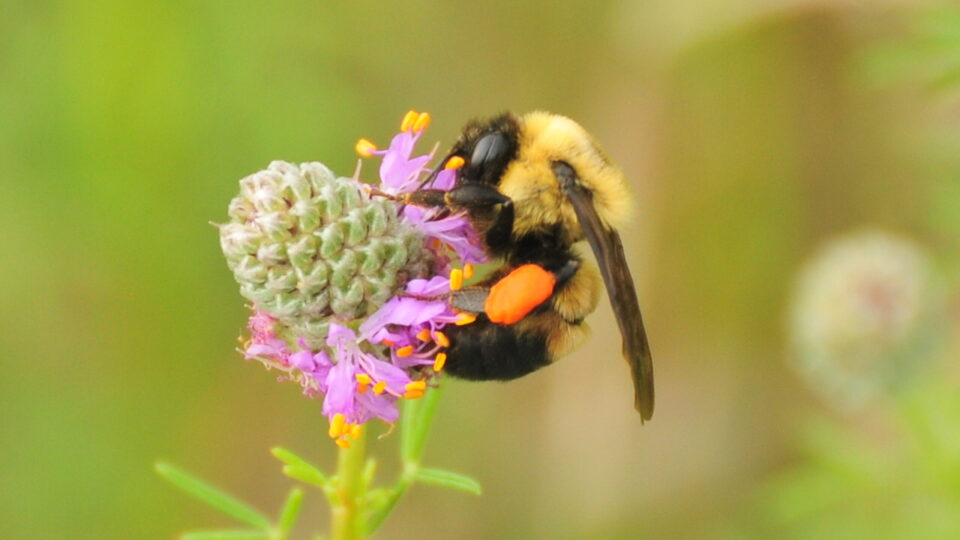
Global insect biodiversity has been in decline as a result of habitat loss, pesticide use, and climate change.  Restoring insect habitat is a way to reverse that trend.  Expanded use of solar energy is a critical part of mitigating climate change.  In order to meet the grid decarbonization goals the U.S. has set, approximately 10 million acres of land will be needed for large-scale solar development.  According to a new study by Argonne National Laboratory and the National Renewable Energy Laboratory, these two efforts are complementary.

Disturbed lands such as former agricultural fields are ideal locations to install solar panels.  These lands can also be established as excellent habitats for insect pollinators and other wildlife that provide important ecosystem services.

A five-year study looked at two solar sites in southern Minnesota that were built on retired agricultural land.  The sites were planted with native grasses and flowering plants in early 2018.  Over a five-year period, the researchers conducted hundreds of observational surveys for flowering vegetation and insect communities, evaluating changes in plant and insect abundance and diversity.

The team observed increases for all habitat and biodiversity metrics.  The total insect abundance tripled, while native bees showed a 20-fold increase in numbers. 

The research highlights the relatively rapid insect community responses to habitat restoration at solar energy sites.  If properly sited, the solar sites can offset the losses of natural areas created by solar farms and actually make prime farmland more productive through the pollination services provided by habitat-friendly solar energy.

**********

Web Links

Insect populations flourish in the restored habitats of solar energy facilities

Photo, posted February 28, 2014, courtesy of Tom Koerner/USFWS via Flickr.

Earth Wise is a production of WAMC Northeast Public Radio

Orcas Versus Boats | Earth Wise

July 11, 2023 By EarthWise Leave a Comment

Orcas are attacking boats

Over the past three years, orcas (also known as killer whales) have been attacking boats off the coasts of Portugal and Spain.  The subpopulation of orcas in this region has been harassing boats, most often by biting at their rudders.

There have been over 500 reported instances of orcas reacting to boats.  Sometimes they simply approach the vessels, but some of the time they actually attack.  Almost 20% of the attacks have caused enough damage to disable the vessels.  In three cases, including one in May in the Strait of Gibraltar, the animals damaged a boat so badly that it sank.  To date, no one has been injured during these attacks.

Orca researchers have observed several different killer whales during these attacks.  They seem to come from two separate groups: a trio of juveniles occasionally joined by a fourth, as well as a mixed-age group consisting of an adult female, two of her offspring, and two of her sisters.  The attacks typically last less than 30 minutes but can go on for up to 2 hours.

Researchers don’t really know why orcas are going after watercraft.  This behavior has not been observed anywhere else in the world.  One theory is that the orcas have invented a new fad.  That’s actually something that they are known to do.  Much as with people, orca fads are often spearheaded by juveniles.  An alternative theory is that the attacks may be a response to a bad past experience involving a boat.  The fact that nobody has been injured in any of these attacks, even when the boats sank, suggests that only the boats themselves are the target of the attacks and not the people on them.

**********

Web Links

Why Has a Group of Orcas Suddenly Started Attacking Boats?

Photo, posted May 24, 2023, courtesy of Pedro Szekely via Flickr.

Earth Wise is a production of WAMC Northeast Public Radio

A High-Tech Fire Alarm | Earth Wise

July 23, 2020 By EarthWise Leave a Comment

In recent years, wildfires have been a global problem, notably in California, Brazil, and Australia.  It has become increasingly important to be able to respond to new fires as soon and as quickly as possible.  Such response can make the task of extinguishing them easier, thereby reducing the amount of damage and the loss of property and life.

Traditional methods for detecting forest fires include satellite monitoring, ground patrols, and watch towers, all of which have high labor and financial costs but suffer from low efficiency.  Remote sensing technologies are becoming increasingly common but rely on batteries for power, requiring servicing in remote locations to replace depleted batteries.  Solar cells represent an alternative to batteries, but it is challenging to use them in forests because of shading and foliage coverage.

A team of researchers at Michigan State University has developed a remote forest fire detection and alarm system powered by nothing more than the movement of tree limbs in the wind.  The device is known as an MC-TENG, which is an acronym for multilayered cylindrical triboelectric nanogenerator.  The triboelectric effect is a phenomenon where certain materials become electrically charged when they separate from a second material with which they were previously in contact.  In the new device, two cylindrical sleeves fit within one another – one anchored and the other free to slide.  The device is tied to a tree branch and when the branch sporadically moves in the wind, electricity is generated and stored in a carbon-nanotube-based micro supercapacitor.  This powers a sensing system that can continuously monitor environmental conditions without requiring any maintenance.

A combination of carbon monoxide and temperature sensors provides a high-tech fire alarm that can operate continuously in the most remote forest.

**********

Web Links

Self-Powered Alarm Fights Forest Fires, Monitors Environment

Photo, posted August 3, 2012, courtesy of Lukas Schlagenhauf via Flickr.

Earth Wise is a production of WAMC Northeast Public Radio.

Primary Sidebar

Recent Episodes

  • An uninsurable future
  • Clean energy and jobs
  • Insect declines in remote regions
  • Fossil fuel producing nations ignoring climate goals
  • Trouble for clownfishes

WAMC Northeast Public Radio

WAMC/Northeast Public Radio is a regional public radio network serving parts of seven northeastern states (more...)

Copyright © 2025 ·