• Skip to primary navigation
  • Skip to main content
  • Skip to primary sidebar

Earth Wise

A look at our changing environment.

  • Home
  • About Earth Wise
  • Where to Listen
  • All Articles
  • Show Search
Hide Search
You are here: Home / Archives for repair

repair

Self-healing concrete

June 25, 2025 By EarthWise Leave a Comment

Concrete is the most widely used building material on Earth.  It has a dangerous and costly flaw:  it cracks easily.  Cracks in concrete can lead to inconvenient damage or to catastrophic structural failures such as collapses of buildings, bridges, or highways.

Concrete is made by mixing crushed stone and sand with powdered clay and limestone and adding water.  The mixture hardens and once set becomes extremely strong.  However, natural forces like freeze-thaw cycles, drying shrinkage, and heavy loads can cause cracks.  Even very tiny cracks can allow liquids and gases to seep into embedded steel reinforcements causing corrosion and weakness. 

For over 30 years, researchers have investigated microbe-mediated self-healing concrete.  It involves introducing microbial healing agents into cracks and injecting nutrients for the healing agents to produce repair materials.  It is not a very practical solution.

Researchers at Texas A&M University have developed a technique inspired by the behavior of lichen systems. Their system, like lichen, uses a combination of cyanobacteria which turns air and sunlight into food, and filamentous fungi, which produces minerals that seal the cracks. 

In lab tests, the paired microbes were able to grow and produce crack-filling minerals even in challenging environments such as concrete.  If it is possible to produce concrete that can heal itself, it would significantly reduce maintenance costs, extend its longevity, and even protect lives through increased safety.

**********

Web Links

Cracking the Code: Deciphering How Concrete Can Heal Itself

Photo, posted May 21, 2009, courtesy of DesignMag via Flickr.

Earth Wise is a production of WAMC Northeast Public Radio
Self-heating concrete

April 24, 2024 By EarthWise Leave a Comment

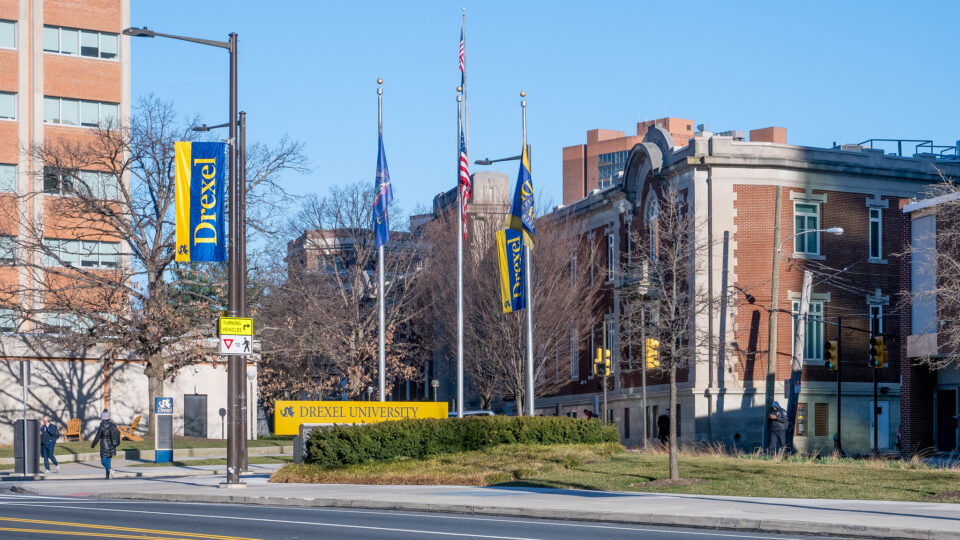
Researchers at Drexel University are developing self-heating concrete

States in the colder parts of the country spend an estimated $2.3 billion a year on snow and ice removal as well as untold millions on repairing roadways damaged by winter weather.  Researchers at Drexel University have been researching a way to extend the service life of concrete surfaces like roadways and to help them maintain a surface temperature above freezing during the winter.

Preventing freezing and thawing as temperatures go up and down and reducing the amount of plowing and salting is a desirable goal.  The Drexel team has developed a cold-weather-resilient concrete mix that is capable of melting snow on its own using only the thermal energy in the environment and not requiring salt, shoveling, or heating systems.

The system uses low-temperature liquid paraffin that turns from its room-temperature liquid state into a solid when temperatures go down.  Incorporating the liquid paraffin into concrete triggers heating when temperatures drop due to the energy released by the phase change.

Tests on slabs of the concrete on the Drexel campus over the past two years recorded 32 freeze-thaw events.  The special slabs maintained a surface temperature between 42 and 55 degrees for up to 10 hours when air temperatures dipped below freezing.

The heating is enough to melt a couple of inches of snow at a rate of a quarter inch an hour.  It’s not enough to melt a heavy snow event before plows are needed, but it can help deice road surfaces and increase transportation safety.  And simply preventing the surface from freezing, thawing, and refreezing can go a long way towards preventing deterioration.  It is promising research toward reducing an ongoing problem in colder climates.

**********

Web Links

Drexel’s Self-Heating Concrete Is One Step Closer to Clearing Sidewalks Without Shoveling or Salting

Photo, posted March 16, 2024, courtesy of Ajay Suresh via Flickr.

Earth Wise is a production of WAMC Northeast Public Radio
Reef Insurance | Earth Wise

January 4, 2023 By EarthWise Leave a Comment

Insuring coral reefs

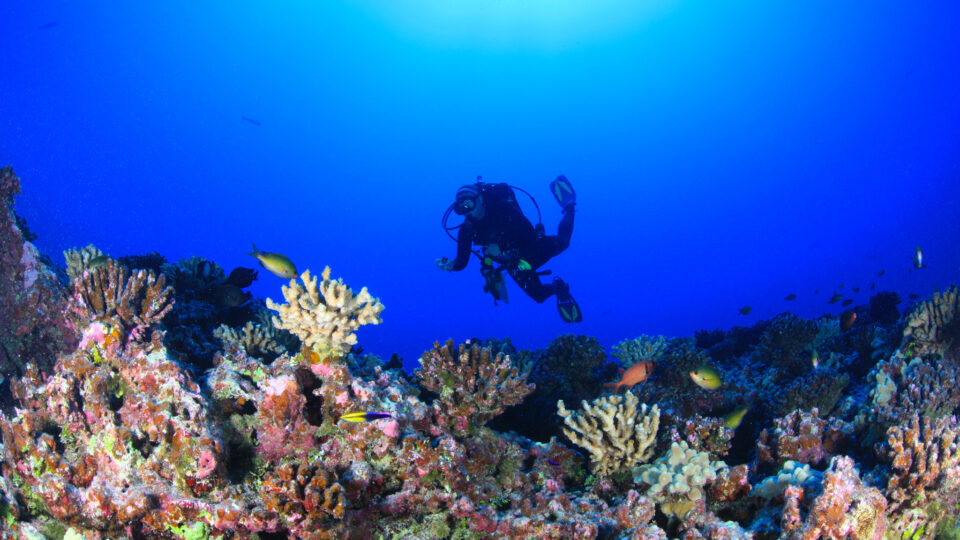
Coral reefs around the world face multiple dangers from warming waters, acidification, human activity, and more.  Powerful storms often cause tremendous damage to reefs.  When possible, snorkelers and divers are deployed to try to repair damage to reefs.  But philanthropy and government grants are basically the only resources available to fund such actions.

Three years ago, tourist businesses and the government in the Mexican state of Quintana Roo purchased an insurance policy to offset costs of protecting the local parts of the Mesoamerican Reef.  The environmental group the MAR Fund later took out an insurance policy on the rest of the reef in Mexico, Belize, Guatemala, and Honduras. 

With this precedent, the Nature Conservancy recently purchased an insurance policy on behalf of the state of Hawaii to help offset repair work on its coral reefs.  It is the first U.S. coral insurance contract.

Coral reefs are more than just hosts for marine life.  They provide barriers against ocean storm surges, which is a major financial incentive for protecting them and hence an incentive to invest in insurance.

The new Hawaiian insurance policy has a premium of $110,000 a year and will provide $2 million in protection.  Payouts occur when wind speeds go above 50 knots.  No further proof of damage is required.

The Nature Conservancy has created teams called ‘Reef Brigades’ composed of snorkelers and divers who recover reef fragments, store them in ocean or shore-based nurseries, and then re-attach them when conditions are safe.  It can be very expensive to do this sort of work, particularly when new corals grown in a nursery are required.

**********

Web Links

Analysis: First U.S. coral insurance marks the rise of the reef brigades

Photo, posted September 14, 2011, courtesy of Greg McFall/NOAA Office of National Marine Sanctuaries via Flickr.

Earth Wise is a production of WAMC Northeast Public Radio
Offsetting Reef Acidification | Earth Wise

August 13, 2021 By EarthWise Leave a Comment

Could artificial ocean alkalinization help offset reef acidification?

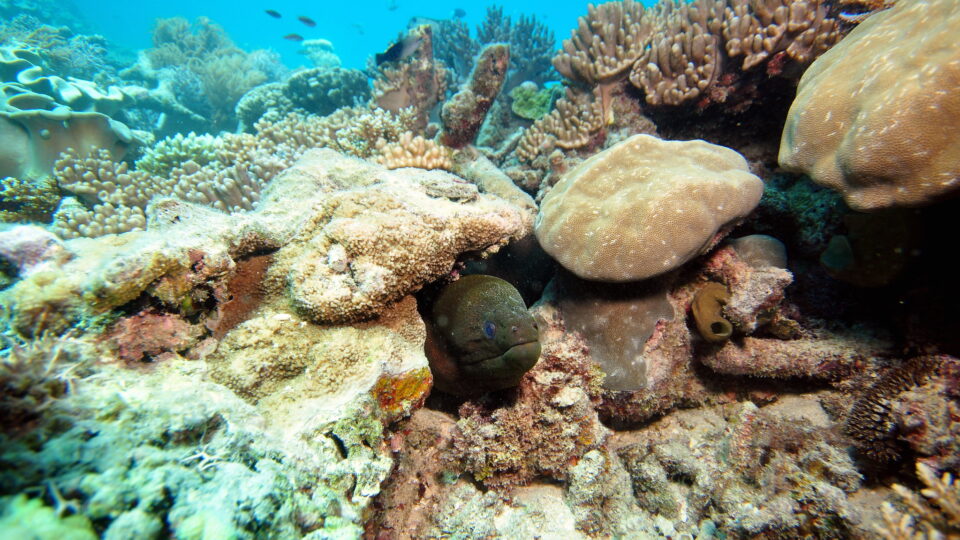
The Great Barrier Reef is the world’s largest coral reef system.  It is composed of nearly 3,000 individual reefs and 900 islands covering an area of more than 130,000 square miles.  In recent times, it has been under unprecedented stress from ocean warming, tropical cyclones, sediment and nutrient runoff, marine pests, and ocean acidification.

Among these stressors, ocean acidification is one of the most significant threats to the long-term viability of the reef because acidification affects the ability of corals to rebuild and repair their structures and recover from bleaching events.

New research from CSIRO, Australia’s national science agency, studied the impact of artificial ocean alkalinization on the acidity of the waters in the Great Barrier Reef.  The idea is to inject a source of alkalinity into the ocean, an accelerated version of a natural process that occurs from the chemical weathering of minerals under the sea.

The results of the study, published in the journal Environmental Research Letters, are that injecting an alkalinizing agent into the ocean along the length of the Reef would make it possible to offset ten years’ worth of ocean acidification based on the present rate of human-generated carbon emissions.  Such an effort could use an abundant mineral resource like olivine, which is already mined near the Great Barrier Reef.  Releasing 30,000 tons a day of the alkalinizing agent from an existing shipping line from a bulk carrier would reach almost the whole of the Great Barrier Reef.

In response to the declining health of coral reef ecosystems, many different intervention concepts and technologies are under consideration.  The goal of these would be to minimize environmental pressures and enhance the resilience of the ecosystems.

**********

Web Links

Projected acidification of the Great Barrier Reef could be offset by ten years

Photo, posted August 4, 2019, courtesy of Larry Koester via Flickr.

Earth Wise is a production of WAMC Northeast Public Radio.

Primary Sidebar

Recent Episodes

  • An uninsurable future
  • Clean energy and jobs
  • Insect declines in remote regions
  • Fossil fuel producing nations ignoring climate goals
  • Trouble for clownfishes

WAMC Northeast Public Radio

WAMC/Northeast Public Radio is a regional public radio network serving parts of seven northeastern states (more...)

Copyright © 2026 ·