• Skip to primary navigation
  • Skip to main content
  • Skip to primary sidebar

Earth Wise

A look at our changing environment.

  • Home
  • About Earth Wise
  • Where to Listen
  • All Articles
  • Show Search
Hide Search
You are here: Home / Archives for remediation

remediation

Getting Rid Of Hydrogen Sulfide | Earth Wise

December 20, 2022 By EarthWise Leave a Comment

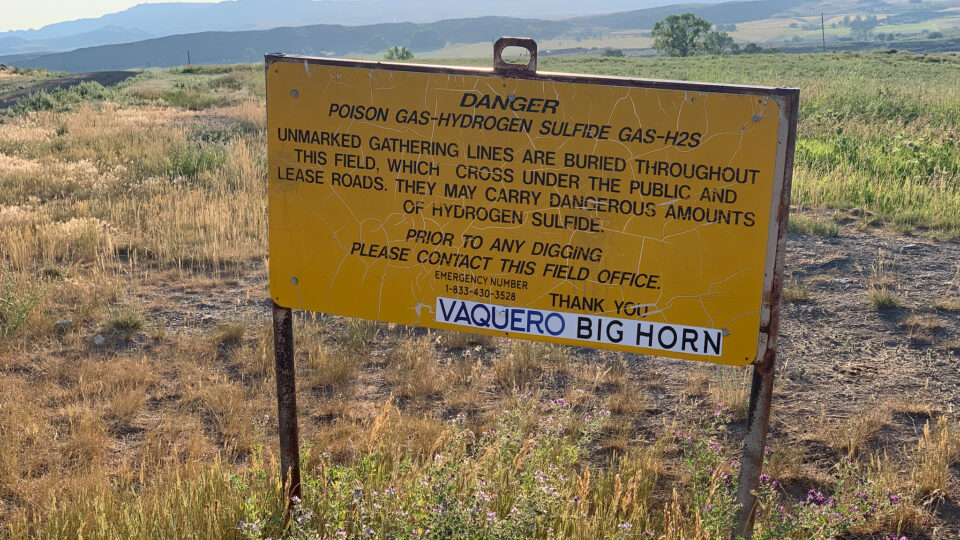
Hydrogen sulfide gas produces the characteristic smell of rotten eggs, sewers, stockyards, and landfills.  The petroleum industry produces thousands of tons of the stuff each year as a byproduct of the processes that remove sulfur from petroleum, natural gas, coal, and other products.  The industry faces substantial fines for emitting hydrogen sulfide, but remediation is expensive.

Researchers at Rice University have developed a method for turning hydrogen sulfide into hydrogen gas and sulfur in a single step.  Called plasmonic photocatalysis, it not only gets rid of an undesirable substance, it does so by producing valuable byproducts.

The established way of getting rid of hydrogen sulfide is called the Claus process.  It requires multiple steps, including some that require combustion chambers heated to 1,500 degrees Fahrenheit.  The end product is sulfur and water.

The Rice University process gets all of its energy from light.  A surface of grains of silicon dioxide is dotted with tiny gold nanoparticles.  These particles interact strongly with a specific wavelength of visible light and cause plasmonic reactions that create short-lived, high-energy electrons that drive the catalysis of hydrogen sulfide.  Given that the process requires only visible light and no external heating, it should be relatively straightforward to scale up using solar energy or very efficient LED lamps.

The new hydrogen sulfide remediation technology has been licensed by a Houston-based startup company with more than 60 employees whose founders include some of the Rice researchers.  The process may end up being efficient enough and cheap enough for cleaning up non-industrial sources of hydrogen sulfide such as sewers and animal waste.

**********

Web Links

New catalyst can turn smelly hydrogen sulfide into a cash cow

Photo, posted July 8, 2021, courtesy of Doug Letterman via Flickr.

Earth Wise is a production of WAMC Northeast Public Radio

Cleaning Up Diesel With Bacteria | Earth Wise

August 9, 2021 By EarthWise Leave a Comment

Using soil bacteria to clean up seeped diesel

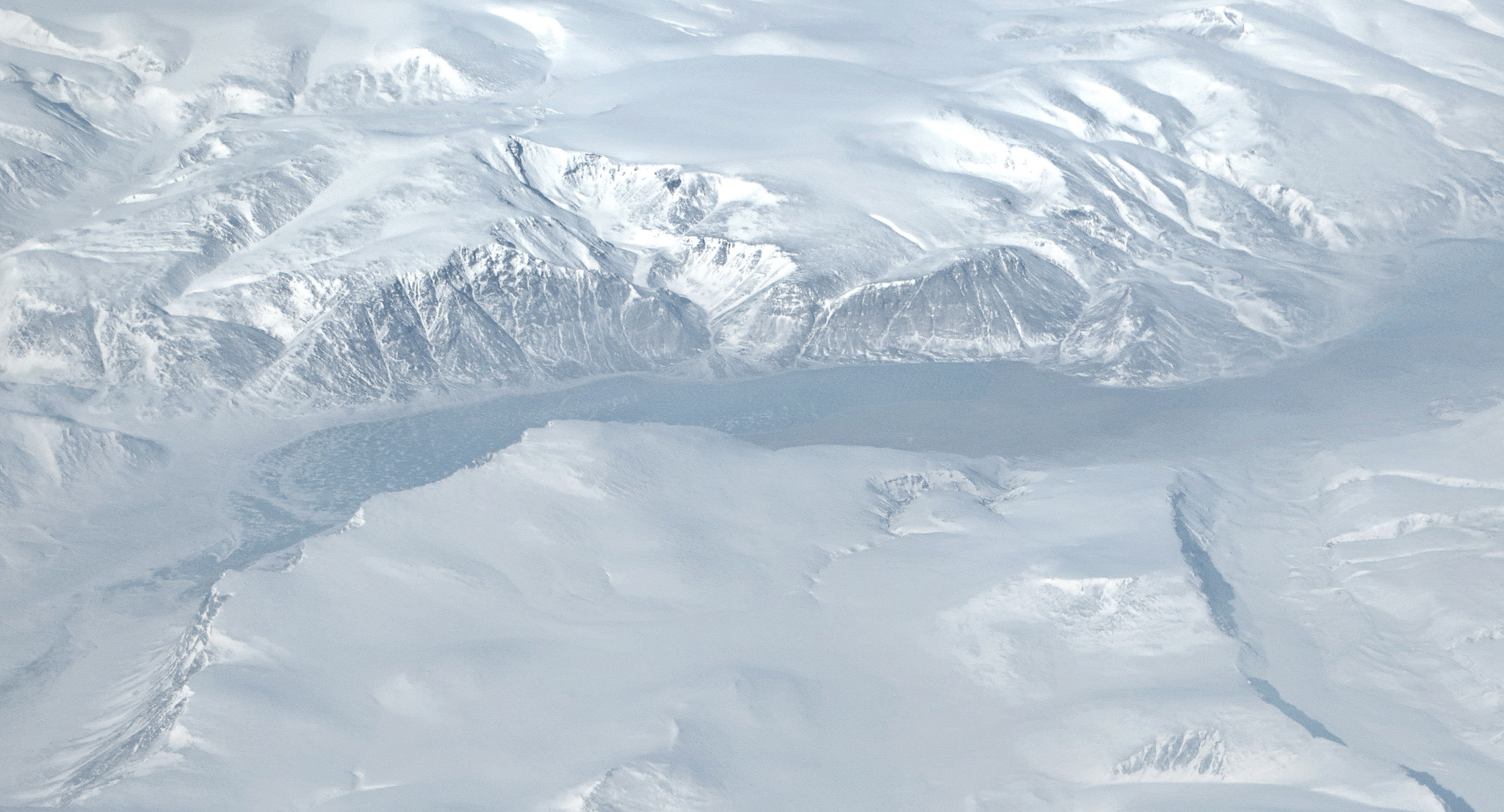
Mothballed military outposts with piles of rusting oil drums are not an unusual sight in Greenland.  There are about 30 abandoned military installations in Greenland and diesel that was once used to operate generators and other machinery has, in many cases, seeped into the ground.

Removing tons of contaminated soil from these sites is incredibly resource-intensive involving the use of aircraft and ships, so it has not really been practical.  As a result, Danish Defense and the engineering company NIRAS instead conducted a five-year experiment to optimize the conditions for naturally occurring soil bacteria to break down the contaminating diesel.

The experiment was performed at Station 9117 Mestersvig, an abandoned military airfield on the coast of East Greenland.  Forty tons of diesel fuel contaminated the soil there.

The remediation method using bacteria is known as landfarming and has most often been applied in warmer climates around the world.  This was the first large-scale test under Arctic conditions.

Landfarming works by distributing contaminated soil in a thin layer, which is then plowed, fertilized, and oxygenated every year to optimize conditions for bacteria to degrade hydrocarbons.

The site was monitored by scientists from the University of Copenhagen, and they found that after five years, the bacteria had bioremediated as much as 82 percent of the 5,000 tons of contaminated soil on the site. 

Based on these results, it appears to be feasible for naturally occurring bacteria to be used to remediate contamination in all of the 30 deserted military installations in Greenland as well as in other Arctic sites contaminated by diesel pollution.

**********

Web Links

Bacteria used to clean diesel-polluted soil in Greenland

Photo, posted September 6, 2013, courtesy of Maj. Matthew J. Sala/The U.S. Air National Guard via Flickr.

Earth Wise is a production of WAMC Northeast Public Radio.

Antibiotics In The Environment

June 6, 2019 By EarthWise Leave a Comment

Antibiotics make their way into the environment in many ways.  Sources of antibiotic pollution include the waste from large-scale animal farms and the wastewater from hospitals, municipalities, and antibiotic manufacturing.

A new study has discovered concentrations of antibiotics in some of the world’s rivers exceed safe levels by up to 300 times.  In the project, researchers looked for 14 commonly used antibiotics in rivers in 72 countries across six continents.  They found antibiotics at 65% of all the sites they examined. 

The antibiotic ciproflaxacin was the compound that most frequently exceeded safe levels, surpassing that threshold in 51 places. The antibiotic metronidazole exceeded safe levels by the biggest margin.  Concentrations of this antibiotic at one site in Bangladesh was 300 times greater than the safe level.  The most prevalent antibiotic was trimethoprim.  It was detected at 307 of the 711 sites. 

Some of the world’s most iconic rivers were sampled as a part of this study, including the Danube, Mekong, Seine, Thames, Tiber and Tigris. 

The project, which was led by the University of York, found that high-risk sites were often located near wastewater treatment systems, waste or sewage dumps, and in some areas of political unrest. 

Safe levels for antibiotics, which were recently established by the AMR Industry Alliance, range from 20,000 to 32,000 nanograms per liter depending on the compound. 

According to the research team, solutions to the problem of antibiotic contamination should include infrastructure investment, tighter regulation, and the remediation of already contaminated sites. 

**********

Web Links

Antibiotics found in some of the world’s rivers exceed ‘safe’ levels, global study finds

Photo, posted October 7, 2013, courtesy of Nicola via Flickr.

Earth Wise is a production of WAMC Northeast Public Radio.

Climate Change And Radioactive Waste

September 14, 2016 By WAMC WEB

https://earthwiseradio.org/wp-content/uploads/2016/08/EW-09-14-16-Climate-Change-and-Radioactive-Waste.mp3

What do climate change and radioactive waste have in common?  It turns out a lot more than we’d like.  According to research, which was was led by York University in collaboration with the University of Zurich and recently published in the journal Geophysical Research Letters, rising global temperatures could lead to the release of – yep, you guessed it – radioactive waste. 

[Read more…] about Climate Change And Radioactive Waste

Primary Sidebar

Recent Episodes

  • An uninsurable future
  • Clean energy and jobs
  • Insect declines in remote regions
  • Fossil fuel producing nations ignoring climate goals
  • Trouble for clownfishes

WAMC Northeast Public Radio

WAMC/Northeast Public Radio is a regional public radio network serving parts of seven northeastern states (more...)

Copyright © 2026 ·