• Skip to primary navigation
  • Skip to main content
  • Skip to primary sidebar

Earth Wise

A look at our changing environment.

  • Home
  • About Earth Wise
  • Where to Listen
  • All Articles
  • Show Search
Hide Search
You are here: Home / Archives for recycled

recycled

Eliminating plastic shipping pillows

July 17, 2024 By EarthWise Leave a Comment

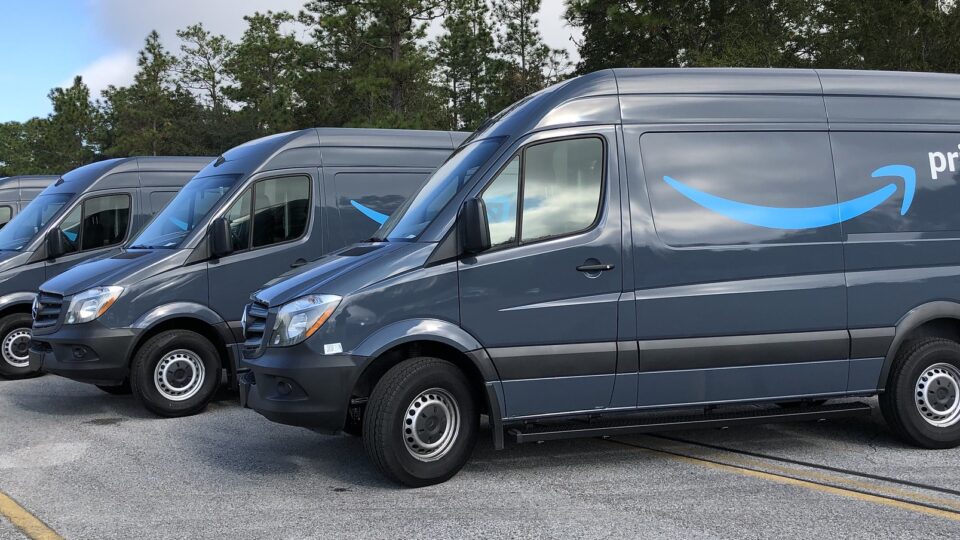
Amazon is phasing out plastic shipping pillows

Anyone who gets packages from Amazon is familiar with the plastic air pillows used to keep products safe in transit.  Amazon uses almost 15 billion of them a year in North America.

Environmentalists have been urging Amazon and other vendors to cut down on the use of plastic packaging. The air-filled plastic pillows are made from plastic film, which is the most common form of plastic litter found in the sea and in seabeds along the shore.  Plastic film can be deadly to wildlife such as sea turtles and sea birds.  Plastic film generally can’t be composted or recycled either.

Recently, Amazon announced that it will replace its plastic pillows with recycled paper filler in all its North American markets – the United States, Canada, and Mexico – which together account for more than 70% of the retailer’s global sales.  It is already making the switch in a big way and is working towards fully removing the plastic materials by the end of the year.

Replacing plastic packaging with paper is a definite improvement.  Paper is recyclable and biodegradable.  It isn’t perfect:  if it ends up in landfills, it can contribute to methane pollution as it biodegrades.  But, on the other hand, paper packaging is more likely to be recycled.

Stemming the tide of plastic waste is an ongoing effort by environmental and consumer groups.  There is pending legislation in New York that aims to reduce the use of plastic packaging by 50% over 12 years by requiring manufacturers to either replace it or pay fees.  The bill cleared the State Senate but has not come up to a vote in the Assembly.  Similar legislation has already been passed in California, Oregon, Maine, and Colorado.

**********

Web Links

Amazon Says It Will Stop Using Puffy Plastic Shipping Pillows

Photo, posted November 20, 2018, courtesy of Todd Van Hoosear via Flickr.

Earth Wise is a production of WAMC Northeast Public Radio
Who Can Solve The Plastic Waste Problem? | Earth Wise

June 21, 2022 By EarthWise Leave a Comment

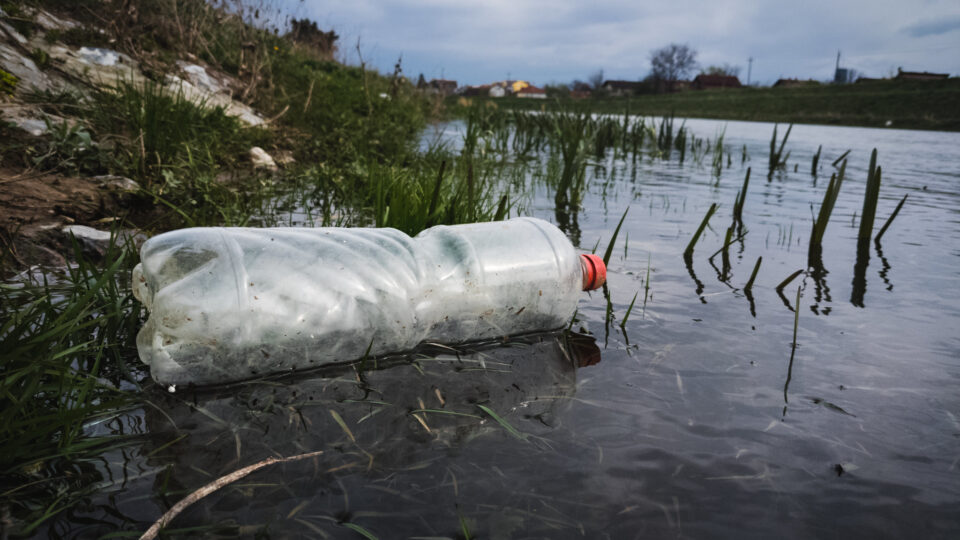
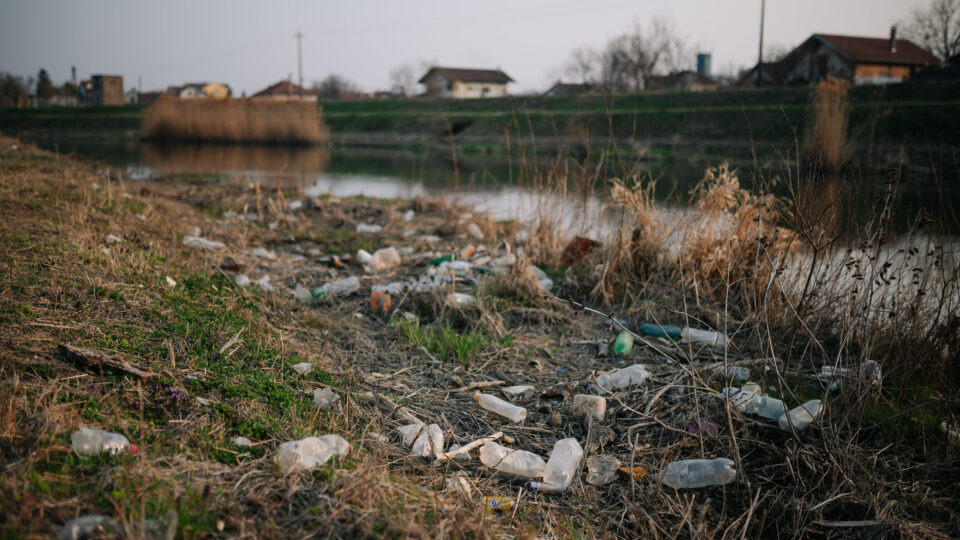
Plastic packaging waste is a global problem.  It collects in the oceans, breaks down into microplastics, which are consumed by fish and in turn by people who eat the fish.  Only 14.5% of U.S. plastic waste is recycled.  Most of it ends up in landfills, where is remains undegraded for hundreds of years. 

A new international study explored the global patterns of plastic packaging waste.  The study found that three countries – the U.S., Brazil, and China – are the top suppliers of waste.  In terms of supply, the Americas generate 41% of the world’s production of plastic waste, Europe 24%, and Asia 21%.

That’s the plastics supply.  As far as the consumers actually creating waste are concerned, the Americas represent 36% of the world’s packaging consumption, Asia 26%, and Europe 23%.

Packaging high-protein food such as meat, fish, and dairy is a major contributor to the waste problem.  Plastic for this purpose is hard to replace and international exports exacerbate the problem, accounting for about 25% of plastic packaging waste.

International agreements typically focus on restrictions and fees on production.  But that mostly creates strong incentives to simply relocate polluting activities to developing countries, which is a zero-sum game.  There need to be incentives for consumers to reduce plastic use such as taxes on waste management, refunds on returning bottles, single-use plastic bans, and so on.

Who can solve the plastic waste problem?  Everyone along the supply chain as well as the final consumers have to be part of the solution for reducing plastic waste.

**********

Web Links

Producers and consumers must share burden of global plastic packaging waste

Photo, posted March 29, 2022, courtesy of Ivan Radic via Flickr.

Earth Wise is a production of WAMC Northeast Public Radio.

The Great Christmas Tree Debate | Earth Wise

December 15, 2021 By EarthWise Leave a Comment

Along with cookies and carols, the Christmas tree is a quintessential part of the holiday season for many people.  According to the American Christmas Tree Association, approximately 75% of Christmas trees in American homes this year will be artificial.  But are artificial trees really the better option for the planet?

The short answer is no.  But it’s more complicated than that.  Ultimately, the answer depends on a variety of factors.

If you decide to go with an artificial tree, you need to use it for a very long time. Studies suggest artificial trees would need to be reused anywhere from 8 to 20 years in order to be considered the more environmentally-friendly option. You should seek out trees manufactured from polyethylene plastic as it’s not as toxic as polyvinyl chloride plastic.  And since the majority of artificial trees are imported from China, look for a “Made in USA” label to reduce the carbon footprint.

If you decide to go for a live tree, shop local. This keeps the carbon footprint low and helps support the local economy in the process.  While some tree farms do spray, researchers say the use of pesticides in tree production is relatively low.  Live trees can also be composted or recycled afterwards.

It’s important to note that live Christmas trees can also be purchased with roots and planted after the holidays.  Some companies even allow you to rent live trees.  Each rented tree can be re-rented for up to seven years, after which it’ll be too large for in-home use and gets planted in its forever home. 

**********

Web Links

Photo, posted December 17, 2017, courtesy of Alan Sandercock via Flickr.

Earth Wise is a production of WAMC Northeast Public Radio.

Infinitely Recyclable Plastic | Earth Wise

May 25, 2021 By EarthWise 1 Comment

Making an infinitely recyclable plastic

The glut of plastics is one of the world’s most challenging environmental problems.  The average American generates over 200 pounds of plastic waste each year and most of that ends up in landfills.  Researchers around the globe continue to work on potential solutions to the plastic waste problem.

Two years ago, scientists at Lawrence Berkeley National Laboratory announced the invention of a new plastic that could be an answer to the plastic waste problem.  The material is called polydiketoenamine or PDK and it differs from traditional plastics in a very important way:  it can be recycled indefinitely with no loss in quality because it can easily be broken down into its constituent component monomers and be used to make brand new plastic.

Only a small percentage of plastics are currently recycled.  When many plastics are melted down together, the polymers are mixed with a slew of incompatible additives, resulting in a new material with much lower quality than newly produced plastic.  As a result, less than 10% of plastic is recycled more than once.

Recently, the Berkeley Lab researchers released a study that shows what could be accomplished if manufacturers began using PDKs on a large scale.  They determined that PDK-based plastic could quickly become commercially competitive with conventional plastics and, furthermore, would get less expensive and more sustainable as time goes on.

PDK is starting to draw interest from companies needing to source plastic.  The best initial application for PDKs are markets where manufacturers have the most access to products at the end of their lifespans such as in the automobile industry and consumer electronics.  Making plastics part of a circular economy is a challenging task.

**********

Web Links

The Future Looks Bright for Infinitely Recyclable Plastic

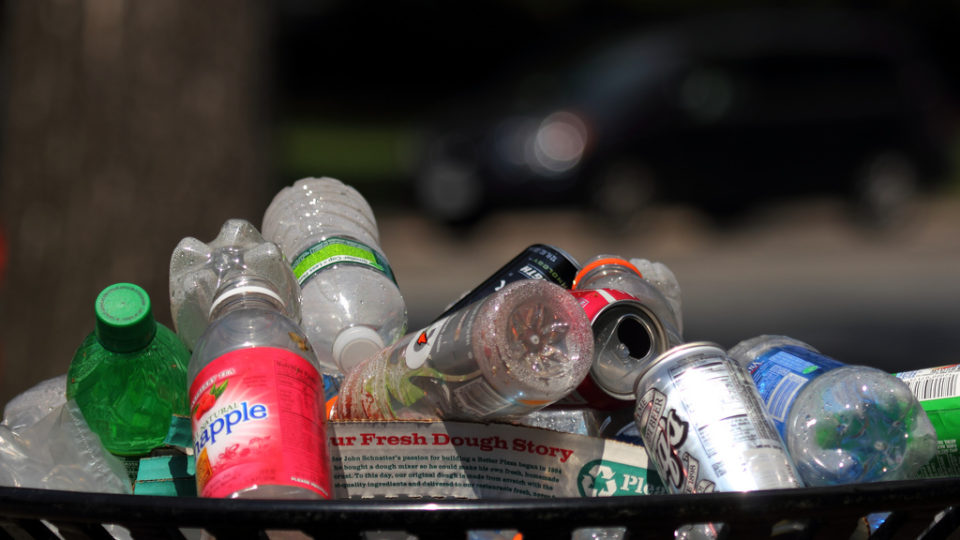
Photo, posted April 19, 2021, courtesy of Ivan Radic via Flickr.

Earth Wise is a production of WAMC Northeast Public Radio.

Turning Wood Into Plastic | Earth Wise

May 4, 2021 By EarthWise Leave a Comment

Could wood solve the plastics problem?

Plastic pollution is particularly pernicious because plastics can take hundreds of years to degrade in the environment.  For this reason, researchers across the globe search for ways to shift from petrochemical plastics to ones that are biodegradable.

Producing biodegradable plastics is challenging both from the standpoint of the methods needed and from the results obtained.  Producing them often requires toxic chemicals and can be very expensive.  The materials that emerge often do not have the durability and strength of conventional plastics and can be unstable when exposed to moisture.

Researchers at the Yale School of the Environment have developed a process of decomposing the porous matrix of natural wood into a slurry that can be formed into a biodegradable plastic.  The material shows high mechanical strength, stability when holding liquids, and is resistant to the effects of ultraviolet light.  Along with all these favorable properties, the material can be recycled or safely biodegraded in the natural environment.

The slurry mixture is created by taking wood powder – a processing residue usually discarded in lumber mills – and deconstructing it with a biodegradable and recyclable solvent.  The resulting mixture has a high solid content and high viscosity and can be casted and rolled without breaking.

The researchers conducted a comprehensive life cycle assessment to test the environmental impacts of the bioplastic compared with conventional plastics.  Sheets of it were buried in soil and observed to fracture after two weeks and completely degrade after three months.  The material can also be broken back down into the slurry by mechanical stirring.

The remaining topic to investigate is the potential impact on forests if the manufacturing of this bioplastic is scaled up.

**********

Web Links

Turning wood into plastic

Photo, posted October 12, 2016, courtesy of the US Forest Service via Flickr.

Earth Wise is a production of WAMC Northeast Public Radio.

Liquid Fuel From The Sun

February 21, 2019 By EarthWise Leave a Comment

Most forms of energy we use ultimately come from the sun in one way or another.  Even fossil fuels are the end product of millions of years of plant life that captured solar energy.  The advantage fossil fuels have over direct solar power is that they are, in fact, fuels and therefore can be stored for use when needed.

Scientists in Sweden have now developed a specialized fluid that absorbs some of the sun’s energy, holds it for months or even years, and then releases it when needed.  This solar thermal fuel is like a rechargeable battery for heat rather than electricity.

The special fluid is pumped through transparent tubes where ultraviolet light from the sun excites its molecules into an energized state.  A compound called norbornadiene is converted into quadricyclane. The quadricyclane is a quite stable substance until it is passed over a cobalt-based catalyst, which causes it to turn back into norbornadiene and release copious amounts of heat.

Such a solar thermal fuel could be stored in uninsulated tanks in homes or factories or piped or trucked to where it was needed.  It could then be used for water heaters, dishwashers, or clothes driers.  The room temperature fluid quickly warms to about 183 degrees when passed over the catalyst, plenty warm enough for heating a home or office.  Both the fuel and the catalyst are damaged very little by the reactions, so the process can be recycled many times.

There is much development work needed to optimize shelf life, energy density, good recyclability and other properties before this technology can be commercialized but there are at least 15 groups around the world now studying this intriguing way to get liquid fuel from the sun.

**********

Web Links

Scientists transform sunlight into a liquid fuel that can be stored for 18 years

Photo, posted August 17, 2009, courtesy of Hiromichi Torihara via Flickr.

Earth Wise is a production of WAMC Northeast Public Radio.

A Supermaterial From Plastic Waste

December 13, 2018 By EarthWise Leave a Comment

https://earthwiseradio.org/wp-content/uploads/2018/12/EW-12-13-18-A-Supermaterial-From-Plastic-Waste.mp3

Researchers at the National University of Singapore have created a way to convert plastic bottle waste into an ultralight aerogel material that has multiple potential applications.

[Read more…] about A Supermaterial From Plastic Waste

Stop Putting Food Waste Down The Drain

May 4, 2016 By WAMC WEB

https://earthwiseradio.org/wp-content/uploads/2016/04/EW-05-04-16-Kitchen-Disposals.mp3

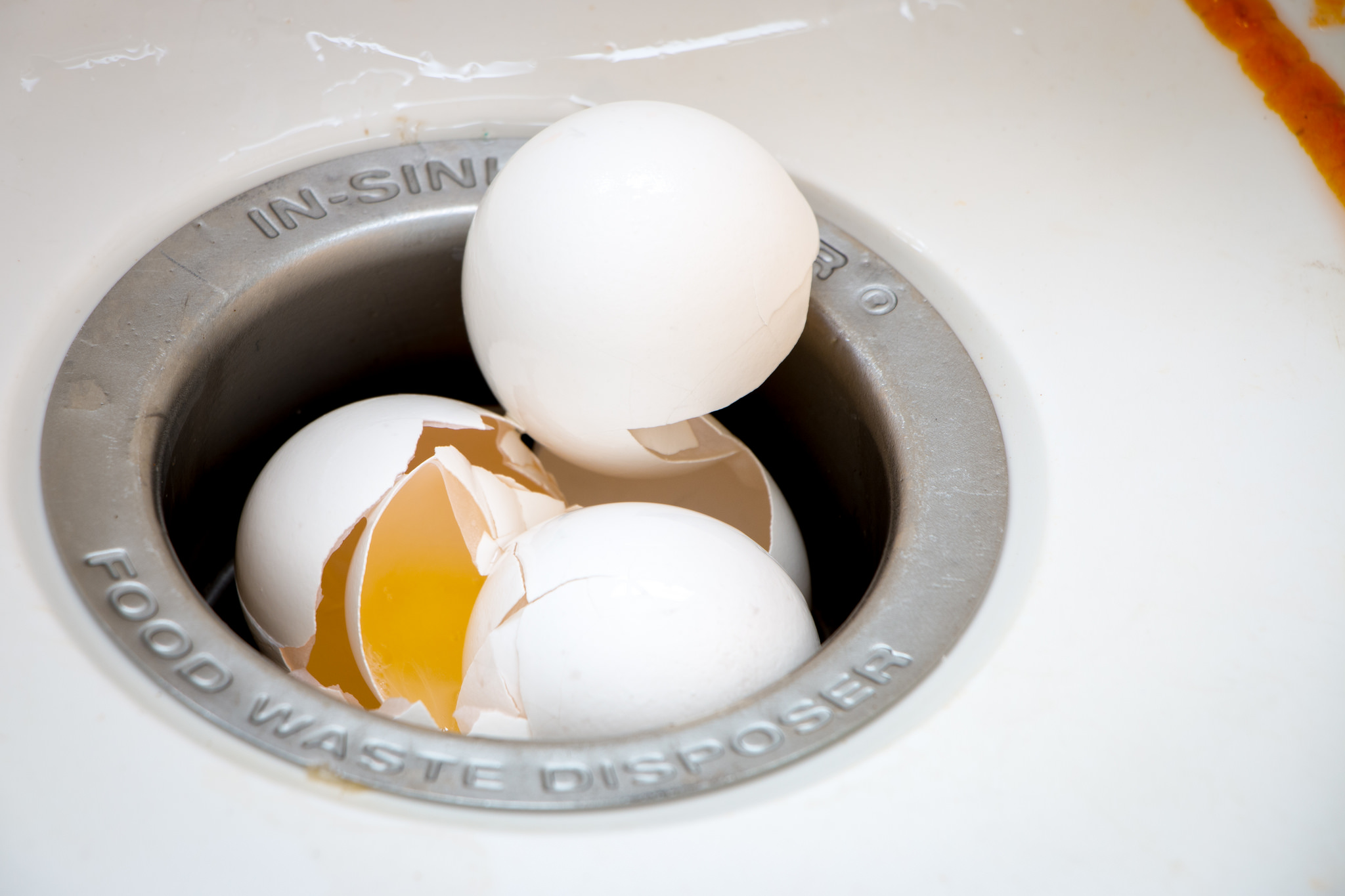
Should we really be putting food scraps down our sinks? Advertisements for kitchen garbage disposals assure us that these devices are a ‘hygienic way of eliminating waste and keeping odors at bay’ – but behind marketing materials questions remain.

[Read more…] about Stop Putting Food Waste Down The Drain

Reduced Waste From Modular Construction

March 10, 2016 By WAMC WEB

https://earthwiseradio.org/wp-content/uploads/2016/03/EW-03-10-16-Modular-Construction.mp3

Our nation’s landfills are overflowing and we are constantly seeking ways to reduce the amount of waste that needs to go into them.  Usually, we are thinking about food waste, plastics, glass and paper.  However, one of the largest sources of waste generation is actually construction and demolition waste.   Estimates are that between 25 and 40% of the national solid waste stream comes from these activities and very little of it gets recycled.

[Read more…] about Reduced Waste From Modular Construction

Primary Sidebar

Recent Episodes

  • An uninsurable future
  • Clean energy and jobs
  • Insect declines in remote regions
  • Fossil fuel producing nations ignoring climate goals
  • Trouble for clownfishes

WAMC Northeast Public Radio

WAMC/Northeast Public Radio is a regional public radio network serving parts of seven northeastern states (more...)

Copyright © 2026 ·