• Skip to primary navigation
  • Skip to main content
  • Skip to primary sidebar

Earth Wise

A look at our changing environment.

  • Home
  • About Earth Wise
  • Where to Listen
  • All Articles
  • Show Search
Hide Search
You are here: Home / Archives for recreational

recreational

Restoring Coastal Ecosystems | Earth Wise

February 1, 2021 By EarthWise Leave a Comment

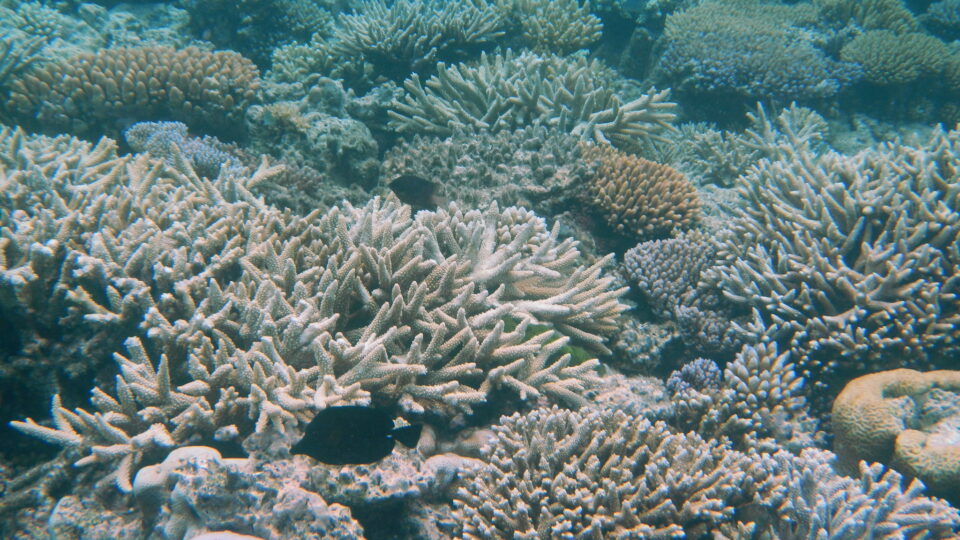
Developing hardier corals for endangered reefs that resist the effects of climate change

Research published by CSIRO, Australia’s national science agency, examined the positive effects of restoration efforts for coastal ecosystems in terms of biodiversity, local economies, and human wellbeing.

Coastal ecosystems include saltmarshes, mangroves, seagrasses, oyster reefs, kelp beds, and coral reefs.  All of these have suffered declines of up to 85% over recent decades.  The research identified a number of successful coastal and marine restoration projects in recent years that indicate the likelihood that such efforts could be expanded by as much as a factor of ten to support human health and wellbeing, boost the adaptation response to climate change, and generate jobs. 

Some of the successful efforts identified included projects in the Great Barrier Reef to harvest coral larvae to boost large-scale coral restoration efforts.   Simple changes to how saltmarshes are planted have resulted in doubled survivorship and biomass.  In the U.S., the propagation of seagrass seeds has resulted in seagrass meadows recovering in areas where they had been lost decades ago.  In Indonesia, recovery of reefs impacted by blast fishing has been achieved by placing rocks or other hard structures underwater to help with coral colonization.

Investing in coral restoration creates jobs and can be used as a strategy to boost economic recovery and coastal marine health.  Restoration of marine habitats like kelp forests and oyster reefs has improved commercial and recreational fishing.

The United Nations has recognized the importance of coastal restoration and has declared the Decade on Ecosystem Restoration to start from 2021.

**********

Web Links

Scientists shine light on ‘bright spots’ to restore coastal ecosystems

Photo, posted November 29, 2012, courtesy of Robert Linsdell via Flickr.

Earth Wise is a production of WAMC Northeast Public Radio.
The Dead Zone In The Gulf Of Mexico | Earth Wise

July 6, 2020 By EarthWise Leave a Comment

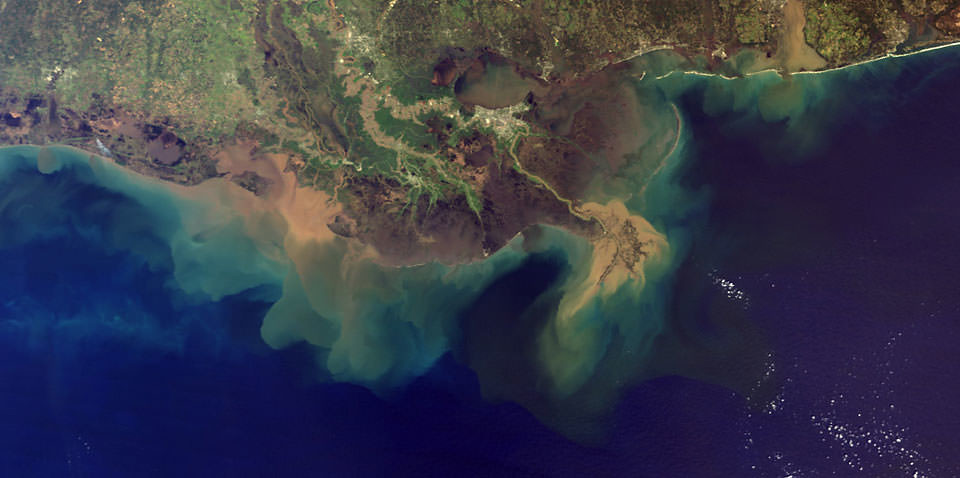
the gulf of mexico dead zone

The Gulf of Mexico has an area of low to no oxygen in the water that can kill fish and other marine life.  It is an annual event that is primarily caused by excess nutrient pollution from human activities in urban and agricultural areas throughout the Mississippi River watershed.   When these excess nutrients reach the Gulf, they stimulate the overgrowth of algae, which eventually die and decompose, depleting the oxygen in the water as the algae sink to the bottom.

These low oxygen levels near the bottom of the Gulf cannot support most marine life.  Some species – among them many fish, shrimp, and crabs – swim out of the area, but animals that can’t swim or move away are stressed or killed by the low oxygen.  The dead zone in the Gulf occurs every summer.

A recent forecast for this summer’s dead zone predicts that the area of low or no oxygen will be approximate 6,700 square miles, which is roughly the size of Connecticut and Delaware combined.  This is about 1,100 square miles smaller than last year’s dead zone and much less than the record of 8,776 square miles set in 2017.  But it is still larger than the long-term average size of 5,387 square miles.

Making comparisons to the long-term average ignores the fact that the long-term average itself is unacceptable.  The dead zone not only hurts marine life, but it also harms commercial and recreational fisheries and the communities they support.  The actions that have been taken so far to reduce pollution in the Mississippi watershed are clearly not sufficient to drastically reduce the dead zone in the Gulf.

**********

Web Links

Large ‘dead zone’ expected for Gulf of Mexico

Photo, posted October 17, 2017, courtesy of NOAA’s National Ocean Service via Flickr.

Earth Wise is a production of WAMC Northeast Public Radio.

Primary Sidebar

Recent Episodes

  • An uninsurable future
  • Clean energy and jobs
  • Insect declines in remote regions
  • Fossil fuel producing nations ignoring climate goals
  • Trouble for clownfishes

WAMC Northeast Public Radio

WAMC/Northeast Public Radio is a regional public radio network serving parts of seven northeastern states (more...)

Copyright © 2026 ·