• Skip to primary navigation
  • Skip to main content
  • Skip to primary sidebar

Earth Wise

A look at our changing environment.

  • Home
  • About Earth Wise
  • Where to Listen
  • All Articles
  • Show Search
Hide Search
You are here: Home / Archives for real time

real time

Surviving Climate Change | Earth Wise

June 30, 2021 By EarthWise Leave a Comment

What species will survive climate change?

The sixth mass extinction of wildlife on Earth is happening now.  According to an analysis published last year in the journal Proceedings of the National Academy of Sciences, more than 500 species of land animals are on the brink of extinction and are likely to be lost within the next 20 years. Without the impact of humans, this quantity of extinctions would have taken thousands of years. 

Anthropogenic climate change continues to exacerbate problems that drive species to the brink.  Which species will be able to adapt and survive?

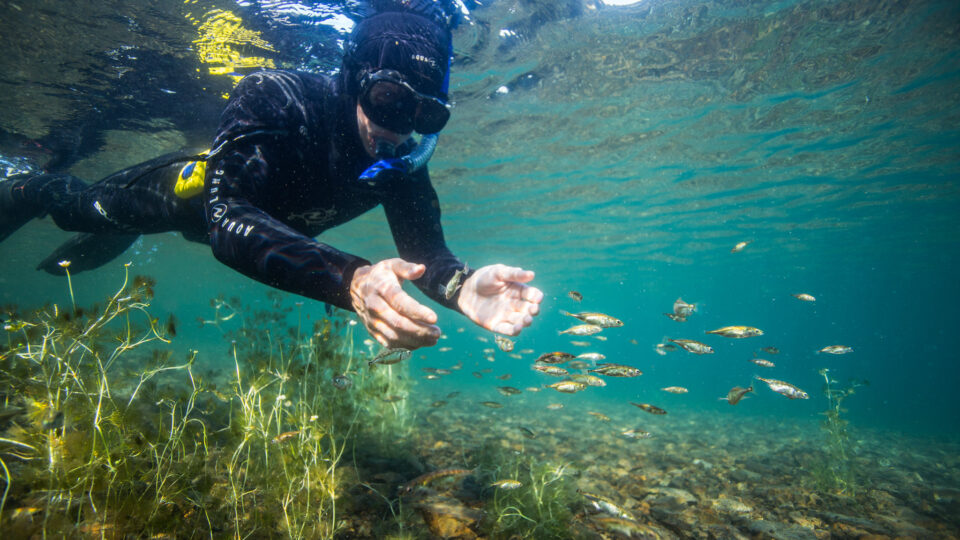
Using genome sequencing, a research team from McGill University in Montreal has found that some fish, like the threespine stickleback, can adapt very rapidly to extreme seasonal changes. Known for their different shapes, sizes, and behaviors, stickleback fish can live in both saltwater and freshwater, and can tolerate a wide range of temperatures.

Stickleback fish, which can be found in different estuaries along coastal California, provided researchers with an opportunity to study natural selection in real-time.  The researchers analyzed six populations of threespine stickleback fish before and after seasonal changes to their environment.   The research team discovered evidence of genetic changes driven by the seasonal shifts in habitat that mirrored the differences found between long-established freshwater and saltwater populations.  Since these genetic changes occurred in independent populations over a single season, the study highlights just how quickly the effects of natural selection can be detected. 

These findings suggest that scientists may be able to use the genetic differences that evolved in the past as a way to predict how species may adapt to climate change in the future.

**********

Web Links

Which animals will survive climate change?

Sixth Mass Extinction of Wildlife Accelerating- Study

Photo, posted August 3, 2015, courtesy of Jason Ching/University of Washington via Flickr.

Earth Wise is a production of WAMC Northeast Public Radio.

Pandemic Lockdowns And Carbon Emissions | Earth Wise

November 25, 2020 By EarthWise Leave a Comment

pandemic impact on carbon emissions

The early months of the COVID-19 pandemic saw many human activities reduced to a fraction of what they were previously.  Notably, air pollution in major cities was dramatically lower than it had been in decades.  Now, a new study has looked at the effect of the pandemic shutdowns on carbon dioxide emissions.

An international team of climate scientists has published an assessment of carbon dioxide emissions by industry, transportation, and other sectors from January through June.  According to their measurements, this year’s pandemic lockdowns resulted in a 9% decline in emissions from 2019 levels.

An earlier study reported a 17% drop in CO2 emissions, but the new study was more comprehensive and detailed.

The new data includes estimates of day-by-day, sector-specific and country-level differences in CO2 emissions derived from frequently updated data sources, some of which are nearly in real-time.  It tracks the effects of COVID-19-related disruptions of human activities in China starting in February and in the United States and Europe in March through May.

The data revealed the resumption of emissions in many regions, such as in China, where they are now back to pre-pandemic levels.  Emissions in the Americas and Europe have been slower to recover, especially in the US, where COVID-19 hotspots are continuing to emerge. 

The reduction in carbon emissions has been due mostly to transportation with fewer people driving to work and traveling by air.  Even by June, when lockdowns were easing, global emissions were still significantly reduced.  In any case, a pandemic is a highly undesirable and unwelcome way to reduce carbon emissions, but the data from this year does show that it is effective.

**********

Web Links

Pandemic lockdowns caused steep and lasting carbon dioxide decline

Photo, posted August 7, 2020, courtesy of Michael Mueller via Flickr.

Earth Wise is a production of WAMC Northeast Public Radio.
V2V And Safer Cars

June 27, 2018 By EarthWise Leave a Comment

https://earthwiseradio.org/wp-content/uploads/2018/06/EW-06-27-18-V2V-and-Safer-Cars.mp3

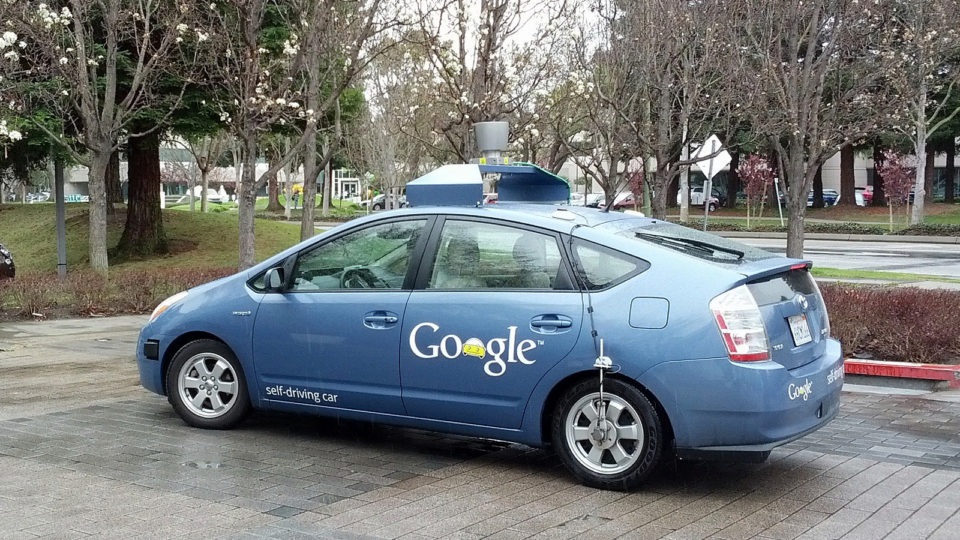
Automated cars are coming, but they face many challenges in sharing the roads with human drivers.  The on-board sensors in these cars are very effective in many ways, but they cannot see around corners or see through buses or trucks.  They won’t know if six cars ahead, someone has slammed on their breaks leading to a chain-reaction collision.  Of course, human drivers have the same problems.

[Read more…] about V2V And Safer Cars

Big Data + Technology = Improved Global Health

June 20, 2016 By WAMC WEB

https://earthwiseradio.org/wp-content/uploads/2016/06/EW-06-20-16-Early-Warning-Disease-System.mp3

Scientists are calling for the creation of a global early warning system for infectious diseases. Such a system would use computer models to tap into environmental, epidemiological, and molecular data – gathering the intelligence needed to forecast where disease risk is high and what actions could prevent outbreaks or contain epidemics.

[Read more…] about Big Data + Technology = Improved Global Health

Primary Sidebar

Recent Episodes

  • An uninsurable future
  • Clean energy and jobs
  • Insect declines in remote regions
  • Fossil fuel producing nations ignoring climate goals
  • Trouble for clownfishes

WAMC Northeast Public Radio

WAMC/Northeast Public Radio is a regional public radio network serving parts of seven northeastern states (more...)

Copyright © 2026 ·