• Skip to primary navigation
  • Skip to main content
  • Skip to primary sidebar

Earth Wise

A look at our changing environment.

  • Home
  • About Earth Wise
  • Where to Listen
  • All Articles
  • Show Search
Hide Search
You are here: Home / Archives for reaction

reaction

Soda can hydrogen

August 15, 2025 By EarthWise Leave a Comment

Produce green hydrogen from soda cans

Hydrogen is an ideal climate-friendly fuel because it doesn’t release carbon dioxide when it is used.  But most hydrogen is produced in ways that result in significant carbon emissions. Thus, the search for green hydrogen goes on. 

Last year, engineers at MIT developed a new process for making hydrogen that significantly reduces the carbon footprint of its production.  The recipe uses seawater and recycled soda cans. 

Pure aluminum reacts with water, breaking up the water molecules to produce aluminum oxide and pure hydrogen.  But when aluminum is exposed to oxygen, it forms a shield-like layer that prevents the reaction.

The MIT researchers found that the shield can be removed by treating aluminum with a small amount of gallium-indium alloy.  Mixing the pure aluminum with seawater not only produces hydrogen, but the salt in the seawater precipitates out the gallium-indium, making it available for reuse.

The research team carried out a “cradle-to-grave” life cycle assessment of the process, taking into account every step in using the hydrogen-production process at an industrial scale.  They found that using recycled aluminum – chopped-up soda cans – is environmentally and economically superior to using “primary” aluminum, mined from the earth. The cans would be shredded into pellet and treated with the gallium-indium alloy.  The pellets would be processed near a source of seawater where they would be combined to generate hydrogen on demand.

According to their analysis, the hydrogen produced would be at least competitive economically and environmentally with other potential methods of producing green hydrogen.

**********

Web Links

Study shows making hydrogen with soda cans and seawater is scalable and sustainable

Photo, posted July 29, 2020, courtesy of Bruce Dupree via Flickr.

Earth Wise is a production of WAMC Northeast Public Radio

Billion-Dollar Disasters | Earth Wise

October 5, 2023 By EarthWise Leave a Comment

As the climate changes, billion-dollar disasters are increasing

By the end of August, the United States had already broken the one-year record for the number of weather and climate disasters that caused more than $1 billion in damage.

According to the National Oceanic and Atmospheric Administration, through August there had already been 23 billion-dollar disasters.  The previous record of 22 had been set in 2020.  The 23 this year racked up $58 billion in damages.

The unfortunate litany of events included two in August:  Hurricane Idalia, which struck Florida’s Big Bend region and the Lahaina fire storm on Maui.  Earlier in the year, winter storms in the Northeast, floods in California and Vermont, and 18 other severe storm events contributed to the record.

With a very active Atlantic hurricane season underway and the prospects for more wildfires in the west, it is likely that the record for billion-dollar disasters will climb even higher before the year ends.

The massive financial losses incurred this year highlight the need for more funding and attention to be directed toward climate resistance and adaptation.  The NOAA report urges policymakers to invest much more in getting out ahead of disasters before they strike rather than only looking for ways to help communities to pick up the pieces after disaster has struck.

Congress is currently considering $16 billion in additional funding for FEMA to keep the agency functioning in this very trying year.

As climate change continues to contribute to more intense storms and larger and more frequent wildfires, the price of adaptation and recovery efforts is likely to continue to grow.

**********

Web Links

2023 has already broken the US record for billion-dollar climate disasters

Photo, posted August 31, 2023, courtesy of Spc. Christian Wilson / The National Guard via Flickr.

Earth Wise is a production of WAMC Northeast Public Radio

Hydrogen And The Methane Problem | Earth Wise

April 24, 2023 By EarthWise Leave a Comment

Theoretically, hydrogen could be the fuel of the future.  It is the most common element in the universe and its combustion produces no harmful emissions.  Most industrial hydrogen comes from a process called steam reforming that extracts it from natural gas – basically methane.  Carbon dioxide is a byproduct of the process.   But it is also possible to get hydrogen by breaking down water resulting only in oxygen as a byproduct.   There is a great deal of ongoing development of so-called green hydrogen.

New research from Princeton University and the National Oceanic and Atmospheric Administration has uncovered a potential problem associated with the use of hydrogen as a clean fuel. 

There is a molecule in the atmosphere called the hydroxyl radical.  It is known as “the detergent of the troposphere”.  It plays a critical role in eliminating greenhouse gases such as methane and ozone from the atmosphere.  It turns out that the hydroxyl radical also reacts with any hydrogen gas in the atmosphere and there is only so much hydroxyl to go around.  If large amounts of hydrogen were to enter the atmosphere, much of the hydroxyl radical would be used up reacting with it and there would be much less available to break down methane.  As a result, there would end up being more methane in the atmosphere, and methane is a powerful greenhouse gas.

The bottom line is that there would need to be proactive efforts to limit the amount of hydrogen getting into the atmosphere whether from producing it, transporting it, or anyplace else in the value chain.  Otherwise, the hydrogen economy would cancel out many of the climate benefits of eliminating fossil fuels.

**********

Web Links

Switching to hydrogen fuel could prolong the methane problem

Photo, posted June 12, 2021, courtesy of Clean Air Task Force via Flickr.

Earth Wise is a production of WAMC Northeast Public Radio
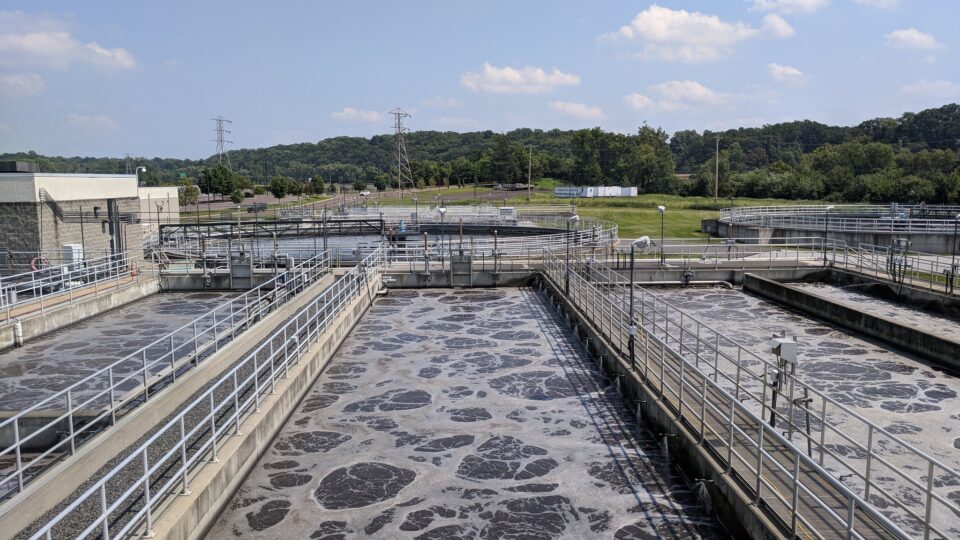
Wastewater And Ammonia | Earth Wise

October 22, 2021 By EarthWise Leave a Comment

Ammonia is the second most produced chemical in the world.  More than half of it is used in agriculture to produce various kinds of fertilizer, to produce cotton defoliants that make cotton easier to pick, and to make antifungal agents for fruits.  Globally, ammonia represents more than a $50 billion a year market.

Current methods to make ammonia require enormous amounts of heat – generated by burning fossil fuels – to break apart nitrogen molecules so that they can bind to hydrogen to form the compound. Ammonia production accounts for about 2% of worldwide fossil energy use and generates over 400 million tons of CO2 annually.

Engineers at the University of Illinois Chicago have created a solar-powered electrochemical reaction that uses wastewater to make ammonia and does it with a solar-to-fuel efficiency that is 10 times better than previous comparable technologies.

The process uses nitrate – which is one of the most common groundwater contaminates – to supply nitrogen and uses sunlight to power the reaction.  The system produces nearly 100% ammonia with almost no hydrogen side reactions.  No fossil fuels are needed, and no carbon dioxide or other greenhouse gases are produced.  The new method makes use of a cobalt catalyst that selectively converts nitrate molecules into ammonia.

Not only is the reaction itself carbon-neutral, which is good for the environment, but if it is scaled up for industrial use, it will consume wastewater, thereby actually being good for the environment.  The new process is the subject of a patent filing and the researchers are already collaborating with municipal corporations, wastewater treatment centers, and others in industry to further develop the system.

**********

Web Links

Combining sunlight and wastewater nitrate to make the world’s No. 2 chemical

Photo, posted August 29, 2018, courtesy of Montgomery County Planning Commission via Flickr.

Earth Wise is a production of WAMC Northeast Public Radio.

A New Membrane For Converting Carbon Dioxide | Earth Wise

March 24, 2020 By EarthWise Leave a Comment

Efficiently transforming CO2 into fuel

Methanol is a valuable chemical used as fuel in the production of countless products. Carbon dioxide is a greenhouse gas that is produced by countless industrial processes.  Carbon dioxide can be converted into methanol, which is one way all that CO2 can be put to good use instead of causing harm. 

In research recently published in Science, chemical engineers from Rensselaer Polytechnic Institute have developed a process that converts CO2 to methanol in a more efficient way by using a highly effective separation membrane they produced.  

The chemical reaction responsible for the transformation of CO2 into methanol also produces water, which severely restricts the continued reaction. The Rensselaer team has found a way to filter out the water as the reaction is happening, without losing other essential gas molecules. 

They produced a membrane made up of sodium ions and zeolite crystals that was able to carefully and quickly permeate water through small pores — known as water-conduction nanochannels — without losing gas molecules. The sodium ions effectively only allow water to go through. When water was effectively removed from the process, the team found that the chemical reaction was able to happen very quickly. By removing the water, the equilibrium shifts, which means more CO2 will be converted and more methanol will be produced.  

The team is now working to develop a scalable process and a startup company that would allow this membrane to be used commercially to produce high purity methanol.  This membrane could also be used to improve a number of other reactions. 

In industry there are many reactions limited by water and this RPI membrane could be an important enhancement for many of them. 

**********

Web Links

Water-Conducting Membrane Allows Carbon Dioxide To Transform into Fuel More Efficiently

Photo courtesy of RPI.

Earth Wise is a production of WAMC Northeast Public Radio.

Primary Sidebar

Recent Episodes

  • An uninsurable future
  • Clean energy and jobs
  • Insect declines in remote regions
  • Fossil fuel producing nations ignoring climate goals
  • Trouble for clownfishes

WAMC Northeast Public Radio

WAMC/Northeast Public Radio is a regional public radio network serving parts of seven northeastern states (more...)

Copyright © 2026 ·