• Skip to primary navigation
  • Skip to main content
  • Skip to primary sidebar

Earth Wise

A look at our changing environment.

  • Home
  • About Earth Wise
  • Where to Listen
  • All Articles
  • Show Search
Hide Search
You are here: Home / Archives for queensland

queensland

Tourism and climate action

October 11, 2024 By EarthWise Leave a Comment

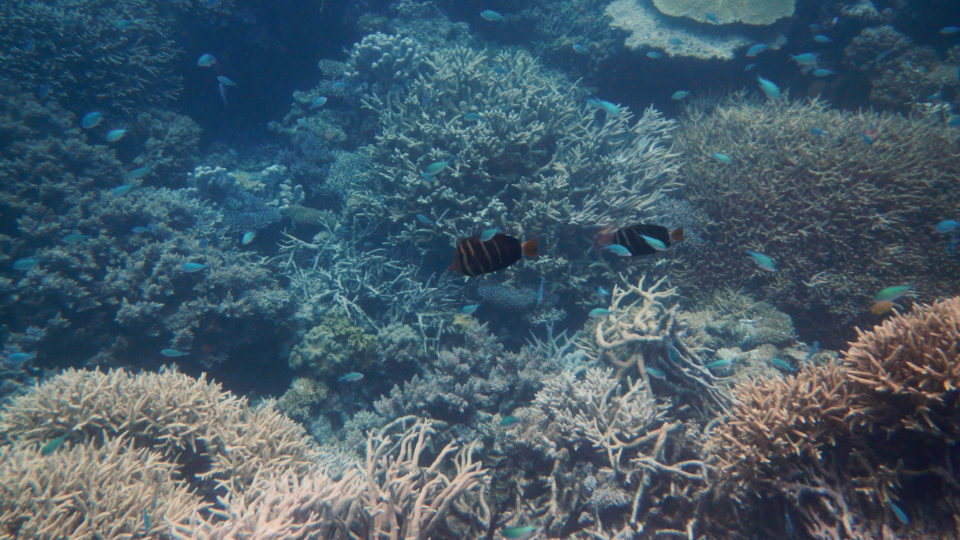
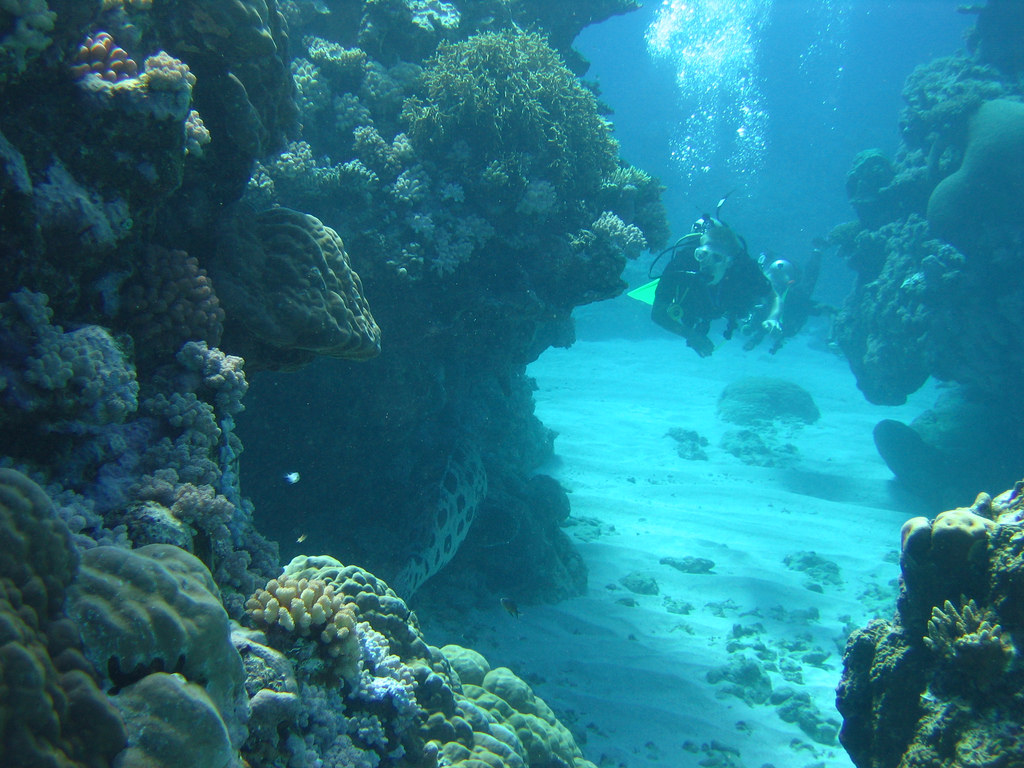
Australia’s Great Barrier Reef is one of the foremost natural wonders of the world and is a major tourist attraction.  It is well-known that the changing climate is threatening the survival of the Great Barrier Reef as well as other coral reefs around the world.  A recent study by researchers at the University of Queensland looked at the reactions of tourists to being informed about the impact of the changing climate on the reef.

The Great Barrier Reef faces many challenges.  Unprecedented marine heatwaves have triggered repeated mass coral bleaching events over the past decade. These climate driven disturbances are compounding the cumulative effects of chronic problems such as unsustainable fishing, pollution, and sedimentation as well as acute disturbances such as tropical cyclones and outbreaks of crown-of-thorns starfish.

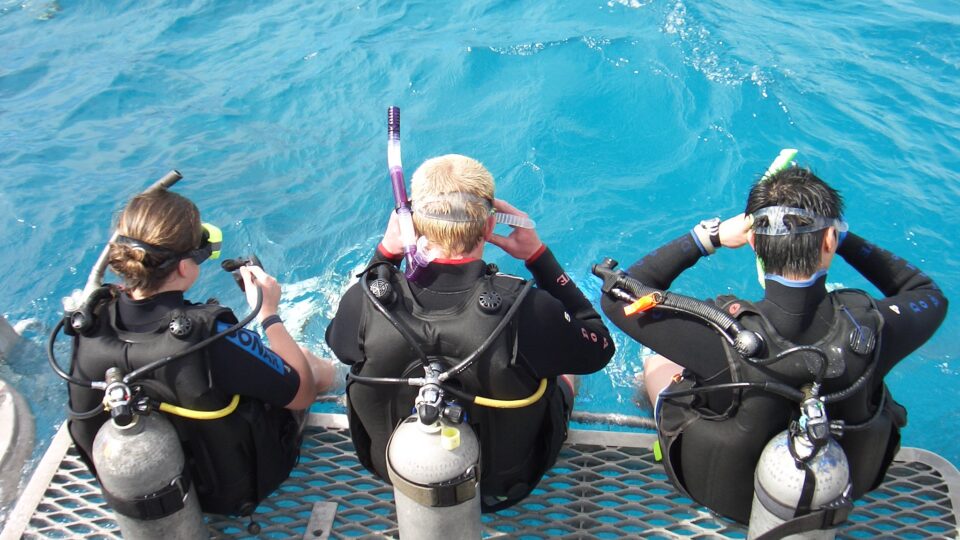
Operators of five reef tourism boats assisted in the study.  As part of their boat trips, tourists were given climate information via a marine biology presentation and there were also posters around the vessel as well as regular mentions of climate change impacts and actions throughout the trip.

The tourism industry often has the idea that providing information on climate change might be detrimental to people’s enjoyment – basically a buzzkill.  But based on surveys conducted at the end of the trips, the researchers found that informing tourists about climate impact didn’t negatively affect their experience.  In fact, most tourists actually wanted more information, particularly about how they can take meaningful actions of their own.

The researchers believe that their study provides further opportunity to improve climate communication and effectively promote climate change engagement among tourists.

**********

Web Links

Reef tourism encourages climate action

Photo, posted October 7, 2008, courtesy of eGuide Travel via Flickr.

Earth Wise is a production of WAMC Northeast Public Radio

Red Pandas And Climate Change | Earth Wise

July 6, 2022 By EarthWise 2 Comments

Climate change threatening red panda populations

Red pandas are small mammals native to the mountainous forests of China, India, Nepal, Bhutan, and Myanmar.  Unlike their name suggests, they are not related to giant pandas.  In fact, red pandas are distant relatives of raccoons. Renowned for their tree-climbing abilities, red pandas live at moderately high elevations in the Himalayas where they forage widely for bamboo shoots and various fruits.

According to the International Union for the Conservation of Nature, red pandas are endangered.  Scientists estimate that there are less than 10,000 red pandas remaining in the wild today, and these numbers are continuing to fall. 

Habitat loss is the main threat to red panda’s survival.  Human expansion into the area, combined with the effects of climate change, has led to the fragmentation and loss of livable land.  Red pandas also face dangers from hunting and poaching.

According to new research recently published in the journal Landscape Ecology, human impacts are driving red pandas closer to extinction than previously thought.  Using GPS telemetry, a research team from the University of Queensland in Australia tracked red pandas in Nepal over a 12-month period.  The researchers found that human activities, such as infrastructure development, were causing red pandas to restrict their movements, which is further fragmenting their habitat and interfering with natural interactions between the animals. 

As the amount of wild forest dwindles, red pandas are being forced into situations where they must decide whether to live closer to predators or adapt to co-exist with humans.

The research team recommends minimizing human-induced disturbances in red panda habitats and to maintain habitat continuity in ecologically sensitive areas. 

**********

Web Links

Red pandas face a fractured future

IUCN: Red Panda

Photo, posted November 27, 2016, courtesy of Mathias Appel via Flickr.

Earth Wise is a production of WAMC Northeast Public Radio.

Batteries On Wheels | Earth Wise

December 24, 2021 By EarthWise Leave a Comment

electric vehicles as a battery resource

Transportation accounts for nearly a quarter of the direct carbon dioxide emissions coming from burning fuel.  As a result, electrification of transport is one of the major ways we can reduce emissions.  Increasing the number of electric vehicles over time is essential for meeting emissions targets.

But electric vehicles have the potential to do more than deliver emissions reduction; they can also provide other energy services.

More and more electric cars provide over 200 miles of driving range, but most cars are actually driven no more than 30 miles a day.  As a result, the fleet of electric cars represents a huge bank of energy stored in battery packs and mostly sitting around unused.  This presents an opportunity to leverage this resource.

Car battery packs could be used to absorb excess renewable energy generated in the middle of the day (for example from solar installations) or at night (from wind farms) and potentially then to export stored energy to power homes and support the grid.  This energy system is known as V2G, or vehicle-to-grid technology.

The University of Queensland in Australia has launched a unique international trial to see if the spare battery capacity in vehicles could be used for these purposes.  The university has partnered with Teslascope, which is an online analytics platform used by Tesla owners to track the performance of their cars.  Tesla owners wishing to be part of the study authorize the collection of their data and, in turn, receive a free 12-month subscription to the Teslascope service.  The study will collect data from Tesla owners in Australia, the US, Canada, Norway, Sweden, Germany, and the UK.

**********

Web Links

Can EV spare battery capacity support the grid?

Photo, posted February 8, 2009, courtesy of City of St Pete via Flickr.

Earth Wise is a production of WAMC Northeast Public Radio.

Is There Hope For Coral Reefs?

January 16, 2019 By EarthWise Leave a Comment

News about the world’s coral reefs has been relentlessly bad for a number of years.  Warming, acidifying oceans have wreaked havoc with coral reefs leading to enormous losses.  Nowhere have things been more dire than in Australia’s Great Barrier Reef.  Coral bleaching events have been increasingly common and severe over the past two decades.  In fact, only 7% of the Great Barrier Reef has escaped bleaching entirely since 1998.

While the future of the world’s coral reefs is very much uncertain as global heating continues, there is a recent bit of hopeful news.   According to a study published in Nature Climate Change, the response of the Great Barrier Reef to the extreme temperatures in 2017 was quite different from that of the previous year in the aftermath of back-to-back bouts of coral bleaching.

Surprisingly, corals that bleached in 2016 but managed to survive were more resistant to the recurrence of hot conditions in 2017.

Many corals don’t survive bleaching events at all and, of course,those corals don’t bleach for a second time. But the surviving corals from the 2016 bleaching event were tougher species.   As a result of bleaching, the mix of coral species on the reef is changing very rapidly.  The net result was that there was less bleaching in 2017 even though the temperatures that year were even more extreme than in 2016.

There have now been four mass bleaching events on the Great Barrier Reef over the past 20 years and it is only a matter of time before another one occurs triggered by the next marine heatwave. Almost half of the corals on the northern two-thirds of the reef have been killed.  But at least some of the reef is showing impressive survival skills.

**********

Web Links

A glimmer of hope for the world’s coral reefs

Photo, posted November 29, 2012, courtesy of Robert Linsdell via Flickr. 

Earth Wise is a production of WAMC Northeast Public Radio.

Can The Great Barrier Reef Be Saved?

August 17, 2017 By EarthWise

https://earthwiseradio.org/wp-content/uploads/2017/08/EW-08-17-17-Can-The-Great-Barrier-Reef-Be-Saved.mp3

There have been many stories in the media about the ongoing environmental crisis at Australia’s Great Barrier Reef.  Over the past two years, the reef has lost almost half of its coral because of bleaching events.   Faced with this situation, the Australian government created the Reef 2050 Plan, a strategy to protect and maintain the reef through the year 2050.

[Read more…] about Can The Great Barrier Reef Be Saved?

Primary Sidebar

Recent Episodes

  • An uninsurable future
  • Clean energy and jobs
  • Insect declines in remote regions
  • Fossil fuel producing nations ignoring climate goals
  • Trouble for clownfishes

WAMC Northeast Public Radio

WAMC/Northeast Public Radio is a regional public radio network serving parts of seven northeastern states (more...)

Copyright © 2026 ·