• Skip to primary navigation
  • Skip to main content
  • Skip to primary sidebar

Earth Wise

A look at our changing environment.

  • Home
  • About Earth Wise
  • Where to Listen
  • All Articles
  • Show Search
Hide Search
You are here: Home / Archives for profitability

profitability

The benefits of agroecology

August 19, 2025 By EarthWise Leave a Comment

Exploring the benefits of agroecology

Agroecology focuses on sustainably managing agricultural systems by applying ecological principles.  The goal is to optimize the interactions between plants, animals, humans, and the environment.

A four-year study by the UK Centre for Ecology and Hydrology found that incorporating nature-friendly practices within farming increases biodiversity, pollination by bees, natural pest control, and the numbers of earthworms. 

The study compared three agricultural systems:  typical intensive agriculture, enhanced ecological farming, and maximized ecological farming.  Enhanced ecological farming involves planting wildflower field margins to provide habitat for bees, beetles, and spiders, and sowing overwinter cover crops to capture carbon and retain soil nutrients.  Optimized ecological farming adds planting in-field strips of wildflowers to attract beneficial insects and adding organic matter such as farmyard manure to improve soil health.

The ecological systems had increased populations of earthworms and pollinators, as well as natural predators of crop pests. 

The study concluded that while there are multiple benefits in terms of biodiversity, soil carbon, and crop yield when ecological farming systems are used, many farmers will be deterred from adopting agroecological farming practices and system because of the reduced profitability.  They argue that financial incentives such as subsidies are needed and are well worth it for the long-term sustainability of agriculture.

**********

Web Links

Nature-friendly farming boosts biodiversity and yields but may require new subsidies 

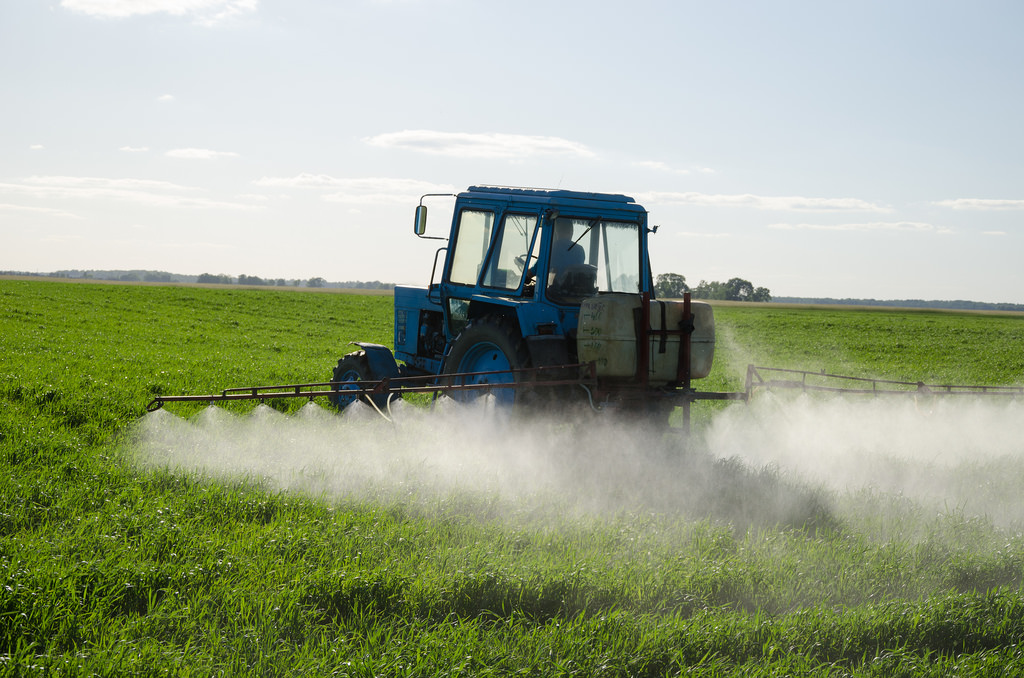
Photo, posted July 27, 2023, courtesy of Judy Dean via Flickr.

Earth Wise is a production of WAMC Northeast Public Radio

A biostimulant for wheat

May 28, 2025 By EarthWise Leave a Comment

Developing a biostimulant for wheat to boost crop yields

Feeding a global population projected to reach nearly 10 billion by mid-century is a massive challenge.  Wheat provides a fifth of the calories in the global human diet and is a significant source of protein, minerals, vitamins, and fiber.  Finding ways to increase the yield of wheat crops has great value.  However, wheat has complex genetics, which makes it difficult to improve yields by traditional breeding methods or even by genetic engineering.

Researchers at Oxford University and the nearby Rosalind Franklin Institute have developed a biostimulant that can deliver increased wheat yields of up to 12%.  It is applied as a spray and a four-year study in Argentina and Mexico demonstrated that it delivers major yield improvements irrespective of weather conditions.

The biostimulant is based on trehalose 6-phosphate (T6P), which is a natural molecule that regulates the plant equivalent of blood sugar.  T6P prompts plants to produce more starch and increases the rate of photosynthesis.

Naturally occurring T6P cannot be applied topically because it cannot cross cell membranes.  The researchers developed a membrane-permeable precursor of T6P that releases T6P into a plant in the presence of sunlight.

The biostimulant can be manufactured on an industrial scale and would be inexpensive to use. 

The researchers have created SugaROx, a spinout company whose mission is “to increase the productivity, resilience, sustainability, and profitability of crop production” using active ingredients inspired by powerful natural plant molecules.

**********

Web Links

New biostimulant treatment significantly boosts wheat yields, field studies confirm

Photo, posted July 28, 2014, courtesy of Brad Higham via Flickr.

Earth Wise is a production of WAMC Northeast Public Radio

EV growth and oil demand

June 7, 2024 By EarthWise Leave a Comment

EV growth to slow oil demand

There has been lots of talk recently about the transition to electric vehicles sputtering out.  Several automakers have delayed their EV programs citing reduced demand for the vehicles and lack of profitability.  In the bigger picture, the auto industry as a whole is in a rough patch as rising interest rates and other factors have reduced car buying.

Despite all this doom and gloom talk, sales of electric vehicles will hit an all-time high this year.  Adoption of EVs is accelerating more quickly than many people expected and government policies in China, the United States, and Europe have had a significant impact on vehicle sales.  In China, 37% of new cars sold last year were electric.  The country hit its 2025 target three years early and this year the figure could hit 45%.

But even as electric car sales rapidly increase, oil demand has continued to climb, reaching 100 million barrels a day, slightly more than it was before the COVID-19 pandemic.  The International Energy Agency expects that oil demand will peak before the end of this decade, but oil consumption could remain strong for decades unless there is further policy action encouraging the transition away from it.

Some experts say that the IEA’s models don’t take into account how quickly the world is changing.  New emission rules are expected to speed the adoption of EVs and plug-in hybrids.  In addition, falling battery costs are making the economics of electric vehicles increasingly attractive.  If EV adoption accelerates more rapidly than these models predict, then oil consumption could drop much more quickly.

However, the oil industry is deeply embedded in modern life and is not likely to fade away without a fight.

**********

Web Links

EV Sales Are Taking Off. Why Is Oil Demand Still Climbing?

Photo, posted September 9, 2020, courtesy of Chris Yarzab via Flickr.

Earth Wise is a production of WAMC Northeast Public Radio

Climate Change And The Bottom Line

July 31, 2019 By EarthWise Leave a Comment

Large companies around the world are facing up to the fact that climate change could substantially affect their bottom lines within the next five years.  Shareholders and regulators have been applying pressure to companies to disclose the specific financial impacts they could face as the planet warms and companies are increasingly making those disclosures.

A non-profit charity called CDP (formerly known as the Carbon Disclosure Project) runs the global disclosure system for investors, companies, cities, states, and regions to manage their environmental impacts.  In 2018, more than 7,000 companies submitted reports to CDP and, for the first time, CDP explicitly asked firms to try to calculate how a warming planet might affect them financially.

Analysis of the reports from 215 of the world’s 500 largest corporations revealed that these companies alone potentially faced roughly $1 trillion in costs related to climate change in the decades ahead unless they took proactive steps to prepare. 

Climate-related risks range from extreme weather that could disrupt supply chains to stricter climate regulations that could hurt the value of coal, oil, and gas investments.  Technology companies like Google’s parent company, Alphabet, Inc., face increased costs to cool energy-hungry data centers as temperatures rise.

In all, the world’s largest companies estimated that at least $250 billion of assets may need to be written off or retired early as the planet heats up.  Previous studies, based on computer climate modeling, have estimated that the risks of global warming, if left unmanaged, could cost the world’s financial sector between $1.7 trillion to $24.2 trillion in net present value terms.

**********

Web Links

Companies See Climate Change Hitting Their Bottom Lines in the Next 5 Years

Photo, posted February 29, 2016, courtesy of Ben Nuttall via Flickr.

Earth Wise is a production of WAMC Northeast Public Radio.

The Restoration Economy

March 2, 2018 By EarthWise Leave a Comment

https://earthwiseradio.org/wp-content/uploads/2018/03/EW-03-02-18-The-Restoration-Economy.mp3

Deforestation is one of the largest contributors to climate change.  Forests cover about 30% of the world’s land area and are a crucial sink for carbon dioxide.   Over time, we have been steadily reducing the amount of forest in the world to obtain wood and timber, open up farmland, build towns and cities, produce paper, make palm oil, and mine for minerals.

[Read more…] about The Restoration Economy

Pesticides And Food Insecurity

April 19, 2017 By EarthWise

https://earthwiseradio.org/wp-content/uploads/2017/03/EW-04-19-17-Pesticides-and-Food-Insecurity.mp3

A newly released report by the United Nations takes a strong stance against the use of industrial agrochemicals, saying that they are not necessary for feeding the world.  The continued use of pesticides at the rate the world currently does in fact can have very detrimental consequences.

[Read more…] about Pesticides And Food Insecurity

Primary Sidebar

Recent Episodes

  • An uninsurable future
  • Clean energy and jobs
  • Insect declines in remote regions
  • Fossil fuel producing nations ignoring climate goals
  • Trouble for clownfishes

WAMC Northeast Public Radio

WAMC/Northeast Public Radio is a regional public radio network serving parts of seven northeastern states (more...)

Copyright © 2026 ·