
• Skip to primary navigation
  • Skip to main content
  • Skip to primary sidebar

Earth Wise

A look at our changing environment.

  • Home
  • About Earth Wise
  • Where to Listen
  • All Articles
  • Show Search
Hide Search
You are here: Home / Archives for processes

processes

The Potential Of Artificial Photosynthesis | Earth Wise

August 2, 2021 By EarthWise Leave a Comment

Artificial photosynthesis could dramatically improve our ability to power society cleanly and efficiently.

The sun is the primary source of energy on the earth.  Enough solar energy hits the earth in one hour to meet all of human civilization’s energy needs for an entire year.  The two leading forms of renewable energy – photovoltaic solar power and wind power – are ways of making use of the sun’s energy.  Wind power is indirectly provided by the sun; photovoltaic power uses sunlight to generate electricity.

The most efficient use of solar energy on the planet is one perfected by plants millions of years ago:  photosynthesis.  Photosynthesis is a complex sequence of processes by which plants convert sunlight and water into usable energy in the form of glucose.  Plants utilize a combination of pigments, proteins, enzymes, and metals to perform their magic.  If we can develop artificial photosynthesis, it would be a dramatic improvement of humans’ ability to power society cleanly and efficiently.  Whereas photovoltaics capture about 20% of the sun’s energy, photosynthesis stores 60% of the sun’s energy as chemical energy.

Researchers across the globe are working to develop artificial photosynthesis.  A group at Purdue university has been making progress in trying to mimic the ability of leaves to collect light and split water molecules to generate hydrogen. This is a critical step in photosynthesis that is accomplished by protein and pigment complexes known as “photosystems II”.  The Purdue group is experimenting with these proteins and various synthetic catalysts in order to try to develop artificial leaves based on abundant, nontoxic materials. 

It is likely to take a decade or more for artificial photosynthesis technology to become part of our energy system, but its ultimate potential is enormous.

**********

Web Links

Soaking up the sun: Artificial photosynthesis promises a clean, sustainable source of energy

Photo, posted June 14, 2007, courtesy of Alex Holyoake via Flickr.

Earth Wise is a production of WAMC Northeast Public Radio.
The ‘Biggest Ever’ Arctic Expedition

October 3, 2019 By EarthWise Leave a Comment

The Arctic is warming faster than any other region on Earth.  In fact, it’s warming at a rate of almost twice the global average.  And, since what happens in the Arctic doesn’t stay in the Arctic, the world is already feeling the effects: rising sea levels, changes in climate and precipitation patterns, increasing severe weather events, and so on. 

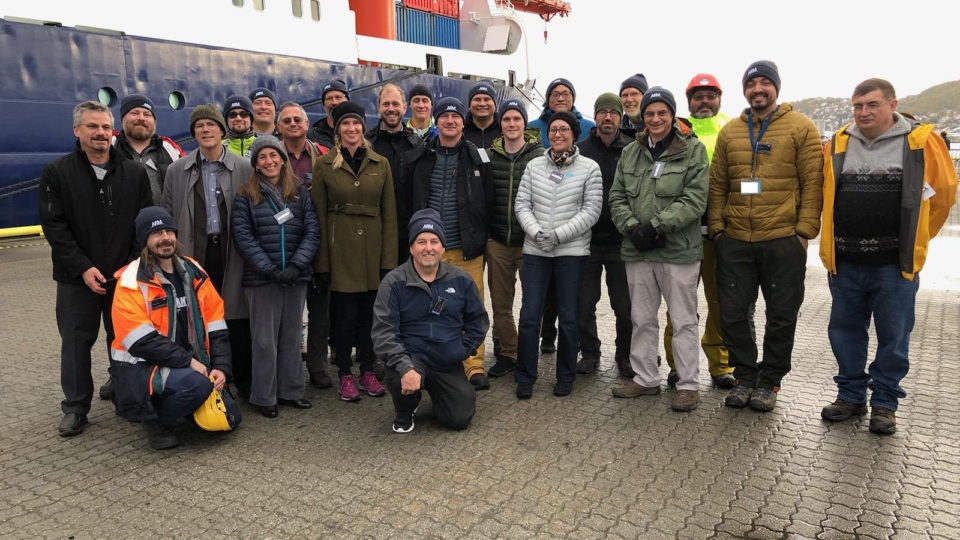
As a result, researchers from more than a dozen countries have launched the biggest and most complex expedition ever attempted in the Arctic.  They plan to freeze Germany’s largest research vessel, the Polarstern, into Arctic sea ice, where it will remain trapped for twelve months.  The ship will drift with the sea ice as the sea ice drifts.  The vessel will serve as a research laboratory, hosting a rotating crew of 300 scientists.  The ice, the ocean, the atmosphere, and even the wildlife will all be sampled.  This year-long journey will give researchers their closest look at how the polar climate and its fragile ecosystems are changing. 

Led by the Alfred Wegener Institute for Polar and Marine Research in Germany, the Multidisciplinary drifting Observatory for the Study of Arctic Climate project (or MOSAiC) is expected to cost about $150 million. 

One major goal of MOSAiC is to improve strikingly uncertain climate projections for the Arctic.  Climate models disagree on how much more the Arctic will warm as the concentration of greenhouse gases in the atmosphere rises and sea ice shrinks.  Some project a 5ºC rise by 2100 relative to the 1986-2005 average.  Others predict a 10ºC increase. 

Understanding the complex processes occurring in the Arctic is essential for projecting the future impacts of climate change. 

**********

Web Links

Climate scientists prepare for largest ever Arctic expedition

Climate change: Polarstern leaves for ‘biggest ever’ Arctic expedition

Image courtesy of the U.S. Department of Energy Atmospheric Radiation Measurement (ARM) user facility.

Earth Wise is a production of WAMC Northeast Public Radio.
Biomimicry Is Big

February 8, 2018 By EarthWise Leave a Comment

https://earthwiseradio.org/wp-content/uploads/2018/02/EW-02-08-18-Biomimicry-is-Big.mp3

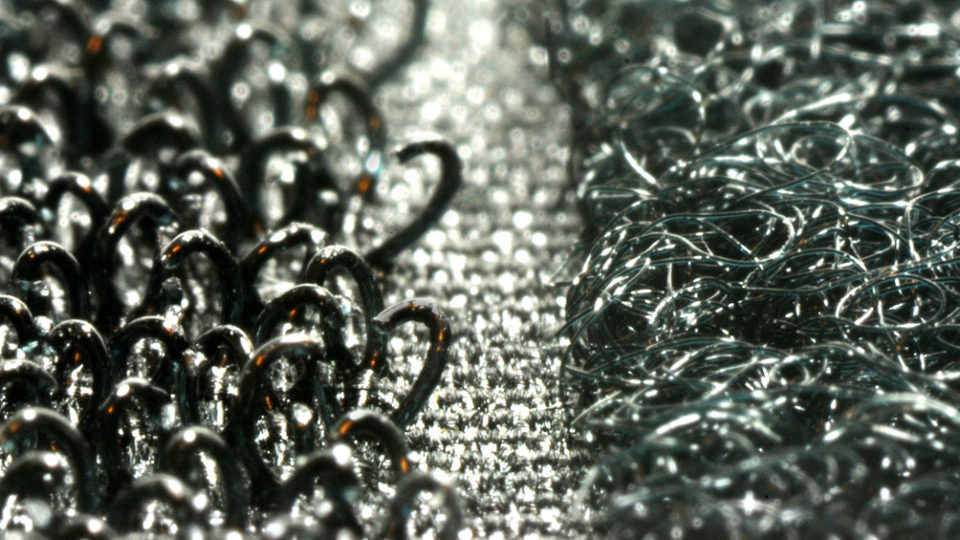
Biomimicry is learning from and then emulating nature’s forms, processes, and ecosystems to create more sustainable designs.   Mother Nature is already the inspiration for countless products and designs ranging from Velcro copied from plant burs to the shape of wind turbines modeled after whale fins.  There are wetsuits inspired by beaver pelts and office buildings that copy termite dens.  Increasingly, innovators are looking at nature for designs in architecture, chemistry, agriculture, energy, health, transportation, computing, and even for the structure of organizations and cities.

[Read more…] about Biomimicry Is Big

Primary Sidebar

Recent Episodes

  • An uninsurable future
  • Clean energy and jobs
  • Insect declines in remote regions
  • Fossil fuel producing nations ignoring climate goals
  • Trouble for clownfishes

WAMC Northeast Public Radio

WAMC/Northeast Public Radio is a regional public radio network serving parts of seven northeastern states (more...)

Copyright © 2026 ·