• Skip to primary navigation
  • Skip to main content
  • Skip to primary sidebar

Earth Wise

A look at our changing environment.

  • Home
  • About Earth Wise
  • Where to Listen
  • All Articles
  • Show Search
Hide Search
You are here: Home / Archives for predicting

predicting

Predicting major earthquakes

October 10, 2024 By EarthWise Leave a Comment

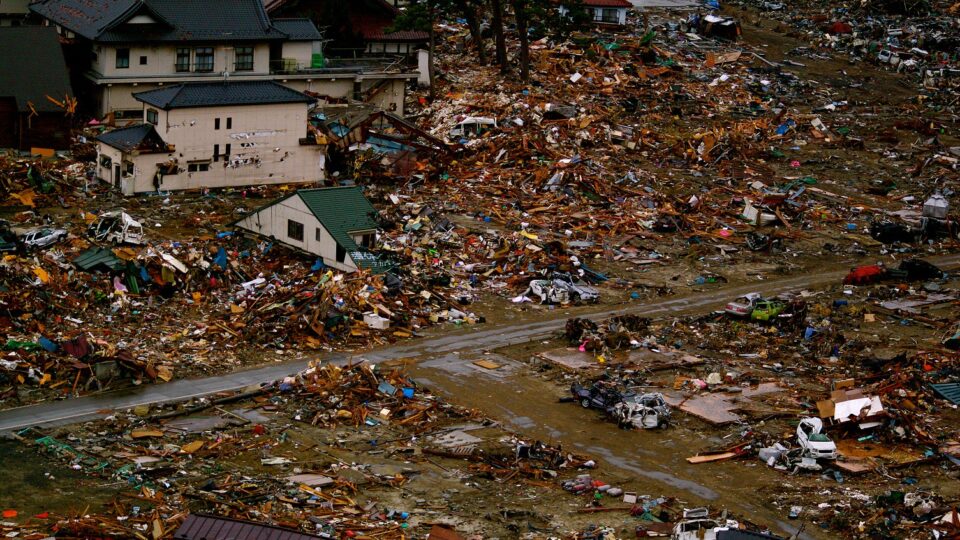
Researchers are exploring how to predict major earthquakes

Natural disasters continue to be major threats for people, just as they always have been.  But modern technology has greatly improved our ability to prepare for and, in many cases, escape from the worst effects of these events.  A good example is hurricane forecasting.  Nowadays, there is plenty of warning when a major hurricane is headed toward a populous area.  It is still up to people to get away from the danger zone, but at least there is the opportunity to do so.

Major earthquakes are a different story.  There is generally little or no warning when one will strike.  But scientists at the University of Alaska Fairbanks and the Ludwig Maximilian University in Munich, Germany have developed a technique that may provide days or even months of warning about an impending major earthquake.

The detection method is based on machine learning and is described in a paper in the journal Nature Communications.  The researchers wrote a computer algorithm that looks for abnormal seismic activity.  Advanced statistical techniques found that approximately three months of abnormal low-magnitude regional seismicity occurred in the regions where two major earthquakes took place.  One was the magnitude 7.1 Anchorage earthquake in 2018 and the other was a similar-sized quake in Ridgecrest, California in 2019.

Considerably more testing – particularly in real-time rather than looking at historical data – is needed.  But accurate earthquake forecasting has the potential to save lives and reduce economic losses.  However, there are ethical and practical questions to answer.  False alarms could lead to unnecessary panic, economic disruption, and loss of public trust.  On the other hand, missed predictions can have catastrophic consequences.

**********

Web Links

UAF scientist’s method could give months’ warning of major earthquakes

Photo, posted January 22, 2012, courtesy of the Climate and Ecosystems Change Adaptation Research University Network via Flickr.

Earth Wise is a production of WAMC Northeast Public Radio
Saving Money By Predicting The Wind | Earth Wise

July 1, 2022 By EarthWise Leave a Comment

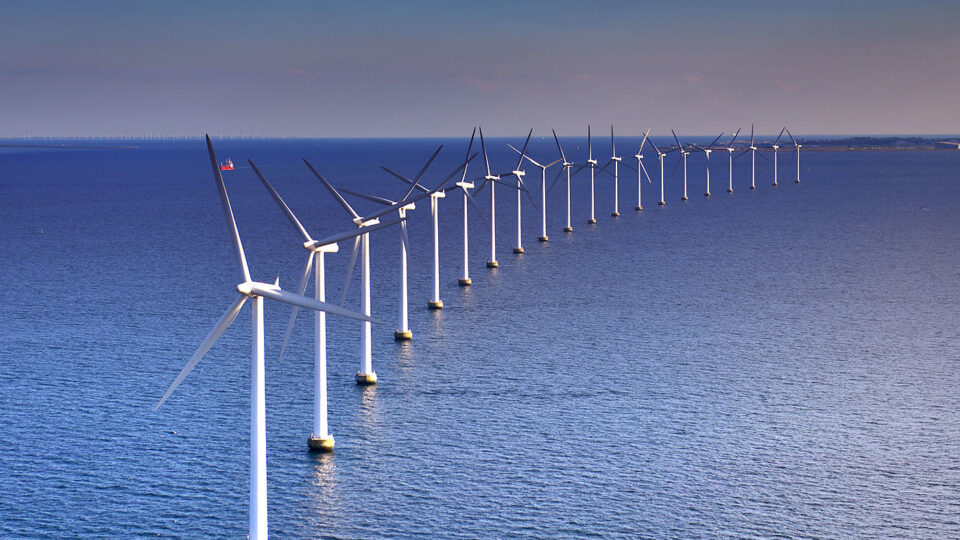
Managing an electrical grid that utilizes significant amounts of intermittent generation sources – solar and wind power – brings with it some unique challenges.  There are abundant wind resources in this country and more and utilities are taking advantage of these resources.   But there are times when there is more wind, times when there is less wind, and times when there is no wind at all.   Utilities need accurate wind forecasts to determine when they need to generate or purchase energy from alternative sources.

Poor wind forecasts can cost utilities a lot of money.  If there is overprediction – that is, when there is less wind than predicted – utilities have to purchase energy off the spot market at higher prices.  If there is underprediction – more wind than predicted – utilities may needlessly burn fossil fuels and waste money that way. 

The National Oceanic and Atmospheric Administration produces wind forecasts using its High-Resolution Rapid Refresh (HRRR) weather model, which provides hourly updated forecasts for every part of the United States looking forward up to 48 hours.  The model generates predictions of wind speed and direction at multiple levels of the atmosphere, information that utilities can use to predict the output of their wind turbines.

A new study by economists and scientists from Colorado State University and NOAA estimated the financial impact of the HRRR model on wind farm production.  The research team calculated that increasingly accurate weather forecasts over the last decade have saved consumers over $150 million a year.   Estimates are that if the newest model was in use in previous years, the savings would have been over $300 million a year.

**********

Web Links

NOAA wind forecasts result in $150 million in energy savings every year

Photo, posted May 2, 2022, courtesy of California Energy Commission via Flickr.

Earth Wise is a production of WAMC Northeast Public Radio.

Climate Change And The Next Pandemic | Earth Wise

May 26, 2022 By EarthWise Leave a Comment

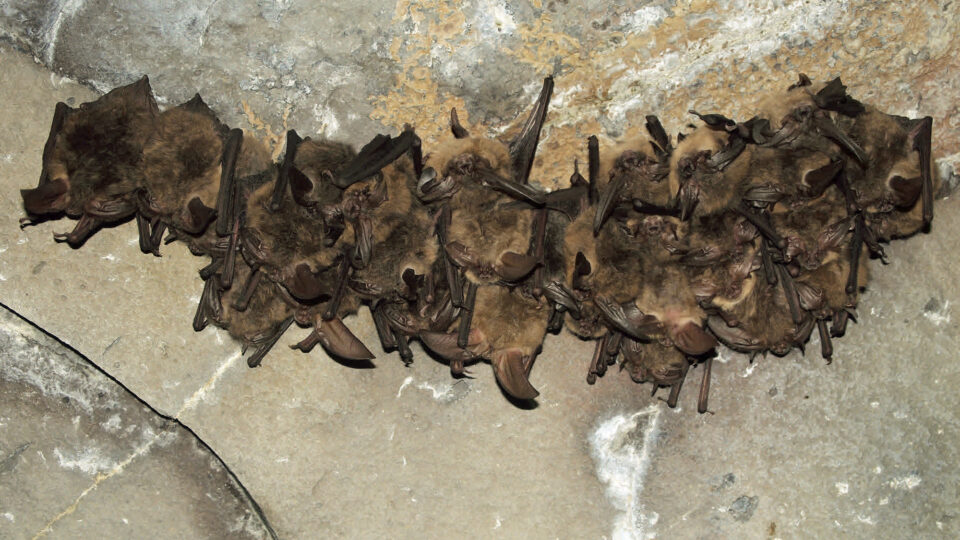
Climate change could lead to the next pandemic

As the planet continues to heat up, animals big and small are moving towards the poles to escape the heat.  According to researchers, these animals are likely to come into contact with other animals that they normally wouldn’t, and are likely to relocate to regions with large human populations.  These factors create opportunities for pathogens to get into new hosts, which dramatically increases the risk of a viral jump to humans.  Climate change could lead to the next pandemic.      

An international research team led by scientists at Georgetown University recently made this connection between climate change and viral transmission.  In the study, which was recently published in the journal Nature, researchers conducted the first comprehensive assessment of how climate change will restructure the global mammalian virome.  Their work focused on geographic range shifts. 

As animals eccounter other animals for the first time, the study projects that they will share thousands of viruses.  And as animals increasingly move into the same areas as humans, there will be greater opportunities for these viruses to jump to humans.  The research team says that the impact on conservation and human health could be alarming as viruses jump between species at unprecedented rates. 

In our warming world, much of this process may unfortunately already be underway.  And efforts to reduce greenhouse gas emissions may not be enough to stop these events from unfolding. 

According to the study, climate change will become the biggest upstream risk factor for disease emergence, eclipsing deforestation, industrial agriculture, and the wildlife trade.  Pairing wildlife disease surveillance with real-time studies of environmental change may be part of the solution to predicting and preventing the next pandemic. 

**********

Web Links

Climate change could spark the next pandemic, new study finds

Coronavirus and Climate Change

Photo, posted October 16, 2014, courtesy of Shawn Thomas / NPS via Flickr.

Earth Wise is a production of WAMC Northeast Public Radio.

Deep Learning And Dirty Air | Earth Wise

May 6, 2021 By EarthWise Leave a Comment

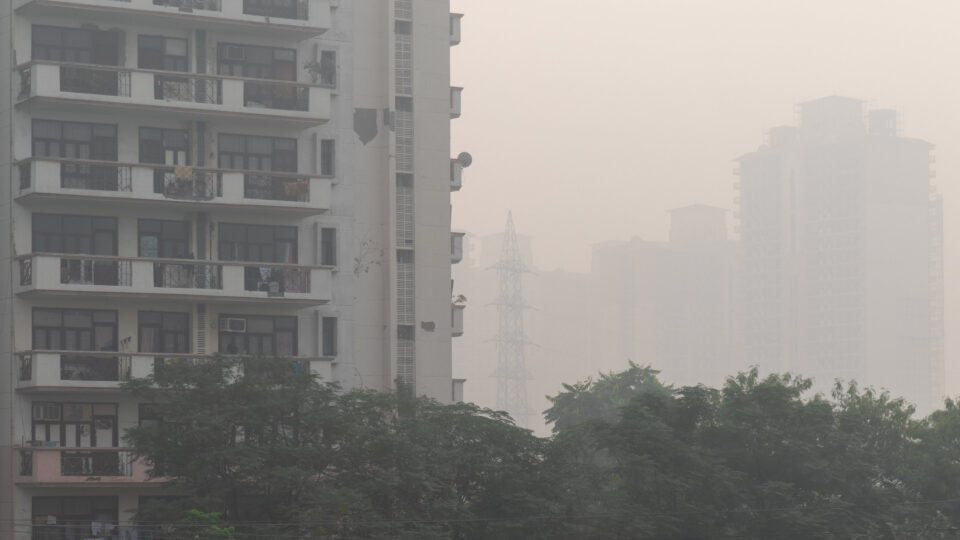
Using deep learning to improve air quality

Poor air quality is a major global problem.  According to the World Health Organization, exposure to air pollution is linked to the premature deaths of an estimated seven million people every year.  In fact, 9 out of 10 people breathe air that contains more pollutants than what the WHO considers safe.  Air pollution is the fourth largest threat to human health, trailing only high blood pressure, dietary risks, and smoking.

But predicting pollution levels at a given place and time remains challenging.  According to a new study recently published in the journal Science of the Total Environment, scientists are turning to deep learning to improve air quality estimates. 

According to researchers, satellite observations and ground observations both measure air pollution, but both have major limitations.  For example, satellites may collect data at the same time and at the same location each day, but they miss how emissions may vary throughout the day.  Ground-based observations from weather stations do continuously collect data, but they only do so in a limited number of locations.    

As a result, scientists have turned to deep learning – a type of machine learning – to analyze the relationship between satellite and ground-based observations of nitrogen dioxide around Los Angeles.  Nitrogen dioxide is associated with emissions from traffic and power plants.  The researchers were able to rely on the learned relationship to take daily satellite observations and create hourly estimates of atmospheric nitrogen dioxide levels in approximately three mile grids.     

According to the research team, this study could be repeated for other greenhouse gases, and applied to different cities and regions – or even whole continents. 

**********

Web Links

Scientists turn to deep learning to improve air quality forecasts

Air Pollution

Photo, posted November 4, 2019, courtesy of Ninara via Flickr.

Earth Wise is a production of WAMC Northeast Public Radio.

Coastal Plants And Climate Change | Earth Wise

March 18, 2020 By EarthWise Leave a Comment

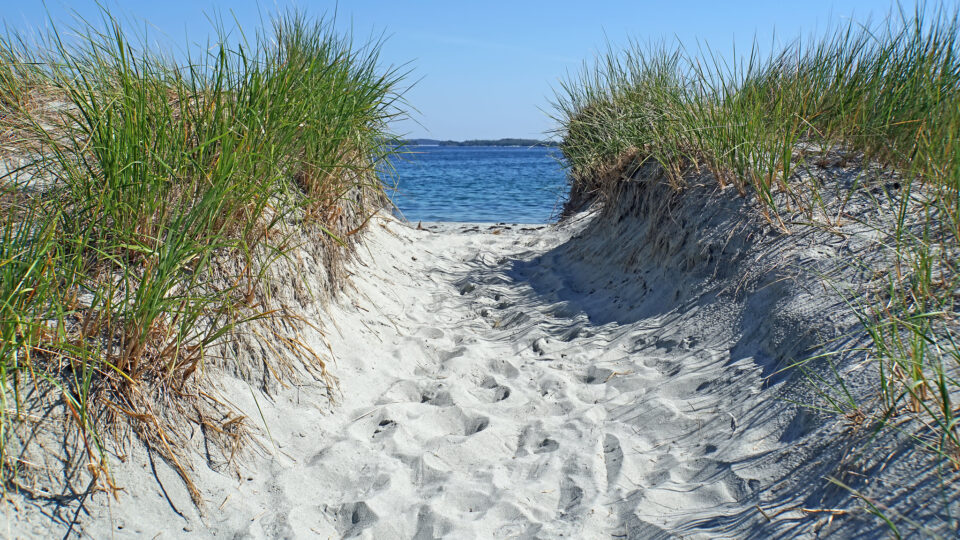
Rising sea levels and the increased frequency and intensity of extreme weather events are leaving observable effects on beaches, cliffs, and coastal infrastructures all around the world.  But a new study suggests that the impact of climate change on coastal plant communities needs more attention. 

According to research recently published in the journal Annals of Botany, coastal plants are a critical element of global sea defense.  But coastal plants are increasingly under threat from flooding, erosion, and other human-induced effects of climate change.  Habitats like salt marshes, mangrove forests, sand dunes, and kelp beds make important contributions  to coastal protection.

The research was led by scientists from the University of Plymouth, in conjunction with researchers at Utrecht University and Manchester Metropolitan University.

The study follows a recent assessment by the Intergovernmental Panel on Climate Change, which found that anthropogenic climate change poses a severe threat to estuaries and coastal ecosystems.  

Conservative estimates of the capital investments needed to combat rising seas and intensifying storms run into the hundreds of billions of dollars in the coming decades.  However, coastal vegetation could offer a dynamic, natural, and relatively low-cost defense strategy at a fraction of the cost when compared with the cost of so-called hard defenses like concrete walls and barriers. 

According to the research team, identifying the key species and habitats for coastal defense and how coasts can be protected and promoted is critical.  More long-term monitoring is also needed in order to better understand and predict where and how storms and other effects of climate change will impact coastal ecosystems. 

**********

Web Links

The gathering storm: optimizing management of coastal ecosystems in the face of a climate-driven threat

Losing coastal plant communities to climate change will weaken sea defences

Photo, posted September 14, 2018, courtesy of Dennis Jarvis via Flickr.

Earth Wise is a production of WAMC Northeast Public Radio.

Primary Sidebar

Recent Episodes

  • An uninsurable future
  • Clean energy and jobs
  • Insect declines in remote regions
  • Fossil fuel producing nations ignoring climate goals
  • Trouble for clownfishes

WAMC Northeast Public Radio

WAMC/Northeast Public Radio is a regional public radio network serving parts of seven northeastern states (more...)

Copyright © 2026 ·