• Skip to primary navigation
  • Skip to main content
  • Skip to primary sidebar

Earth Wise

A look at our changing environment.

  • Home
  • About Earth Wise
  • Where to Listen
  • All Articles
  • Show Search
Hide Search
You are here: Home / Archives for predictable

predictable

Solar on farmland

June 4, 2025 By EarthWise Leave a Comment

Solar panels on farmland would benefit energy system and farmers

New studies have found that devoting a small percentage of U.S. farmland to producing solar power would benefit both the country’s energy system and its farmers.

Currently, about 46,000 square miles of farmland – about the area of Pennsylvania – is being used to grow corn to make ethanol.  One study looked at the impact of using some of this land for solar power instead of corn ethanol.

Not much of all this farmland is close enough to electrical transmission lines to be practical for utility solar power.  In fact, only about 1,500 square miles fits the bill.  But if even this small fraction of the corn growing land was used instead for solar power, it would generate as much energy each year than from all of the farms growing corn for fuel.

Solar installations on farms are helpful for farmers as well.  The land beneath the panels can be used to grow wildflowers that attracts the bees, wasps, and other insects needed to pollinate crops in the nearby fields.  In addition, the solar arrays provide a steady income stream for farmers.

In some places, farmers can earn substantially more from leasing their land for solar than from growing crops.  But a study of farms in California suggests that the best option is to do both.  Farmers who both grow crops and host solar arrays can have more financial security than those who do just one or the other.  The income from solar arrays is pretty predictable and is paid throughout the year.  Income from crops can drop off from, for example, a seasonal drought, or from extreme weather events.

**********

Web Links

To Help Growers and the Grid, Build Solar on Farmland, Research Says

Photo, posted June 9, 2016, courtesy of Matt Lavin via Flickr.

Earth Wise is a production of WAMC Northeast Public Radio
New approaches to nuclear power

November 18, 2024 By EarthWise 1 Comment

Researchers explore new approaches to nuclear power

The US is the world’s largest user of nuclear power.  Its 94 reactors supply nearly 19% of the country’s electricity. But the number of U.S. reactors has steadily fallen over the past 30 years and new nuclear power plants are a real rarity.  The reasons are a combination of perceived dangers following several nuclear accidents and the increasing costs associated with building plants that can meet a growing number of regulatory requirements.

There are recent developments associated with new advanced reactor technologies that may lead to a resurgence in the use of nuclear power.  Bill Gates’ energy company TerraPower is developing nuclear reactors that use sodium instead of water for cooling.  Such reactors operate at lower pressures and higher temperatures.  

Meanwhile, Kairos Power, a California-based energy company, has entered into an agreement with Google to build multiple small modular nuclear reactors that will supply electricity to that giant tech company.  The modular reactors use a molten-salt cooling system combined with a ceramic, pebble-type fuel in order to transport heat to a steam turbine to generate power.  The novel design of these reactors can reduce construction timelines, allow deployment in more places, and make final project delivery more predictable.

Surveys indicate that a majority of Americans favor the use of nuclear power, which has the advantages that it doesn’t create greenhouse gas emissions and can run 24-7.  But traditional nuclear power plants are too expensive and have too many potential problems.  These new nuclear power technologies may be the answer for allowing nuclear power to play an important role in the future energy system.

**********

Web Links

New nuclear clean energy agreement with Kairos Power

Photo, posted May 16, 2016, courtesy of Steve Jurvetson via Flickr.

Earth Wise is a production of WAMC Northeast Public Radio
Protecting coastal areas with tidal range electricity generation

February 13, 2024 By EarthWise Leave a Comment

Tidal range electricity generation uses the water level difference between high and low tides to operate generator turbines.  The method requires the construction of barrages and sluices to capture water during high tides and then release it during generation at low tide.  Tidal range generation is predictable renewable energy driven by the gravitational pull of the moon and sun.

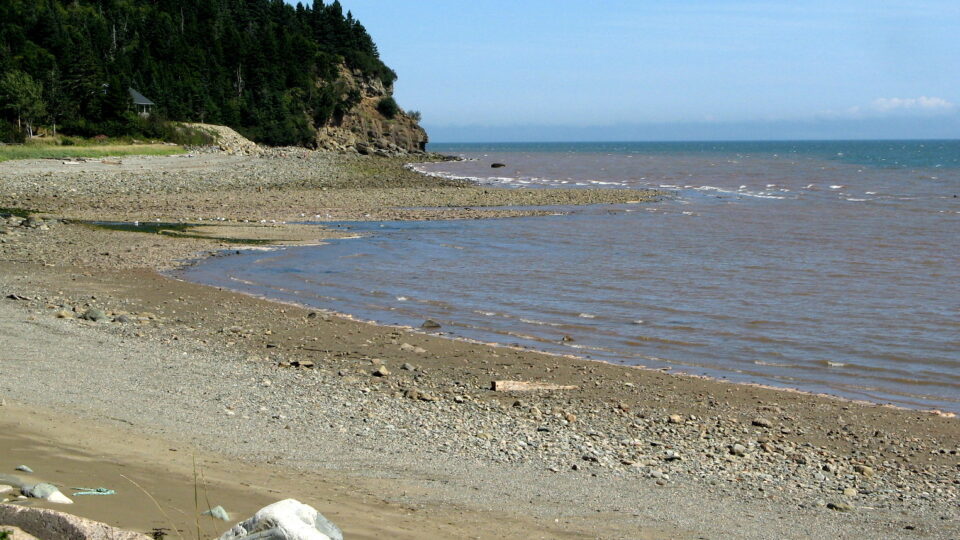
It is only a practical scheme in those places that have large tidal ranges.  The largest tidal range in the world is in the Bay of Fundy in Canada.  The second largest is the Severn Estuary, in the UK.  Tidal ranges are large in many places around Britain’s coasts. But they are also vulnerable to flooding and surges from rising seas.

A new study by Lancaster University in the UK has found that the environmental and economic benefits are huge because tidal range barrages can protect coastal areas from flooding and sea level rise. With two-way generation and pumping, the full range of existing tides can be maintained to protect and support low-lying intertidal areas such as saltmarshes and mudflats. High tides can be limited to existing levels simply by closing sluices and running turbines and low tide levels can be maintained by pumping.  The study determined that with modern technology and operating procedures, these so-called estuarine barrages may be the only practical way to protect vital coastal habitats.

Earlier work by the researchers found that tidal range projects under commercial consideration in the UK can produce about 5% of the country’s electricity use and additional projects are feasible for 4 or 5 times as much generation.

**********

Web Links

How tidal range electricity generation can protect coastal areas from flooding

Photo, posted August 17, 2014, courtesy of Andrea via Flickr.

Earth Wise is a production of WAMC Northeast Public Radio
An Ancient Way To Store Energy

November 6, 2017 By EarthWise 2 Comments

https://earthwiseradio.org/wp-content/uploads/2017/10/EW-11-06-17-An-Ancient-Way-to-Store-Energy.mp3

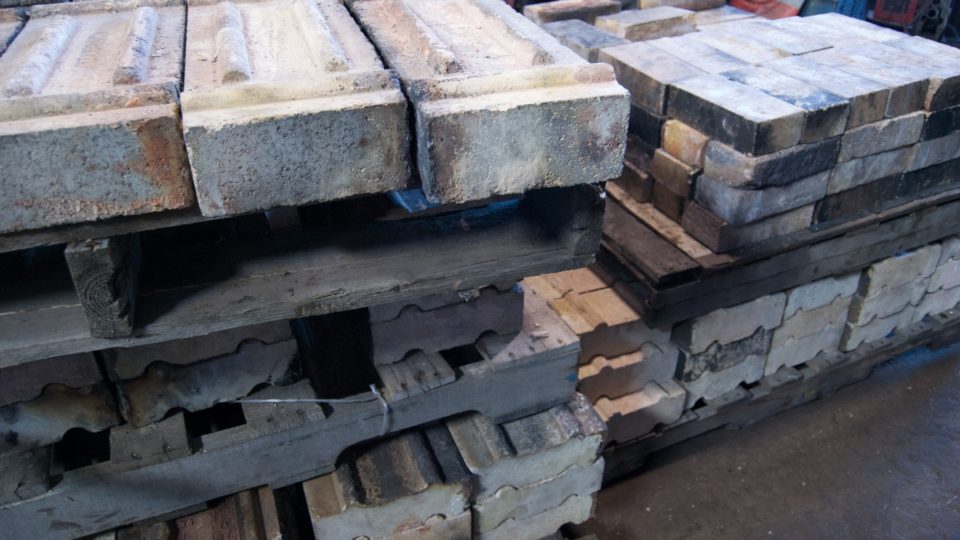
Firebricks, which are bricks designed to withstand high heat, have been around for more than 3000 years.  The Hittites used them to line iron-smelting kilns.  They are simply bricks made from clays that can withstand much higher temperatures than ordinary bricks.

[Read more…] about An Ancient Way To Store Energy

Tidal Turbines Set An Energy Record

October 20, 2017 By EarthWise Leave a Comment

https://earthwiseradio.org/wp-content/uploads/2017/10/EW-10-20-17-Tidal-Turbines-Set-An-Energy-Record.mp3

Two turbines in the Pentland Firth in Scotland recently set a world record for monthly energy production from a tidal stream power station.  In August, the MeyGen installation off the Caithness coast of Scotland produced 700 MWh of electricity, enough to power 2,000 homes.

[Read more…] about Tidal Turbines Set An Energy Record

A Large-Scale Tidal Energy Plant

August 9, 2016 By WAMC WEB

https://earthwiseradio.org/wp-content/uploads/2016/07/EW-08-09-16-Large-Scale-Tidal-Power.mp3

Ocean energy is about to take an important step towards making a real impact in Scotland.  The MeyGen Tidal Array Project is reaching the final construction of its demonstration phase, which will be the first test of multiple underwater turbines sited together in a full-scale array.

[Read more…] about A Large-Scale Tidal Energy Plant

Primary Sidebar

Recent Episodes

  • An uninsurable future
  • Clean energy and jobs
  • Insect declines in remote regions
  • Fossil fuel producing nations ignoring climate goals
  • Trouble for clownfishes

WAMC Northeast Public Radio

WAMC/Northeast Public Radio is a regional public radio network serving parts of seven northeastern states (more...)

Copyright © 2026 ·