• Skip to primary navigation
  • Skip to main content
  • Skip to primary sidebar

Earth Wise

A look at our changing environment.

  • Home
  • About Earth Wise
  • Where to Listen
  • All Articles
  • Show Search
Hide Search
You are here: Home / Archives for predator

predator

Amphibians and climate change

April 7, 2025 By EarthWise Leave a Comment

Amphibians are a group of vertebrate animals that include frogs, toads, and salamanders. They are unique for their ability to live both in water and on land during different stages of life. Amphibians play a crucial role in ecosystems, often serving as both predators and prey in food webs.

Amphibians are the world’s most at-risk vertebrates, with more than 40% of species listed as threatened.  They are cold-blooded creatures and rely on external sources to regulate their body temperature.  But needing to regulate their body heat this way makes amphibians particularly vulnerable to temperature change in their habitats. 

Researchers from the University of New South Wales in Australia can now predict the heat tolerance of 60% of the world’s amphibian species.  This new tool will allow scientists to better identify which amphibian species and habitats will be most impacted by climate change.  

The study’s landmark findings, which were recently published in the journal Nature, found that 2% of amphibian species are already exposed to overheating in shaded terrestrial conditions.  According to the research team, a 4°C global temperature increase could push 7.5% of amphibian species beyond their physiological limits. 

Local amphibian extinctions can trigger ecological repercussions, including reshuffling community compositions, eroding genetic diversity, and impacting the food chain and overall ecosystem health.

The researchers highlight the importance of vegetation and water bodies in protecting amphibians during heat waves, and emphasize the need to provide adequate water and shade during future conservation efforts. 

**********

Web Links

The pot is already boiling for 2% of the world’s amphibians: new study

Photo, posted October 8, 2011, courtesy of Dave Huth via Flickr.

Earth Wise is a production of WAMC Northeast Public Radio
Deer vs. caribou

June 13, 2024 By EarthWise Leave a Comment

White-tailed deer expansion bad news for caribou

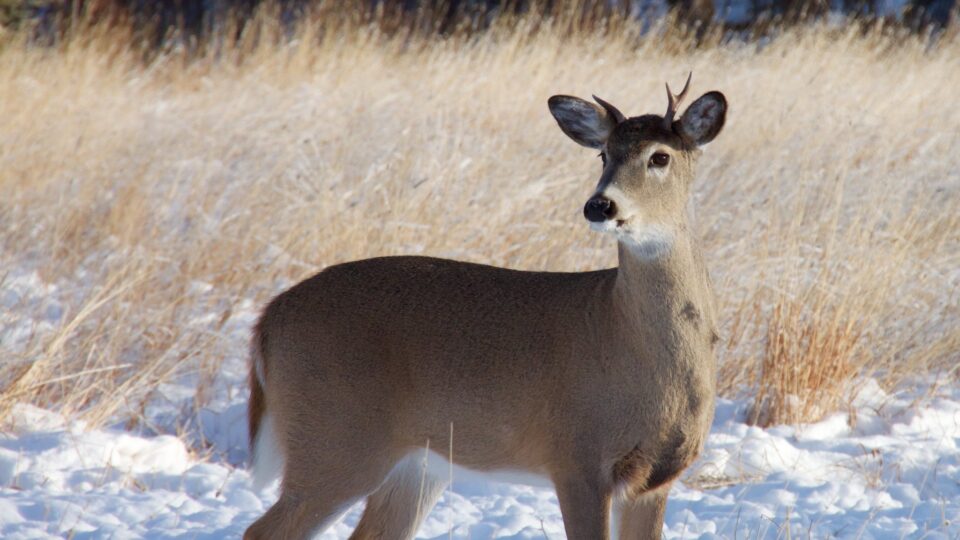
The combination of a warming climate and human disruption of traditional habitats has been causing changes in the ranges of many animal species.  Over the past century, white-tailed deer have greatly expanded their range in North America.  Researchers from a group of Canadian institutions have been investigating the expansion of the deer in the boreal forest of Western Canada.  A five-year study used 300 wildlife cameras throughout the region to track the activities of large mammals.

Climate change has created milder winters and habitat alteration from forestry and energy exploration have created new food sources for deer. 

The expansion of deer in the forest has not been a good thing for the woodland caribou. The species was designated as threatened in 2002.  As of 2011, only 34,000 remained in the region.  Deer are ecosystem disruptors, in this case disrupting existing predator-prey dynamics.  Areas with more deer typically have more wolves and wolves are predators of caribou.  Deer can handle high predation rates, but the already threatened caribou cannot.

Understanding the relative roles of climate and human land use is essential in efforts to recover caribou populations.  It is complicated because further north, the climate becomes harsher and human land use decreases.  The debate over the relative effect of climate or habitat change is one of the most pressing issues facing ecologists globally as they pursue efforts for ecosystem restoration.

In any case, winter severity is expected to decline as climate change progresses.  Therefore, deer are expected to keep expanding northward and increasing in abundance, which means increasing risk to caribou.

**********

Web Links

Deer are expanding north, and that’s not good for caribou

Photo, posted January 12, 2016, courtesy of Gerry via Flickr.

Earth Wise is a production of WAMC Northeast Public Radio
Canada Lynx And Climate Change | Earth Wise

April 19, 2023 By EarthWise Leave a Comment

Glacier National Park may be a climate refuge for Canada Lynx

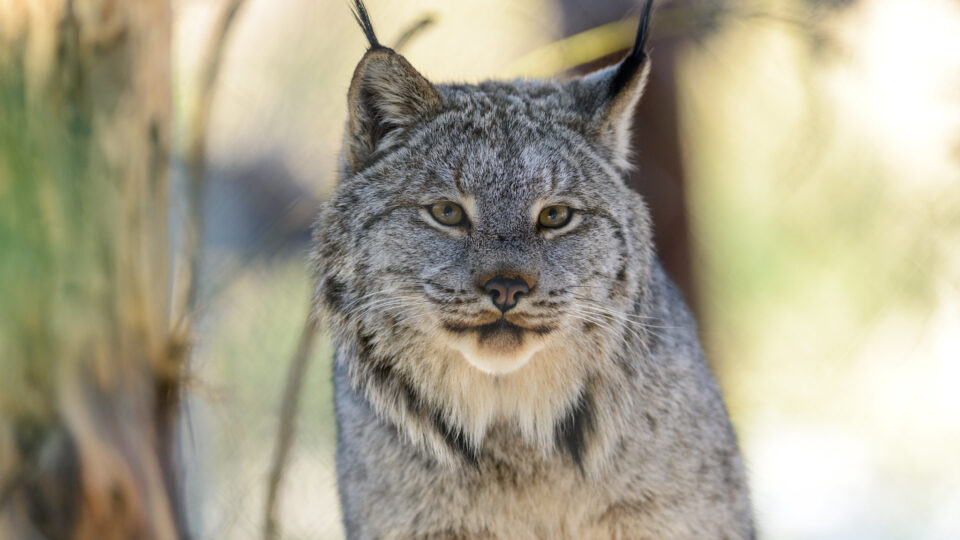
Canada lynx are medium-sized North American big cats known for their long, black ear tufts, and their ability to hunt across the surface of deep snow.  Historically, the predator’s habitat ranged across Alaska, Canada, and much of the Northern United States.  But in the contiguous U.S. today, the Canada lynx exists only in several disjunct populations in Maine, Minnesota, Colorado, Idaho, Washington and Montana. 

While Glacier National Park in Montana is famous for its grizzly bears and mountain goats, the park also holds a surprising number of Canada lynx, and could serve as a much-needed climate refuge for the big cats in the future.

Glacier National Park is one of the few, large, protected areas located within the Canada lynx range in the Lower 48.  Using an array of 300 motion-sensitive cameras on hiking trails throughout Glacier, researchers from Washington State University conducted the first parkwide occupancy survey for Canada lynx inside the park.  They were surprised to find that Glacier is home to roughly 50 Canada Lynx.  In fact, the researchers found that the iconic predator resides across most of the park’s 1,600 square-mile landscape, although at lower densities than in the core of its range further north.

The researchers also found that Canada lynx are distributed at lower elevations inside Glacier.  Since the cats are a cold-adapted species that need the deep snow, within Glacier, they have a lot of room to climb in elevation as the climate warms.      

The researchers hope their survey can serve as a baseline population estimate to help their collaborators with the National Park Service keep tabs on the numbers of Canada lynx in Glacier.

**********

Web Links

Glacier National Park could be climate haven for Canada lynx

Photo, posted February 22, 2014, courtesy of Eric Kilby via Flickr.

Earth Wise is a production of WAMC Northeast Public Radio
Marine Predation And Climate Change | Earth Wise

July 11, 2022 By EarthWise Leave a Comment

Climate change is taking a toll on forests, farms, freshwater resources, and economies all around the world.  But ocean ecosystems remain the center of global warming.

Despite their vast ability to absorb heat and carbon dioxide, oceans are warming.  In fact, according to scientists, the oceans have absorbed 90% of all the warming that has occurred during the past 50 years. 

The ocean’s surface layer, which is home to most marine life, takes most of this heat.  As a result, the top 2,300 feet of global ocean water has warmed approximately 1.5°F since 1901.

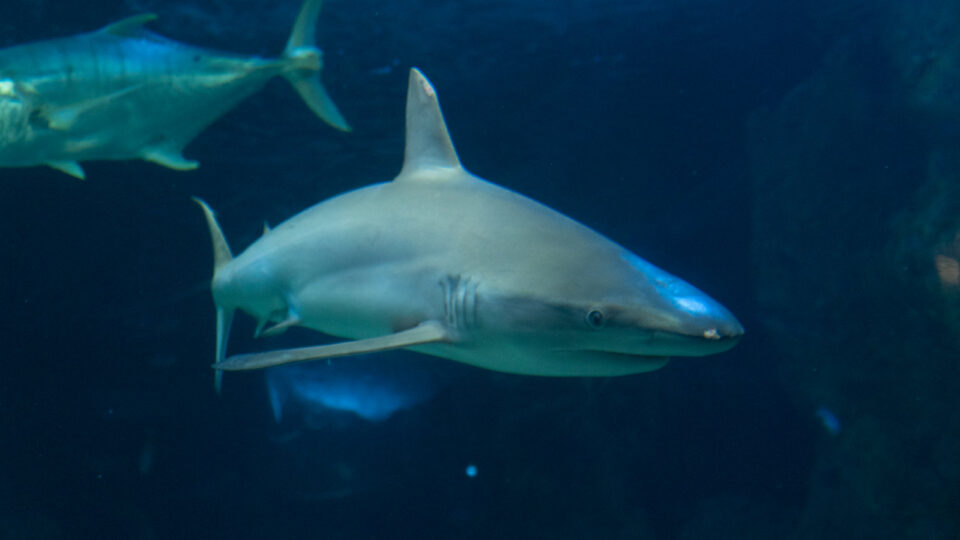
Well it turns out that a hotter ocean is also a hungrier ocean.  According to a new study recently published in the journal Science, researchers discovered that predator impacts in the Atlantic and Pacific oceans peak at higher temperatures.  The effects of more intense marine predation could disrupt ecosystem balances that have existed for millennia. 

An international research team led by the Smithsonian Institution and Temple University analyzed predator and prey data collected from 36 sites, running along the Atlantic and Pacific coasts from Alaska in the north to Tierra de Fuego at the tip of South America.  The research team found that, in warmer waters, predators’ more voracious appetites left outsized marks on the prey community.  Total prey biomass plunged in warmer waters when prey were left unprotected.  However, in the coldest zones, leaving prey exposed or protected made nearly no difference at all.  

As the oceans continue to warm, more intense predation will create winners and losers and could jeopardize the overall health of marine ecosystems.  

***********

Web Links

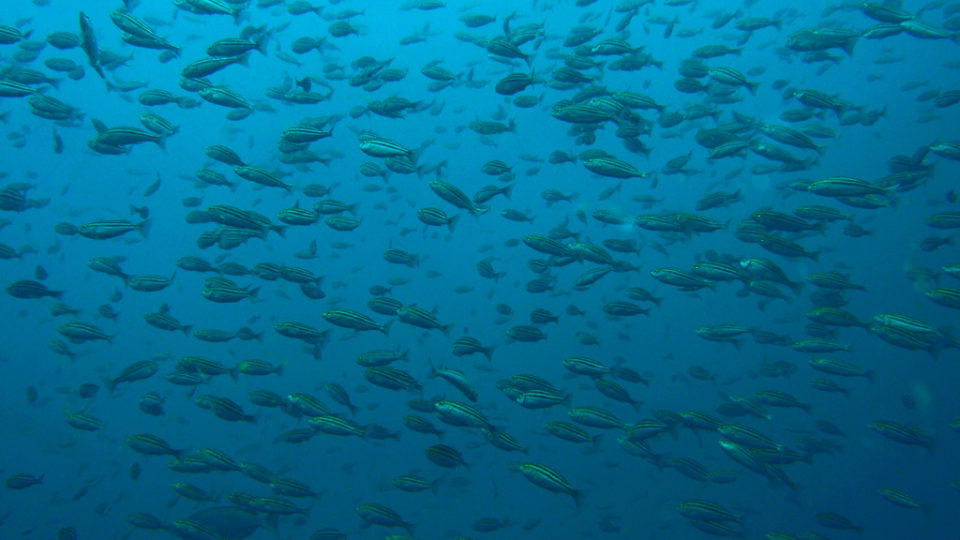
As the ocean heats up hungrier predators take control

Photo, posted July 14, 2017, courtesy of Jonathan Chen via Flickr.

Earth Wise is a production of WAMC Northeast Public Radio.

Fish And Their Sense Of Smell

September 4, 2018 By EarthWise Leave a Comment

https://earthwiseradio.org/wp-content/uploads/2018/08/EW-09-04-18-Fish-And-Their-Sense-Of-Smell.mp3

We use our sense of smell for all sorts of things, like locating food and habitat, avoiding danger, and so on.  Fish do as well.  But instead of smelling scent molecules in the air like humans do, fish use their nostrils to sense chemicals suspended in water.  

[Read more…] about Fish And Their Sense Of Smell

Alien Waters Invade The Arctic

June 18, 2018 By EarthWise Leave a Comment

https://earthwiseradio.org/wp-content/uploads/2018/06/EW-06-18-18-Alien-Waters-Invade-the-Arctic.mp3

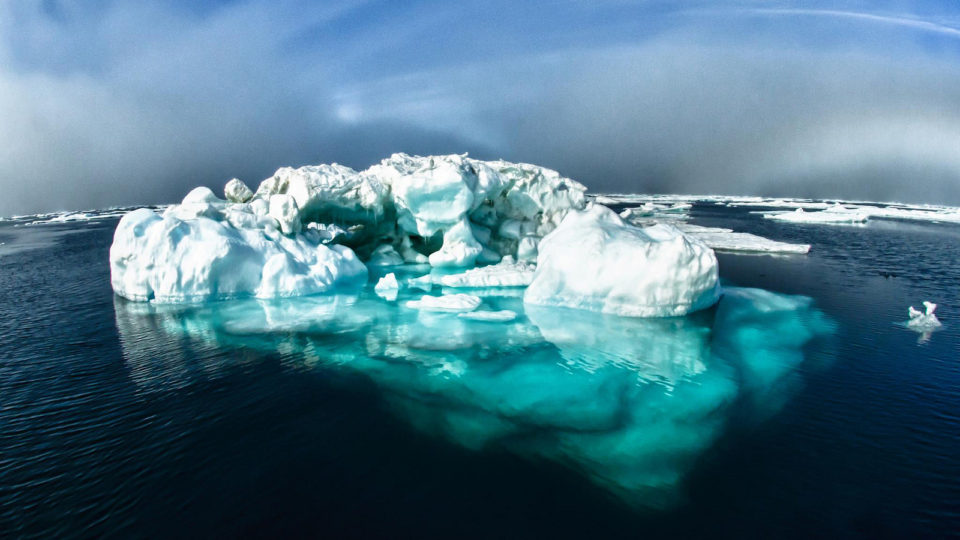
The Arctic is heating up faster than any other region of the planet.  As a result, once-distinct boundaries between the frigid polar ocean and the warmer, neighboring Atlantic and Pacific Oceans are blurring, opening the way for the southern waters to enter the polar regions.  The volume of Pacific Ocean water flowing into the Arctic Ocean through the Bering Strait has increased by 70% over the past decade.  The Arctic Ocean’s cold layering system that blocks Atlantic inflows is breaking down.

[Read more…] about Alien Waters Invade The Arctic

Protecting Reefs Of Hope

June 4, 2018 By EarthWise Leave a Comment

https://earthwiseradio.org/wp-content/uploads/2018/06/EW-06-04-18-Protecting-Reefs-of-Hope.mp3

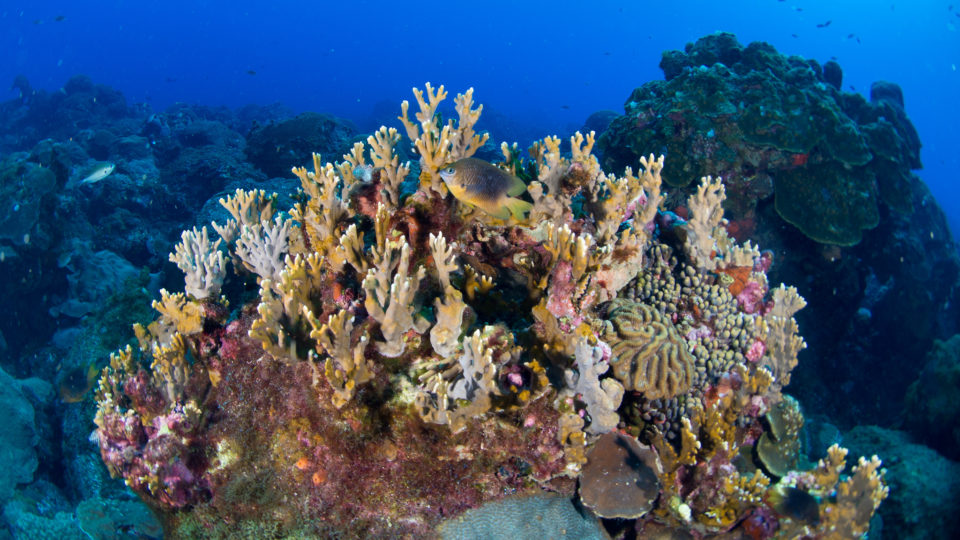
One of the most harmful effects of the changing climate is what is happening to coral reefs.  Warmer ocean temperatures and acidification are causing widespread bleaching of coral.  Stressed corals expel the algae living in their tissue, turning the corals white and robbing them of nutrients.  When bleaching events persist, the corals starve and die.   Reefs everywhere have been experiencing mass bleaching events in recent years with over 70% of the coral reefs around the world being damaged.

[Read more…] about Protecting Reefs Of Hope

Primary Sidebar

Recent Episodes

  • An uninsurable future
  • Clean energy and jobs
  • Insect declines in remote regions
  • Fossil fuel producing nations ignoring climate goals
  • Trouble for clownfishes

WAMC Northeast Public Radio

WAMC/Northeast Public Radio is a regional public radio network serving parts of seven northeastern states (more...)

Copyright © 2026 ·