• Skip to primary navigation
  • Skip to main content
  • Skip to primary sidebar

Earth Wise

A look at our changing environment.

  • Home
  • About Earth Wise
  • Where to Listen
  • All Articles
  • Show Search
Hide Search
You are here: Home / Archives for power production

power production

Efficiency Of Offshore Wind | Earth Wise

December 10, 2021 By EarthWise Leave a Comment

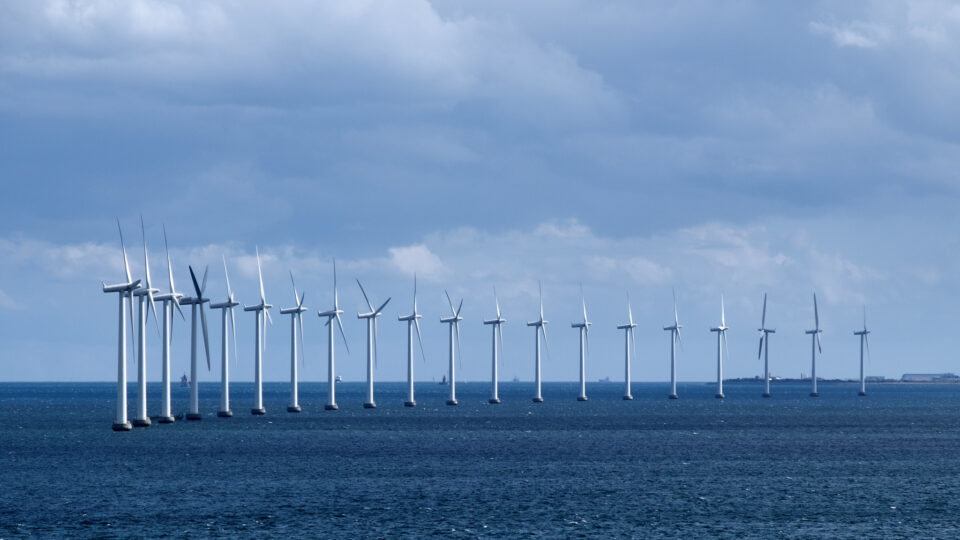
Exploring the efficiency of offshore wind turbines

After many years of debates, delays, and controversies, offshore wind is about to expand in a big way in the United States.  The White House has announced the goal to deploy 30 gigawatts of offshore wind – enough to power 90 million homes – along the East Coast seaboard by 2030.

In New York State, there are now five offshore wind projects in active development.  The state goal is to have nearly a gigawatt of offshore wind by 2035, enough to power over 4 million homes.

These projects involve the use of thousands of physically large, high-capacity wind turbines deployed over large areas at an unprecedented scale.  Such mammoth installations bring with them unique problems.

Low-turbulence conditions over water lead to the fact that individual wind farms will experience each other’s wake (the disturbance of their airflow) even when turbine arrays are 15 to 50 miles apart.  As a result, turbines may fatigue earlier, and groups of turbines may experience up to 30% lower power production due to wake effects.

Industry trends are causing an increased probability of large wake-induced energy losses within individual wind farms and an increasing probability of wake interactions.

These issues have been studied in new research published by researchers at Cornell University.  The research presents simulations that may be helpful to optimize turbine spacing in the ongoing deployments and assist plans for future ones.  Improved understanding of wind turbine and wind-farm wake is essential in ensuring that the financial investments in offshore wind result in electricity-generation goals met at the lowest possible cost.

According to Department of Energy studies, offshore wind resources around the United States could potentially generate more electricity than the entire country currently uses.

**********

Web Links

Scientists bring efficiency to expanding offshore wind energy

Photo, posted August 9, 2016, courtesy of Lars Plougmann via Flickr.

Earth Wise is a production of WAMC Northeast Public Radio.
Agrivoltaics

September 24, 2019 By EarthWise Leave a Comment

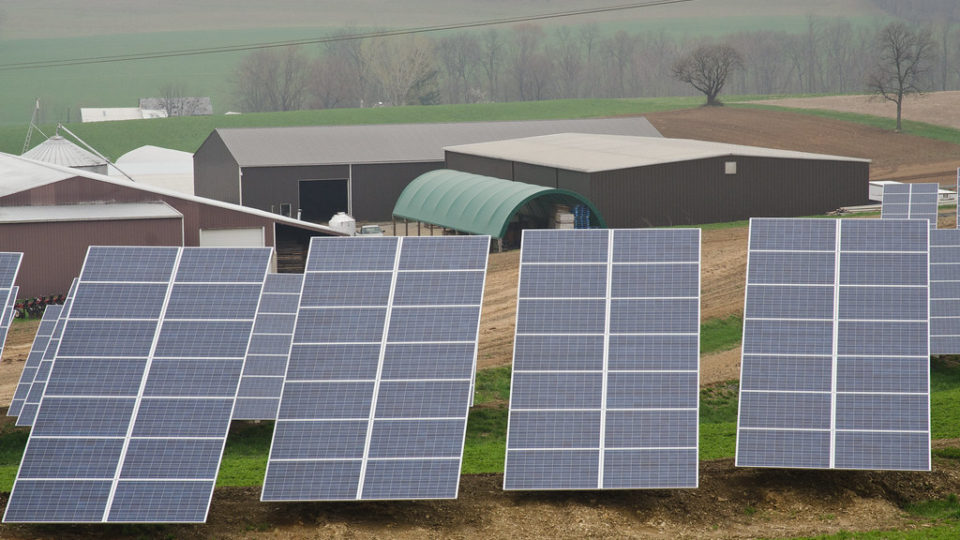
A new study by Oregon State University has found that the most productive places on Earth for solar power are farmlands.   In fact, if less than 1% of agricultural land was converted to solar panels, it would be sufficient to fulfill global electricity demand.

The concept of co-developing the same area of land for both solar photovoltaic power and conventional agriculture is known as agrivoltaics.

The synergy between agriculture and solar power is not surprising.   People have been growing crops around the planet for at least 8,000 years and, long ago, farmers found the best places to grow them which turn out to also the best places to harvest solar energy.  The needs for solar panels are pretty similar to those of food crops.  The efficiency of the panels decreases if they get too hot.  Barren land is hotter than cropland, so the productivity of solar panels is less in such places.

The Oregon State Study analyzed power production data collected by Tesla, which had installed five large grid-tied, ground-mounted solar electric arrays owned by Oregon State.  The researchers monitored air temperature, relative humidity, wind speed, wind direction, soil moisture, and incoming solar energy.  With the data, they developed a model for the best conditions for solar panel productivity and they coincide with excellent conditions for agriculture.  Solar panels are kind of like people with regard to the weather:  they are happier when it is cool and breezy and dry.

Previously-published research shows that solar panels actually increase crop yields on pasture or agricultural fields.

These new results have implications for the current practice of constructing large solar arrays in deserts.  Agricultural lands may be a much better option for both solar production and crop production.

**********

Web Links

Installing solar panels on agricultural lands maximizes their efficiency, new study shows

Photo, posted April 20, 2011, courtesy of U.S. Department of Agriculture via Flickr.

Earth Wise is a production of WAMC Northeast Public Radio.
Emissions From Electric Buses

September 12, 2018 By EarthWise Leave a Comment

https://earthwiseradio.org/wp-content/uploads/2018/09/EW-09-12-18-Emissions-from-Electric-Buses.mp3

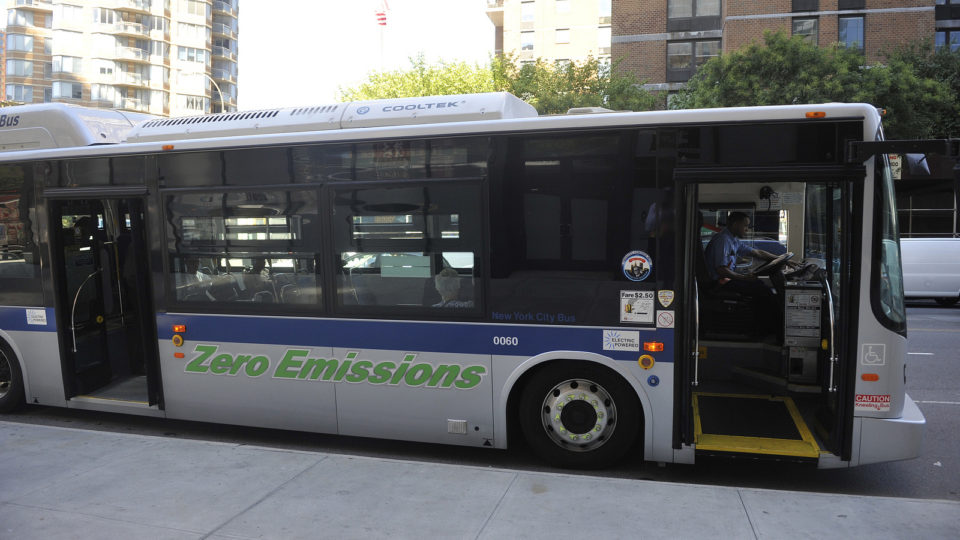
Municipalities and transit agencies are gradually replacing conventional diesel buses with cleaner alternatives such as natural-gas-powered, diesel-electric hybrid, or fully electric buses.  The goal is to reduce the substantial carbon emissions associated with buses as well as reducing unhealthy air pollution. Diesel buses on average get less than 5 miles per gallon as they transport passengers around, so there is plenty of motivation to find more efficient ways to power them.

[Read more…] about Emissions From Electric Buses

Primary Sidebar

Recent Episodes

  • An uninsurable future
  • Clean energy and jobs
  • Insect declines in remote regions
  • Fossil fuel producing nations ignoring climate goals
  • Trouble for clownfishes

WAMC Northeast Public Radio

WAMC/Northeast Public Radio is a regional public radio network serving parts of seven northeastern states (more...)

Copyright © 2026 ·