
• Skip to primary navigation
  • Skip to main content
  • Skip to primary sidebar

Earth Wise

A look at our changing environment.

  • Home
  • About Earth Wise
  • Where to Listen
  • All Articles
  • Show Search
Hide Search
You are here: Home / Archives for phones

phones

Battery life in electric cars

January 9, 2025 By EarthWise Leave a Comment

Most of us have lots of experience with the batteries in phones, computers, and other gadgets.  Batteries don’t last forever, and we sometimes have to replace them.  It’s a fact of life.   These days, it’s becoming more common to drive electric cars and the fundamental principle is the same.  However, the battery pack in an EV is the most expensive part of the car, so its reliability and lifespan is a greater concern.

EV batteries generally have generous warranties.  In the US, EV batteries are required by federal law to be covered for at least 8 years or 100,000 miles, whichever comes first.  So, the financial exposure from the battery pack is reasonably limited.  Even so, EV owners would like to know that their car’s battery pack is likely to last a long time.

Battery life is generally determined by laboratory tests involving repeated charge-discharge cycles over a relatively short period of time, as opposed to those cycles being spaced out over years.

A new study by Stanford University looked at battery performance under conditions much more like what would be experienced in the real world.  Cars experience frequent acceleration, braking that charges the batteries a bit, lots of stops, periods of rest, and so forth.  Nothing like just charging and discharging repeatedly.

The study found that today’s EV batteries may last up to 40% longer than expected.  Real-world stop-and-go driving benefits batteries more than standard test conditions.

The cost of EV batteries continues to get lower all the time and it is likely to be quite a long time before one is likely to need a new battery assuming one even keeps the car long enough.

**********

Web Links

Existing EV batteries may last up to 40% longer than expected

Photo, posted August 27, 2021, courtesy of Ron Frazier via Flickr.

Earth Wise is a production of WAMC Northeast Public Radio

A better way to extract lithium

December 10, 2024 By EarthWise Leave a Comment

Researchers are developing a better way to extract lithium

Lithium is the critical component in the batteries that power phones and computers, electric cars, and the systems that store energy generated by solar and wind farms.  Lithium is not particularly rare, but it is difficult and often environmentally harmful to extract from where it is found.

Traditional ore sources are increasingly difficult and expensive to mine.  The largest known deposits of lithium are in natural brines – the salty water found in geothermal environments.  These brines also contain other ions like sodium, potassium, magnesium, and calcium, and efficiently separating out the lithium is extremely challenging.

Traditional separation techniques consume large amounts of energy and produce chemical waste, particularly hazardous chlorine gas.  These techniques typically suffer from poor selectivity; that is, the process is interfered with by the other ions present in natural brines.

A team of researchers at Rice University has developed a three-chamber electrochemical reactor that improves the selectivity and efficiency of lithium extraction from brines.  The middle chamber of the reactor contains a specialized membrane that acts as a barrier to chloride ions, preventing them from getting to the electrode area where they can form chlorine gas.

The new reactor has achieved a lithium purity rate of 97.5%, which means the setup can effectively separate lithium from other ions in the brine and allow the production of high-quality lithium hydroxide, the key material for battery manufacturing. 

The Rice University reactor design has the potential to be a game changer for lithium extraction from geothermal brines.

**********

Web Links

‘Game changer’ in lithium extraction: Rice researchers develop novel electrochemical reactor

Photo, posted October 21, 2023, courtesy of Simaron via Flickr.

Earth Wise is a production of WAMC Northeast Public Radio
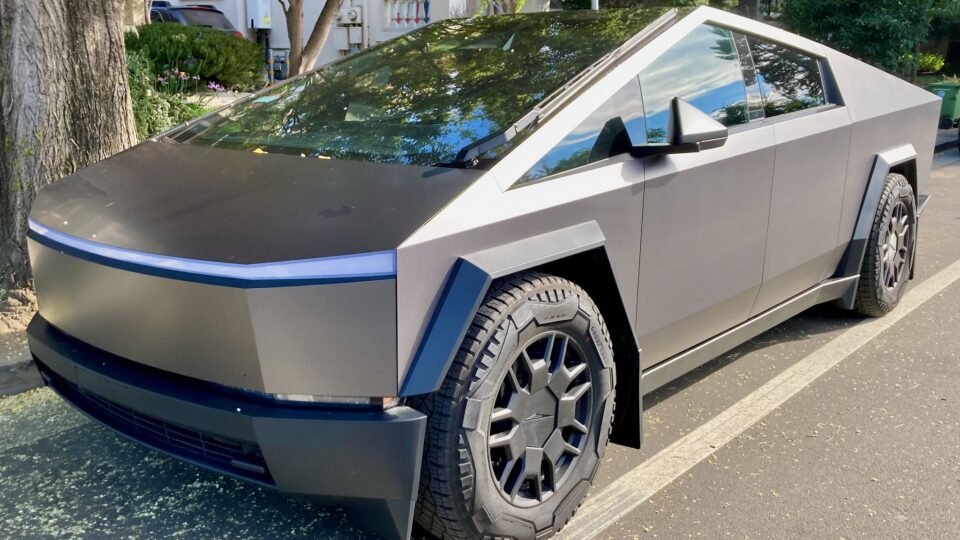
Solid-state batteries for cars

September 19, 2024 By EarthWise Leave a Comment

Battery-powered electric vehicles have historically faced the challenges of limited driving range and long charging time.  In recent years, both of these limitations have been largely overcome for many if not most drivers.  Popular EVs on the market can go 300 miles and more on a charge and today’s fastest charging networks can add 200 miles of range in 20 minutes.  But many people want even more range and even faster charging.  Both of these things will happen in the not-too-distant future.

Multiple companies are working on solid-state batteries, which hold more energy in a given volume than current batteries.  The lithium-ion batteries that power today’s EVs (as well as our phones and computers) have a liquid or gel electrolyte.  Solid-state batteries use a solid ceramic or polymer electrolyte that provides higher energy density, faster charging times, and reduced fire risk as well.

Samsung announced that it will produce solid-state batteries for vehicles by 2027.  Toyota says it is on track to develop a solid-state battery by 2027 or 2028.  California-based QuantumScape has an agreement to supply solid-state batteries to Volkswagen for mass production.  Tesla has not said what it is doing with regard to solid-state batteries, but it is likely that it’s also pursuing the technology.

The upshot of all of this is that EV ranges are likely to increase dramatically over the next several years leading to the availability of vehicles that can go 600 miles or more on a charge.  Given that the cost of EVs is already rapidly becoming at least competitive with if not lower than that of gasoline-powered cars, the days of internal combustion are becoming numbered.

**********

Web Links

Want an EV With 600 Miles of Range? It’s Coming

Photo, posted August 17, 2024, courtesy of Bill Abbott via Flickr.

Earth Wise is a production of WAMC Northeast Public Radio

The Plunging Cost Of Lithium-Ion Batteries | Earth Wise

May 11, 2021 By EarthWise Leave a Comment

The cost of lithium-ion batteries is plunging

Lithium-ion batteries are the power source for phones, laptops, and electric cars.  These rechargeable batteries were first commercially introduced in 1991.  Since then, their performance has improved, and their cost has dropped tremendously.

There have been dramatic cost declines in many advanced technologies.   The price of big-screen televisions is a prime example.  Most people think of solar photovoltaic panels as the most exceptional case.  In the 1970s, solar panels cost over $100 per watt. Today, they are 20 cents a watt.

How much lithium-ion batteries have dropped in price has been somewhat unclear.  This is because much of the information about battery costs is in the form of closely held corporate data.  Most lithium-ion batteries are not sold directly to consumers but rather are built into consumer electronics and cars.  Large companies like Apple and Tesla buy batteries by the millions or manufacture them themselves, and the true costs are not publicly disclosed.

Recently, MIT researchers have carried out an extensive analysis of lithium-ion battery costs over the past three decades.  The researchers found that the cost of these batteries has dropped by 97% over that period.

It is clear that the decline in battery costs has been an enabler of the recent growth in sales of electric vehicles.  It is also clear that further declines in lithium-ion battery costs are likely to increase the batteries’ usage in stationary applications such as storing energy from intermittent green power sources like solar and wind.

The batteries have ever-improving energy density (energy stored within a given volume) and specific energy (energy stored within a given mass.)  As lithium-ion batteries continue to get better and cheaper, their role in the world continues to grow.

**********

Web Links

Study reveals plunge in lithium-ion battery costs

Photo, posted October 26, 2020, courtesy of Ajay Suresh via Flickr.

Earth Wise is a production of WAMC Northeast Public Radio.

Primary Sidebar

Recent Episodes

  • An uninsurable future
  • Clean energy and jobs
  • Insect declines in remote regions
  • Fossil fuel producing nations ignoring climate goals
  • Trouble for clownfishes

WAMC Northeast Public Radio

WAMC/Northeast Public Radio is a regional public radio network serving parts of seven northeastern states (more...)

Copyright © 2026 ·