• Skip to primary navigation
  • Skip to main content
  • Skip to primary sidebar

Earth Wise

A look at our changing environment.

  • Home
  • About Earth Wise
  • Where to Listen
  • All Articles
  • Show Search
Hide Search
You are here: Home / Archives for pest

pest

Rats and climate change

March 10, 2025 By EarthWise Leave a Comment

Rat populations are exploding as temperatures warm

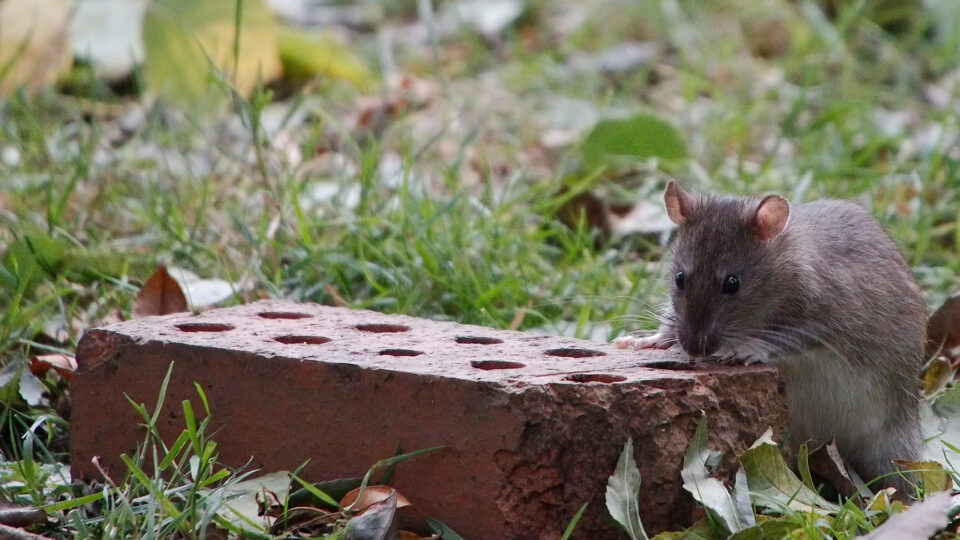
Human activity has made rats one of the most prolific mammals on the planet. Our waste, buildings, and ships provide food, shelter, and transport.  In the United States alone, rats cost the country approximately $27 billion each year in damage to infrastructure, crops, and contaminated food supplies. Additionally, rats carry and spread over 50 zoonotic pathogens and parasites, impacting public health around the world.

Now, climate change is adding to the problem. According to a new study recently published in the journal Science Advances, urban rat populations are exploding as global temperatures rise.  The researchers found that Washington DC, San Francisco, Toronto, New York City, and Amsterdam had the greatest population increases.  In fact, over the past decade, rats increased by a whopping 390% in Washington DC, 300% in San Francisco, 186% in Toronto, and 162% in New York City.  The study, which examined data from 16 cities globally, found that 11 of them showed significant increases in rat numbers.

Only Tokyo, Louisville, and New Orleans bucked the trend with declining rat numbers.

According to the researchers, the best pest management strategies involve making the urban environment less rat-friendly as opposed to removing rodents that are already there.  An example would be putting trash in containers instead of bags on the street. 

There aren’t many perks to the changing climate – unless, of course, you’re a rat. 

**********

Web Links

Increasing rat numbers in cities are linked to climate warming, urbanization, and human population

‘Perfect rat storm’: urban rodent numbers soar as the climate heats, study finds

Photo, posted September 25, 2018, courtesy of Tim Felce via Flickr.

Earth Wise is a production of WAMC Northeast Public Radio

Controlled Environment Agriculture | Earth Wise

October 24, 2023 By EarthWise Leave a Comment

The term “controlled environment agriculture” (or CEA) refers to any number of systems embodying a technology-based approach to farming.  CEA can range from simple shade structures to greenhouses to full indoor or vertical farms.  At the most advanced level, CEA systems are fully automated, closed loop systems with controlled lighting, water, and ventilation.   Many systems make use of hydroponics rather than traditional soil.

The goal of CEA systems is to provide optimum growing conditions for crops and prevent disease and pest damage. 

A recent study by the University of Surrey in the UK sought to understand the impact of using CEA systems to grow lettuce, which is a high-value crop that is often grown in such systems.

The study found that, on average, CEA methods produce double the crop yields compared to field-based agriculture.  They also found that the cultivation time of CEA yields was, on average, 40 days.  This compares with an average cultivation time of 60-120 days for field-based agriculture.  More specifically, production of lettuce using CEA was 50% faster in the summer and up to 300% faster in the winter.

Climate change presents many difficult challenges to society, not the least of which is its threat to food security.  Controlled environment agriculture could allow cultivation of crops in harsh environments and in the face of changing climates.  Quantifying the benefits CEA can have on yield and growth provides important information for advancing our understanding of where and when this technology can bring the most value to society. 

**********

Web Links

Using artificial methods for growing crops could help solve global food security

Photo, posted February 24, 2013, courtesy of Cindy Kurman / Kurman Photography via Flickr.

Earth Wise is a production of WAMC Northeast Public Radio
Here Come The Lanternflies | Earth Wise

May 15, 2023 By EarthWise Leave a Comment

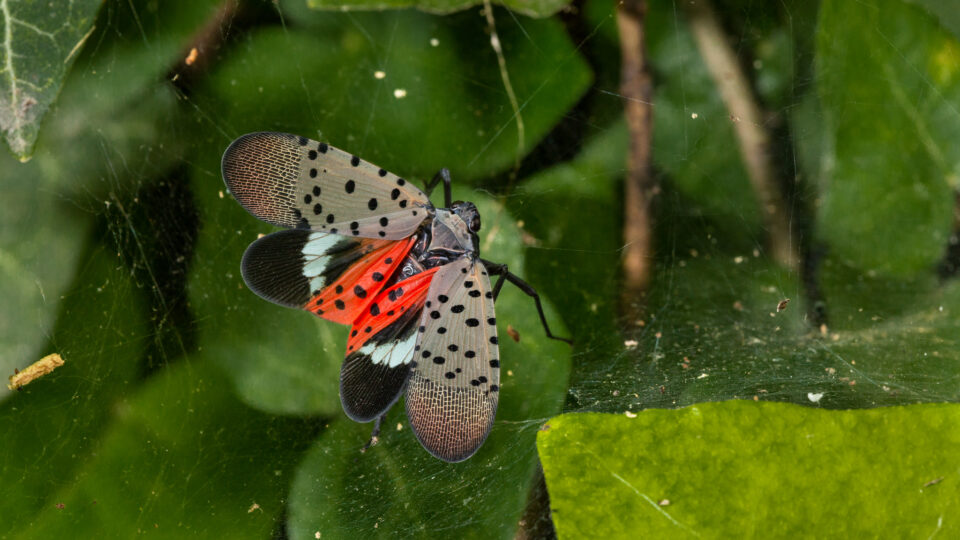
The spotted lanternfly is an invasive pest from Asia that primarily feeds on tree of heaven, which is itself an invasive species that has become widespread.  The real problem is that the lanternfly can also feed on some 70 other plants such as grapevines, maples, fruit trees, and more.

The lanternfly was first discovered in the US in Pennsylvania in 2014 and has since spread to 14 states including New York, Massachusetts, Connecticut, and Rhode Island.  (It was first spotted in New York in Staten Island in 2020 and has continued to spread).

The insect poses a significant threat to New York’s agricultural and forest health. Both the adults and nymphs feed on the sap of plants which stresses them making them vulnerable to diseases and other insect attacks.  They also secrete a sticky substance that attracts molds and interferes with photosynthesis.

Lanternflies are not strong fliers.  They mostly spread through human activity by laying their eggs on vehicles, firewood, outdoor furniture, and other objects that people transport.

The bout of unusually warm weather that the Northeast experienced in early spring is likely to have jumpstarted the spotted lanternfly timeline and hatching could be bumped up to as early as May.

Agriculture officials are asking for people to look for spotted lanternfly egg masses and scrape them off with implements with a sharp edge.  Adult insects should be reported to local authorities and should be killed if at all possible.  There is lots of information online about how to recognize the egg masses and the insects.  Spotted lanternflies are not a direct threat to humans, but they have the potential to cause great harm to vineyards, orchards, and forests.

**********

Web Links

Spotted Lanternfly

Photo, posted September 12, 2018, courtesy of the U.S. Department of Agriculture via Flickr.

Earth Wise is a production of WAMC Northeast Public Radio
The Spotted Lantern Fly Is A Big Problem | Earth Wise

October 27, 2021 By EarthWise Leave a Comment

The spotted lantern fly poses a big threat to agriculture

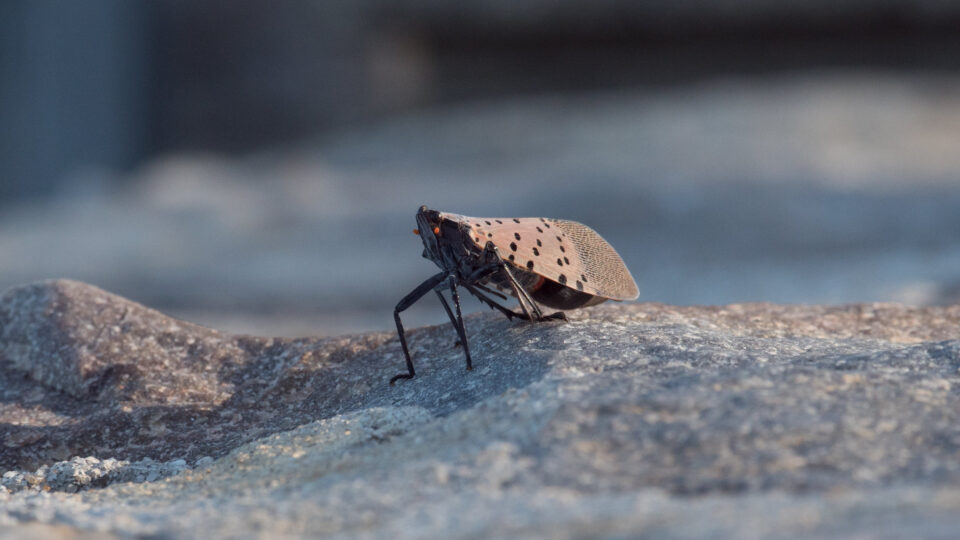
The spotted lanternfly is an invasive pest from Asia that arrived in the United States seven years ago.  It is a handsome and colorful insect, but it feeds on the sap of more than 70 plant species, leaving them susceptible to disease and destruction from other natural antagonists.  It destroys fruit crops, trees, and plants by hopping from plant to plant, crop to crop, and tree to tree.

Several states have established quarantines aimed at preventing the spread of the insects.  Pennsylvania, where they were first detected in the U.S., issued an Order of Quarantine and Treatment that imposes fines and even potential criminal penalties on anyone who intentionally moves a spotted lanternfly, at any stage of its life, from one sort of location to another.  The insects hop and fly only short distances, but they can hitch a ride on vehicles, clothing, and other objects that people bring with them.  They have now spread to at least nine states, primarily in the Northeast.

Lanternflies arrived in New York City last year and quickly made it to the Most Wanted List for environmentalists.  The City’s Parks Department says: “If you see a spotted lanternfly, squish it, dispose of it, and report it to us.”  New York’s Department of Agriculture has asked people in the Finger Lakes region, home of numerous vineyards, to collect specimens and provide specifics on where they were found.

Lanternflies are harmless to humans, but they threaten everything from oak, walnut, and poplar trees to grapes, almonds, and fruit orchards.  As the species continues to spread across the country, federal and state officials have a unified message:  if you come across a spotted lanternfly, kill it.

**********

Web Links

Die, Beautiful Spotted Lanternfly, Die

Photo, posted August 30, 2018, courtesy of the USDA via Flickr.

Earth Wise is a production of WAMC Northeast Public Radio.

The Southern Pine Beetle

October 13, 2017 By EarthWise Leave a Comment

https://earthwiseradio.org/wp-content/uploads/2017/10/EW-10-13-17-The-Southern-Pine-Beetle.mp3

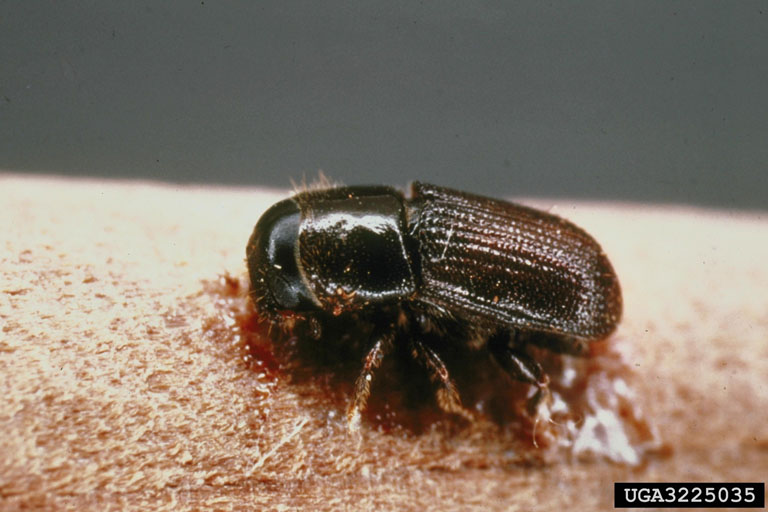
Recent sightings of a destructive tree-eating beetle in northeast pine forests have been alarming.  And a new study from Columbia University has confirmed what ecologists had feared all along:  they’re here to stay.

[Read more…] about The Southern Pine Beetle

Primary Sidebar

Recent Episodes

  • An uninsurable future
  • Clean energy and jobs
  • Insect declines in remote regions
  • Fossil fuel producing nations ignoring climate goals
  • Trouble for clownfishes

WAMC Northeast Public Radio

WAMC/Northeast Public Radio is a regional public radio network serving parts of seven northeastern states (more...)

Copyright © 2026 ·