• Skip to primary navigation
  • Skip to main content
  • Skip to primary sidebar

Earth Wise

A look at our changing environment.

  • Home
  • About Earth Wise
  • Where to Listen
  • All Articles
  • Show Search
Hide Search
You are here: Home / Archives for peat

peat

Canadian zombie fires

April 8, 2024 By EarthWise Leave a Comment

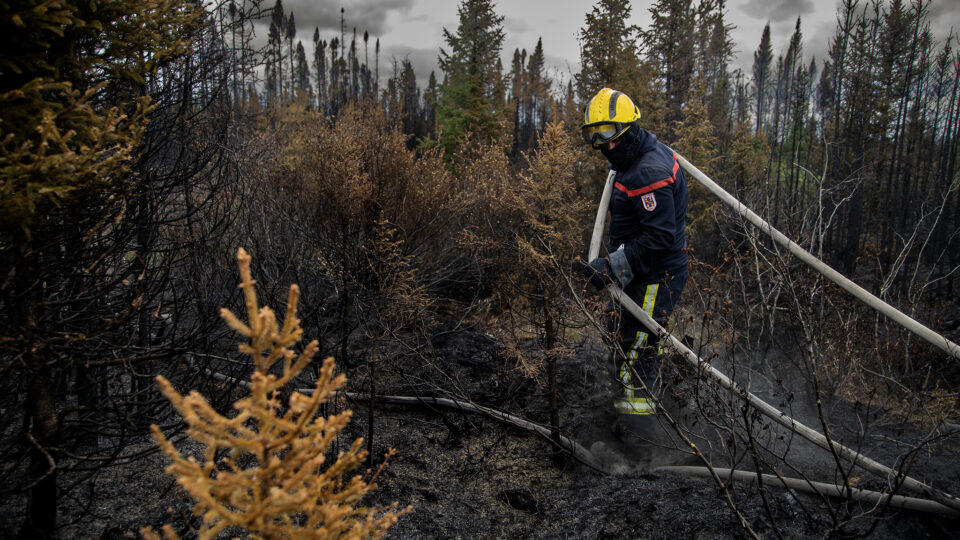
Canada’s 2023 wildfire season was the most destructive ever recorded.  Over 6,000 fires burned nearly 71,000 square miles of land from the West Coast to the Atlantic provinces.  The burned areas are roughly the size of the entire country of Finland and represent almost triple the amount burned in the previous year, which itself was a lot. Smoke from Canadian fires, particularly those in Quebec, blanketed many cities in the United States and made its way as far south as Florida.

An alarming aspect of the Canadian fire season is that it didn’t ever really end.  Late in the winter, 149 active wildfires are still burning across Canada.  92 are in British Columbia, 56 in Alberta, and one in New Brunswick.  In these places, the wildfire season is yearlong.

These overwintering fires have come to be known as zombie fires.  They burn slowly below the surface during the winter.  Many areas in the north contain porous peat and moss ground cover and these act as underground fuel for smoldering fires.

Wildfires have become more prevalent in Canada because the changing climate has brought about increases in the hot, dry, and gusty conditions that lead to drought.

Many of the zombie fires don’t pose an increased threat of triggering wildfires in the spring because they are in places that are already so charred that there is nothing left to burn.  But others are in drought areas that are basically tinder boxes ready to burst into flame once spring arrives.

Overall, Canadian government officials are warning that this year’s wildfire season is likely to be even worse than last year’s, particularly in the Western provinces of British Columbia and Alberta.

**********

Web Links

As ‘Zombie Fires’ Smolder, Canada Braces for Another Season of Flames

Photo, posted June 30, 2023, courtesy of P. McCabe / EU via Flickr.

Earth Wise is a production of WAMC Northeast Public Radio
Carbon In The Congo Peatlands | Earth Wise

December 16, 2022 By EarthWise Leave a Comment

Studying the carbon in the Congo Peatlands

The Congo peatlands in central Africa are the world’s largest tropical peatlands complex, occupying an area of 65,000 square miles, about the size of the entire state of Florida. Peatlands represent a huge store of carbon and therefore are important to the stability of the climate.

A study by scientists at the University of Leeds and University College London found that around the time that Stonehenge was built – about 5,000 years ago – there was an extended drying period in central Congo and the peatlands started emitting carbon dioxide rather than storing it.  Over the course of time, the climate in the area got wetter again and over the past 2,000 years, the Congo peatlands have been a place that takes large amounts of carbon out of the atmosphere.

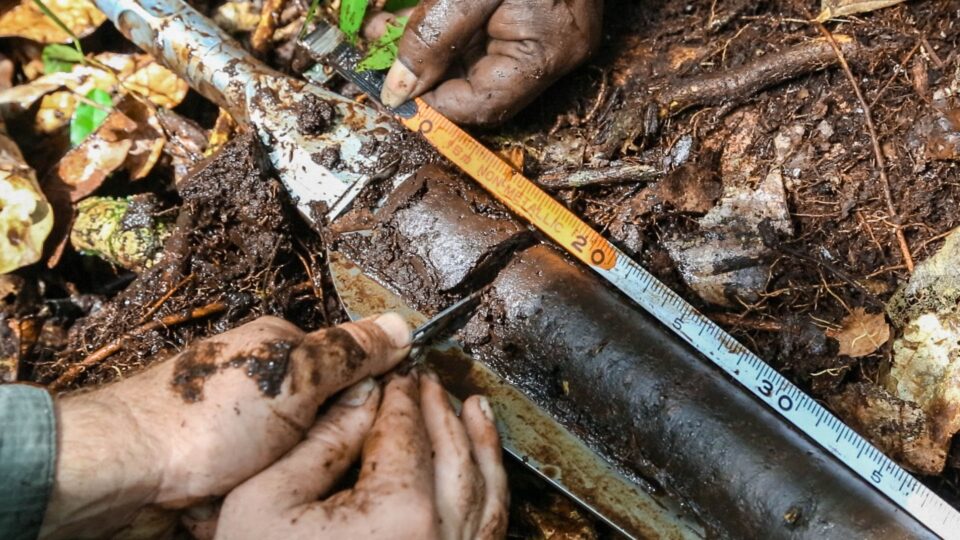
The study utilized peat samples taken from beneath remote swamp forests to build a record of the vegetation and rainfall in the central Congo Basin over the past 17,500 years.

In a paper published in Nature, the researchers warn that if modern-day global warming produces extended droughts in the Congo region, history could repeat itself and the peatlands could once again become carbon emitters.  If that were to happen, over 30 billion tons of carbon could be released into the atmosphere.  That is the equivalent to the total global emissions from fossil fuel burning over a three-year period.

There is some evidence that dry seasons are lengthening in the Congo Basin, but it is unknown if these will continue.  In any case, the study reveals that peatlands are more vulnerable than previously thought and need to be protected.  They are some of the most wildlife and carbon-rich ecosystems on Earth.

**********

Web Links

Congo peatlands could release billions of tonnes of carbon

Photo, posted November 5, 2016, courtesy of Roni Ziade / Forest Service via Flickr.

Earth Wise is a production of WAMC Northeast Public Radio
Fighting Zombie Fires | Earth Wise

April 30, 2021 By EarthWise Leave a Comment

New tool in the fight against zombie fires

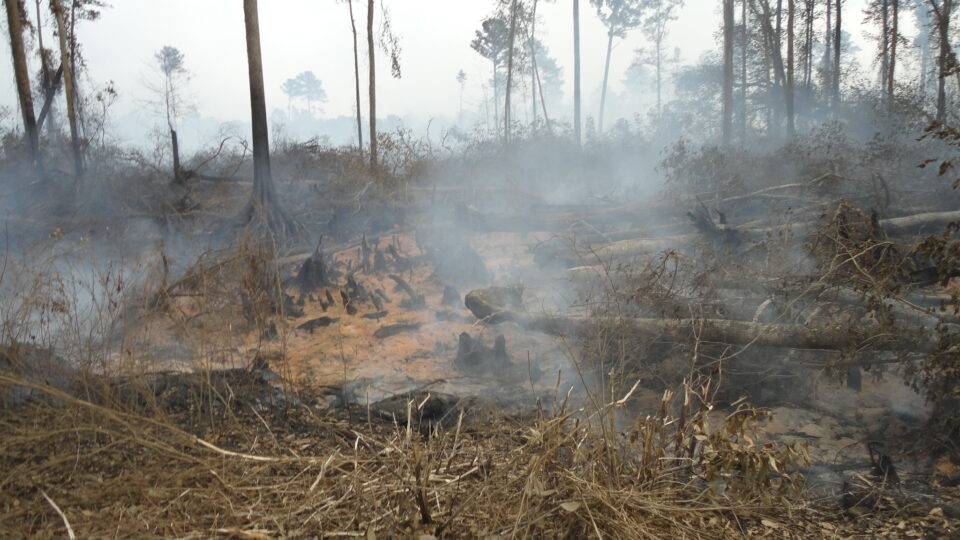
Peat fires are a global threat to both economies and the environment.  They generally burn a smaller area than fast-moving forest fires, but they can burn up to ten times more fuel matter per acre, producing far more smoke and far more carbon emissions.  They ignite very easily, are notoriously difficult to put out, all while releasing as much as 100 times more carbon into the atmosphere than flaming fires.  Some smoldering peat megafires are the largest and longest burning fires on Earth and are responsible for as much as 15% of annual global greenhouse gas emissions.

Peat fires are known as “zombie fires” because of their ability to hide and smolder underground and then reemerge as new flames days or weeks after they were supposedly extinguished.

Firefighters use billions of gallons of water to tackle a peat fire.  For example, fighting the 2008 Evans Road peat fire in North Carolina used up 2 billion gallons of water.  When water alone is used to extinguish peat fires, it tends to create large channels in the soil, which diverts water from nearby smoldering hotspots.  This is one reason that it is so difficult to extinguish a peat fire.

Researchers at Imperial College London have combined water with an environmentally friendly fire suppressant – one already used on flaming wildfires – and tested its use on peat fires.  They found that adding the suppressant to water helped them put out peat fires nearly twice as fast as using water alone, while using only a third to half of the usual amount of water.  The suppressant reduces the surface tension of the liquid, making it less likely to create large channels.  Instead, the liquid flows uniformly through the soil.  This could be an important tool in battling peat fires.

**********

Web Links

‘Magical’ fire suppressant kills zombie fires 40% faster than water alone

Photo, posted in August, 2011, courtesy of Chris Lowie / USFWS via Flickr.

Earth Wise is a production of WAMC Northeast Public Radio.

Melting Permafrost | Earth Wise

February 26, 2020 By EarthWise Leave a Comment

Thawing Permafrost Is Transforming the Arctic

The Arctic is warming faster than any region on Earth and mostly we’ve been hearing about the rapid disappearance of Arctic sea ice.  But the land in the Arctic is also undergoing major changes, especially to the permafrost that has been there for millennia.

Permafrost occurs in areas where the temperature of the ground remains below freezing for two years or more.  About a quarter of the Northern Hemisphere’s landscape meets this criterion.  Most of the world’s permafrost is found in northern Russia, Canada, Alaska, Iceland, and Scandinavia.

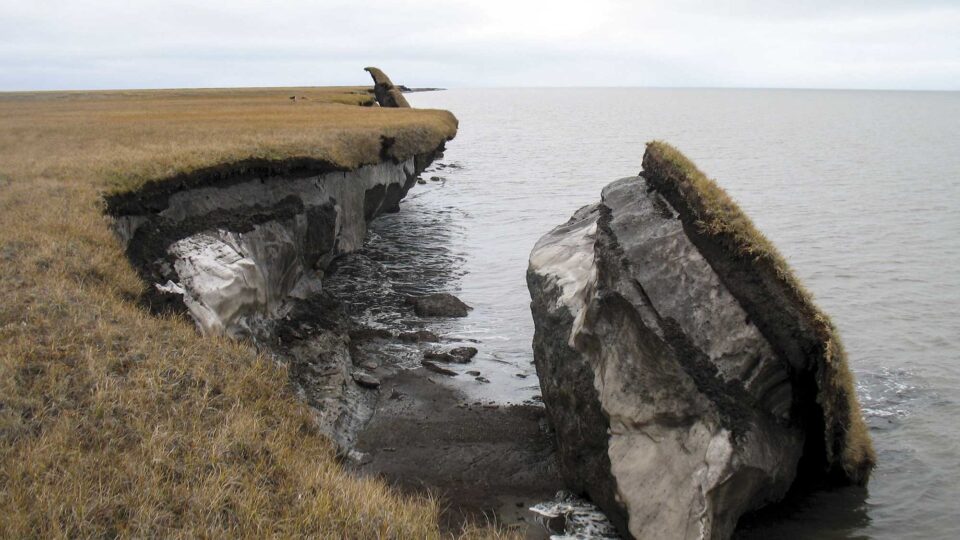
Permafrost regions previously carpeted in cranberries, blueberries, shrubs, sedges, and lichen are now being transformed into nothing but mud, silt, and peat.  So-called regressive thaw slumps – essentially landslides – are creating large craters in the landscape.  (The Batagaika Crater in the Yana River Basin of Siberia is a kilometer long and 100 meters deep).

Apart from the violence being done to the Arctic landscape, the greatest concern is that the permafrost has locked in huge stores of greenhouse gases, including methane, carbon dioxide, and nitrous oxide.  It is estimated that the permafrost contains twice as much carbon as is currently contained in the atmosphere.  As the permafrost thaws, these gases will be released.  With them will be pathogens from bygone millennia whose impact cannot be predicted.  Climatologists estimate that 40% of the permafrost could be gone by the end of the century.

As the permafrost thaws, the region’s ecosystems are changing, making it increasingly difficult for subsistence indigenous people and Arctic animals to find food.  Landslides are causing stream flows to change, lakes to suddenly drain, seashores to collapse, and water chemistry to be altered.

The warming Arctic is about much more than disappearing sea ice.

**********

Web Links

How Thawing Permafrost Is Beginning to Transform the Arctic

Photo, posted February 9, 2017, courtesy of the U.S. Geological Survey via Flickr.

Earth Wise is a production of WAMC Northeast Public Radio.

Primary Sidebar

Recent Episodes

  • An uninsurable future
  • Clean energy and jobs
  • Insect declines in remote regions
  • Fossil fuel producing nations ignoring climate goals
  • Trouble for clownfishes

WAMC Northeast Public Radio

WAMC/Northeast Public Radio is a regional public radio network serving parts of seven northeastern states (more...)

Copyright © 2026 ·