• Skip to primary navigation
  • Skip to main content
  • Skip to primary sidebar

Earth Wise

A look at our changing environment.

  • Home
  • About Earth Wise
  • Where to Listen
  • All Articles
  • Show Search
Hide Search
You are here: Home / Archives for pattern

pattern

October was another hot month

December 3, 2024 By EarthWise Leave a Comment

October was another hot month, a continuation of the warming trend

In a year filled with unusually warm months, October 2024 ranked as the second-warmest October in the 175 years of the National Oceanic and Atmospheric Administration’s records.  It was just 0.09 degrees Fahrenheit cooler than the previous global record set just last year.

In our part of the world, North America had its warmest October on record.

Year-to-date, the global surface temperature has been 2.3 degrees Fahrenheit above the 20th century average, which is the warmest such period on record.  This record warmth was observed in Africa, Europe, North America, Oceania, and South America.  With only a little of the year to go, predictions are that there is a greater than 99% chance that 2024 will rank as the world’s warmest year on record.

Other aspects of the warming climate were also in full evidence in October.  Global sea ice coverage was the smallest in the 46 years that it has been tracked, about 1.25 million square miles below the 1991-2020 average.  Ice extent in the Arctic was the fourth lowest on record and ice extent in the Antarctic was the second lowest on record.

Global ocean surface temperature was the second warmest for October and is the warmest ever for the period January to October.

The Atlantic basin saw five tropical cyclones during October, including the deadly and destructive Hurricane Milton that made landfall just south of Tampa Bay. 

The monthly climate postings by NOAA continue to report record-breaking temperatures and significant climate anomalies and events.  This pattern is not likely to do anything but continue in the future.

**********

Web Links

Planet saw its 2nd-warmest October in 175-year record

Photo, posted August 21, 2018, courtesy of Fabio Achilli via Flickr.

Earth Wise is a production of WAMC Northeast Public Radio

Europe Is Warming Very Quickly | Earth Wise

July 13, 2023 By EarthWise Leave a Comment

Europe is warming faster than most of the world

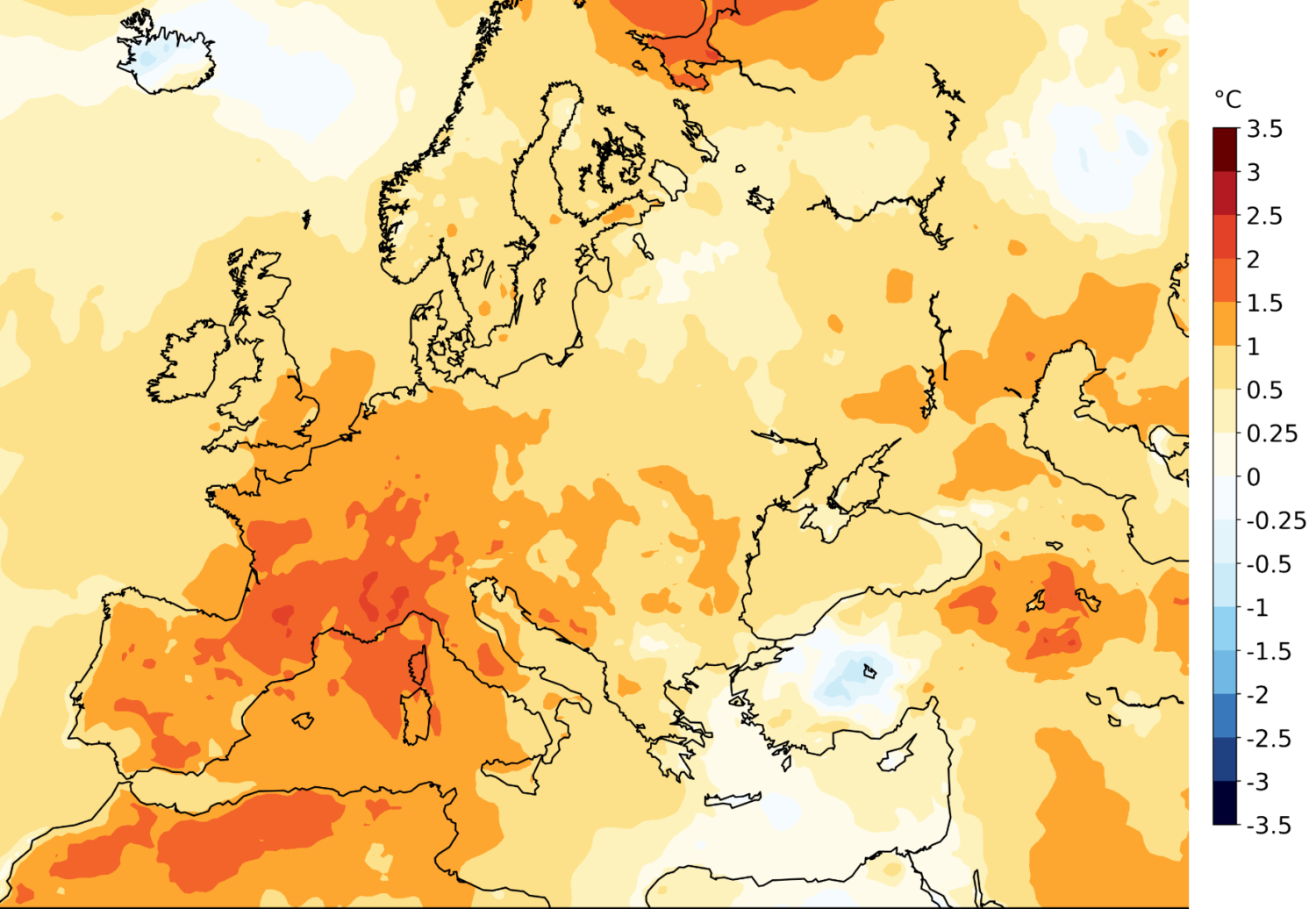
According to a new report from the World Meteorological Organization, Europe is warming faster than any other inhabited continent.  The result of the rising temperatures has been increasingly severe heat waves, flood, and wildfires.

The Paris Climate Agreement has set a goal of limiting warming to no more than 2 degrees Celsius above pre-industrial levels and, if at all possible, to no more than 1.5 degrees.  To date, the planet has warmed by 1.2 degrees and, with greenhouse gas emissions continuing at record levels, the temperature keeps going up.

These numbers refer to the global average.  Some places have warmed more and others less.  The Arctic has been warming four times quicker than the rest of the world.  In terms of direct impact on large populations, Europe has already surpassed the 2-degree mark, having reached 2.3 degrees last year.  In 2022, many countries in western and southwestern Europe had their warmest year on record. Weather-related economic damages totaled $2 billion, mostly as a result of storms and floods.

Europe is trying to do its part in mitigating climate change by making major gains on clean energy.  Wind and solar generated 22% of Europe’s power in 2022, which is more than either natural gas or coal produced.  Europe is trying to do its share, but the warming climate is a global phenomenon and will require a global effort to mitigate its effects.

The record-breaking heat stress experienced by Europeans last year cannot be considered a one-off occurrence.  It is part of a pattern that will make weather extremes more frequent and more intense over time.

**********

Web Links

The Fastest-Warming Continent, Europe Has Already Heated by More Than 2 Degrees C

Photo, posted September 26, 2011, courtesy of Ben Ramirez via Flickr.

Earth Wise is a production of WAMC Northeast Public Radio
Not All Eggs In One Basket | Earth Wise

March 2, 2021 By EarthWise Leave a Comment

Loggerhead turtles don't put all their eggs in one basket

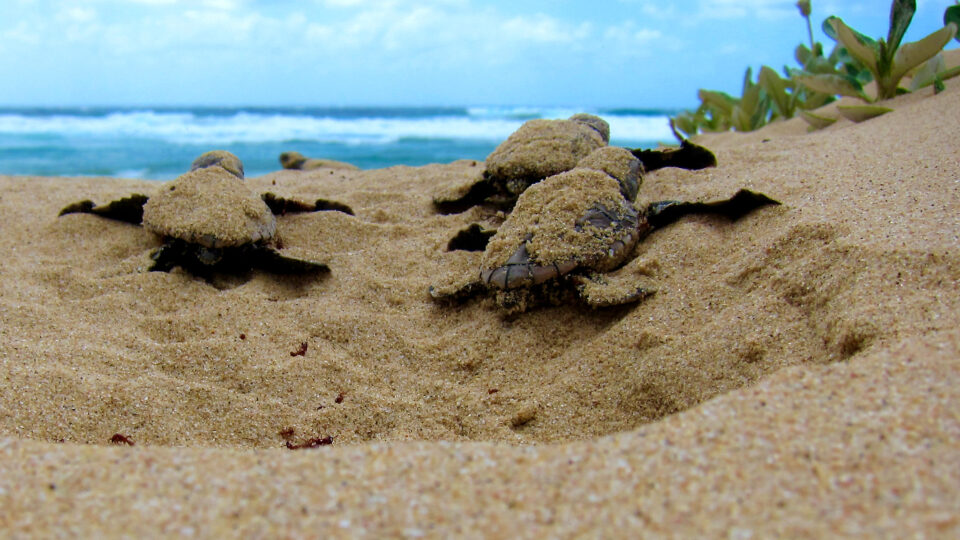
Sea turtles lay their eggs in burrows on sandy beaches.  Many species lay their eggs on the exact same beach year after year.  On average, sea turtles lay over 100 eggs in a nest and produce between 2 and 8 nests per season.

Animals that produce such large numbers of eggs have this reproductive strategy because so few survive to adulthood.   Sea turtle eggs and hatchlings face numerous threats including powerful storms, poachers, marauding birds, and more.  Estimates are that only one in thousand sea turtle eggs leads to an adult turtle.

A recent study by the University of South Florida looked at the reproductive strategy of loggerhead sea turtles nesting on Keewaydin Island off the southwestern Gulf coast of Florida.  The researchers found that individual females lay numerous clutches of eggs in locations as much as six miles apart from each other to increase the chance that some of their offspring will survive.

As the saying goes, nesting loggerhead turtles don’t lay all their eggs in one basket.  The researchers compare the turtles’ strategy to investing in a mutual fund.  The female turtles divide their resources among many stocks rather than investing everything in a single stock.

During their 50-year lifetime, a single female loggerhead will produce over 4,000 eggs and scatter them at 40 different sites.  This strategy helps reduce the risk of complete reproductive failure caused by hurricanes and thunderstorms that could wash out or flood all their clutches.  The combination of unpredictable patterns of nests over time and space results in nearly two-thirds of loggerhead sea turtle hatchlings making it into the Gulf of Mexico.  The species still faces significant challenges but it is doing its part to try to survive.

**********

Web Links

Not all in one basket: Loggerhead sea turtles lay eggs in multiple locations to improve reproductive success

Photo, posted January 27, 2012, courtesy of Jeroen Looye via Flickr.

Earth Wise is a production of WAMC Northeast Public Radio.

Why Have Crocodiles Changed So Little Over Time? | Earth Wise

February 9, 2021 By EarthWise Leave a Comment

Why haven't crocodiles evolved?

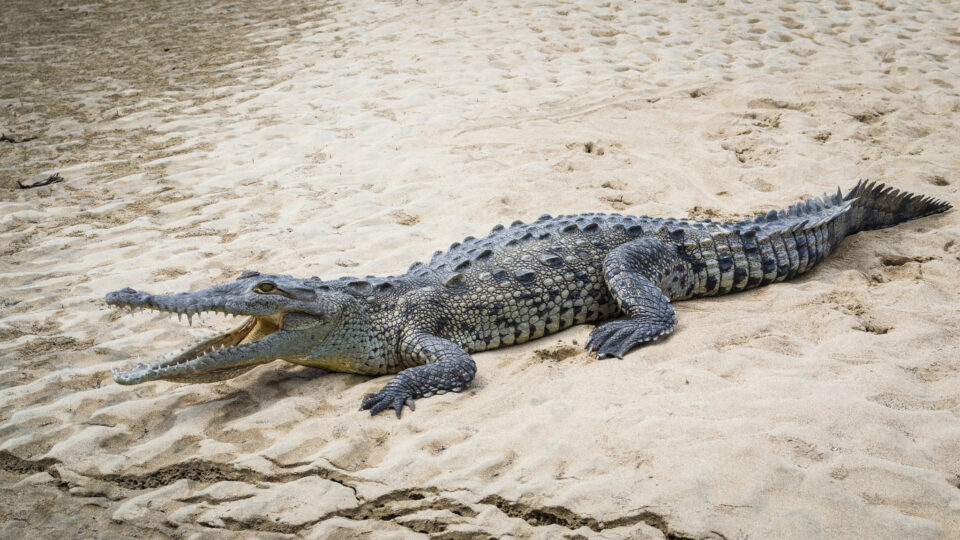
Crocodiles today look very similar to ones from the Jurassic period some 200 million years ago.  In fact, there are very few species of crocodilians alive today – approximately two dozen to be exact.  Many other species have achieved a diversity of many thousands of species in the same amount of time. 

During prehistoric times, many more types of crocodiles roamed the earth, including some as big as dinosaurs and other serpentine forms that lived in the sea.  

According to findings by scientists at the University of Bristol in the U.K., a stop-start pattern of evolution could explain why crocodiles have changed so little over time. In the study, which was recently published in the journal Nature Communications Biology, researchers describe how crocodiles follow a pattern of evolution known as “punctuated equilibrium.”  In other words, crocodiles’ rate of evolution is generally slow, but occasionally picks up because the environment has changed.     

According to the research team, this slow rate of evolution is how crocodile diversity became so limited.  It appears crocodiles arrived at a body that was efficient and versatile.  They didn’t need to continue to change in order to survive.

This efficiency and versatility could be an explanation for why crocodiles survived the meteor impact that wiped out the dinosaurs.  Since crocodiles can’t control their body temperature and rely on the environment for warmth, they generally fare better in warm conditions.  During the age of dinosaurs, the climate was warmer than it is today, which could explain why crocodile diversity was higher.  

The scientists next step is to try to figure out why some prehistoric crocodiles died out while others did not. 

**********

Web Links

Why crocodiles have changed so little since the age of the dinosaurs

Photo, posted December 26, 2012, courtesy of Nicholas Smith via Flickr.

Earth Wise is a production of WAMC Northeast Public Radio.

2018 Was A Wet Year

March 20, 2019 By EarthWise Leave a Comment

Recent news reports noted that 2018 was the fourth hottest year on record.  But the changing climate is not just about temperature.  2018 was also the third-wettest year since 1895, when steady record-keeping began.

Overall, the U.S. recorded 4.68 inches more precipitation in 2018 than the 20th century average.  But all that rain and snow was nothing like evenly distributed.  The eastern half of the country – especially in places like North Carolina and Virginia – saw record amounts of precipitation, while most of the West remained stuck in drought.

The warming climate leads to precipitation extremes at both ends, meaning that wet places are likely to get wetter and dry places drier.  There has been a marked upward trend in short-duration extreme events.   For example, Cyclone Mekunu dumped almost 13 inches of rain on Salalah, Oman in 36 hours, more than double its annual average rainfall.

In the southeast and eastern U.S., the trend toward stronger storm events is mostly driven by strong warming of the oceans that fringe their shores.  Warm oceans evaporate more water into the air and warm air holds more water than cooler air.  Warmer, moisture-laden air acts like a blanket over the land, keeping heat trapped near the ground.  Many of the states that had their wettest-ever years also set records for high minimum temperatures – their coldest temperatures were less cold than in the past.

Air temperatures are projected to warm up even further in the coming years and, as a result, many scientists are anticipating that extreme precipitation events will only get more extreme.  The pattern of drought in the west and wetness in the east is likely to stay.

**********

Web Links

2018 was the U.S.’s third-wettest year on record—here’s why

Photo, posted August 18, 2018, courtesy of Jim Lukach via Flickr.

Earth Wise is a production of WAMC Northeast Public Radio.

Primary Sidebar

Recent Episodes

  • An uninsurable future
  • Clean energy and jobs
  • Insect declines in remote regions
  • Fossil fuel producing nations ignoring climate goals
  • Trouble for clownfishes

WAMC Northeast Public Radio

WAMC/Northeast Public Radio is a regional public radio network serving parts of seven northeastern states (more...)

Copyright © 2026 ·