• Skip to primary navigation
  • Skip to main content
  • Skip to primary sidebar

Earth Wise

A look at our changing environment.

  • Home
  • About Earth Wise
  • Where to Listen
  • All Articles
  • Show Search
Hide Search
You are here: Home / Archives for operation

operation

Sunrise Wind construction begins

August 9, 2024 By EarthWise Leave a Comment

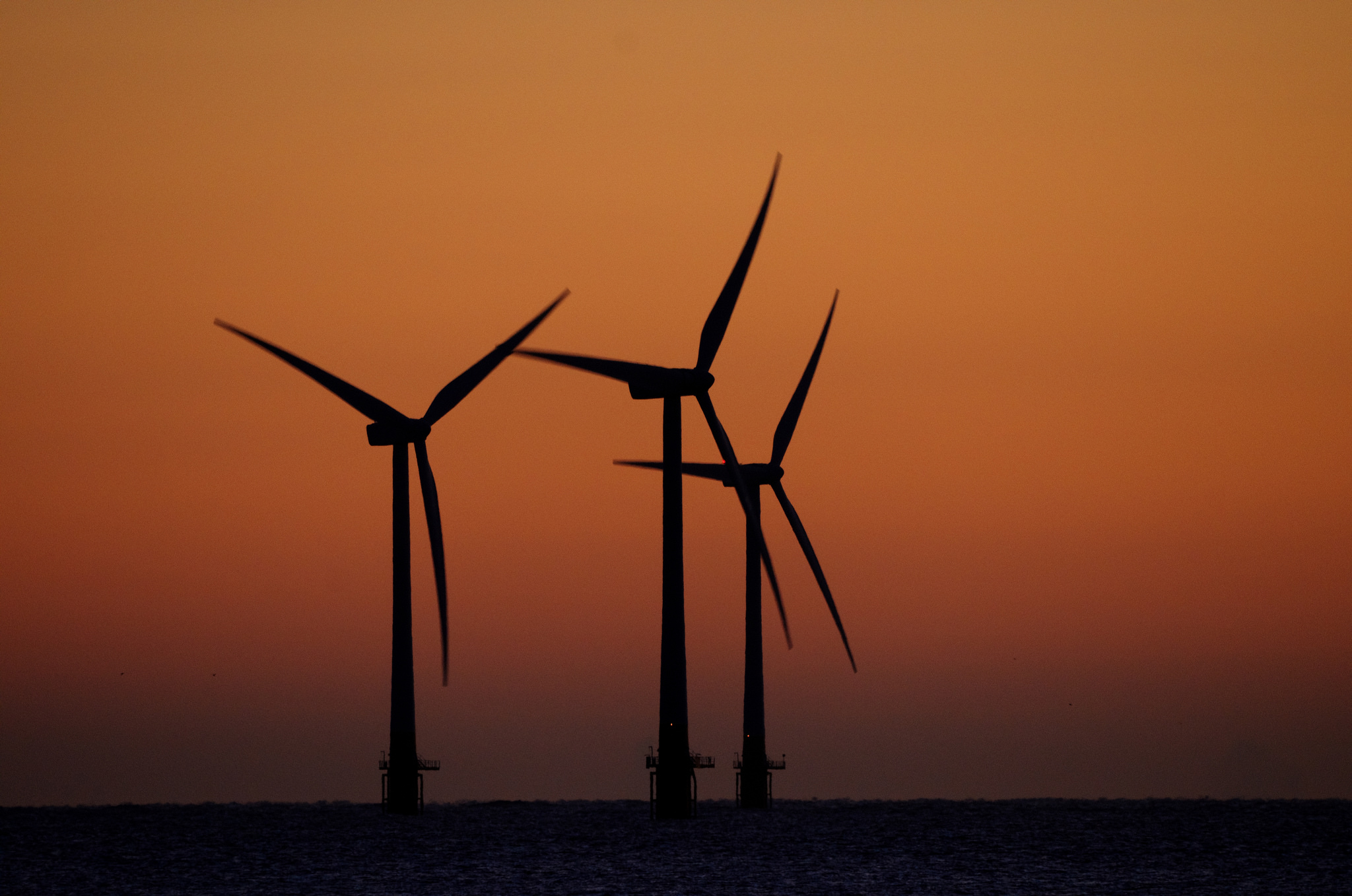
In mid-July, construction started on New York’s largest offshore wind project.  Sunrise Wind is a 924-megawatt offshore wind farm located about 30 miles off the coast of Montauk Point on Long Island.  Sunrise Wind is expected to be operating in 2026 and will provide enough clean energy to power nearly 600,000 homes, making it the largest offshore wind farm in the United States.

The ongoing construction project will support more than 800 direct jobs.  It will be built under project labor agreements ensuring local union labor’s participation in all phases of construction.

Power from the wind farm will flow through an undersea cable coming ashore deep under the beach at Smith Point County Park.  From there, the power will travel primarily under roadways via a transmission line terminating at a power converter station in Holbrook, Suffolk County.

Sunrise Wind is being developed by Oersted, the largest energy company in Denmark and the world’s largest developer of offshore wind power by number of built offshore wind farms.

The second large offshore wind farm in New York, Empire Wind I, is being developed by Equinor.  These large wind farms are the result of New York’s fourth offshore wind solicitation.  The two projects, totaling over 1,700 megawatts, will be the largest power generation projects in New York State in more than 35 years once they enter operation in 2026.

New York has also launched a fifth offshore wind solicitation for which final proposals will be due in September.  Offshore wind is a major component of New York’s effort to expand the use of clean energy, grow its green economy, and combat climate change.

**********

Web Links

Construction begins on Sunrise Wind, New York’s largest offshore wind project

Photo, posted June 14, 2022, courtesy of Stephen Boutwell/BOEM via Flickr.

Earth Wise is a production of WAMC Northeast Public Radio
The carbon cost of wind farms

July 31, 2024 By EarthWise Leave a Comment

Reviewing the carbon cost of wind farms

Opponents of electric vehicles and renewable energy often try to make arguments to the effect that the carbon footprint associated with producing electric cars, solar panels, and wind turbines negates their advantages over legacy technologies that involve burning fossil fuels.  These arguments have been soundly refuted for the case of electric vehicles but there have been fewer studies related to other green technologies.

A new peer-reviewed study by engineers at the Te Herenga Waka Victoria University in Wellington, New Zealand, has analyzed the carbon emissions associated with wind farm operation.

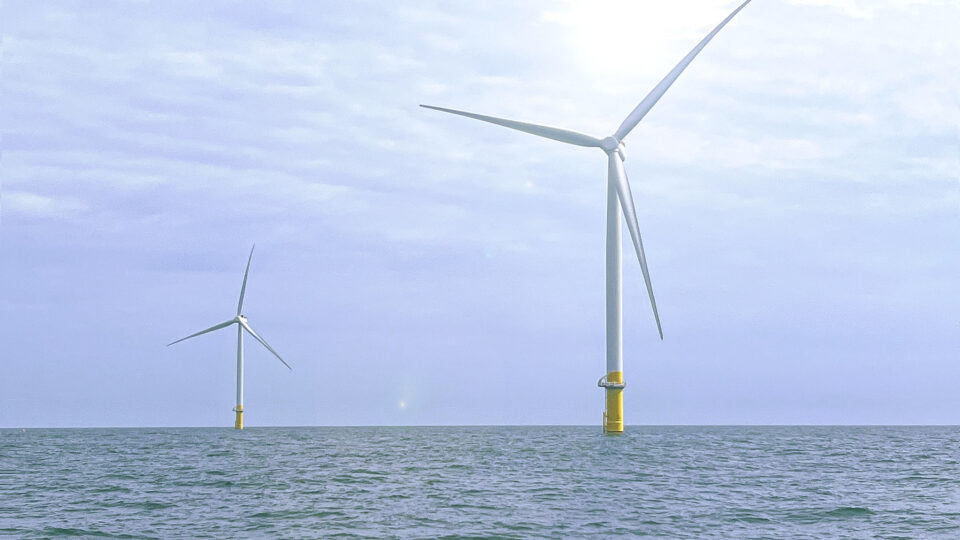
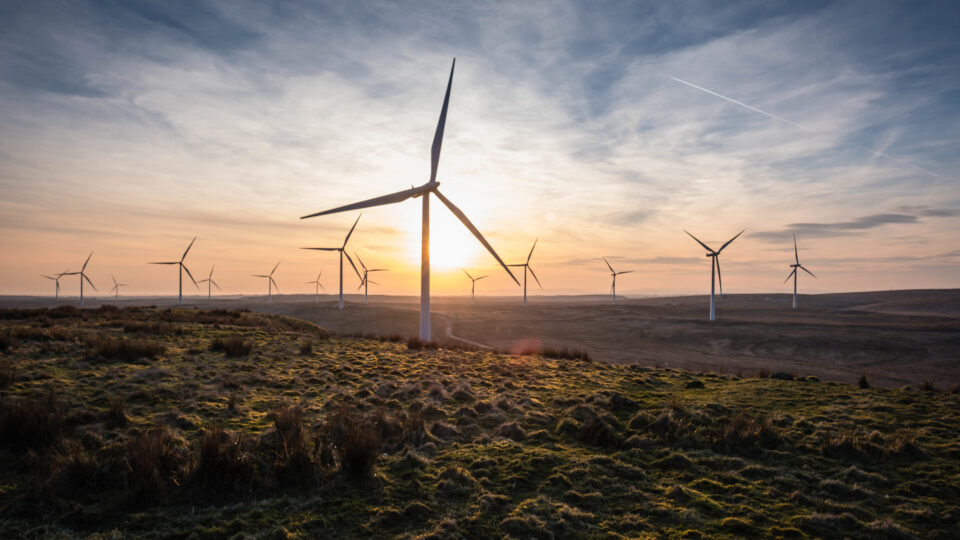
The main result is that after operating for less than two years, a wind farm can offset the carbon emissions generated across its entire 30-year lifespan.   The study takes into account everything from the manufacturing of individual turbine parts, to transporting them and installing them into place, to decommissioning the entire wind farm at its life’s end.  The environmental impacts of the installation and transportation phases are important, accounting for about 10% of the overall emissions.

The decommissioning phase is also important.  The study recommended the development of a recycling process for end-of-life turbine blades.  Currently, such blades are disposed of in landfills, but a recycling process could reduce emissions.

The manufacturing of wind turbines is the primary contributor to the carbon and energy consumption footprints and continues to be the subject of efforts to be improved.

There are other aspects of wind farms that are subject to criticism including physical impacts on the local environment and various social, wildlife and economic impacts.  But with respect to carbon emissions, wind farms are a winning strategy.

**********

Web Links

Wind Farms can Offset Their Emissions Within Two Years, New Study Shows

Photo, posted April 2, 2017, courtesy of Ian Dick via Flickr.

Earth Wise is a production of WAMC Northeast Public Radio
Progress on offshore wind in New York

April 1, 2024 By EarthWise Leave a Comment

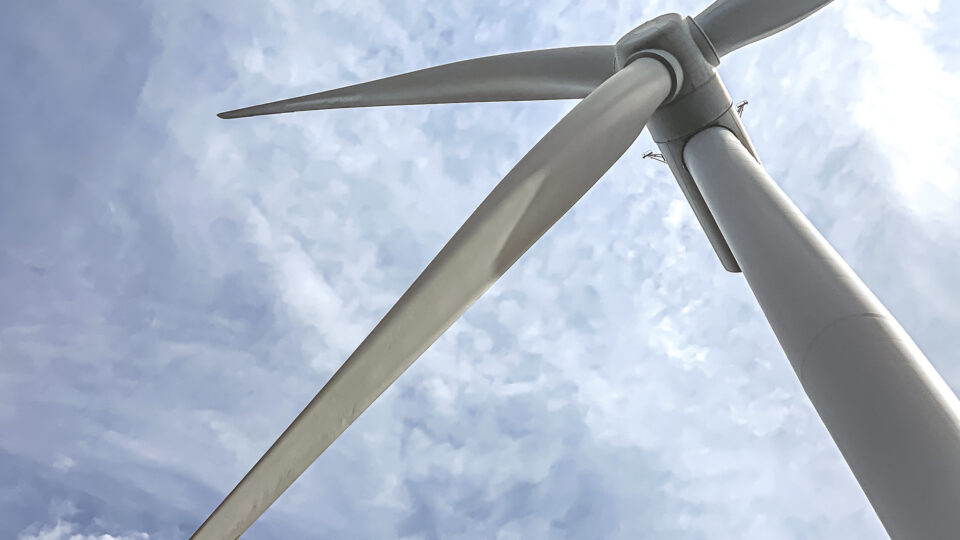
New York has now conditionally awarded two offshore wind projects that will move towards operation in 2026.  The projects, totaling more than 1,700 megawatts of power, will be the largest power generation projects in New York state in more than 35 years.  It is an important milestone toward achieving the state’s goal of developing 9,000 megawatts of offshore wind by 2035.

Empire Wind I, located 15 miles southeast of Long Island, and Sunrise Wind, located more than 30 miles east of the eastern point of Long Island, have already completed most federal and state permitting requirements.  Empire Wind I received final approval of their Construction and Operation Plan from the Bureau of Ocean Energy Management in late February.

Both projects are expected to ramp up construction activity this year.  Previous awards by NYSERDA for the projects in 2019 included contract provisions for specific economic benefits to New York communities and commitments for purchasing iron and steel from American sources.   Empire Wind I is being developed by Equinor, an international energy company headquartered in Norway.  Sunrise Wind, originally a joint project by Ørsted and Eversource, is now solely being developed by Ørsted, a global energy company based in Denmark.

Following successful execution of the contracts for the two projects, NYSERDA payments under these awards will only begin once the projects have obtained all required permits and approvals, the construction has been completed, and the projects begin delivering clean energy to New York.

**********

Web Links

New York selects Empire Wind I and Sunrise Wind offshore projects

Photo, posted June 14, 2022, courtesy of Lissa Eng / BOEM via Flickr.

Earth Wise is a production of WAMC Northeast Public Radio

Grid-Scale Gravity Energy Storage | Earth Wise

September 19, 2023 By EarthWise Leave a Comment

As wind and solar energy play a growing part in our energy system, the need for grid-scale energy storage is growing as well.  An historic form of energy storage and still the largest in installed capacity is pumped hydro storage, which makes use of the potential energy contained in having water sitting at a higher elevation where it can be released downward to operate turbine generators.  This is an effective system but is limited to places where geography cooperates.

For the past five years, a company called Energy Vault has been developing a system that uses the same principle to generate electricity but instead of pumping water to a higher elevation, it uses mechanical devices to lift heavy objects such as concrete blocks to an appropriate height.  Lowering the blocks back to the ground drives generators.

To date, Energy Vault has only built demonstration systems with a fraction of the storage capacity needed for grid-scale operation. Their EV1 Tower in Switzerland was successfully grid interconnected in 2020 and demonstrated round-trip efficiency (the fraction of the energy stored that was produced by the generators) above 75%.  Their improved EVx system is expected to do better than 80%.

This year the company, along with partners Atlas Renewable and China TIanying, is now in the first phases of commissioning a grid-scale system located outside of Shanghai, China.  The 25-MW system is built adjacent to a wind farm and a national grid interconnection site

This is the first grid-scale gravity energy storage system and is expected to be fully online in the fourth quarter of this year.  A second, similar system is now under contract to be built elsewhere in China.

**********

Web Links

First grid-scale gravity energy storage system undergoes commencement in China

Photo courtesy of Energy Vault.

Earth Wise is a production of WAMC Northeast Public Radio
Solar Parking Lots In France | Earth Wise

January 6, 2023 By EarthWise Leave a Comment

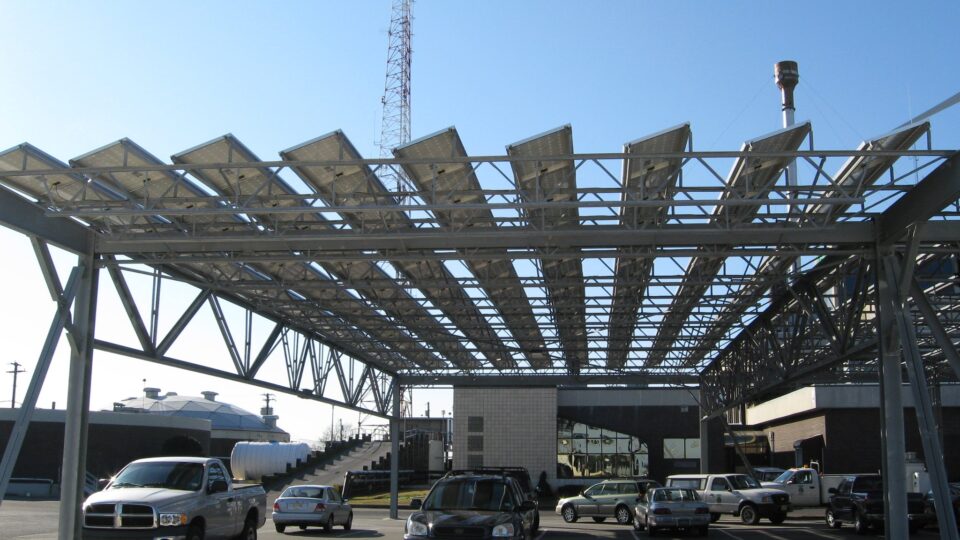
France has passed legislation that will require all parking lots with more than 80 spaces to be covered over by solar panels.  This is part of a broader effort to put solar panels on vacant lots, empty land alongside roadways and train tracks, and even some farmland.  The overall program would add 11 gigawatts of solar power to the French electricity grid.

The legislation applies to both new and existing parking lots.  Owners of parking lots with more than 400 spaces would have 3 years to comply, while owners of lots with 80 to 400 spaces would have five years.

To produce 11 gigawatts of solar output, about half a percent of France’s urban land would need to be covered with solar panels.  This is quite a bit, but not an insurmountable obstacle.  Parking lots, however, could only provide a fraction of what is needed.  It would take something like 8 million parking spaces covered with solar panels to produce that much power.  That is probably at least twice as many as France has.

Several countries, most notably Germany, already have mandates for new construction to incorporate renewable energy.  This includes solar panels, biomass boilers, heat pumps, and wind turbines.  Many parking lots in southern Europe already have sunshades over them, which would make it pretty easy to install solar panels.  This is much rarer in cooler countries.

France is pursuing this policy to reduce its dependence on nuclear power, which currently provides 70% of the country’s electricity.  Apart from the general trend of opposition to nuclear power, reliance upon it during increasingly common droughts is problematic as the power plants require significant amounts of water to operate.

**********

Web Links

France’s plan for solar panels on all car parks is just the start of an urban renewable revolution

Photo, posted February 11, 2008, courtesy of Armando Jimenez / U.S. Army Environmental Command via Flickr.

Earth Wise is a production of WAMC Northeast Public Radio.

Electric Pickup Trucks | Earth Wise

April 5, 2022 By EarthWise Leave a Comment

There are more and more electric cars on the market as auto manufacturers move toward fleet-wide electrification.  In the United States, pickup trucks are massively popular.  The top three selling vehicles in the country are all trucks, led by the Ford F-Series.  Thus, it is no surprise that automakers are now turning their attention to electric pickup trucks.

Some of the trucks are from established manufacturers like Ford and Chevy and others from new companies like Rivian.  The Ford F-150 Lightning is bound to be a big seller.  There are hundreds of thousands of pre-orders for Tesla’s exotic Cybertruck, now expected to enter the market next year.

A recent study looked at the environmental impact of pickup truck electrification.  The central question is what does the transition to electric trucks mean for the overall decarbonization of the transportation industry?

Researchers from the University of Michigan and the Ford Motor Company conducted a cradle-to-grave assessment of the life cycle of pickup trucks and compared the implications of truck electrification to those of sedans and SUVs.

The study found that replacing an internal combustion-powered vehicle with a battery-powered vehicle results in greater total greenhouse gas emission reductions as the size of the vehicle increases, which is no real surprise considering how much more gas larger vehicles use.

The study also found that manufacturing electric vehicles produces more emissions than gas-powered vehicles, but the impact is offset by savings in their operation.  Breakeven time is little more than a year.

Basically, the results are that replacing gas-powered trucks with electric trucks is even a bigger win for the planet than replacing gas cars with electric cars.  Let’s hope we see plenty of electric trucks on the roads in the near future.

**********

Web Links

Study: Greater greenhouse gas reductions for pickup truck electrification than for other light-duty vehicles

Photo, posted September 22, 2020, courtesy of Steve Jurvetson via Flickr.

Earth Wise is a production of WAMC Northeast Public Radio.

Ever Cheaper Solar Power | Earth Wise

May 14, 2021 By EarthWise Leave a Comment

The cost of solar panels continues to decline

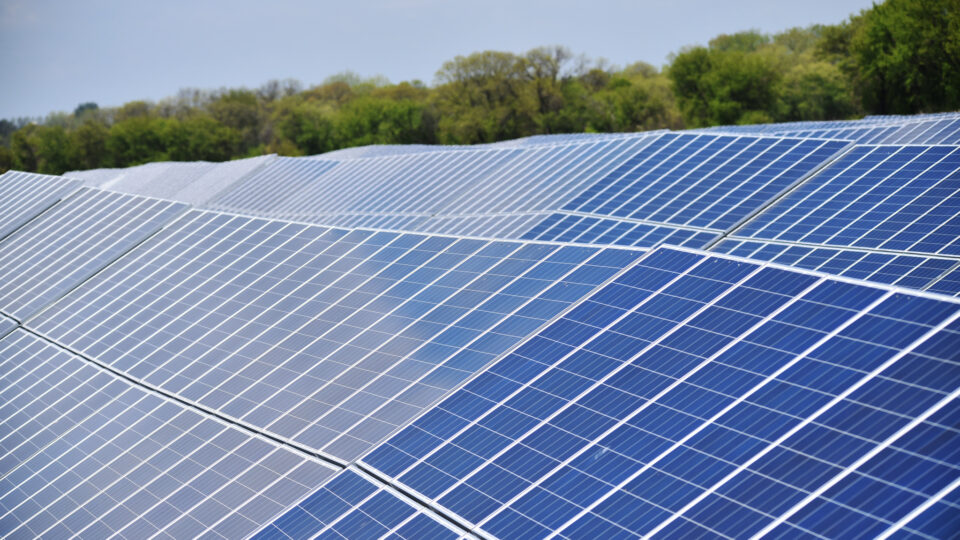
The price of electricity from solar panels has been dropping dramatically over the last decade.  The average cost of utility-scale solar power has gone down more than 80% since 1980, making it the least expensive power source in many places.  The plunging price of solar power is one of the driving forces behind the transition to clean energy. 

The 2020 average cost of solar power was 4.6 cents per kilowatt-hour.  The Department of Energy has recently set a target of reducing the cost of solar power by more than half again by 2030, to an unsubsidized average of 2 cents per kilowatt-hour.  The 2-cent goal is not just the ordinary cost of electricity; it is the levelized cost of energy which is based on a formula that includes the cost of construction and operation of a power plant.

If the least expensive power source becomes that much cheaper, it will really shake the foundation of many energy debates.  One of these debates is how to meet the need for more interstate power lines to transport renewable energy from rural areas to population centers.   If large amounts of additional renewable energy sources are added, policymakers will need to work harder to reform the regulatory system to make sure that new interstate power lines get built.

If the average cost of solar power reaches 2 cents a kilowatt-hour, the actual price will be lower in sunnier regions and higher in those that get less sun.  However, the continuing decrease in solar electricity costs will actually have the greatest impact in the northern, less sunny regions, because solar power may not currently be the least expensive option there but it will become the cheapest alternative over time.

**********

Web Links

Inside Clean Energy: What Happens When Solar Power Gets Much, Much Cheaper?

Photo, posted May 14, 2020, courtesy of Courtney Celley/USFWS via Flickr.

Earth Wise is a production of WAMC Northeast Public Radio.

Offshore Wind Progress

July 14, 2017 By EarthWise

https://earthwiseradio.org/wp-content/uploads/2017/07/EW-07-14-17-Offshore-Wind-Progress.mp3

Last December, the first commercial offshore wind farm in the United States started operation off the coast of Rhode Island.   The Fisherman’s Energy Atlantic City Windfarm off the coast of New Jersey is under construction.  With the lengthy logjam finally broken, there is increasing activity in the emerging U.S. offshore wind sector.

[Read more…] about Offshore Wind Progress

Primary Sidebar

Recent Episodes

  • An uninsurable future
  • Clean energy and jobs
  • Insect declines in remote regions
  • Fossil fuel producing nations ignoring climate goals
  • Trouble for clownfishes

WAMC Northeast Public Radio

WAMC/Northeast Public Radio is a regional public radio network serving parts of seven northeastern states (more...)

Copyright © 2026 ·