• Skip to primary navigation
  • Skip to main content
  • Skip to primary sidebar

Earth Wise

A look at our changing environment.

  • Home
  • About Earth Wise
  • Where to Listen
  • All Articles
  • Show Search
Hide Search
You are here: Home / Archives for onshore

onshore

Five amazing renewable energy projects

June 11, 2025 By EarthWise Leave a Comment

Worldwide investment in renewable energy topped $2 trillion in 2024.  For Climate Solutions Week, we wanted to highlight some amazing projects around the world that showcase innovative technology, ambitious scale, and the commitment to a cleaner and sustainable future.

In Morocco, the Noor Solar Power Station is a huge concentrated solar power facility that generates power for more than a million Moroccans.  The facility stores some of the heat generated by the sun in molten salt so it can continue to produce power after sunset.

The Three Gorges Dam in China is the world’s largest power plant by installed capacity.  The 32 turbines generate enough electricity to power millions of homes. 

The Alta Wind Energy Center in California is one of the largest onshore wind farms in the world.  The 600 turbines at the facility provide clean electricity for up to 450,000 homes.

The Yamakura Dam Floating Solar Project in Japan has more than 50,000 solar panels that provide electricity for about 5,000 households.  The plant is located atop the surface of the Yamakura Dam reservoir and is one of the largest floating solar installations in the world.

The Hellisheiði Power Station in Iceland is one of the world’s most technologically advanced geothermal energy plants.  It taps into Iceland’s volcanic geology and draws both high-pressure steam and hot water to provide both electricity and heat to thousands of local homes and businesses.  

These five projects are just a sampling of the renewable energy development going on all over the world.

**********

Web Links

Powering the Future: Innovative Renewable Energy Projects Around the World

Photo, posted December 1, 2019, courtesy of Richard Allaway via Flickr.

Earth Wise is a production of WAMC Northeast Public Radio

Wave energy in LA

March 6, 2025 By EarthWise Leave a Comment

Ocean waves form as wind blows over the surface of open water.  Globally, waves contain tremendous amounts of energy.  Theoretically, the energy generating potential of waves off the coasts of the U.S. would meet more than 60% of the country’s electricity needs.  There are a variety of methods and technologies for tapping into this energy source, but none have reached the point of commercial adoption to date.  There are many problems that remain to be solved.

Eco Wave Power, a wave energy company, announced that it has received the necessary permit from the U.S. Army Corps of Engineers to operate the first onshore wave energy installation in the United States.  The installation will be at the Port of Los Angeles at the facilities of AltaSea, a public-private ocean institute that conducts research on food and energy supply, climate change, and ocean exploration.

The system will utilize eight of Eco Wave Power’s energy floaters that will be installed on the piles of an existing concrete wharf structure on Municipal Pier One.  The system will also include an energy conversion unit enclosed in two shipping containers and connected to the floaters.  The installation is expected to be completed by the end of the first quarter of this year.

Floaters draw energy from waves by using their rising and falling motion to generate electricity. The bobbing motion of the floaters compresses and decompresses hydraulic pistons.  These transmit hydraulic fluid into land-based accumulators that build up pressure.  The pressure rotates a hydraulic motor, which then operates a generator, producing electricity.

The project is a collaboration on the development of wave energy in the Port of Los Angeles between Eco Wave Power and Shell Marine Renewable Program.

**********

Web Links

Eco Wave Power secures final USACE permit for its first U.S. wave energy project

Photo courtesy of Eco Wave Power.

Earth Wise is a production of WAMC Northeast Public Radio
The cost of methane emissions

April 26, 2024 By EarthWise Leave a Comment

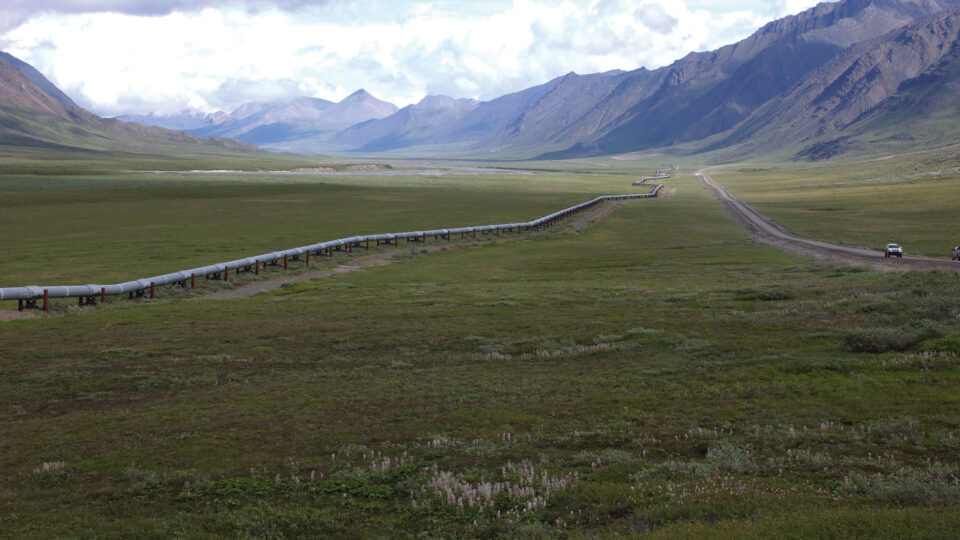
Stanford University-led research has determined that American oil and gas operations are emitting more than 6 million tons of methane each year.  The emissions come from both intentional vents and unintentional leaks. 

Methane is the main component of natural gas and losing that much of it through leakage is costing the industry a billion dollars a year just in lost revenue.  Adding in the harm to the economy and human well-being caused by adding this much potent greenhouse gas to the atmosphere is estimated to increase the cost of these emissions to $10 billion a year.

These emission and cost estimates are roughly three times the level predicted by the U.S. government.  The Stanford numbers are based on roughly a million aerial measurements of wells, pipelines, storage, and transmission facilities in six of the nation’s most productive oil and gas regions located in Texas, New Mexico, California, Colorado, Pennsylvania, and Utah.  These areas account for 52% of U.S. onshore oil production and 29% of gas production.

The survey also found that fewer than 2% of the methane emitters are responsible for 50-80% of emissions in four of the regions.  It also found that midstream infrastructure – which includes gathering and transmission pipelines, compressor stations, and gas processing plants – is responsible for about half of total emissions.

While the federal government estimates that methane leakage averages about 1% of gas production, the new survey puts the number at 3%, and some regions lose almost 10% to leakage.

Better tracking and fixing these leaks – especially the larger ones –  is essential for climate change mitigation.

**********

Web Links

Methane emissions from U.S. oil and gas operations cost the nation $10 billion per year

Photo, posted June 5, 2015, courtesy of Dave Houseknecht / USGS via Flickr.

Earth Wise is a production of WAMC Northeast Public Radio
Onshore Algae Farms | Earth Wise

November 9, 2022 By EarthWise Leave a Comment

According to some estimates, food production will need to increase by 50% by 2050 in order to feed a projected global population of 10 billion people.  How can this be achieved?  

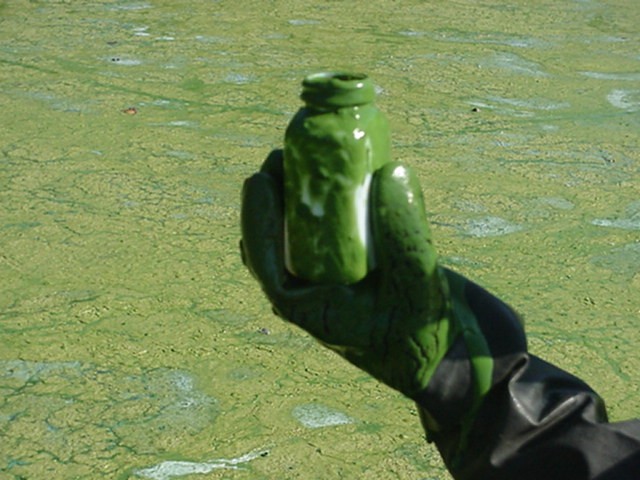
One solution, according to researchers at Cornell University, could be to grow nutritious and protein-dense microalgae in seawater-fed onshore aquaculture systems.

According to the research, which was recently published in the journal Oceanography, growing algae onshore could close a projected gap in society’s future nutritional demands while also improving environmental sustainability.  

Climate change, environmental degradation, limited arable land, and lack of freshwater will all constrain the amount of food that can be grown in the coming decades.  Wild fish stocks are already heavily exploited, and there are limits to how much finfish, shellfish, and seaweed aquaculture can be produced in the coastal ocean. 

As a result, the researchers argue for expanding algae production in onshore aquaculture facilities.  The research team’s models found that the best locations for onshore algae farming facilities are along the coasts of the Global South, including desert environments. 

Algae can grow as much as ten times faster than traditional crops.  Algae can also be produced in a manner that is more efficient than agriculture in its use of nutrients.  In addition to its high protein content, algae also provides nutrients lacking in vegetarian diets, such as essential amino acids, minerals, and omega-3 fatty acids.

Algae could become the breadbasket of the Global South.

**********

Web Links

Onshore algae farms could feed the world sustainably

Photo, posted June 17, 2011, courtesy of NOAA Great Lakes Environmental Research Laboratory via Flickr.

Earth Wise is a production of WAMC Northeast Public Radio
Scottish Wind Power

September 5, 2019 By EarthWise Leave a Comment

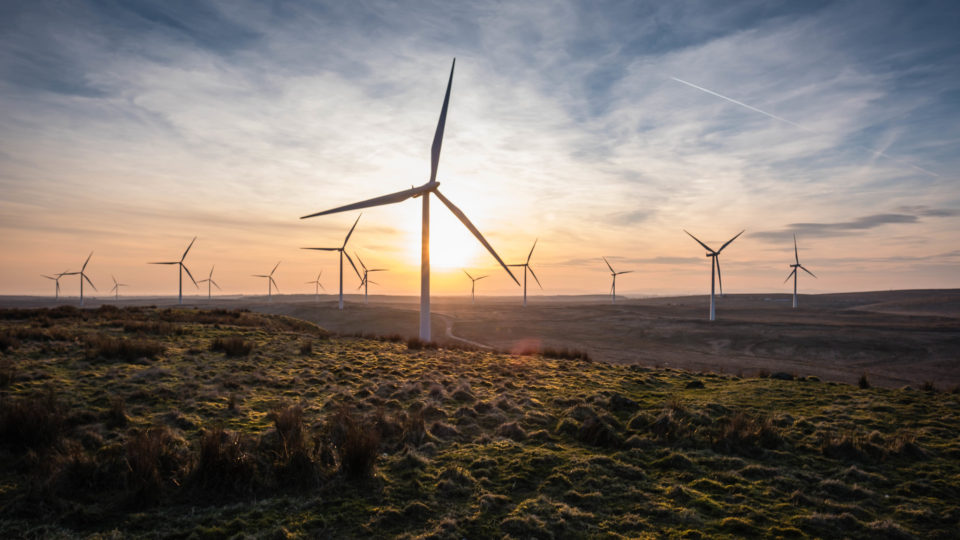
Scotland is a windy country.  Most wind turbines in the European Union produce electricity at an average of 25% of their maximum rated power as a result of the variability of wind resources.  The west and northern coasts of Scotland have an average capacity of 31% or more.  Some wind farms in Scotland have achieved more than 50% capacity over the course of a year.

As of the end of last year, Scotland had more than 8 GW of installed wind power capacity.  This included 7.8 GW of onshore wind and 623 MW of offshore wind generators.  Estimates are that more than 11 GW of onshore wind could be installed in Scotland.  The total offshore potential is far greater than that but would be much more expensive.  There are multiple large-scale wind farms proposed or under construction in Scotland.

All of this growth in wind power has led to some remarkable results.  During the first half of 2019, wind turbines in Scotland produced enough electricity to power every home in the country twice over.  Scottish wind farms generated nearly 10 million megawatt-hours between January and June, which is equal to the consumption of 4.5 million homes during that period.   That is enough to take care of all of Scotland’s homes plus a large portion of northern England’s. 

Scotland has set a target of generating half of its electricity from renewable sources by 2030 and decarbonizing its energy system almost entirely by 2050.  The recent performance of its wind power installations shows that the country might be able to reach its goal much sooner than anticipated.

**********

Web Links

Scotland’s Wind Farms Generate Enough Electricity to Power Nearly 4.5 Million Homes

Photo, posted March 27, 2017, courtesy of Ian Dick via Flickr.

Earth Wise is a production of WAMC Northeast Public Radio.

Primary Sidebar

Recent Episodes

  • An uninsurable future
  • Clean energy and jobs
  • Insect declines in remote regions
  • Fossil fuel producing nations ignoring climate goals
  • Trouble for clownfishes

WAMC Northeast Public Radio

WAMC/Northeast Public Radio is a regional public radio network serving parts of seven northeastern states (more...)

Copyright © 2026 ·