• Skip to primary navigation
  • Skip to main content
  • Skip to primary sidebar

Earth Wise

A look at our changing environment.

  • Home
  • About Earth Wise
  • Where to Listen
  • All Articles
  • Show Search
Hide Search
You are here: Home / Archives for one earth

one earth

Emissions and the Great Salt Lake

September 4, 2024 By EarthWise Leave a Comment

Emissions and the Great Salt Lake

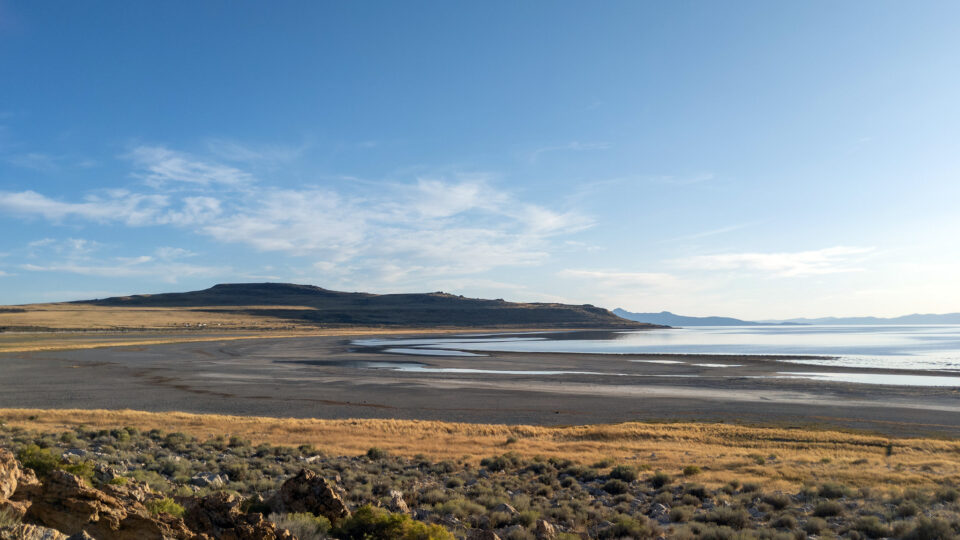
The Great Salt Lake in Utah has been described as a puddle of its former self.  The lake’s size fluctuates naturally with seasonal and long-term weather patterns, but the lake has been experiencing decline for decades as Utahans take water out of the rivers and streams that once fed the lake.  Over recent decades, the lake has lost 73% of its water and 60% of its surface area.

For years, scientists and environmental leaders have warned that the Great Salt Lake is headed toward a catastrophic decline.  Recent research has found that the lake’s desiccating shores are becoming a significant source of greenhouse gas emissions.  Scientists have calculated that the dried-out portions of the lakebed released about 4.1 million tons of carbon dioxide and other greenhouse gases in 2020.

The recent study, published in the journal One Earth, suggests that the Great Salt Lake – which is largest saltwater lake in the Western Hemisphere – as well as other shrinking saline lakes around the world could become major contributors of climate-warming emissions.

The shrinking back of the water has exposed a dusty lakebed that is laced with arsenic, mercury, lead, and other toxic substances.  Some are naturally occurring, and others are the residue of mining activity in the region.  These substances threaten to increase rates of respiratory conditions, heart and lung disease, and cancers.

As the lake shrinks, it is becoming saltier and uninhabitable to native flies and brine shrimp and may increasingly become unable to support the 10 million migratory birds and wildlife that frequent it.

The new research about greenhouse gas emissions just adds to a dire list of environmental consequences brought on by the lake’s steep decline.

**********

Web Links

Shrinking Great Salt Lake Becoming Source of Heat-Trapping Gas

Photo, posted January 20, 2020, courtesy of Matthew Dillon via Flickr.

Earth Wise is a production of WAMC Northeast Public Radio

Positive tipping points and climate

January 29, 2024 By EarthWise Leave a Comment

We often hear about tipping points and climate change.  Tipping points are critical thresholds that, when crossed, lead to large, accelerating, and often irreversible changes.  Some of the ones of concern with the climate are thawing permafrost, melting glaciers and ice sheets, and global temperatures reaching certain levels.  These are all tipping points that are essential to avoid.

A study published in the journal One Earth by researchers at the University of Exeter in the UK contends that in order to avoid the severe consequences of climate change, we need to trigger some positive tipping points.

Many climate-friendly changes are happening too slowly.  Triggering positive tipping points is a way to rapidly reach the high levels of decarbonization required to avoid triggering the negative tipping points of great concern.

Reaching a positive tipping point is a way that beneficial changes can rapidly gain momentum.  One example is the adoption of electric vehicles.  It has clearly reached a tipping point across Scandinavia and has happened rapidly.  Norway has managed to transition the market share of electric vehicles from under 10% to nearly 90% in less than 10 years.  At some point, everybody wanted an electric car.  This is evidence that positive tipping points can happen.

Many of the other forms of decarbonization need to move from their current level of adoption to rapid expansion.  A combination of affordability, attractiveness, availability, and political will are needed to trigger tipping points.  Exactly what those tipping point are is not necessarily known, but unless something accelerates the current pace of change, it will be very difficult to prevent negative climate tipping points from changing the world in destructive ways.

**********

Web Links

Positive tipping points must be triggered to solve climate crisis

Photo, posted July 8, 2023, courtesy of Michael Swan via Flickr.

Earth Wise is a production of WAMC Northeast Public Radio
An Accelerating Rate Of Mountain Forest Loss | Earth Wise

April 27, 2023 By EarthWise Leave a Comment

Recent study demonstrates how mountain forest loss is accelerating

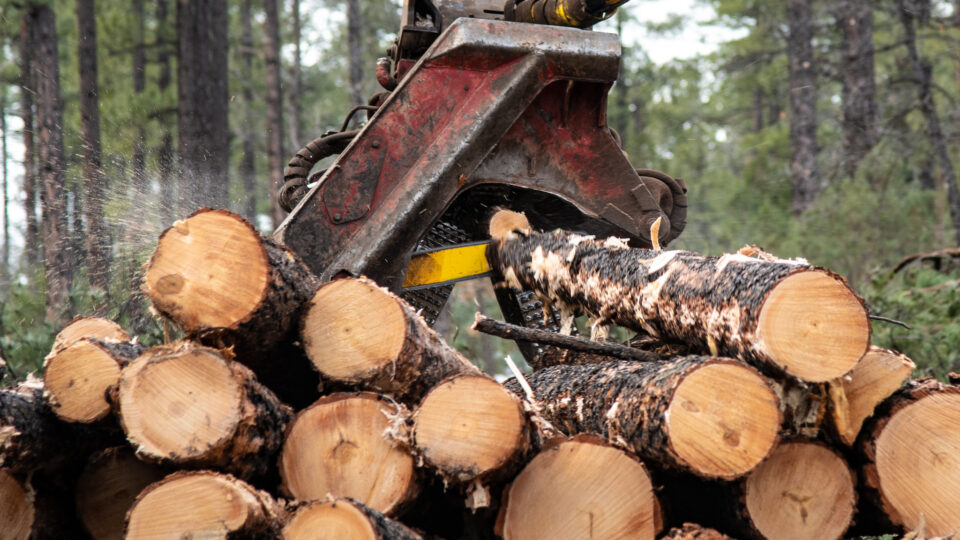
Mountains contribute disproportionately to the Earth’s diversity of life.  While mountains account for about 25% of the land area on Earth, they are home to more than 85% of the mammal, bird, and amphibian species.  But alarmingly, forested mountain habitats in which these species live are disappearing, and they appear to be disappearing at an accelerating rate.

According to a new study recently published in the journal One Earth, more than 300,000 square miles of mountain forest has been lost globally since 2000, which is an area larger than the state of Texas. 

A research team led by scientists from Leeds University in the United Kingdom and the Southern University of Science and Technology in China tracked changes in mountain forests on an annual basis from 2001 to 2018.  The researchers found logging to be the biggest driver of mountain forest loss, responsible for 42% of the overall decline.  This is followed by wildfires at 29%, so-called “slash-and-burn” cultivation at 15%, and permanent or semi-permanent agriculture at 10%.  Significant losses occurred in Asia, Africa, Europe, Australia, and South America, but not in Oceania or North America.

The research team also found that the rate of mountain forest loss seems to be accelerating: in fact, the annual rate of loss increased 50% from 2010-2018 when compared with 2001-2009.

While developing additional forest protection strategies and interventions is critical, the researchers emphasize the importance of also considering food production, livelihoods, and human wellbeing in any new measures.

**********

Web Links

Mountain forests are being lost at an accelerating rate, putting biodiversity at risk

Photo, posted December 6, 2018, courtesy of Lance Cheung / USDA via Flickr.

Earth Wise is a production of WAMC Northeast Public Radio
Building Resilient Food Systems | Earth Wise

August 12, 2022 By EarthWise Leave a Comment

Building resilient food systems are critical

According to the United Nations and The World Bank, global hunger levels in 2021 surpassed the previous record set in 2020.  The organizations also found that acute food insecurity – defined as when a person’s inability to consume adequate food puts their lives or livelihoods in immediate danger – could continue to worsen this year in many countries around the world. 

According to a new study led by researchers from the University of Colorado Boulder, increased demand for water will be the biggest threat to food security during the next 20 years, followed closely by heat waves, droughts, income inequality, and political instability.  

The report, which was recently published in the journal One Earth, calls for increased collaboration to build a more resilient global food supply.  The impacts of conflict and climate change are already measured and studied around the world.  While these pressing threats are not new, the researchers found that better collaboration between these areas of research could fortify and strengthen global food security. 

In 2019, before the COVID-19 pandemic, the researchers surveyed 69 experts in various fields related to food security.  They found that many effects of climate change – such as unpredictable weather changes – could have the greatest negative impacts on food security.  The researchers also found that threats to food security from income inequality, global price shocks, and political instability and migration are highly likely during the next two decades.  More than half of the world’s food insecure populations also live in conflict-prone regions.

According to the research team, food security has never been a problem of production.  It’s a problem of distribution, access, and poverty, and can be exacerbated by conflict.   

**********

Web Links

Amid climate change and conflict, more resilient food systems a must, report shows

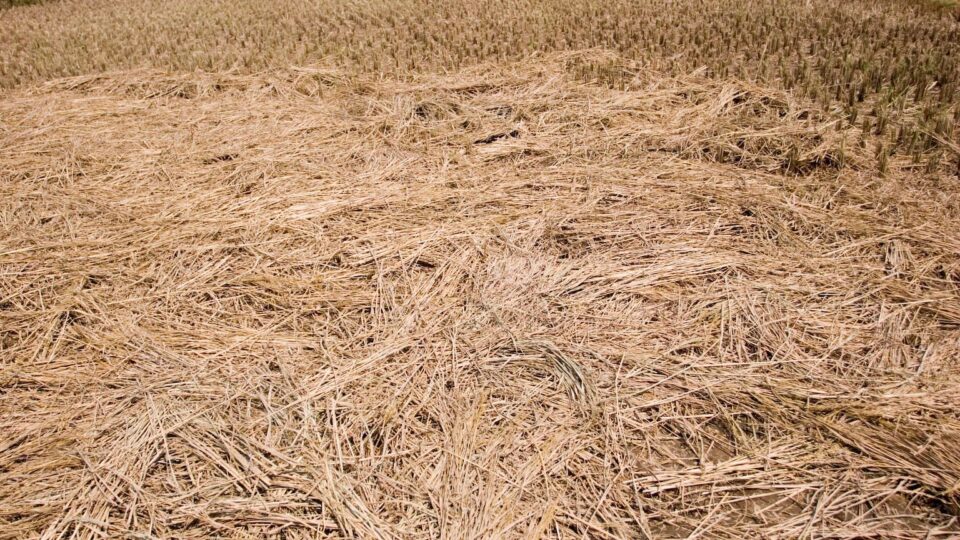
Photo, posted July 19, 2009, courtesy of Danumurthi Mahendra via Flickr.

Earth Wise is a production of WAMC Northeast Public Radio.

Primary Sidebar

Recent Episodes

  • An uninsurable future
  • Clean energy and jobs
  • Insect declines in remote regions
  • Fossil fuel producing nations ignoring climate goals
  • Trouble for clownfishes

WAMC Northeast Public Radio

WAMC/Northeast Public Radio is a regional public radio network serving parts of seven northeastern states (more...)

Copyright © 2026 ·