• Skip to primary navigation
  • Skip to main content
  • Skip to primary sidebar

Earth Wise

A look at our changing environment.

  • Home
  • About Earth Wise
  • Where to Listen
  • All Articles
  • Show Search
Hide Search
You are here: Home / Archives for old growth

old growth

Deconstructing buildings

July 24, 2025 By EarthWise Leave a Comment

Deconstructing buildings to reduce waste

An estimated 30 million tons of wood waste from construction and demolition in the U.S. ends up in landfills each year.  A growing number of cities have launched initiatives to reuse the wood instead.  It is a strategy to reduce carbon emissions, cut waste, and shift towards a circular economy.

For a long time, salvaged wood was a niche pursuit by people who valued the fine grain and enduring quality of older wood.  Reclaimed old-growth lumber offers character and strength.  These people pursued construction that uses wood with a story – timber recovered from historic structures, collapsing barns, and other demolished buildings.

Now, there are multiple companies in the business of salvaging wood from buildings.  Cities and businesses are embracing the use of reclaimed materials.   Ordinances in cities like Portland, Oregon, Boulder, Colorado, and San Antonio, Texas require older buildings to be taken apart for repurposing their materials.  Palo Alto, California has banned demolition completely. 

Portland was the first U.S. city to require old residential homes to be deconstructed.  After a decade, contractors have deconstructed more than 650 homes in the city, salvaging 2,000 tons of reusable wood.

Using reclaimed wood in local buildings stores carbon and reduces emissions by avoiding the need to cut new trees, process materials, and ship them long distances.

Deconstructing buildings is not a widely available skill.  Contractors have to be trained on how to dismantle buildings piece by piece.  But there is now a national registry of deconstruction trainers and a network of practitioners.

**********

Web Links

Deconstructing Buildings: The Quest for New Life for Old Wood

Photo, posted May 16, 2018, courtesy of Alexandre Prevot via Flickr.

Earth Wise is a production of WAMC Northeast Public Radio
Sequoias in Britain

April 16, 2024 By EarthWise Leave a Comment

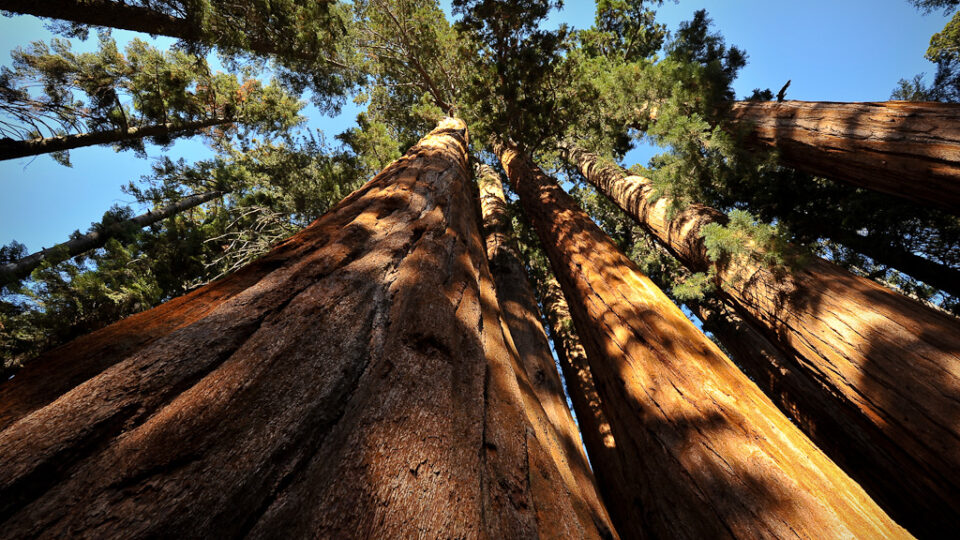
Giant sequoias are the most massive trees on earth.  They can grow as tall as nearly 300 feet and have trunk diameters from 20 to 26 feet.  They are also among the oldest living organisms on Earth; some of them are well over 3,000 years old.  The trees are native to the western slopes of the Sierra Nevada mountain range in California.

Lengthy droughts and wildfires have been pushing giant sequoias in California into decline.  Up to 20% of all large giant sequoias in California died in wildfires in 2020 and 2021.  There are estimated to be only about 80,000 remaining in the native groves in the Sierra Nevada.  These old-growth forests are very much in jeopardy and represent rare ecosystems of considerable ecological and historical value.

Giant sequoias have been planted in many places around the world.  They were introduced to country estates in Britain during the 19th century.  They were seen as symbols of wealth and power.  Over time, they have been widely planted in parks and woodlands.   As a result, there are now half a million giant sequoias growing in Britain and they are thriving there.

The British sequoias are rather young by sequoia standards, so they are relatively squat in stature.  The tallest of them measures about 180 feet.  But recent research, published in the journal Royal Society Science, found that in Britain’s cool and mild climate, the trees are growing nearly as fast as they do in California. 

The British sequoias are probably more important for their aesthetic and historical interest than their impact on the environment, but it is good to know they are there.

**********

Web Links

Under Threat in Their Native California, Giant Sequoias Are Thriving in Britain

Photo, posted November 4, 2010, courtesy of John Buie via Flickr.

Earth Wise is a production of WAMC Northeast Public Radio
Mercury In The Amazon Rainforest | Earth Wise

March 8, 2022 By EarthWise Leave a Comment

Mercury polluting the Amazon rainforest

Recent research has found that some of the highest levels of mercury pollution ever recorded are in a patch of pristine Amazonian rainforest.  The international team of researchers discovered that illegal goldmining in the Peruvian Amazon is the source of the pollution.

Illegal miners separate gold particles from river sediments using mercury.  Mercury binds to gold, forming pellets large enough to be caught in a sieve.   The pellets are then burned in open fire ovens, releasing the mercury to the atmosphere, leaving the gold behind.  The mercury smoke ends up being washed into the soil by rainfall, deposited onto the surface of leaves, or directly absorbed into leaf tissues.

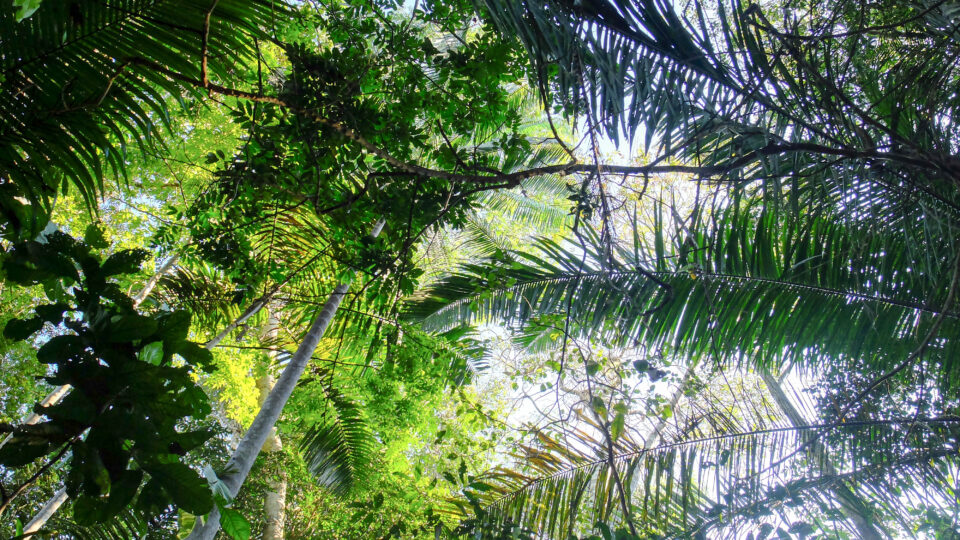
Deforested areas had low levels of mercury, while the areas with the largest, densest old-growth trees captured huge volumes of atmospheric mercury, more than any other ecosystem studied in the entire world.  Mercury levels were directly related to leaf area index:  the denser the canopy, the more mercury it holds.  Birds from this area have up to twelve times more mercury in their systems than birds from less polluted areas.  Such high concentrations of mercury could provoke a decline of up to 30% in these birds’ reproductive success.

Small-scale artisanal gold mining is an important livelihood for local communities.  Eliminating it outright may not be a viable solution but coming up with ways to continue to provide a sustainable livelihood while protecting communities from poisonous pollution is essential.

In the meantime, the forests are doing an important service by capturing much of the mercury and preventing it from getting into the general atmosphere and endangering more people and animals.  Burning or harvesting the mercury-ridden trees would release the mercury back into the atmosphere.

**********

Web Links

Modern Day Gold Rush Turns Pristine Rainforests into Heavily Polluted Mercury Sinks

Photo, posted August 24, 2016, courtesy of Anna and Michal via Flickr.

Earth Wise is a production of WAMC Northeast Public Radio.

Primary Sidebar

Recent Episodes

  • An uninsurable future
  • Clean energy and jobs
  • Insect declines in remote regions
  • Fossil fuel producing nations ignoring climate goals
  • Trouble for clownfishes

WAMC Northeast Public Radio

WAMC/Northeast Public Radio is a regional public radio network serving parts of seven northeastern states (more...)

Copyright © 2026 ·