• Skip to primary navigation
  • Skip to main content
  • Skip to primary sidebar

Earth Wise

A look at our changing environment.

  • Home
  • About Earth Wise
  • Where to Listen
  • All Articles
  • Show Search
Hide Search
You are here: Home / Archives for natural selection

natural selection

Corals and climate change

December 24, 2024 By EarthWise Leave a Comment

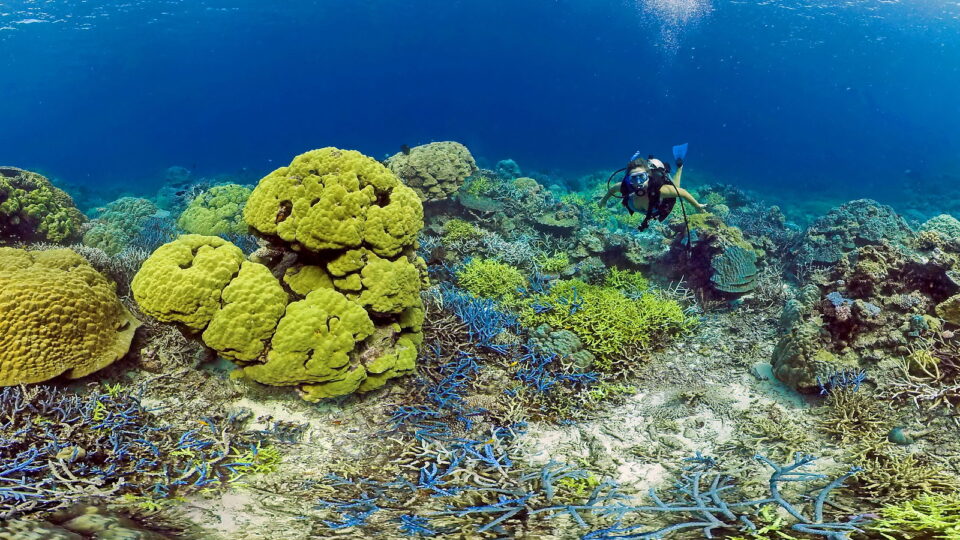
Climate change is a major threat to coral reefs around the world.  Ocean warming triggers coral bleaching – a stress response where corals expel the symbiotic algae essential for their survival.  If coral bleaching is severe, it can lead to coral death.

A new study led by scientists from Newcastle University in England suggests that corals are unlikely to adapt to ocean warming quickly enough to keep pace with global warming, unless there are rapid reductions in global greenhouse gas emissions.

The study, which was recently published in the journal Science, found that coral heat tolerance adaptation via natural selection could keep pace with ocean warming, but only if the climate goals of the Paris Agreement are realized.  In the Paris Agreement, countries agreed to limit global warming by the end of the century to two degrees Celsius above pre-industrial levels.  

However, current climate policies around the world have the globe on track to warm by three degrees Celsius.  According to the research team, this could lead to significant reductions in reef health, elevated risks of local coral extinctions, and considerable uncertainty in the so-called “evolvability” of corals. 

Coral reefs are among the most biologically diverse ecosystems on Earth.  They are often referred to as the “rainforests of the sea” because they support an incredible variety of marine life.  They provide essential ecosystem services, such as protecting coastlines from erosion and storm surges, supporting fisheries, and serving as a source of income through tourism. Coral reef health is vital for the health of the planet.

**********

Web Links

Coral adaptation unlikely to keep pace with global warming

Photo, posted June 9, 2012, courtesy of Bokissa Private Island Resort via Flickr.

Earth Wise is a production of WAMC Northeast Public Radio
Surviving Climate Change | Earth Wise

June 30, 2021 By EarthWise Leave a Comment

What species will survive climate change?

The sixth mass extinction of wildlife on Earth is happening now.  According to an analysis published last year in the journal Proceedings of the National Academy of Sciences, more than 500 species of land animals are on the brink of extinction and are likely to be lost within the next 20 years. Without the impact of humans, this quantity of extinctions would have taken thousands of years. 

Anthropogenic climate change continues to exacerbate problems that drive species to the brink.  Which species will be able to adapt and survive?

Using genome sequencing, a research team from McGill University in Montreal has found that some fish, like the threespine stickleback, can adapt very rapidly to extreme seasonal changes. Known for their different shapes, sizes, and behaviors, stickleback fish can live in both saltwater and freshwater, and can tolerate a wide range of temperatures.

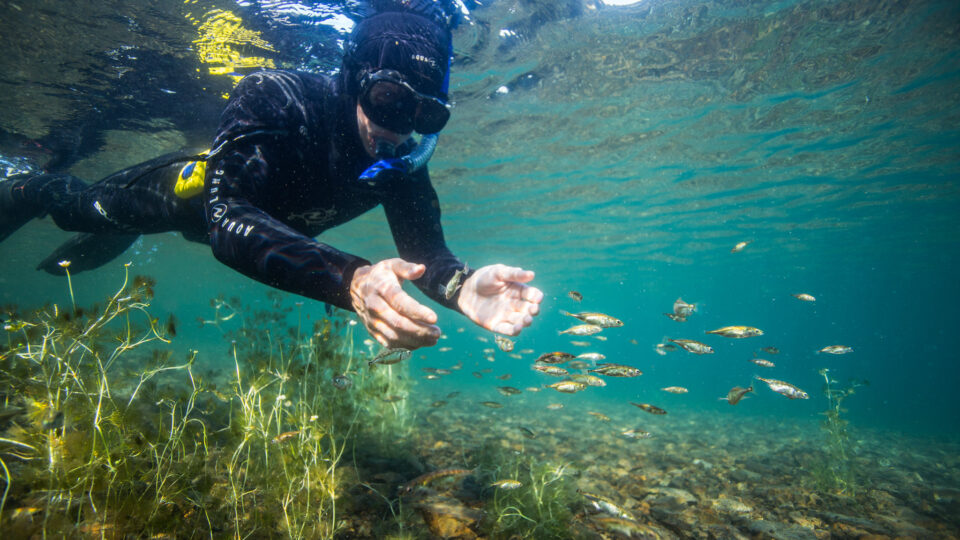
Stickleback fish, which can be found in different estuaries along coastal California, provided researchers with an opportunity to study natural selection in real-time.  The researchers analyzed six populations of threespine stickleback fish before and after seasonal changes to their environment.   The research team discovered evidence of genetic changes driven by the seasonal shifts in habitat that mirrored the differences found between long-established freshwater and saltwater populations.  Since these genetic changes occurred in independent populations over a single season, the study highlights just how quickly the effects of natural selection can be detected. 

These findings suggest that scientists may be able to use the genetic differences that evolved in the past as a way to predict how species may adapt to climate change in the future.

**********

Web Links

Which animals will survive climate change?

Sixth Mass Extinction of Wildlife Accelerating- Study

Photo, posted August 3, 2015, courtesy of Jason Ching/University of Washington via Flickr.

Earth Wise is a production of WAMC Northeast Public Radio.

Frogs Are In Big Trouble

May 22, 2019 By EarthWise Leave a Comment

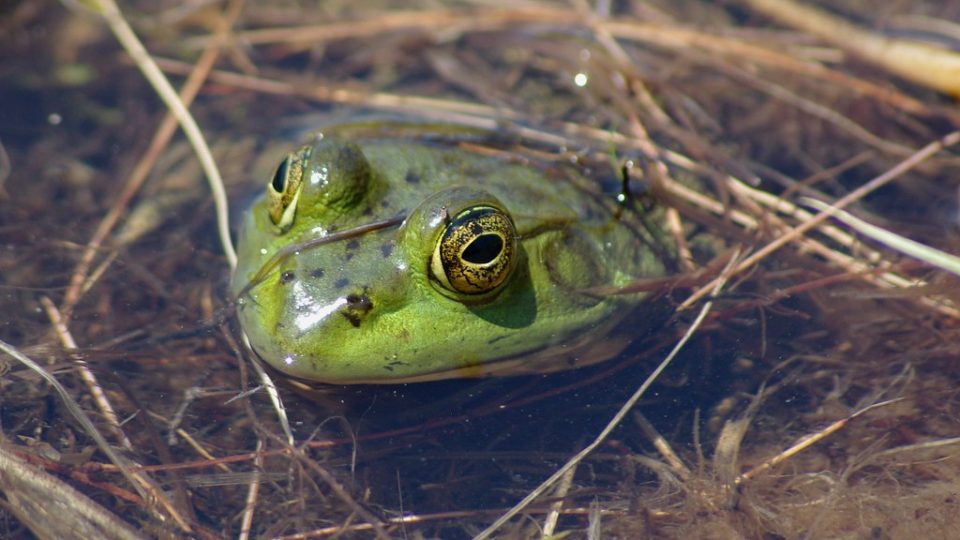
Scientists first noticed in the 1970s that some frog populations were declining rapidly.  By the 1980s, some species appeared to be extinct.  The loss of frog species was mysterious because many were actually living in pristine habitats that did not face pollution or deforestation.

By the late 1990s, researchers had identified that frogs in widely different places around the world were infected with a deadly fungus called Batrachochytrium dendrobatidis – or Bd for short.  The fungus originated on the Korean peninsula, but the pathogen spread throughout the world, probably via the international trade in pet amphibians.  By 2007, researchers speculated that Bd might be responsible for all known declines of frogs that had no other apparent cause – about 200 species.

Recently, a group of 41 scientists published the first worldwide analysis of the fungal outbreak and the devastation turns out to be far worse than anyone had previously realized.  Populations of more than 500 species of amphibians have declined significantly because of the outbreak, including at least 90 species presumed to have gone extinct.  These figures are more than twice as large as earlier estimates.

According to biologists, Bd is now considered to be the deadliest pathogen known to science.  But the decimation of frogs peaked in the 1980s.  Today, although 39% of the species that suffered population declines in the past are still declining, 12% are showing signs of recovery, possibly because natural selection is favoring resistant animals.

There is cautious optimism for the surviving amphibian species, but scientists worry that another strain of Bd or some different species of fungus altogether may prove even deadlier.  The best we can do is not participate in moving pathogens around the world.

**********

Web Links

The Plague Killing Frogs Everywhere Is Far Worse Than Scientists Thought

Photo, posted June 19, 2010, courtesy of Chris Luczkow via Flickr.

Earth Wise is a production of WAMC Northeast Public Radio.

Primary Sidebar

Recent Episodes

  • An uninsurable future
  • Clean energy and jobs
  • Insect declines in remote regions
  • Fossil fuel producing nations ignoring climate goals
  • Trouble for clownfishes

WAMC Northeast Public Radio

WAMC/Northeast Public Radio is a regional public radio network serving parts of seven northeastern states (more...)

Copyright © 2026 ·