• Skip to primary navigation
  • Skip to main content
  • Skip to primary sidebar

Earth Wise

A look at our changing environment.

  • Home
  • About Earth Wise
  • Where to Listen
  • All Articles
  • Show Search
Hide Search
You are here: Home / Archives for native plants

native plants

Relocating native plants

May 2, 2025 By EarthWise Leave a Comment

Relocating endangered native plants

Climate change is endangering many native plant species.  As the climate warms, many species will need to establish themselves in new places that are more hospitable than their historic ranges.  But many native plants in the U.S. cannot move themselves by natural forces quickly enough to avoid climate-change driven extinction.  For such plants to survive into the future, they will need human help to move into adjacent areas, a process called “managed relocation.”

Such a process has its problems.  There is no guarantee that a plant will thrive in a new area.  On the other hand, relocating plant species historically has often had disastrous consequences.  Consider, for example, the story of kudzu in the American south.

Researchers at the University of Massachusetts Amherst have studied this problem in detail and reported the results in the journal Global Change Biology.

The issue is how to help plants move successfully without their causing harm in their new locations.  The study found that some plant traits can lead to success and some to ecological disaster.  In some cases, the same traits that help plants to establish themselves in a new location make them powerful invasive species.  Traits like having a large size predispose a plant to not only establish itself but spread wildly. 

The study recommends that people managing relocation need to focus on plants whose traits they have determined to be conducive to successful relocation but more unlikely to cause harm in their new environment. 

**********

Web Links

If Native Plants Are Going to Survive Climate Change, They Need Our Help to Move—Here’s How to Do It Safely

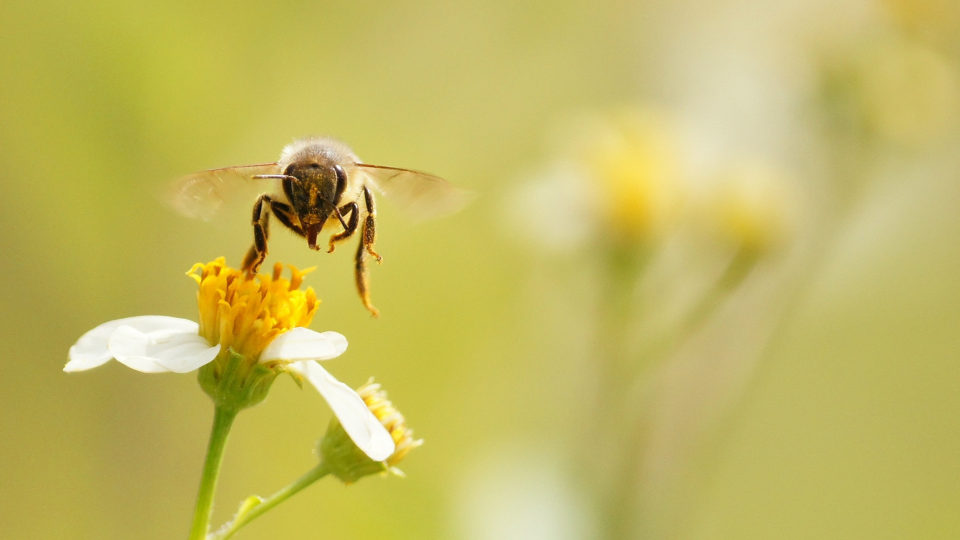
Photo, posted August 17, 2012, courtesy of Joshua Mayer via Flickr.

Earth Wise is a production of WAMC Northeast Public Radio
Native plants and road salt pollution

February 12, 2025 By EarthWise Leave a Comment

Can native plants help mitigate pollution from road salt?

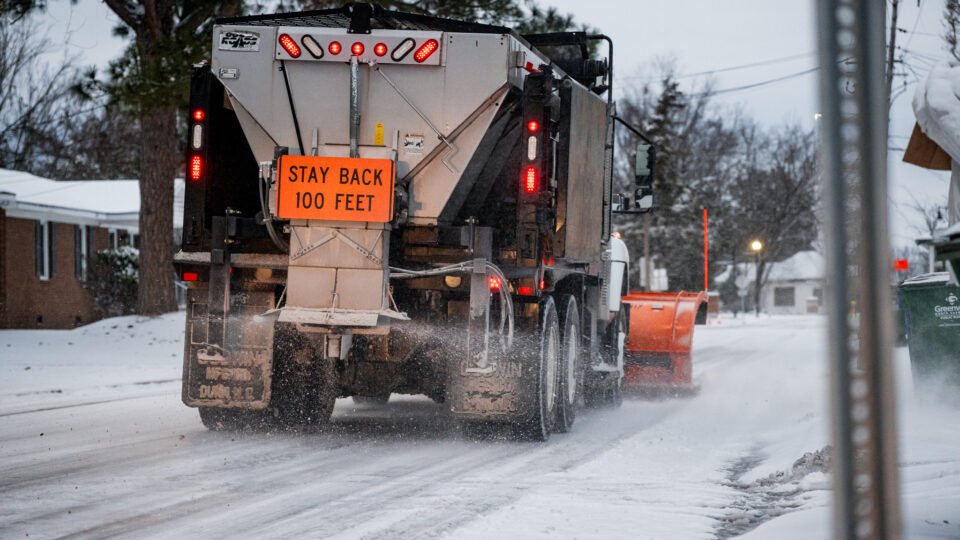
Applying salt to roadways lowers the freezing point of water and prevents slippery surfaces, which makes it safer for people to drive in wintry conditions.  In the U.S., more than 22 million tons of road salt is spread every year. 

But road salt harms infrastructure and the environment.   In fact, road salt damages cars and metal infrastructure by accelerating rust and corrosion.  Road salt can also leach into soil and waterways, disrupting ecosystems, degrading soil, contaminating water, and damaging vegetation. 

In cities and towns, road salts often wash into stormwater systems, posing health concerns and challenges for infrastructure.

A new study led by researchers from Virginia Tech looked at how salt affects plants and whether certain plants could mitigate salt pollution. The research team studied stormwater detention basins in Northern Virginia, examining the impacts of road salt on plants, soils, and water quality in green infrastructure systems.

The findings, which were recently published in the journal Science of the Total Environment, found that the amount of salt present in green infrastructure systems does reach levels that threaten plant communities.  However, the researchers found that relying on salt-tolerant plants for mitigation is unlikely to be effective because they simply don’t take in enough salt.

Certain plants, particularly cattails, absorbed substantial amounts of salt.  But even in a basin densely planted with salt-tolerant cattails, only up to 6% of the road salt applied during winter could be removed. 

Plants alone cannot solve our salt pollution problem.

**********

Web Links

Researcher studies the power of native plants to combat road salt pollution

Photo, posted January 22, 2025, courtesy of the City of Greenville, North Carolina via Flickr.

Earth Wise is a production of WAMC Northeast Public Radio
Agriculture Turning Wild Plants Into Weeds | Earth Wise

February 7, 2023 By EarthWise Leave a Comment

Modern agriculture practices are turning wild plants into weeds

We often hear about the importance of native plants in the environment and how invasive species can wreak havoc with ecosystems.   But it turns out that human activities can change the characteristics of native species and create unexpected new problems.

Common waterhemp is plant native to North America that typically grows near lakes and streams.  It never used to be any kind of problem, but in recent times it has become nearly impossible to eradicate from farms as a result of genetic adaptations triggered by modern agriculture.

A study led by researchers at the University of British Columbia looked at waterhemp samples from modern farms and neighboring wetlands and compared them with historical samples dating back as far as 1820 stored in various museums.

In recent times, mutations in genes related to drought tolerance, rapid growth, and resistance to herbicides have resulted in waterhemp that has become a pervasive weed on farms.  These genetic shifts, scarcely ever seen in historical samples, have made the plant thrive among human agricultural activities and enable it to outcompete crops.

Genetic analysis of the plants showed that herbicide-resistant mutations that were mostly absent from historical samples stand out as factors that allow waterhemp to prosper in agricultural settings. There are some plants in natural habitats that have herbicide-resistant mutations, but in many cases, these mutations are actually harmful to the plants in the wild.

Understanding how plant adaptations occur on relatively short timescales is increasingly important as farming and climate  change continue to drive rapid plant evolution.

**********

Web Links

How intensive agriculture turned a wild plant into a pervasive weed

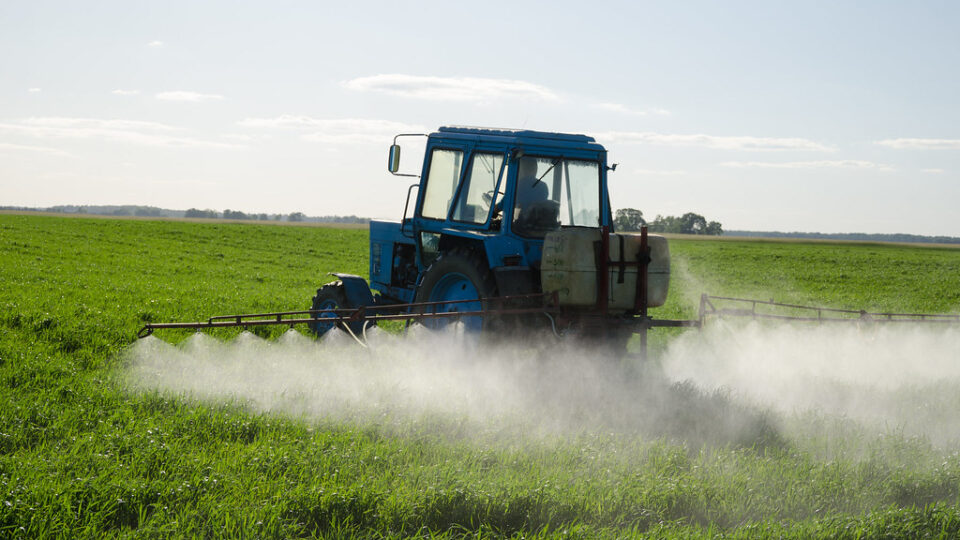
Photo, posted February 16, 2016, courtesy of Aqua Mechanical via Flickr.

Earth Wise is a production of WAMC Northeast Public Radio
Working Forest Buffers | Earth Wise

April 15, 2020 By EarthWise Leave a Comment

Forest Buffer Zones on Farms

More than 100,000 miles of U.S. rivers and streams are polluted by nitrogen and phosphorus, mostly from agricultural runoff.  In the past, forests grew naturally alongside these waterways and helped stabilize stream banks and decrease flooding while trapping and filtering pollutants.  But most of these forests have been cut down to make way for towns, cities, livestock, and crops.

Farmers are reluctant to retire valuable farmland with non-productive buffer planting.  But in Pennsylvania, there is an innovative program that encourages farmers to plant cash crops in waterway buffer zones that can help stabilize stream banks and clean up the waterways.  These plantings are called working buffers.

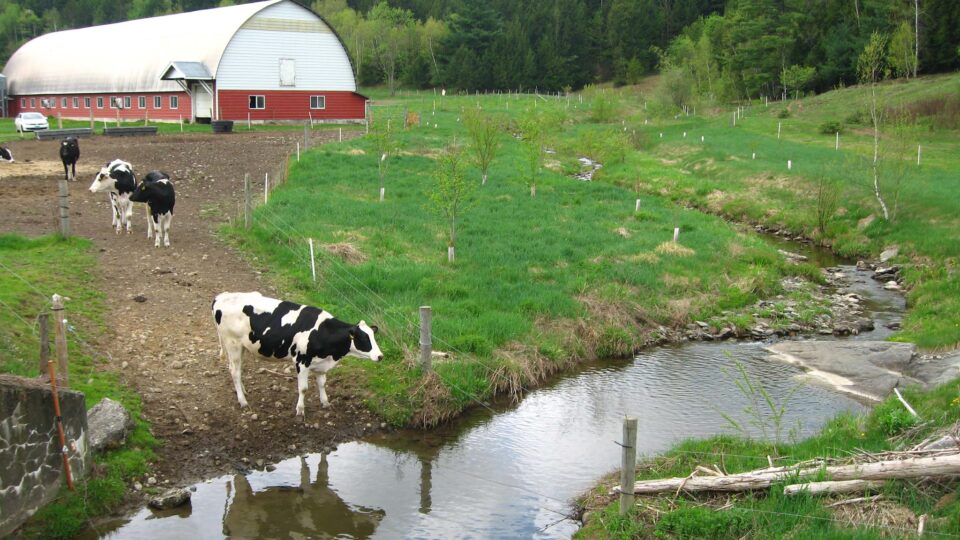
Strips of streamside land are replanted with native floodplain trees and shrubs.  These are known as riparian forest buffers.  Pennsylvania has instituted a grant program under which farmers and landowners plant these buffers and turn a profit.

Many of these buffers have three zones.  A conventional forest buffer that can be just 15 feet wide is composed of native woodland and stabilizes the bank with tree roots and enhances wildlife habitat.  A second zone, some 20 feet wide, is planted with trees and shrubs that can tolerate periodic flooding.  Apart from slowing floodwater and taking up nutrients, this zone can provide profits by planting trees like black walnut, hazelnut, persimmon, and elderberry.  Only hand harvesting is allowed.  A third zone, adjacent to conventional crop, can contain blueberries, raspberries, and decorative woody florals.

How many farmers can be enticed to create these riparian buffers remains to be seen, but they do represent a way to help farmers to reduce pollution and turn a profit along the way.

**********

Web Links

A Movement Grows to Help Farmers Reduce Pollution and Turn a Profit

Photo, posted March 19, 2010, courtesy of the USDA via Flickr.

Earth Wise is a production of WAMC Northeast Public Radio.

Cities Can Help Bees

December 14, 2017 By EarthWise Leave a Comment

https://earthwiseradio.org/wp-content/uploads/2017/12/EW-12-14-17-Cities-Can-Help-Bees.mp3

Global bee populations have been drastically declining as a result of habitat loss, pesticides and climate change.  But studies are showing that planting flower patches in urban gardens and green spaces can make a real difference in restoring natural pollinators.   There are already positive results in cities from Chicago to London to Melbourne.

[Read more…] about Cities Can Help Bees

Primary Sidebar

Recent Episodes

  • An uninsurable future
  • Clean energy and jobs
  • Insect declines in remote regions
  • Fossil fuel producing nations ignoring climate goals
  • Trouble for clownfishes

WAMC Northeast Public Radio

WAMC/Northeast Public Radio is a regional public radio network serving parts of seven northeastern states (more...)

Copyright © 2026 ·