• Skip to primary navigation
  • Skip to main content
  • Skip to primary sidebar

Earth Wise

A look at our changing environment.

  • Home
  • About Earth Wise
  • Where to Listen
  • All Articles
  • Show Search
Hide Search
You are here: Home / Archives for narwhal

narwhal

Narwhal Tusks And Stories Teeth Can Tell | Earth Wise

February 4, 2020 By EarthWise Leave a Comment

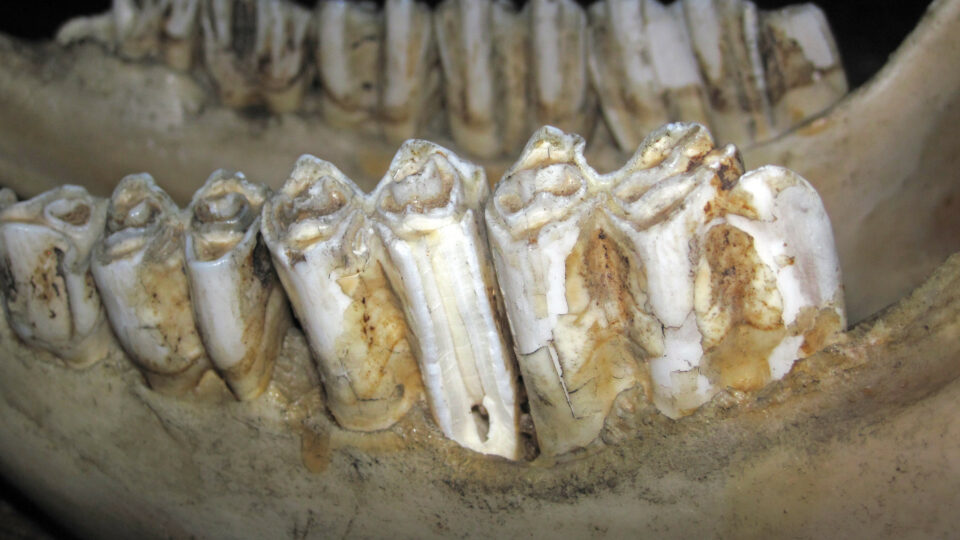
teeth can tell stories narwhal tusks

Teeth and particularly narwhal tusks are getting some unusual press recently when one of them was the weapon of choice to fend off the London Bridge attacker, which was a good choice according to Harvard dental researcher Dr. Martin Nweeia.  Turns out that narwhal tusks have some pretty amazing physical features.  They exhibit both extreme strength and flexibility at the same time.  The narwhal is known as the unicorn of the sea, a pale-colored, medium-sized whale found in Arctic coastal waters and rivers.  In males, the more prominent tooth grows into a sword like, spiral tusk up to 8.8 feet long.

Changes in the shape of teeth over time can tell us about climate change. Adaptations in horse teeth 55 million years ago from North America were observed and caused by changes in climate, favoring different food sources.  The horses changed their diets from fruit to more favorable grasses and their teeth changed in response. For this same reason, the teeth of elephants adapting in different environments of Asia and Africa have different tooth forms.  Both eat plants but Asian elephants, with more ridges on their teeth, eat larger amounts of grasses while African elephants, with wider spread ridges, eat more leaves. 

Teeth have been used to link land mass theories like the Bering Land Strait Theory, hypothesizing that North America and Asia were once one land mass. The teeth shape and form of people on both sides of the Bering Land Bridge shared a common “mongoloid dentition” with unique features. And so, can the narwhal tusk tell us something about a changing Arctic?  Scientists have discovered that the narwhal tusk is a giant sensory organ that is able to continually monitor its environment and has the ability to detect ice formation, and melt, both capabilities helpful for surviving in a changing Arctic.

**********

–Earth Wise acknowledges script contribution from Dr. Martin Nweeia of Harvard University.

Web Links

Fossil teeth reveal new facts about a mass extinction 260 million years ago

From the Horse’s Mouth: Teeth Reveal Evolution

Photo, posted April 3, 2019, courtesy of James St. John via Flickr.

Earth Wise is a production of WAMC Northeast Public Radio.
What’s On Nature’s Calendar? | Earth Wise

January 29, 2020 By EarthWise 1 Comment

Nature Calendar Flux

The Inuit Calendar is based on six seasons defined by weather, ice, animal migration, daylight hours and the night sky.  All these variables are in flux according to Harvard Narwhal Biologist Dr. Martin Nweeia.  Last August in the high Canadian Arctic, at 72 degrees north latitude, temperatures were at an astounding 70 degrees during the day. In 2018, the same region at the same time of year, experienced one of the coldest August months in 15 years.  

Disappearing sea ice in Hudson Bay affects migration patterns of ice-dependent species like narwhal and beluga whales and now allows more shipping traffic which produces more marine noise pollution and the risk of an oil spill. As a natural resource, the Arctic has significant deposits of iron ore, gold, diamonds, phosphate, and bauxite, so cargo shipments are increasing yearly.  

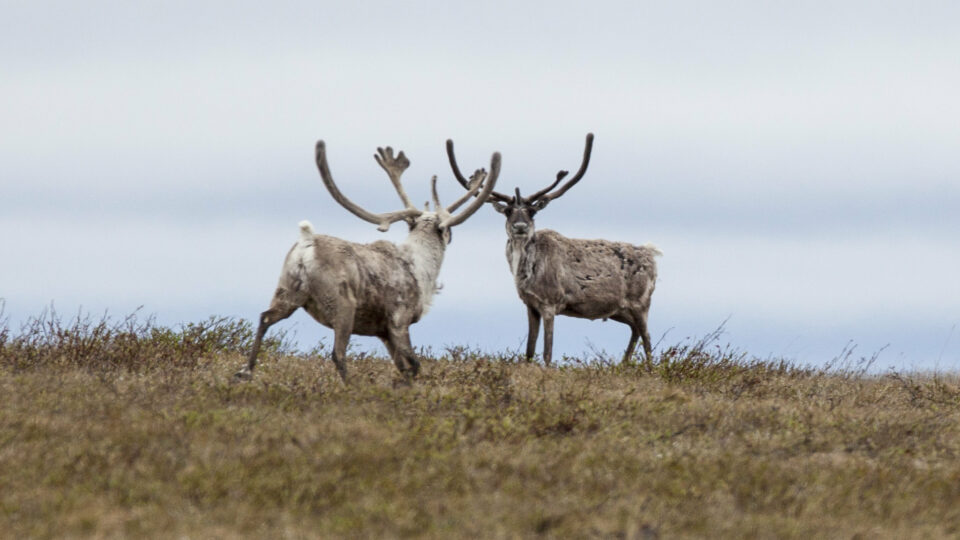
The disappearance of caribou herds and altered migrations of other animals have also blurred the seasonal changes. Caribou numbers have decreased by more than half in the last two decades.  Narwhal populations are remaining steady but are experiencing migration shifts resulting in their appearance at new locations and their absence from traditional areas.  Even the timing of the migration has changed, shifting two weeks later from normal late summer – early fall patterns.  

The night sky, which has long had identifiable reference points for Inuit observers, is also changing causing speculation about changes in the magnetic field and a polar shift or flipping of the poles. The earth’s magnetic north has been shifting toward Siberia at an alarming 30 miles each year since 2015.  Every million years, it is estimated that the poles flip three times.  No one knows if or when it will happen again. That’s a calendar with some unexpected dates. 

**********

–Earth Wise acknowledges script contribution from Dr. Martin Nweeia of Harvard University.

Web Links

Migratory Tundra Caribou and Wild Reindeer

Earth’s magnetic field is acting up and geologists don’t know why

Photo, posted June 27, 2014, courtesy of the Bureau of Land Management via Flickr.

Earth Wise is a production of WAMC Northeast Public Radio.
Arctic Shipping

December 21, 2016 By EarthWise

https://earthwiseradio.org/wp-content/uploads/2016/12/EW-12-21-16-Shipping-Through-the-Arctic.mp3

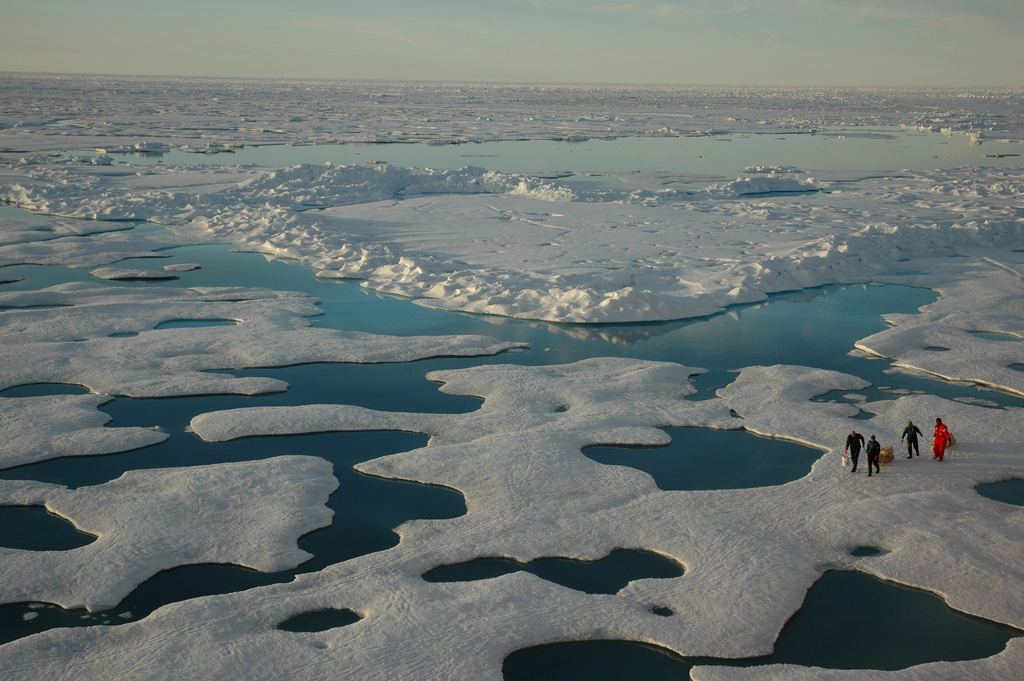
The Arctic used to be pretty much a pristine wilderness populated only by fairly small numbers of indigenous residents living environmentally benign lifestyles.  The disruptive elements of modern civilization were not much of a factor.   Because of the changing climate, this is no longer true.

[Read more…] about Arctic Shipping

Primary Sidebar

Recent Episodes

  • An uninsurable future
  • Clean energy and jobs
  • Insect declines in remote regions
  • Fossil fuel producing nations ignoring climate goals
  • Trouble for clownfishes

WAMC Northeast Public Radio

WAMC/Northeast Public Radio is a regional public radio network serving parts of seven northeastern states (more...)

Copyright © 2026 ·