• Skip to primary navigation
  • Skip to main content
  • Skip to primary sidebar

Earth Wise

A look at our changing environment.

  • Home
  • About Earth Wise
  • Where to Listen
  • All Articles
  • Show Search
Hide Search
You are here: Home / Archives for nanoplastics

nanoplastics

Facemask pollution

August 28, 2025 By EarthWise Leave a Comment

During the height of the Covid-19 pandemic, the global usage of disposable facemasks reached a staggering 129 billion per month. Most of these masks are manufactured from petroleum-based non-renewable plastics like polypropylene and the disposal of these masks results in serious pollution problems.  These include the loss of ecological integrity from buried waste in landfills, air pollution from increased waste incineration, and microplastic pollution. 

Recent research by engineers at Washington University in St. Louis investigated the multipronged pollution problem brought about by discarded facemasks.  The study in particular looked at the chemical changes that occur when facemasks are exposed to sunlight, water, and trace metal ions.

Masks littering the environment degrade into nanoplastics and produce reactive oxygen species.  These chemical agents interact with trace metal ions in the environment within hours.  The result is oxides of metals like manganese and iron, which can drive various biogeochemical reactions.

Abandoning and forgetting about plastics like facemasks is an unsustainable practice.  Plastics not only cause physical damage, but also introduce unpredictable and potentially dangerous chemical changes into environmental systems.

Plastic waste is a global problem that has continued to grow and become an increasingly serious threat over decades.  Understanding the nature of the effects of billions of facemasks in the environment is essential to efforts to address the challenges created by them.

**********

Web Links

Sun exposure changes chemical fate of littered face masks

Photo, posted August 21, 2021, courtesy of Ivan Radic via Flickr.

Earth Wise is a production of WAMC Northeast Public Radio

A new way to recycle plastic

April 18, 2025 By EarthWise Leave a Comment

Researchers at Northwestern University have developed a new method for recycling plastic that is safer, cleaner, cheaper, and more sustainable than those currently in use.  The U.S. is the world’s largest plastic polluter per capita, and we only recycle 5% of our plastics.  There is a pressing need for better technologies for processing different types of plastic waste.

The Northwestern method is designed to break down polyethylene terephthalate or PET, which is the most common type of polyester plastic.  PET plastic is used in food packaging and beverage bottles and represents 12% of total plastics used globally.  It does not break down easily and is therefore a major contributor to plastic pollution.  It mostly either ends up in landfills or, over time, degrades into tiny microplastics or nanoplastics that end up almost everywhere. 

The non-toxic, environmentally friendly, solvent-free Northwestern process first uses an inexpensive molybdenum catalyst to break apart the bonds in PET.  Then the broken plastic is exposed to ambient air.  Just from the trace amounts of moisture in air, the broken-down PET is converted into monomers, which are the building blocks of plastic.  The monomers could then be recycled back into PET products or used to make other valuable materials.

The process is fast and effective and takes just a few hours.  The catalyst is durable and recyclable, meaning it can be used over and over again.  It only works on polyesters, which means it can be used for recycling mixed plastics without sorting them since it will select only the PET from its inputs.

**********

Web Links

Plastic recycling gets a breath of fresh air

Photo, posted August 10, 2013, courtesy of Lisa Risager via Flickr.

Earth Wise is a production of WAMC Northeast Public Radio
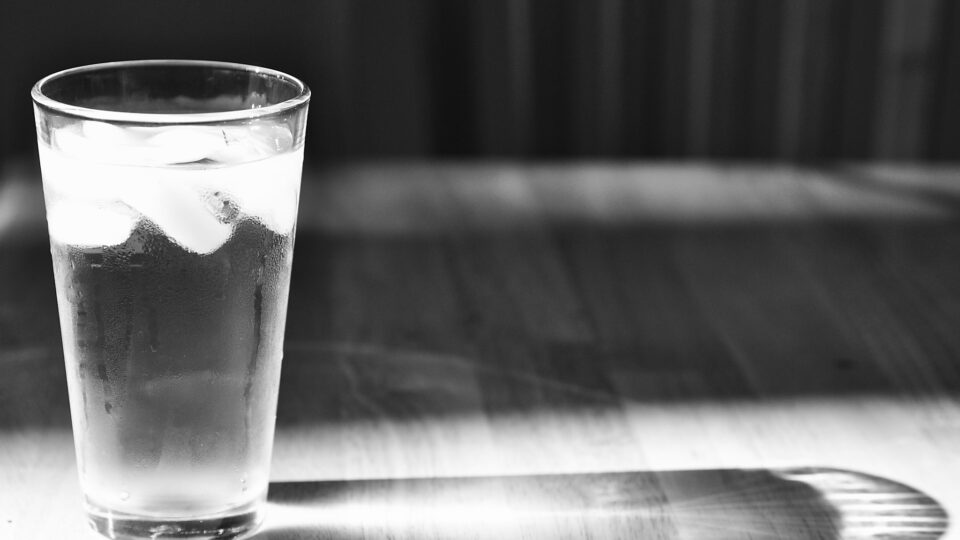
Removing nanoplastics from water

September 26, 2024 By EarthWise Leave a Comment

Plastic pollution is a growing problem for people and for the environment in multiple ways.  When plastics break down over time, they can form small particles called microplastics – bits smaller than sesame seeds – and these, in turn, can break down into even smaller pieces called nanoplastics.  They are too small to be seen with the naked eye and can enter the body’s cells and tissues.

Recent studies have shown that nanoplastics are increasingly showing up in bottled water.  In fact, measurements on several popular brands of bottled water found an average of nearly a quarter million tiny pieces of plastic in a single liter of bottled water.

The health effects of ingesting all of this plastic are not really known, but they are unlikely to be anything good.  Finding a way of avoiding this contamination of the beverages we drink is a pressing need.

Researchers at the University of Missouri have created a new liquid-based solution that eliminates more than 98% of microscopic plastic particles from water.  The method makes use of water-repelling solvents made from safe, non-toxic natural ingredients. A small amount of this designer solvent absorbs plastic particles from a large volume of water.

The solvent sits on the water’s surface.  When mixed with the water, it absorbs the plastic and eventually comes back to the surface carrying the plastic leaving behind clean, plastic -free water.

Ultimately, the hope is to scale up the process so it can be applied to increasingly large amounts of water – even lakes and, eventually, oceans.  There is work to be done, but it is a potential way to address an increasingly worrisome and pervasive form of pollution.

**********

Web Links

Mizzou scientists achieve more than 98% efficiency removing nanoplastics from water

Photo, posted August 9, 2012, courtesy of Enid Martindale via Flickr.

Earth Wise is a production of WAMC Northeast Public Radio
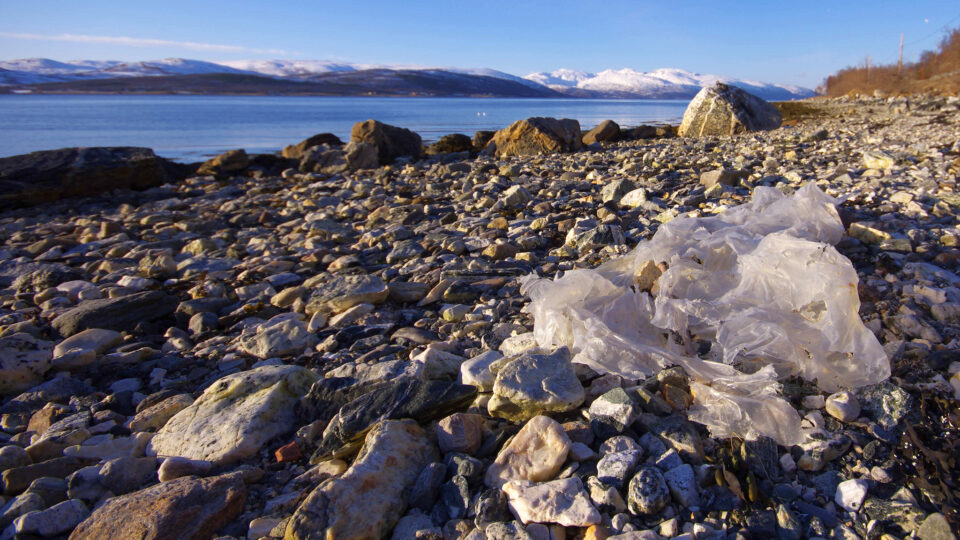
Atmospheric Plastic Polluting The Ocean | Earth Wise

June 8, 2022 By EarthWise Leave a Comment

Winds carry plastic particles all around the world

According to estimates, by 2040 there will likely be nearly 90 million tons of plastic pollution entering the environment each year.  Particles of plastic have been found in virtually all parts of our planet including the land, the water, and even the air.  Tiny plastic particles have been found in the Arctic, the Antarctic, and at the tops of the highest mountains.

A new study has shown that winds can carry plastic particles over great distances and in fact can bring them from their point of origin to the most remote places in a matter of days.   As a result, micro- and nanoplastics can penetrate the most remote and otherwise largely untouched regions of the planet

How does plastic get into the atmosphere?  Particles produced by tires and brakes in road traffic or ones in the exhaust gases from industrial processes rise into the atmosphere, where they are transported by winds.  There is also evidence that a substantial number of these particles are transported by the marine environment.  Microplastic from the coastal zone finds its way into the ocean through beach sand.  A combination of sea spray, wind, and waves forms air bubbles in the water containing microplastic.  When the bubbles burst, the particles find their way into the atmosphere.

Understanding the interactions between the atmosphere and ocean is important because the atmosphere turns out to be a major mechanism in depositing substantial amounts of plastic into a broad range of ecosystems.

The impact of plastic particles on ecosystems is not well understood.  Neither is the effect of plastic particles in the air upon human health.  In a recent British study, microplastic was detected in the lungs of 11 out of 13 living human beings.

**********

Web Links

Micro- and nanoplastic from the atmosphere is polluting the ocean

Photo, posted April 25, 2016, courtesy of Bo Eide via Flickr.

Earth Wise is a production of WAMC Northeast Public Radio.

Nanoplastics In The Air | Earth Wise

December 17, 2021 By EarthWise Leave a Comment

Austria, Silvretta mountains

The world is awash in plastic.  Discarded plastic litters our roadways, woodlands, and beaches.  It piles up in landfills.  Plastic enters the oceans by the millions of tons.  And plastic is finding its way even to remote and supposedly pristine parts of the world.

A team of researchers has found nanoplastics at the isolated high-altitude Sonnblick Observatory in the Austrian Alps.  This is the first time the particles were found in the area.  The researchers were looking for certain organic particles and only found the nanoplastics by chance.

The detected plastic particles were less than 200 nanometers in size, about one hundredth the width of a human hair.  It is highly unlikely that such particles originated in remote Alpine areas.

The researchers were looking for organic particles by taking samples of snow or ice, evaporating them, and then burning the residue to detect and analyze the vapors.  They described the detection method as essentially like a mechanical nose.  In this case, the nose smelled burning plastics in the form of polypropylene and polyethylene terephthalate.

Looking into the issue, the researchers found a strong correlation between high concentrations of nanoplastics and winds coming from the direction of major European cities – especially Frankfurt and the industrial Ruhr area of Germany, but also the Netherlands, Paris, and even London.

Modeling supports the idea that nanoplastics are transported by air from distant urban places.  This is particularly worrisome because it means that there are likely hotspots of nanoplastics in our cities and in the air that we are breathing.  Plastics appear to be everywhere.

**********

Web Links

Nanoplastics found in the Alps, transported by air from Frankfurt, Paris and London

Photo, posted July 1, 2013, courtesy of Robert J. Heath via Flickr.

Earth Wise is a production of WAMC Northeast Public Radio.

Primary Sidebar

Recent Episodes

  • An uninsurable future
  • Clean energy and jobs
  • Insect declines in remote regions
  • Fossil fuel producing nations ignoring climate goals
  • Trouble for clownfishes

WAMC Northeast Public Radio

WAMC/Northeast Public Radio is a regional public radio network serving parts of seven northeastern states (more...)

Copyright © 2026 ·