• Skip to primary navigation
  • Skip to main content
  • Skip to primary sidebar

Earth Wise

A look at our changing environment.

  • Home
  • About Earth Wise
  • Where to Listen
  • All Articles
  • Show Search
Hide Search
You are here: Home / Archives for movements

movements

Slow-moving landslides

October 17, 2024 By EarthWise Leave a Comment

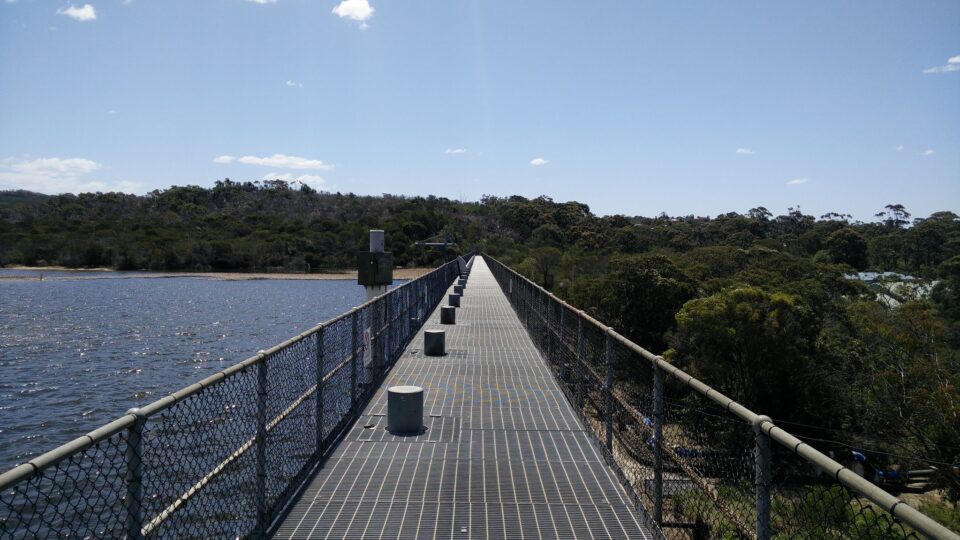
Landslides are mass movements of rock, earth, or debris down a slope.  They can be initiated by rainfall, snowmelt, changes in water level, erosion by streams, earthquakes, volcanic activity, or by various human activities.  Most landslides we hear about are sudden events that can cause all sorts of calamities.  But not all landslides are rapid occurrences.  There are also slow-moving landslides.

A new study by the University of Potsdam in Germany has found that as urban centers in mountainous regions grow, more people are building homes on steeper slopes prone to slow-moving landslides.  Slow-moving landslides can move as little as one millimeter a year and up to as much as three meters per year.  Locations with slow-moving landslides can seem safe to settle on; in some cases, the movement itself can be inconspicuous or even completely undetected.

Slow slides can gradually produce damage in houses and other infrastructure and there can also be sudden acceleration from heavy rain or other influences.

The study compiled a new database of nearly 8,000 slow-moving landslides with areas of at least 25 acres located in regions classified as “mountain risk.”  Of the landslides documented, 563 are inhabited by hundreds of thousands of people.  The densest settlements on slow-moving landslides are in northwestern South America and southeastern Africa. 

In all regions of the study, urban center expansion was associated with an increase in exposure to slow-moving landslides.  As cities expand in mountainous areas, people are moving into unsafe areas, but poorer populations may have few other options.

**********

Web Links

Slow-moving landslides a growing, but ignored, threat to mountain communities

Photo, posted March 4, 2015, courtesy of Flickr.

Earth Wise is a production of WAMC Northeast Public Radio
The Importance Of Wildlife Crossings | Earth Wise

September 23, 2022 By EarthWise Leave a Comment

Wildlife crossings reduce collisions and save lives and money

Highway accidents involving animals are a big problem for both people and animals.  According to the National Highway Traffic Safety Administration, motorists in the United States kill one to two million large animals every year.  About 200 people are killed annually in the U.S. as a result of those collisions with animals.   

These crashes are expensive, too.  Deer-vehicle collisions cost an average of more than $8,000 each; elk-vehicle collisions cost about $25,000; and moose-vehicle collisions cost more than $44,000.

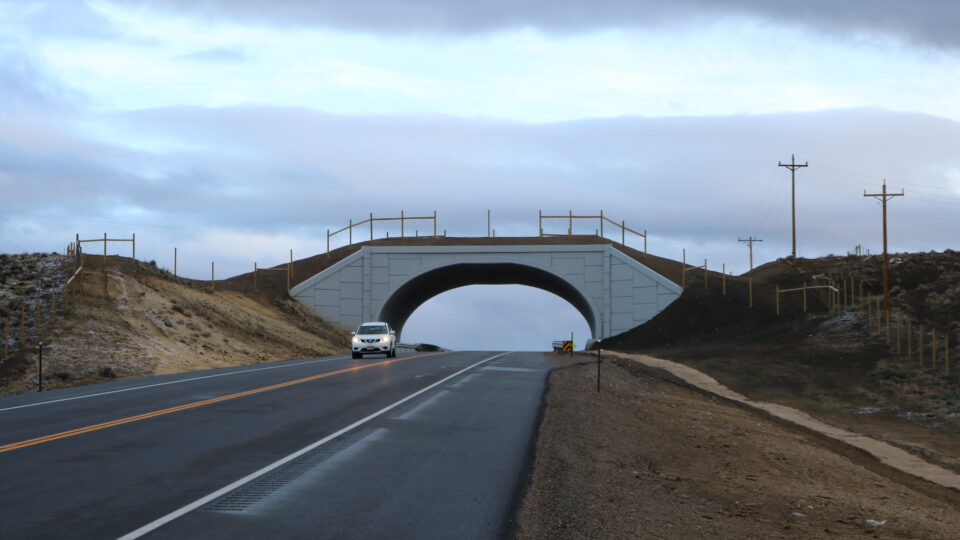
One solution that has been quite effective around the world in reducing car-animal collisions is wildlife overpasses and underpasses.  They are designed to help animals move in search of food and to escape predators and wildfires.  These traffic-spanning bridges and tunnels have been popular in Europe since the 1950s.  They look much like regular overpasses for cars but are decked out with native flora.  The underpasses, which assist shyer and smaller animals, are typically invisible to drivers.

According to a new economic analysis by researchers at Washington State University, wildlife crossings in Washington State save roughly $235,000 to $443,000 every year per structure. 

Wildlife crossing structures range in cost from $500,000 for a tunnel-like underpass to more than $6 million for a broad bridge.  There may soon be many more wildlife crossing structures across the country since $350 million was allotted in the federal Infrastructure Investment and Jobs Act signed into law in 2021.

**********

Web Links

Wildlife crossings potentially save millions annually in Washington state

How wildlife bridges over highways make animals—and people—safer

Photo, posted March 24, 2017, courtesy of Jeffrey Beall via Flickr.

Earth Wise is a production of WAMC Northeast Public Radio
Whales As Ecosystem Engineers | Earth Wise

December 14, 2021 By EarthWise Leave a Comment

Whales are great ecosystem engineers

Researchers from Stanford University have been studying the role of large whales on ocean ecosystems with some surprising results.

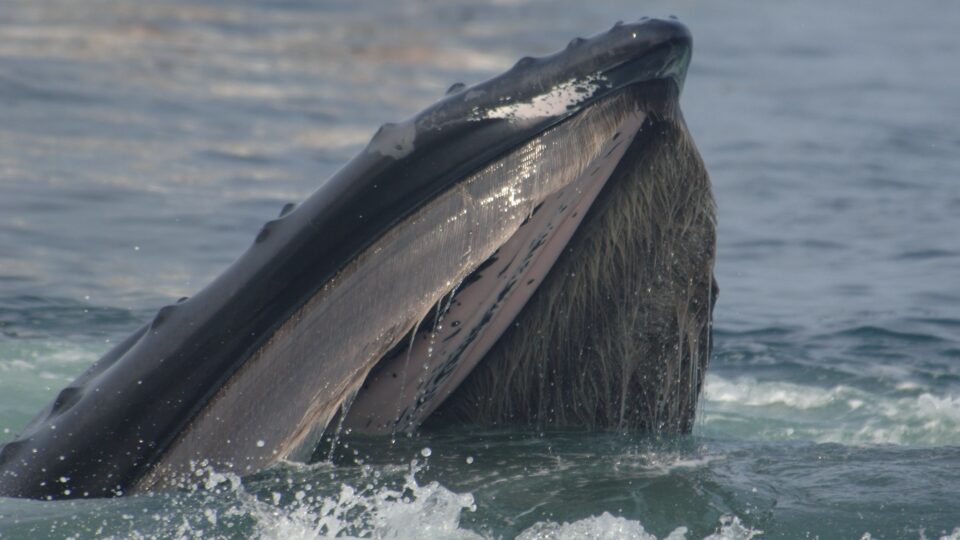
From 1910 to 1970, people killed about 1.5 million baleen whales in the waters surrounding Antarctica.  The whales were hunted for their blubber, baleen, and meat.  Baleen is the filtering fringe that certain whales use instead of teeth to capture food from the ocean.  A primary food source for these whales is krill, small shrimp-like creatures.   One would assume that the decimation of the baleen whale population in the Southern Ocean would have led to a surge in krill populations.  But the new research has found that the opposite is the case.

The precipitous decline of large marine mammals has negatively impacted the health and productivity of ocean ecosystems.

New high-tech tagging devices that attach to whales for brief periods allow researchers to record their movements and activities.  For the first time, it has been possible to accurately determine how much krill whales actually consume, and the answer is that they eat two to three times as much as previously thought.  Interestingly, the same technology shows that fish-eating whales like humpbacks eat somewhat less than previously thought.

Baleen whales are essentially mobile krill processing plants.  They eat the krill, digest it, and produce iron-laden excretions that are needed by phytoplankton, which comprise the bottom of the food chain that nourish krill and other small creatures.  With fewer whales, there is less nourishment for the krill.  In fact, based on the new data, estimates are that the historic abundance of krill in the Southern Ocean had to be about five times what it is today.

Whales are important ecosystem engineers.

**********

Web Links

Stanford researchers find whales are more important ecosystems engineers than previously thought

Photo, posted November 18, 2010, courtesy of Dr. Brandon Southall, NMFS/OPR via Flickr.

Earth Wise is a production of WAMC Northeast Public Radio.

A New Fishway Technology | Earth Wise

February 5, 2021 By EarthWise Leave a Comment

A new fishway technology to improve passageways for fish

Freshwater fish populations have declined by more than 80% over the past forty years across the globe.  This is in part due to hundreds of thousands of dams, weirs, and barriers stopping their movements.  These river barriers have disrupted fish reproduction cycles the world over by preventing river fish from migrating to spawn.

Fishways or fish ladders are waterways constructed on or around obstructions in order to provide passageways for fish and other aquatic species.  Often, they consist of a series of small overflow weirs and pools constructed in the form of steps.  Fish need to jump from one pool to another to migrate to the upstream.  Such fish ladders require a large space to construct.  These and several other types of fishways tend to be expensive to install and maintain and are not always successful in allowing fish to get to where they need to go.

Researchers at the University of New South Wales in Australia have come up with an ingenious new type of fishway.  Called a “tube fishway”, it is a low-cost and low-energy installation that works by pumping fish at high velocity – protected by a cushion of bubbly water – through a tube running over the obstructing barrier to deliver them safely into the water on the other side.

They successfully demonstrated a prototype system on a rugged slope behind a campus building that transported fish from one tank to another about 25 feet up the slope.

Fish are attracted into the chamber by suitable geometry and the system uses the energy available from the upper reservoir to lift the fish.  Modeling shows that the system will work for pipes as large as three feet in diameter and could lift fish more than 300 feet vertically. 

**********

Web Links

New fishway technology to get fish up and over those dam walls

Photo, posted October 19, 2019, courtesy of Andrew Harvey via Flickr.

Earth Wise is a production of WAMC Northeast Public Radio.

Primary Sidebar

Recent Episodes

  • An uninsurable future
  • Clean energy and jobs
  • Insect declines in remote regions
  • Fossil fuel producing nations ignoring climate goals
  • Trouble for clownfishes

WAMC Northeast Public Radio

WAMC/Northeast Public Radio is a regional public radio network serving parts of seven northeastern states (more...)

Copyright © 2026 ·