• Skip to primary navigation
  • Skip to main content
  • Skip to primary sidebar

Earth Wise

A look at our changing environment.

  • Home
  • About Earth Wise
  • Where to Listen
  • All Articles
  • Show Search
Hide Search
You are here: Home / Archives for more

more

Much more energy storage for New York

August 2, 2024 By EarthWise Leave a Comment

As solar and wind power play an ever-growing role in the electricity grid, the need for energy storage also grows.  Even if sun and wind can provide more energy than is needed at a particular time, they can’t provide it at all times.  The ability to store excess energy waiting in reserve for when the sun and wind are not providing it is essential to avoid the need for burning fossil fuels to take up the slack.

The New York State Public Service Commission has announced that it has approved a new framework for the state to have in place a nation-leading six gigawatts of energy storage by 2030.  This represents at least 20% of the peak electricity load of New York State.

An extensive set of recommendations to expand New York’s energy storage programs describe cost-effective ways to unlock the rapid growth of renewable energy across the state as well as to bolster the reliability of the grid.  The buildout of storage deployment is estimated to reduce projected future statewide electric system costs by nearly $2 billion.  New York has previously established goals to generate 70% of its electricity from renewable sources by 2030 and 100% zero-emission electricity by 2040.

The new roadmap includes programs to procure an additional 4.7 gigawatts of new energy storage projects across large-scale, retail, and residential energy storage sectors across the state.  These future procurements, when combined with the 1.3 gigawatts already being procured or under contract, will allow the State to achieve the 6-gigawatt goal by 2030.

Energy storage plays a critical role in decarbonizing the grid, reducing electricity system costs, and improving the reliability of the electricity system.

**********

Web Links

New York approves plan to add six gigawatts of energy storage by 2030

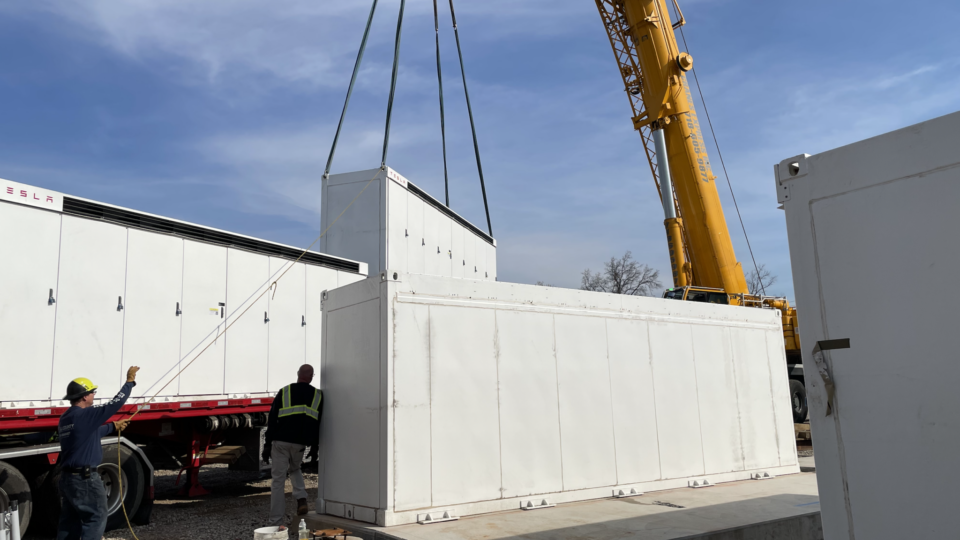
Photo courtesy of NineDot Energy.

Earth Wise is a production of WAMC Northeast Public Radio
More renewable energy for New York

November 24, 2023 By EarthWise Leave a Comment

More renewable energy coming for New York

In late October, New York announced its largest state investment in renewable energy to date that includes three offshore wind projects, and 22 land-based clean energy projects totaling more than 6 GW of power generation.

The portfolio of projects is expected to create approximately 8,300 jobs and spur $20 billion in economic investments statewide.

The projects support the state’s goal to have 70% of its electricity come from renewable sources by 2030 and to have 9 GW of offshore wind operating by 2035.  The announcement represents the first set of actions taken by the State as part of New York’s 10-Point Action Plan.

The three offshore wind projects include Attentive Energy One, a 1.4 GW project that seeks to retire fossil fuel power generation in New York City.  Community Offshore Wind, a 1.3 GW project will make use of a new grid interconnection in downtown Brooklyn.  Excelsior Wind, another 1.3 GW project, will provide robust energy deliverability to Long Island. 

Apart from the offshore wind projects, there will be 14 new solar projects, six wind upgrading projects, one new wind project, and one return-to-service hydroelectric project.

The average bill impact for customers over the life of the land-based projects is estimated to be approximately 0.31%, or about 32 cents a month for the average customer.  The bill impact for customers utilizing the offshore wind projects is estimated to be about 2.7%, or $2.93 per month.

*********

Web Links

NY to invest in 3 offshore wind farms, 22 land-based renewable projects

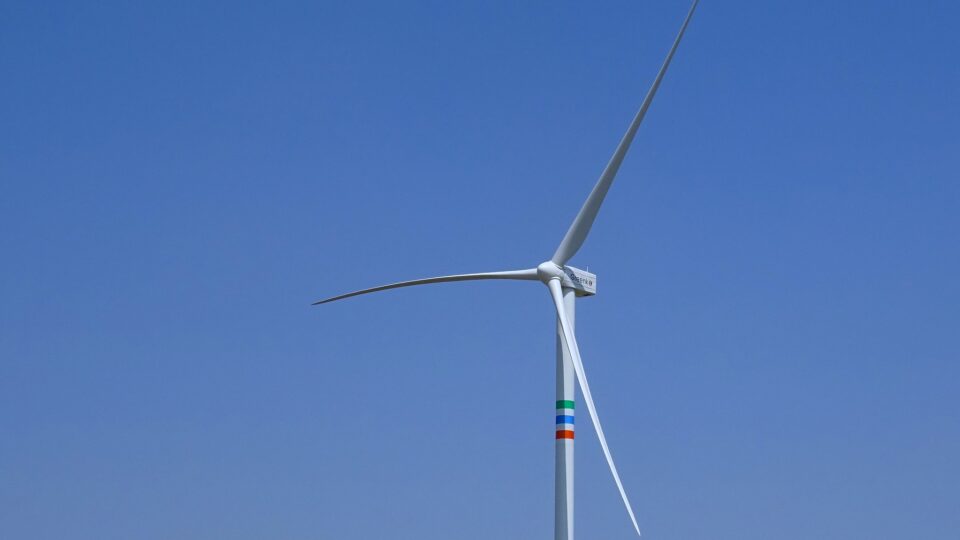
Photo, posted October 21, 2016, courtesy of B Sarangi via Flickr.

XXXXXXXXXXXXXXX

More Extreme Weather | Earth Wise

November 23, 2020 By EarthWise Leave a Comment

the costs of extreme weather

If it seems like natural disasters happen more frequently than they used to, that is because they do.  A new report from the United Nations entitled “The Human Cost of Disasters 2000-2019” provides the facts.  From 2000 to 2019, there were 7,348 natural disasters around the world, compared with 4,212 natural disasters from 1980-1999. 

The culprit is the climate.  Climate-related disasters increased from 3,556 events during the 1980-1999 period to 6,681 in the past 20 years, again an increase of more than 3,000.

The global economic losses associated with natural disasters have been staggering.  The earlier 20-year period saw $1.63 trillion in losses while the recent period resulted in $2.97 trillion in losses.   Disasters killed 1.19 million people in the earlier period and 1.23 million in the recent period.  It is a testimonial to the skills and efforts of disaster management agencies, civil protection departments, fire brigades, public health authorities, the Red Cross and Red Crescent, and many NGOs that the cost in human lives was not much greater over the past 20 years.

According to a statement from the UN, human society is being willfully destructive.  They draw that conclusion in light of reviewing the disaster events over the past 20 years and seeing the failure of society to act on science and early warnings to invest in prevention, climate change adaptation, and disaster risk reduction.  

**********

Web Links

Extreme Weather Events Have Increased Significantly in the Last 20 Years

Photo, posted September 18, 2020, courtesy of the National Guard via Flickr.

Earth Wise is a production of WAMC Northeast Public Radio.

More Plastic Pollution On The Way | Earth Wise

January 31, 2020 By EarthWise Leave a Comment

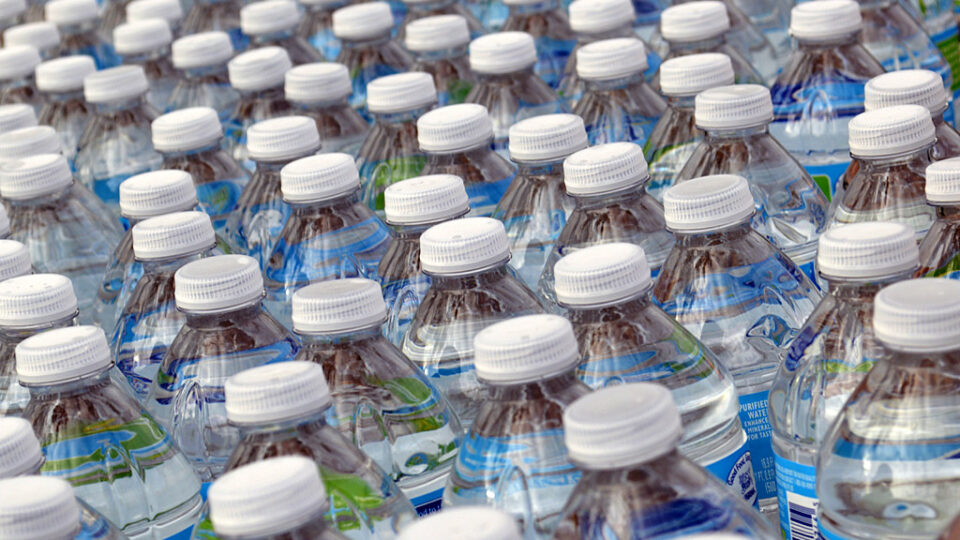
Public concern about plastic pollution has been rising.  More and more of us are choosing reusable grocery bags, metal straws, and reusable water bottles.  We shake our heads at images of immense plastic garbage patches in the ocean. We see reports of birds with 15% of their body weight in plastic.

While all of this is going on, companies like ExxonMobil, Shell, and Saudi Aramco are ramping up production of plastic – which is mostly made from oil, gas, and their byproducts.  They are doing this as a hedge against the growing possibility that the global response to climate change will reduce demand for their fuels.  Plastics are part of the category called petrochemicals, which currently account for 14% of oil use.  Petrochemicals are expected to drive half of oil demand growth over the next 30 years.

The World Economic Forum predicts plastic production will double in the next 20 years.  The fracking boom in the United States has turned this country into a big growth area for plastic production.  Natural gas prices are low which is hurting profits at fracking operations.  But fracking also unearths ethane, which is a feedstock for plastic production.  So plastic is becoming a kind of subsidy for fracking.

The American petroleum industry’s hub has historically been the Gulf Coast of Texas and Louisiana as well as a stretch along the lower Mississippi River.  There is a slew of new projects there.  The industry is also seeking to create a new plastics corridor in Ohio, Pennsylvania, and West Virginia, where fracking wells are rich in ethane.

Society in general may be increasingly concerned about the impact of things like carbon emissions and plastic pollution, but the fossil fuel industry continues to focus entirely on growth and profits.

**********

Web Links

The Plastics Pipeline: A Surge of New Production Is on the Way

Photo, posted January 10, 2015 , courtesy of Daniel Orth via Flickr.

Earth Wise is a production of WAMC Northeast Public Radio.

Primary Sidebar

Recent Episodes

  • An uninsurable future
  • Clean energy and jobs
  • Insect declines in remote regions
  • Fossil fuel producing nations ignoring climate goals
  • Trouble for clownfishes

WAMC Northeast Public Radio

WAMC/Northeast Public Radio is a regional public radio network serving parts of seven northeastern states (more...)

Copyright © 2026 ·