• Skip to primary navigation
  • Skip to main content
  • Skip to primary sidebar

Earth Wise

A look at our changing environment.

  • Home
  • About Earth Wise
  • Where to Listen
  • All Articles
  • Show Search
Hide Search
You are here: Home / Archives for megafauna

megafauna

The Decline Of Earth’s Largest Freshwater Creatures

September 23, 2019 By EarthWise Leave a Comment

While nearly 70% of the globe is covered by water, only 2.5% of it is freshwater.  The rest is saline and ocean-based.  And only 1% of our freshwater is easily accessible, with much of it locked away in snowfields and glaciers.  

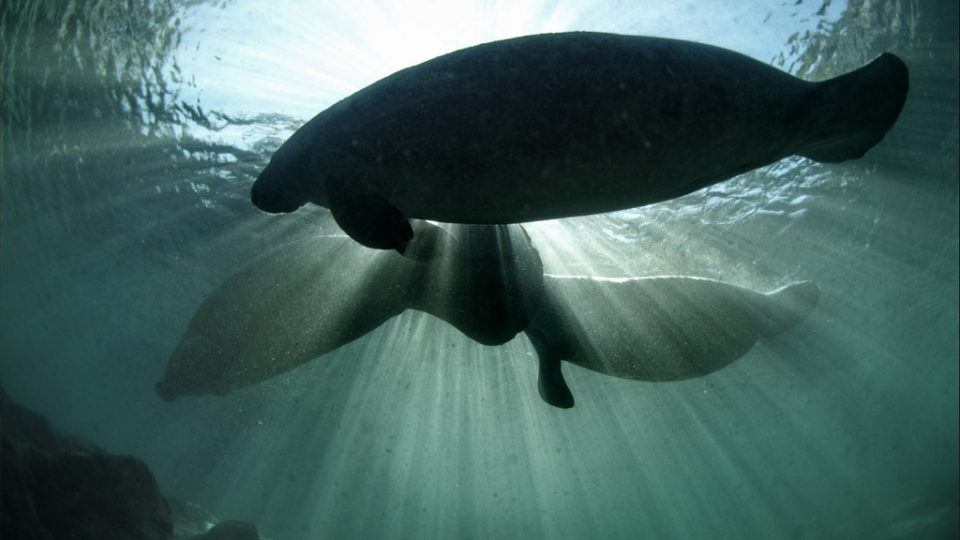
Despite freshwater only making up a small fraction of all water on the planet, it’s home to one third of all vertebrate species.  Some have survived hundreds of millions of years, but many of the world’s largest freshwater creatures – including fish, reptiles, amphibians, and mammals – may soon find themselves on the brink of extinction.

According to a study recently published in the journal Global Change Biology, scientists from the Leibniz-Institute of Freshwater Ecology and Inland Fisheries and international colleagues have quantified the global decline of freshwater megafauna for the first time.  In four decades since 1970, the global populations of these freshwater giants have declined 88% – twice as much as the loss of vertebrate populations on land or in the oceans. 

Freshwater megafauna include all freshwater animals that weigh 30 kilograms (about 66 pounds) or more, such as certain dolphins, beavers, crocodiles, turtles and sturgeons.

Overexploitation is one of the main threats to freshwater megafauna.  (These animals are often targeted for their meat, eggs, and skin).  The other main threat is the loss of free-flowing rivers. Many of the world’s large rivers are already highly fragmented, which impacts access to spawning and feeding grounds.  The research team says another 3700 large dams are planned or under construction, including 800 in habitats rich with freshwater megafauna, including the Amazon, Congo, and Ganges river basins.

Current conservation measures are clearly failing our freshwater creatures. 

********** 

Web Links

88 percent decline of big freshwater animals

Earth’s largest freshwater creatures at risk of extinction

Photo, posted March 25, 2012, courtesy of the U.S. Fish and Wildlife Service via Flickr.

Earth Wise is a production of WAMC Northeast Public Radio.
Your Children’s Yellowstone

January 25, 2019 By EarthWise Leave a Comment

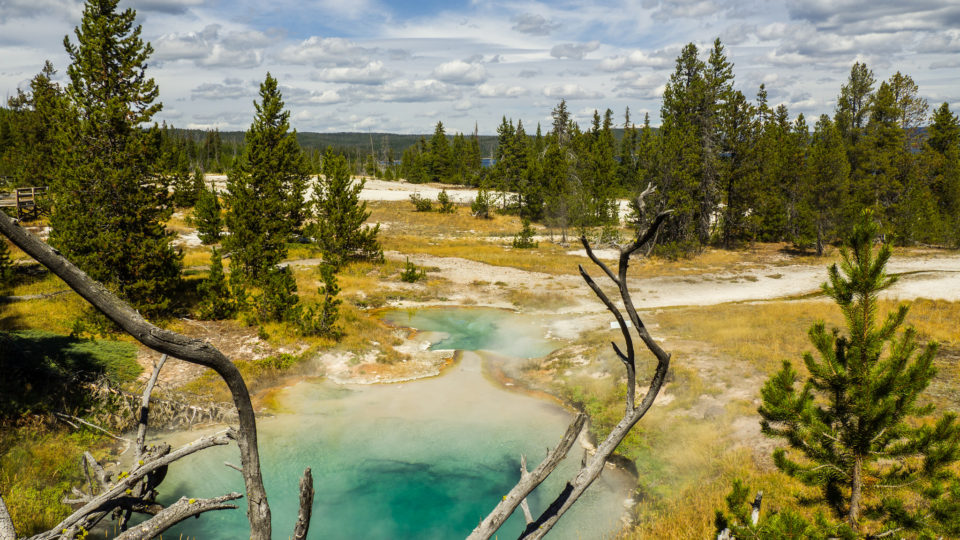
Yellowstone National Park was the first national park in the US and according to some sources, the first in the world.  It is the home of charismatic megafauna and stunning geysers that attract over four million visitors a year.  It is the only place in the United States where bison and wolves can be seen in great numbers.  And it is changing.

Over the next few decades of climate change, Yellowstone will quite likely see increased fire, less forest, expanding grasslands, shallower, warmer waterways, and more invasive plants.  All these things will alter how and how many animals move through the landscape.   Ecosystems are always changing, but climate change is transforming habitats so quickly that many plants and animals may not be able to make the transition at all.

Since 1948, the average annual temperature in the Greater Yellowstone ecosystem has gone up by 2 degrees Fahrenheit.  On balance, winter is 10 days shorter and less cold.  The Northern Rockies snowpack has fallen to its lowest level in eight centuries. Summers in the park are warmer, drier, and increasingly prone to fire.

Non-nutritious invasive plants like cheatgrass and desert madwort have replaced nutritious native plants.  When plants like these take over, they suck moisture out of the ground early so that bison and elk cannot be sustained throughout the summer.

The behavior of elk and other animals is already changing, with many staying outside the park to nibble lawns and alfalfa fields.  In turn, wolves go where the elk go.   Forests and waterways are changing as well.

The rapid changes going on at Yellowstone mean that the park that our children and grandchildren will visit in the future is likely to be a very different one from the Yellowstone we remember.

**********

Web Links

In Yellowstone National Park, warming has brought rapid changes.

Photo, posted September 7, 2016, courtesy of Mike Yang via Flickr.  

Earth Wise is a production of WAMC Northeast Public Radio.

Primary Sidebar

Recent Episodes

  • An uninsurable future
  • Clean energy and jobs
  • Insect declines in remote regions
  • Fossil fuel producing nations ignoring climate goals
  • Trouble for clownfishes

WAMC Northeast Public Radio

WAMC/Northeast Public Radio is a regional public radio network serving parts of seven northeastern states (more...)

Copyright © 2026 ·